
Affiliate Disclosure:Kid Sitting Safe is reader-supported. When you buy through links on our site, we may earn an affiliate commission at no additional cost to you. This does not influence our reviews or recommendations — we only recommend products we genuinely believe in.
Every US state has child restraint laws, but no two states have identical requirements. This creates real confusion for parents, especially families who travel across state lines or relocate. A car seat setup that is perfectly legal in one state may violate the law 30 miles down the highway.
This guide provides a complete reference for car seat and booster seat laws in all 50 states plus Washington, D.C. We cover rear-facing requirements, forward-facing harness rules, booster seat mandates, front seat restrictions, and penalties for violations. We also explain where state legal minimums fall short of safety best practices recommended by the American Academy of Pediatrics (AAP), the National Highway Traffic Safety Administration (NHTSA), and Federal Motor Vehicle Safety Standard (FMVSS) 213.
How to Use This Guide
This guide covers:
- How federal and state law fit together, and why neither one is the whole answer
- Where to look up your own state, and why we stopped publishing our own table
- AAP recommendations vs legal minimums, and why the legal minimum isn’t the safe answer
- Special situations including rideshares, rental cars, and interstate travel
Disclaimer: This is a plain-language summary, not legal advice, and it isn’t a substitute for the statute itself. Child passenger safety laws change frequently. Always verify current requirements against your state’s own statute, its department of motor vehicles or highway safety office, or a certified Child Passenger Safety Technician (CPST). When in doubt, follow the stricter standard.
This article is organized in four sections:
- State-by-state table with rear-facing, forward-facing, booster, front seat, and penalty requirements for every state
- AAP recommendations vs. legal minimums explaining why laws are not enough
- Recent law changes in 2025-2026
- Special situations including rideshares, rental cars, and interstate travel
Disclaimer: This is a plain-language summary, not legal advice, and it isn’t a substitute for the statute itself. Child passenger safety laws change frequently, and this guide reflects our reading of them as of early 2026. We re-checked a sample of states against their statutes in September 2026, not the whole table, so treat any single row as a starting point. Always verify current requirements against your state’s own statute, its department of motor vehicles or highway safety office, or a certified Child Passenger Safety Technician (CPST). When in doubt, follow the stricter standard.
Federal vs. State Law Hierarchy
You need to understand how federal and state regulations relate to each other. According to NHTSA, all 50 states have laws requiring child restraint use, yet there’s no single federal law governing how parents must secure their children in vehicles. That creates a patchwork system where state legislatures determine specific requirements.
Federal Motor Vehicle Safety Standard 213 establishes baseline requirements for car seats, mandating minimum crash performance standards for all child restraint systems sold in the United States. This federal regulation ensures that every car seat meets rigorous safety testing criteria before reaching consumers. However, FMVSS 213 governs manufacturing standards, not usage requirements. Once parents purchase a compliant seat, state laws dictate how that seat must be installed and used.
The AAP recommends best practice standards that exceed legal minimums in most states, creating a three-tier hierarchy of safety guidance. At the base, FMVSS 213 ensures seat quality. State laws establish mandatory minimums that all caregivers must follow. Best practice recommendations from safety organisations sit at the top. Legal compliance doesn’t automatically equal optimal safety, and that gap catches a lot of parents off guard.
Looking Up Your State
We used to publish a 51-row table of every state’s thresholds on this page. We’ve taken it down, and it’s worth saying plainly why.
In September 2026 we audited it against the actual statutes. Of the thirteen states we checked, five were wrong. One row described an Ohio law change that doesn’t exist. Two more credited states with rear-facing mandates their statutes don’t contain. A table that’s wrong about the law in roughly a third of the rows we sampled is worse than no table at all, because it reads as authoritative and parents act on it.
Keeping 51 states right means re-reading 51 statutes every time a legislature sits. We can’t do that honestly, and we don’t need to, because the Governors Highway Safety Association keeps a state-by-state database and the State Highway Safety Offices review the entries themselves. At the time of writing it carries “Last updated in October 2025. Laws last reviewed by SHSOs in June 2025”, which is a currency guarantee we were never in a position to offer.
Look your state up there, then check it against your state’s own statute before you rely on it. Both steps matter, because a summary is a summary, ours included.
Why the lists in circulation get this wrong
This part is worth your attention even if you never read another word here, because it’s the thing our audit turned up that nobody else seems to publish.
Plenty of articles carry a list of “states that require rear-facing until age 2”. We checked the statutes behind ours, and three states that routinely appear on those lists don’t belong there. Ohio, North Carolina and Utah set no rear-facing age in statute at all. What they require is that a restraint be used according to the manufacturer’s instructions, which in practice keeps a small baby rear-facing, but the law fixes no age.
That matters in a specific way. If you’re in one of those states and you’re relying on the law to tell you when it’s safe to turn your child around, the law isn’t answering the question. The manufacturer’s limits are, and the AAP’s guidance is to stay rear-facing until the child reaches the seat’s own height or weight maximum.
States whose statutes we did read and that do set an age-2 rear-facing rule: California, Hawaii, Michigan, Montana, New Jersey, Oklahoma and Washington, D.C. We haven’t read all fifty, so treat that as a verified subset rather than a complete list.
Where States Sit Against Best Practice
The examples below come from the GHSA database rather than from our own reading of each statute, except where noted. They’re here to show the spread, not to tell you your own state’s rule. Look yours up.
Stricter end. Hawaii runs the longest booster requirement in the country and the steepest penalties: up to $100 for a first offence, $250 to $500 for a second, and $500 to $800 for a third or subsequent offence within three years, plus a driver education assessment each time. We read Hawaii’s statute directly for the penalty bands.
More lenient end. Several states let children out of a restraint far earlier than the AAP would, and some set no front-seat age at all beyond the general restraint law. A child legally allowed into an adult seat belt at five or six is almost certainly too small for it to fit properly.
The gap is the point. A legal minimum is the floor a legislature settled on, not a finding about what’s safe. CHOP put the size of that gap plainly: “CHOP Research has shown that the use of belt-positioning booster seats lowers the risk of injury to children aged 4-8 years by 45 percent compared with the use of seat belts alone.” So in a state that releases a child from a booster at six, following the law can still mean giving up a measurable chunk of protection.
One retired statistic, while we’re here
The case for extended rear-facing rests on how crash forces load a small neck and spine, not on any single headline number. A widely repeated claim that rear-facing is “five times safer” came from a 2007 paper in Injury Prevention, which the journal retracted in 2018 after the authors found the survey weights had been mishandled. Treat that figure as withdrawn. The AAP still recommends rear-facing for as long as the seat allows. See our extended rear-facing guide for what the evidence does and doesn’t show.
AAP Recommendations vs. Legal Minimums
State laws establish the floor, not the ceiling, for child passenger safety. The gap between what is legal and what is safest is substantial in most states.
Rear-Facing Stage
| State Law (Typical) | AAP Recommendation | |
|---|---|---|
| Minimum age | Age 1-2 | As long as possible, until outgrowing the seat’s RF height or weight limit |
| Best practice | Meet legal minimum | Until seat’s maximum RF limits (often age 3-4) |
| Weight limit | 20-40 lbs | Up to seat maximum (often 40-50 lbs) |
The AAP recommends keeping children rear-facing as long as possible, ideally until they outgrow the rear-facing height or weight limit of their seat. Many convertible seats accommodate rear-facing to 40 or even 50 lbs. A seat like the Graco Extend2Fit supports rear-facing to 50 lbs, well beyond what any state law requires.
For a thorough explanation of why extended rear-facing matters, see our extended rear-facing guide.
Forward-Facing Harness Stage
| State Law (Typical) | AAP Recommendation | |
|---|---|---|
| Start | After meeting RF minimum | After outgrowing RF seat limits |
| End | Age 4-5 or 40 lbs | Until outgrowing harness limits (often 65-90 lbs) |
The AAP recommends children remain in a forward-facing harness seat until they reach the seat’s maximum harness height or weight, typically 65 lbs for standard convertible seats. Some seats like the Chicco MyFit accommodate up to 65 lbs in harness mode before converting to a booster. Five-point harnesses distribute crash forces across the strongest parts of a child’s body and provide significantly more protection than a booster with a seat belt.
Booster Seat Stage
| State Law (Typical) | AAP Recommendation | |
|---|---|---|
| Required until | Age 6-8 or 4’9” | Until passing five-step seat belt fit test |
| Typical age children pass | N/A | Ages 10-12 |
| Height when most pass | N/A | Approximately 4’9” |
This is where the gap between law and safety is widest. Most states allow children to stop using boosters at age 8, and most 8-year-olds don’t yet fit an adult belt properly. Use the five-step seat belt fit test rather than a birthday. The test checks whether the lap belt sits on the upper thighs (not abdomen), the shoulder belt crosses the chest (not neck), the child’s back is against the seat, knees bend at the seat edge, and the child maintains position for the entire ride.
Front Seat
| State Law (Typical) | AAP Recommendation | |
|---|---|---|
| Minimum age | Age 8-13 (varies widely) | Age 13 |
| Key risk | Front airbags | Front airbags can seriously injure or kill children |
NHTSA and the AAP recommend all children under 13 ride in the back seat. Front passenger airbags deploy with force designed for adult bodies and can cause fatal injuries to children, even those in booster seats. For a detailed analysis, see our guide on when a child can sit in the front seat.
Recent Law Changes (2025-2026)
Child passenger safety legislation continues to evolve. The overall trend is toward stricter requirements that align more closely with AAP recommendations.
2025-2026 Updates
- Michigan (2 April 2025): Strengthened its child restraint law to require rear-facing until age 2 (previously age 1) and forward-facing harness until age 5 (previously age 4). The amended MCL 257.710d also requires the driver to position the child in a rear seat, where the vehicle has one, through age 12.
- Several states have proposed bills to increase booster seat age requirements from 8 to 10 or to add height-based thresholds
Legislative Trends
Three major trends are shaping car seat legislation nationwide:
-
Rear-facing until 2 is becoming standard. Roughly twenty states are commonly listed as requiring it, and Michigan joined them in 2025. The lists in circulation include states whose statutes set no rear-facing age at all, so treat any count with suspicion and read your own state’s law.
-
Height-based booster requirements are gaining traction. Oregon and Washington require children to meet both an age threshold (age 8) and a height threshold (4’9”) before transitioning out of a booster. This approach is more scientifically sound than age-only cutoffs because children grow at different rates.
-
Fines are increasing. States are raising penalties to improve compliance. Several states have doubled first-offense fines in the past five years.
Special Situations
Interstate Travel

When driving across state lines, you must comply with the laws of the state you are currently driving in. Your home state laws do not travel with you. If you live in Florida (booster required until age 5) and drive through Georgia (booster required until age 8), your 6-year-old must be in a booster while in Georgia.
Best practice for road trips: Research every state on your route and follow the strictest requirement for the entire trip. This avoids the risk of a violation and, more importantly, keeps your child in the safest possible restraint.
Rideshares, Taxis, and Rental Cars
Most states exempt taxis and rideshare vehicles (Uber, Lyft) from car seat requirements. However, physics does not grant exemptions. An unrestrained child in an Uber faces the same crash forces as in a personal vehicle.
Options for rideshare travel:
- Bring your own car seat or travel car seat
- Use a travel vest that meets FMVSS 213 standards
- In select cities, request Uber Car Seat for pre-installed forward-facing seats
- See our complete Uber with car seat guide for detailed options
Rental car companies rarely provide car seats. Those available may be improperly installed, damaged, or the wrong size. Bring your own seat or purchase an inexpensive option at your destination.
Flying With a Car Seat
The FAA recommends children under 40 lbs use an approved child restraint system on aircraft. While children under 2 can fly as lap infants, this provides no protection during turbulence or emergency landings. Car seats used on planes must be FAA-approved (look for the label) and fit in the airline seat. For guidance, see our article on flying with a car seat.
Children With Special Needs
Standard car seat laws apply to all children regardless of disability or medical condition. However, children with special needs may require adaptive car seats that accommodate their specific requirements while still meeting FMVSS 213 crash performance standards. The Roosevelt car seat program provides specialized seating solutions. A CPST with special needs training can help identify appropriate options.
Common Legal Misconceptions
”My pediatrician said…”
Medical advice may not align with legal requirements. While doctors provide health guidance, car seat laws are regulatory. Follow both medical advice AND legal requirements - the stricter of the two.
”I was legal in my home state…”
Your home state laws don’t travel with you. Each state has jurisdiction over vehicles operating within its borders.
”The car seat label says…”
Car seat labels indicate FMVSS 213 compliance and usage instructions, but don’t override state laws. Both must be followed.
Enforcement and Penalties
Understanding the legal consequences of car seat violations helps parents appreciate the seriousness of compliance, since penalties go well beyond monetary fines. Fines typically range from $25 to $500 for first offenses depending on jurisdiction, with several states imposing escalating penalties for repeat violations. Some jurisdictions assign points to driver’s licences, which can affect insurance rates.
NHTSA’s National Child Restraint Use Special Study, a nationally representative sample collected in 2011, found that 46% of car seats and booster seats had at least one major error to installation or use that could reduce the seat’s effectiveness in a crash. That suggests enforcement alone can’t ensure child safety. Many jurisdictions offer diversion programmes where parents can attend certified car seat education courses in lieu of paying fines. These programmes often provide greater long-term safety benefits than penalties alone.
But the true cost of non-compliance isn’t measured in dollars. It’s measured in child injury risk. According to NHTSA crash data, properly restrained children face significantly lower fatality and injury rates compared to unrestrained or improperly restrained peers. Legal penalties exist to encourage compliance, but crash outcomes are the real consequence. Treat car seat laws as baseline requirements while striving for best practice installation and usage that exceeds those minimums.
Choosing the Right Seat for Legal Compliance and Safety
Meeting your state’s legal requirements is the minimum. Choosing a seat that allows your child to remain in each stage as long as possible provides the best protection.
All-in-One Seats
An all-in-one or 4-in-1 seat covers every stage from rear-facing infant through booster, eliminating the need to purchase separate seats as your child grows. The Graco 4Ever DLX covers 4-120 lb across four modes, though each mode has its own limits: rear-facing stops at 40 lb, and the 120 lb figure is backless-booster only. A single seat can keep your child legally compliant and properly protected from birth through the end of the booster stage. See our Graco 4Ever DLX review for a detailed analysis.
Extended Rear-Facing Seats
If your state requires rear-facing until age 2, choose a convertible seat with a high rear-facing weight limit. Seats with 40-50 lb rear-facing capacity allow children to remain rear-facing well past the legal minimum, which is the safest approach. Our best rear-facing car seats guide compares top options.
Booster Seats
For the booster stage, consider whether a highback or backless booster is appropriate. Highback boosters provide side-impact protection, head support, and shoulder belt guides. Backless boosters are more portable but offer no side-impact protection. Most state laws do not distinguish between the two, but safety experts recommend highback boosters for primary use. For detailed comparisons, see our highback vs. backless booster guide and booster seat reviews.
Understanding car seat types helps you choose the right seat for each stage and ensures you meet both legal requirements and safety best practices.
Ensuring Legal Compliance
The Four-Point Check
Before every trip, verify:
- Correct seat type for child’s age/weight/height
- Proper installation (tight, correct angle)
- Proper harnessing (snug, correct clip position) - learn how tight car seat straps should be
- Correct seating position (back seat, proper restraint)
Documentation to Carry
When traveling:
- Car seat manual (shows FMVSS 213 compliance)
- Child’s birth certificate (proves age if questioned)
- Height/weight records (for borderline cases)
Getting Help
Certified Child Passenger Safety Technicians can:
- Verify your installation meets legal requirements
- Provide documentation of proper installation
- Explain specific state law nuances
Find a CPST at: cert.safekids.org
Key Takeaways
- All 50 states have child restraint laws, but requirements vary significantly in age, weight, height thresholds, and penalties
- State laws are minimums, not safety targets. The AAP, NHTSA, and FMVSS 213 standards provide the benchmark for optimal child protection
- The trend is toward stricter laws. More states now require rear-facing until age 2, and several are raising booster age requirements
- When crossing state lines, you must follow the laws of the state you are currently in
- Use the five-step seat belt fit test rather than age alone to determine when your child can stop using a booster
- First-offense fines range from $10 to $250 in most states, with repeat violations reaching up to $800 in Hawaii, but the real cost of non-compliance is your child’s safety in a crash
For more child passenger safety data, see our car seat statistics compilation. For help with proper installation, find a CPST at cert.safekids.org.
Sources and References
- NHTSA Car Seats and Booster Seats - Federal car seat safety guidelines and state law summaries
- AAP Car Seat Guidelines - Pediatric best practice recommendations
- FMVSS 213 - Federal crash performance standards for child restraint systems
- NHTSA, Children: 2022 Data (DOT HS 813 575) - Source of the 71% / 54% fatal injury reduction figures
- Children’s Hospital of Philadelphia, car seat safety for 4-8 year olds - Source of the 45% booster seat injury reduction figure
- Governors Highway Safety Association (GHSA) - State-by-state child passenger safety law database
- Insurance Institute for Highway Safety (IIHS) - Child safety research and booster seat evaluations
- Safe Kids Worldwide - Car seat inspection stations and installation assistance
Recommended Products
Graco 4Ever DLX
Best all-in-one for full legal complianceCovers every car seat stage from birth through booster, meeting requirements in all 50 states.
What We Like
- 4-in-1 functionality grows with child
- 10-year lifespan from rear-facing to booster
- Simply Safe Adjust harness adjusts from front
- Budget-friendly compared to similar models
What We Don't
- Takes up significant space in vehicle
- Installation requires time and effort to secure properly
Graco Extend2Fit Convertible Car Seat
Best for extended rear-facing compliance50-lb rear-facing limit exceeds the strictest state rear-facing laws by a wide margin.
What We Like
- 50-pound rear-facing limit per AAP guidelines
- 10-year lifespan
- Excellent value for features offered
- Extension panel provides extra legroom for taller babies
What We Don't
- Basic installation without InRight LATCH system
- Bulky design takes up significant vehicle space
Graco TurboBooster LX Backless Booster
Best budget backless boosterBackless belt-positioning booster for 40-100 lb and 43-57 in, which covers the booster stage in every state. No head or side support, so the vehicle needs its own headrest.
What We Like
- Light and easy to move between cars, which is most of the point of a backless booster
- Adjustable armrests for comfort
- Dual integrated cup holders
- LATCH connectors, so it stays put when nobody is sitting in it
What We Don't
- Backless only: no head or side support, so the vehicle needs its own headrest behind the child
- No side impact protection, unlike a highback booster with energy-absorbing foam in the wings
- Less padding than premium options like Chicco KidFit
Chicco KidFit
Best highback boosterDuoGuard side-impact protection exceeds every state's booster seat requirements.
What We Like
- 10-position headrest for growing children
- SuperCinch LATCH tightener for added stability
- Ergonomic seat design for comfort on long trips
- Removable washable fabrics for easy cleaning
What We Don't
- Higher price than basic belt-positioning boosters
- Takes up more vehicle space than backless boosters
- Larger footprint than backless-only boosters
Safety 1st Grow and Go
Best budget all-stages seatAffordable 3-in-1 seat that satisfies rear-facing, forward-facing, and booster laws in every state.
What We Like
- Budget-friendly price without sacrificing safety standards
- QuickFit harness for easy height adjustments without rethreading
- Machine washable and dryer safe seat pad
- 10-year usable life span
What We Don't
- Bulkier than premium models
- Lower weight limits in each mode compared to competitors
Chicco MyFit Harness+Booster
Best harness-to-booster transitionCombination seat that bridges the forward-facing harness and booster stages required by law.
What We Like
- 4-position recline for comfort on long trips
- DuoGuard side impact protection system
- Premium fabrics and padding for comfort
- Easy harness adjustment with no-rethread system
What We Don't
- 25-100 lb range is narrower than some competitors (Britax 49-120 lbs)
- Heavier seat (21 lbs) makes vehicle transfers difficult
- Installation more complex than ClickTight systems
Sources & Research
- Amazon Product Page
- Graco Official Product Page
- Amazon Product Page
- Graco Official Product Page
- Amazon Product Page
- Graco TurboBooster 2.0 Highback (model 2184597), read 2026-08-04. Source for the line's real limits, 40-100 lb / 43-57 in / at least 4 years old, in BOTH modes. The previously cited turbobooster-lx-highback URL 404s
- Chicco Official Product Page
- Amazon Product Page
- Safety 1st Official
- Amazon Product Page
- Chicco Official Product Page
Continue Reading
Explore more car seat safety content or browse our other categories.
Frequently Asked Questions
- When can my child legally stop using a car seat?
- This depends on your state. Most states require children to use some form of child restraint (car seat or booster) until age 8 and 4 feet 9 inches (57 inches) tall. However, some states like Hawaii require boosters until age 10, while a few states like Florida allow transition as early as age 5. Regardless of your state's legal minimum, NHTSA and the American Academy of Pediatrics recommend children remain in booster seats until they pass the five-step seat belt fit test, which most children do not pass until ages 10-12.
- When can a child legally sit in the front seat?
- Front seat laws vary widely. Some states have no specific front seat age restriction beyond general child restraint laws, while others prohibit front seat riding until age 12 or 13. States like California, New Jersey, and Maine require children to ride in the back seat until age 8. The AAP recommends all children under 13 ride in the back seat regardless of state law, because front airbags pose serious injury risks to children.
- Do car seat laws apply in Uber, Lyft, and taxis?
- Most states exempt taxis and rideshare vehicles from car seat requirements. However, an exemption from the law does not change the physics of a crash. An unrestrained child faces the same injury risks in an Uber as in a personal vehicle. Some cities offer Uber Car Seat with pre-installed forward-facing seats. For regular rideshare travel, parents should bring their own portable car seat or a travel vest that meets FMVSS 213 standards. See our guide on [riding Uber with a car seat](/uber-with-car-seat/) for more details.
- What happens if I am driving through a state with stricter car seat laws than my home state?
- You must follow the car seat laws of the state you are currently driving in, not your home state. If you live in a state that allows booster transition at age 6 but drive through a state requiring boosters until age 8, you must comply with the age-8 requirement while in that state. When planning a road trip, research every state on your route and follow the strictest requirement.
- What are the fines for car seat violations?
- First-offense fines range from $10 in some states to $500 or more in others. Hawaii has the steepest penalties, up to $100 for a first offense and $500 to $800 for a third or subsequent offense within three years. Some states also add points to your driver's license, which can increase insurance premiums. Many jurisdictions offer fine dismissal if the parent completes a certified car seat safety education course. The financial penalty is small compared to the injury risk: NHTSA reports that child safety seats reduce fatal injury by 71% for infants under 1 and by 54% for toddlers aged 1 to 4 in passenger cars.
- Has any state updated its car seat laws recently?
- Yes. Michigan strengthened its law effective 2 April 2025, now requiring rear-facing until age 2 (was age 1), forward-facing harness until age 5 (was age 4), and the rear seat for every child under 13. The broader trend is toward requiring rear-facing until age 2 and extending booster seat age requirements. Always check your state's department of motor vehicles or highway safety office for the most current requirements, as laws can change during any legislative session.
- Are federal car seat laws different from state laws?
- There are no federal car seat usage laws - child passenger safety is regulated at the state level. However, federal standards do apply to car seat manufacturers. All car seats sold in the US must meet Federal Motor Vehicle Safety Standard (FMVSS) 213 for crash performance. State laws govern how those seats must be used (ages, stages, seating positions). When traveling between states, you must comply with the laws of the state you're currently driving in.
Written By
Kid Sitting Safe
Our team researches car seat safety standards, crash test data, and real-world usability to help parents make the safest choice.
Related Articles
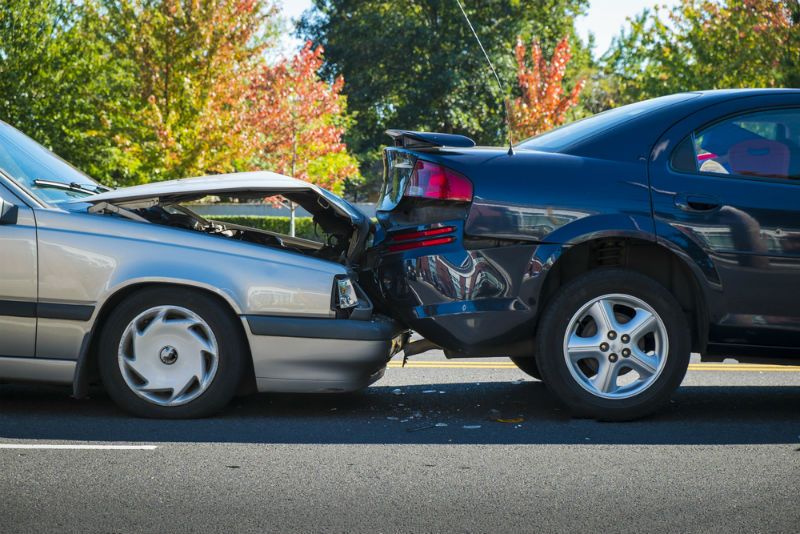
Car Seat After Accident: When to Replace & Insurance Coverage
Learn when car seats must be replaced after accidents. NHTSA guidelines, insurance coverage options, and how to assess if your seat is still safe to use.

Car Seat Installation: A Complete Guide for Parents
Master car seat installation with our comprehensive guide. Learn LATCH vs. seat belt methods, common mistakes to avoid, and expert tips for secure installation every time.
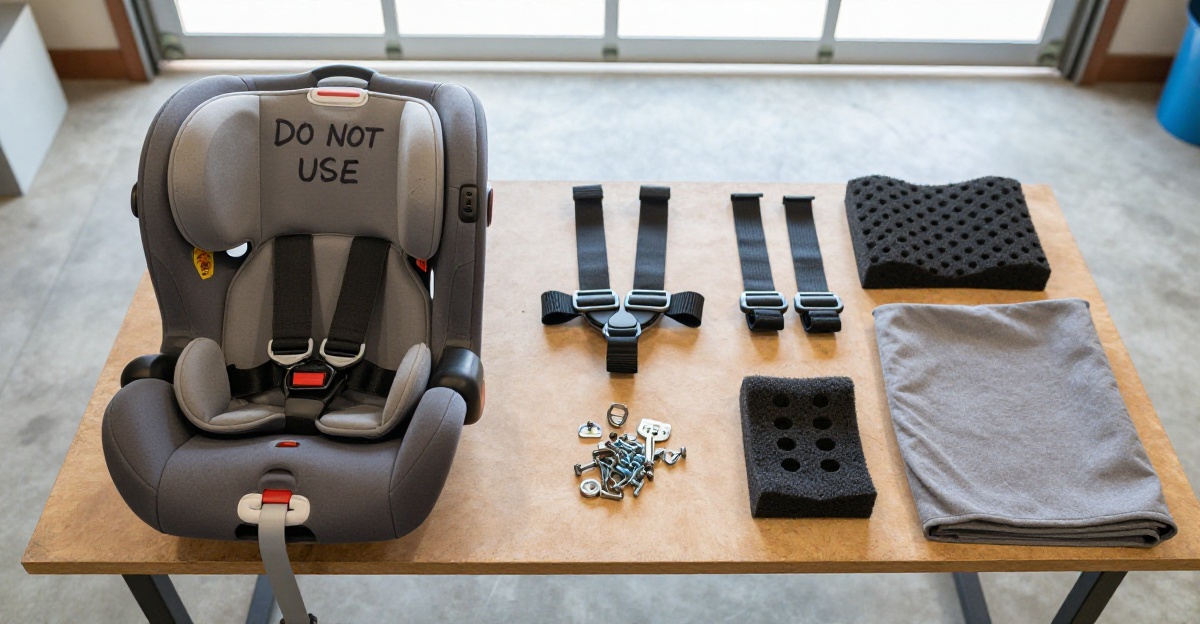
Car Seat Recycling and Disposal Guide: How to Responsibly Get Rid of Old Seats
How to recycle, trade in, or safely dispose of old, expired, or crashed car seats. Covers Target trade-in events, DIY disassembly, and why you should never donate an expired seat.