
Affiliate Disclosure:Kid Sitting Safe is reader-supported. When you buy through links on our site, we may earn an affiliate commission at no additional cost to you. This does not influence our reviews or recommendations — we only recommend products we genuinely believe in.
Transitioning from a 5-point harness to a booster seat is a significant milestone, but rushing this transition can compromise your child’s safety. According to the American Academy of Pediatrics (AAP) and NHTSA guidelines, maturity matters more than age or size alone. Our AAP child passenger safety research summary covers the underlying data. Understanding the different types of car seats helps parents navigate each transition. This guide explains the requirements for safe booster seat use and helps you determine when your child is truly ready.
Understanding Booster Seat Readiness
The Four Requirements
Safe booster seat use requires meeting four criteria:
- Age: Minimum 4 years old (preferably 5-6+)
- Weight: Minimum 40 pounds
- Height: Tall enough for proper seat belt fit
- Maturity: Can sit properly for entire trips
According to FMVSS 213 (Federal Motor Vehicle Safety Standard 213), booster seats must be designed to properly position the vehicle seat belt on a child’s body. However, the regulation alone doesn’t guarantee your child is developmentally ready for this transition. NHTSA data shows that premature transitions from harness seats to boosters - or boosters to vehicle seat belts - significantly increase injury risk in crashes.
The reality is that all four requirements must be met simultaneously. A 6-year-old who weighs 50 pounds but constantly unbuckles isn’t ready, just as a mature 4-year-old who weighs 38 pounds isn’t heavy enough for safe booster use.
Why Maturity Matters Most
Unlike harness seats that physically restrain children, booster seats rely on proper sitting behavior. A child who slouches, unbuckles, or plays with the seat belt needs more time in a harness - regardless of age or size.
The fundamental difference between harness seats and boosters is the locus of control. With a 5-point harness, the seat restrains your child through five secure anchor points. In a booster, the vehicle’s 3-point seat belt (designed for adults) becomes the restraint system, and the booster simply positions it correctly. If your child moves out of position, the belt can’t protect them - and may even cause injury.
Signs of Readiness:
- Sits upright without slouching
- Keeps seat belt properly positioned
- Doesn’t unbuckle or play with belt
- Maintains position while sleeping
- Understands and follows safety instructions
- Doesn’t lean against windows or siblings
- Stays seated during entire trips
- Keeps both seat belt portions visible (not tucked or twisted)
Signs of Immaturity:
- Frequently unbuckles themselves
- Slouches or leans against windows
- Puts shoulder belt behind back
- Falls asleep and slumps over
- Gets distracted and moves around
- Tests boundaries by repositioning belt
- Complains about belt position constantly
- Tries to share space with siblings
Consider this scenario: You’re driving on the highway at 65 mph when you need to brake suddenly. Your child is asleep, leaning against the window with the shoulder belt slack. In this position, the belt can’t restrain them properly, and they may suffer serious injuries or even eject from the vehicle in a crash. A harness seat would keep them safely positioned regardless of sleeping position.
Developmental Psychology and Car Seat Safety
Child development experts note that impulse control - a key executive function - doesn’t fully develop until the teenage years. However, most children develop sufficient impulse control for booster seat use between ages 5 and 7. This ability varies significantly by individual temperament, birth order (older siblings often mature faster), and parenting approach.
Some children are “rule followers” who naturally understand safety requirements, while others are “boundary testers” who need more time in the controlled environment of a harness seat. Neither temperament is better or worse - they simply require different timelines for safe booster transition.
Age and Developmental Considerations
The 4-Year Minimum
Most booster seats specify a minimum age of 4 years, but this is just a starting point. Developmentally:
Ages 4-5:
- Often lack impulse control
- May not understand consequences
- Frequently test boundaries
- Usually not ready for boosters
- Still developing body awareness
- May not recognize discomfort from improper belt positioning
- Attention span may be insufficient for long trips
According to AAP guidelines, children in this age group benefit significantly from the continued use of harness seats. The AAP states that children should use a forward-facing car seat with a harness for as long as possible, up to the highest weight or height allowed by their specific seat manufacturer - often 65 pounds or more with modern extended-use harness seats.
Many extended-use harness seats, like the Britax Grow With You ClickTight, accommodate children up to 65 pounds in harness mode before converting to a booster. This allows 4-5 year olds to remain safely harnessed even if they’re tall or heavy for their age. Ages 5-6:
- Improved impulse control
- Better understanding of safety rules
- May be ready with good behavior
- Individual assessment needed
- Can usually articulate discomfort
- Beginning to understand cause and effect
- Often motivated by “big kid” privileges
Children in this age range show the widest variability in readiness. Some 5-year-olds demonstrate excellent maturity and sitting behavior, while others still struggle with impulse control. This is the age where parental assessment becomes critical - no guideline can replace your knowledge of your specific child’s temperament and capabilities.
Ages 6-7:
- Typically mature enough
- Can understand importance of position
- Most children ready by this age
- Still use if seat fits and child is comfortable
- Can self-correct position when reminded
- Understand safety concepts more abstractly
- May resist but can comply consistently
The AAP Recommendation
The AAP states children should remain in 5-point harness seats with properly tightened straps until they reach the maximum weight or height limits - often age 5-7. There’s no safety benefit to early booster transition.
This recommendation, updated in 2018, reflects decades of crash data analysis. The AAP’s position is unambiguous: keep children in harness seats longer. Their policy statement notes that “all infants and toddlers should ride in a rear-facing car seat as long as possible, until they reach the highest weight or height allowed by their car seat’s manufacturer. Most convertible seats have limits that will permit children to ride rear-facing for 2 years or more. All children whose weight or height is above the forward-facing limit for their car seat should use a belt-positioning booster seat until the vehicle lap-and-shoulder belt fits properly, typically when they have reached 4 feet 9 inches in height and are between 8 and 12 years of age.”
The key phrase is “typically when they have reached 4 feet 9 inches in height and are between 8 and 12 years of age.” This means the AAP expects children to use boosters for years - not months - before transitioning to vehicle seat belts alone.
Understanding Why the Transition Can Wait
Many parents feel social pressure to transition their children earlier than recommended. Comments like “they’re too big for that seat” or “my child stopped using a booster at age 7” create unnecessary anxiety. However, safety data overwhelmingly supports extended harness use and extended booster use.
Consider these statistics from NHTSA: Booster seats reduce the risk of serious injury by 45% for children aged 4-8 years compared to seat belt use alone. But children in harness seats have even better protection than those in boosters - the structured 5-point harness distributes crash forces across the strongest parts of a child’s body (shoulders, hips, and between the legs).
Weight and Height Requirements
Weight Minimums
40-pound standard:
- Most booster seats require minimum 40 pounds
- Some states allow 30-35 pounds (not recommended)
- Lighter children can submarine under lap belt
The 40-pound minimum exists for good reason: vehicle seat belts are designed around adult bodies, not children’s. Below this weight, even with perfect positioning, the belt geometry doesn’t work effectively.
Why Weight Matters: Heavier children stay properly positioned during crashes. Under 40 pounds, the lap belt may ride up onto the abdomen, causing serious internal injuries.
Abdominal injuries from improperly positioned lap belts include liver lacerations, spleen damage, bowel perforations, and spinal fractures. These “seat belt syndrome” injuries occur when the lap belt rides up over the abdomen instead of staying low across the pelvis. In children under 40 pounds, even a properly positioned belt at the start of a trip may shift upward during normal driving movements.
The physics are straightforward: In a crash, your child experiences forces many times their body weight. The seat belt must distribute these forces across strong skeletal structures - the pelvis and clavicle/shoulder. Lighter children have less mass to keep the belt properly positioned, and their smaller pelvic structure provides less surface area for the lap belt to engage.
Weight Ranges by Booster Type:
| Booster Type | Minimum Weight | Maximum Weight | Typical Age Range |
|---|---|---|---|
| Highback Booster | 40 lbs | 100-120 lbs | 4-12 years |
| Backless Booster | 40 lbs | 100-120 lbs | 6-12 years |
| Combination Seat (Harness to Booster) | 22-40 lbs (harness) / 40-120 lbs (booster) | 120 lbs | 2-12 years |
Combination seats like the Britax Grow With You ClickTight offer the best of both worlds: extended harness use up to 65 pounds, then conversion to a belt-positioning booster up to 120 pounds. This design eliminates the pressure to transition before your child is ready, since the same seat accommodates both stages.
Height Requirements
General Guidelines:
- Ears below top of vehicle headrest
- Knees bend naturally at seat edge
- Lap belt fits across upper thighs
- Shoulder belt crosses chest
Height matters just as much as weight, because proper seat belt fit depends on your child’s torso length, leg length, and shoulder height relative to the vehicle’s seat belt anchor points.
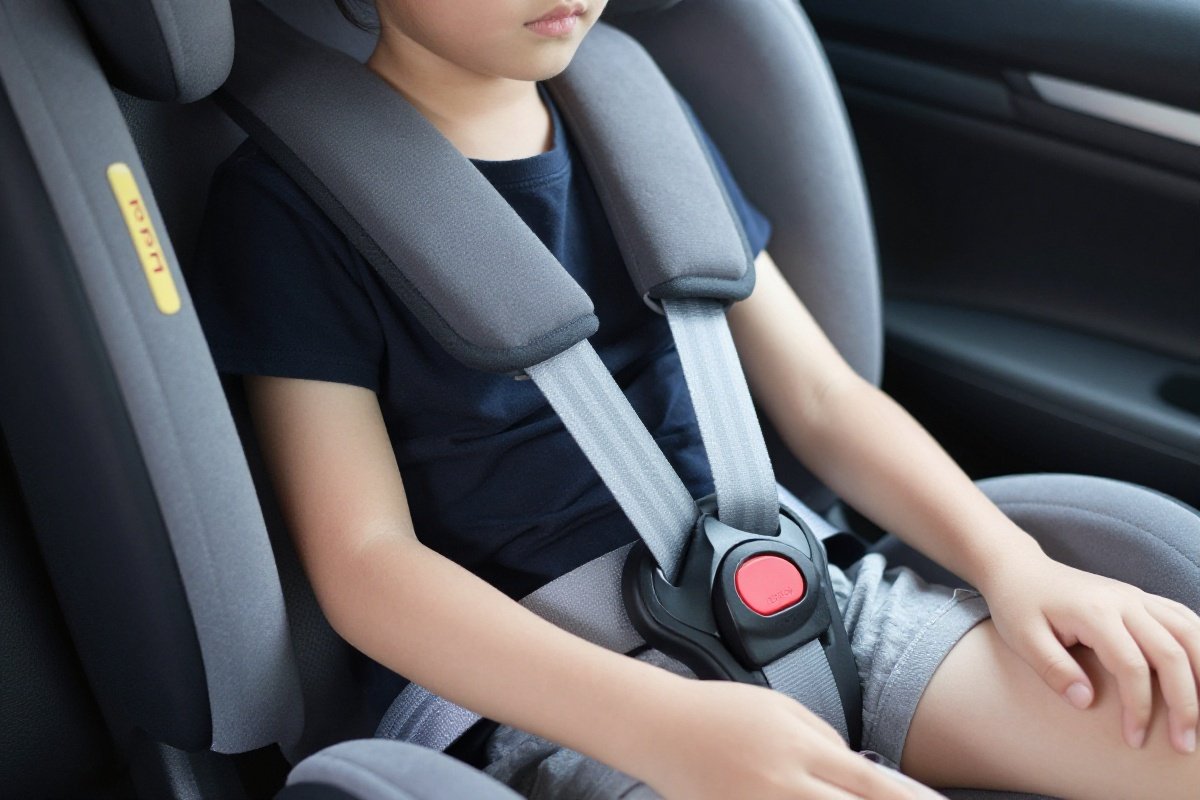
Proper Seat Belt Fit:
| Measurement | Correct Position | Incorrect Position | Risk of Incorrect Position |
|---|---|---|---|
| Lap belt | Across upper thighs, touching hips | Across stomach or up near ribs | Abdominal injuries, spinal fractures |
| Shoulder belt | Center of shoulder and chest | Across neck, under arm, or behind back | Neck injuries, ejection, or ejection |
| Head position | Supported by headrest or seat back | Above headrest or slumped forward | Head/neck injuries, whiplash |
| Knee position | Bent comfortably at seat edge | Straight out or dangling | Improper sliding, inability to brace |
The shoulder belt position is particularly critical. If your child is too short, the shoulder belt will cross their neck or face, which is uncomfortable and dangerous. Children often respond by putting the shoulder belt under their arm or behind their back - which defeats the entire purpose of the belt and dramatically increases injury risk in crashes.
The Role of Torso vs. Leg Length
Not all children of the same height have the same proportions. Some children have long torsos and short legs, while others have short torsos and long legs. These proportional differences affect booster seat fit and readiness.
Long torso / short legs:
- May need a booster longer despite being tall
- Knees may not bend at seat edge even when old enough
- Often have better shoulder belt positioning
- May need highback booster for extended period
Short torso / long legs:
- May pass the knee-bend test earlier
- Shoulder belt may still be too high across neck
- May need extended use of highback booster for shoulder positioning
- Height may not reflect true booster readiness
This is why the 5-step test (discussed below) evaluates multiple body positions rather than relying on height or age alone. A child might pass some steps but not others, indicating they need more time in a booster or a different booster style.
Highback vs. Backless Boosters
Highback Boosters
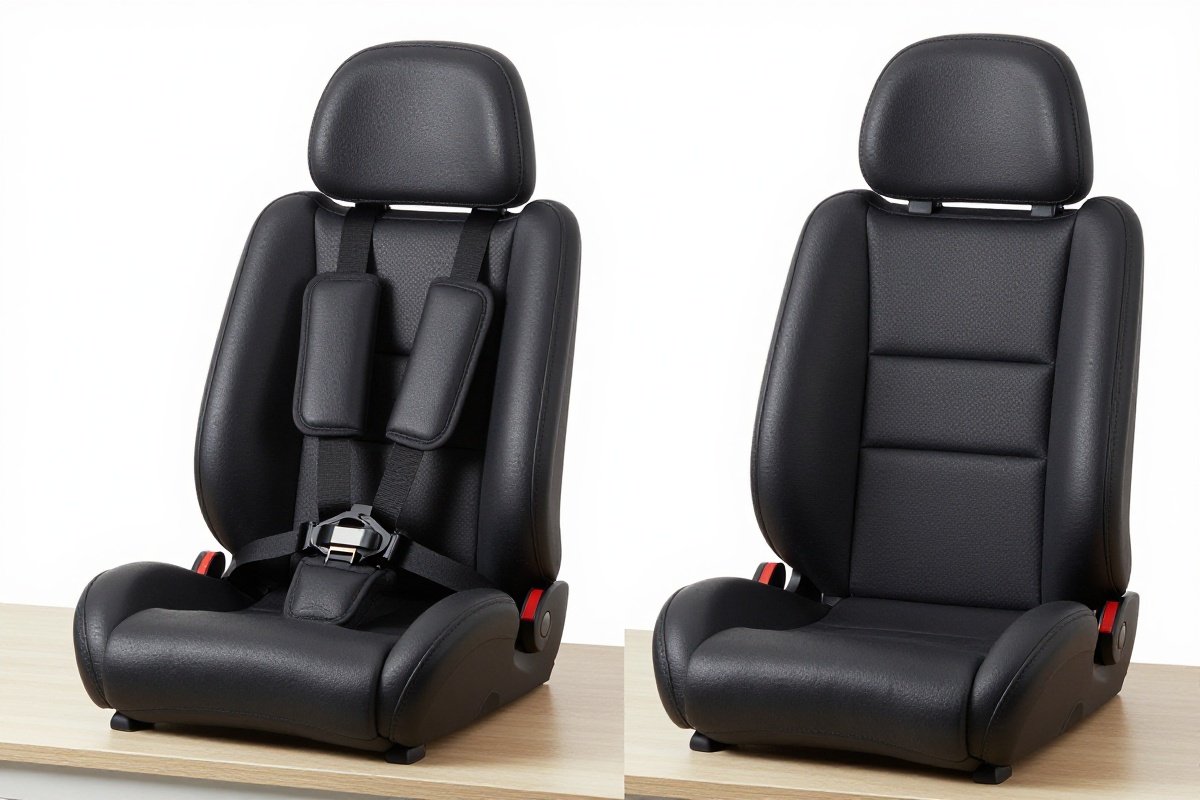
Advantages:
- Head and neck support
- Side impact protection
- Belt positioning guides
- Better for sleeping children
- Required if no vehicle headrest
- Adjustable headrest grows with child
- Side wings prevent slouching
- More comfortable on long trips
Highback boosters function as both a positioning device and a protective structure. The rigid shell provides a barrier between your child and the vehicle door during side-impact crashes. In the crash data NHTSA analysed for its side-impact rule, about 25% of deaths among children aged 0 to 12 riding in child restraints in rear seats happened in side crashes.
Best For:
- Younger children (4-7 years)
- Long trips
- Vehicles without headrests
- Children who sleep in the car
- Vehicles with low or non-adjustable seat belts
- Multi-child households (better crash protection)
- Children with special needs requiring additional support
Graco’s TurboBooster 2.0 Highback exemplifies the versatility of modern highback boosters: it converts to a backless booster when your child outgrows the back, essentially two products in one. Watch the naming, though. The TurboBooster LX is backless from the start, so it doesn’t offer that conversion. The Chicco KidFit represents the premium end of the highback market, with 10-position headrest adjustment, premium padding, and dual-position cup holders. While more expensive, premium boosters offer significantly better comfort on long trips, which can improve compliance - a child who’s comfortable is more likely to sit properly.
When Highback Features Matter Most
Side impact protection becomes critical in these scenarios:
- Vehicles without side curtain airbags
- Older vehicles with minimal side structure
- Highway driving (higher crash speeds)
- Urban driving (more intersection crashes)
- Seating positions near doors (outboard positions)
Side-impact crashes pose particular danger to children because vehicle doors provide less crush space than front or rear structures. A highback booster’s side wings put some structure between your child’s head and the impact point.
Backless Boosters
Advantages:
- Less expensive
- More portable
- Takes up less space
- Good for older children
- Easy to move between vehicles
- Stores easily when not needed
- Allows vehicle seat adjustments
- Less conspicuous for older kids
Requirements:
- Vehicle must have headrest
- Child must have excellent maturity
- Shoulder belt fits without guide
- Child sits properly without support
- Child’s ears are below top of vehicle seat
- Vehicle seat provides adequate side support
- Child doesn’t sleep frequently in car
Best For:
- Older children (8+ years)
- Short trips
- Travel and carpooling
- Vehicles with good headrests
- Children close to outgrowing boosters entirely
- Families needing multiple seats across back seat
- Grandparents’ cars or occasional-use vehicles
The Diono Solana 2 is a good example of a well-designed backless booster: light, easy to move between cars, and simple to store. It’s wider than its slim looks suggest, though, so measure your back seat before counting on it for a three-across.
The Transition from Highback to Backless
Many parents wonder when to make the transition from highback to backless mode. The answer depends on several factors:
Consider transitioning when:
- Your child consistently sits properly without reminders
- Your child’s ears are well below the vehicle headrest (2+ inches)
- The vehicle seat belt fits properly without the highback guides
- Your child no longer sleeps in the car regularly
- Your child expresses desire to use backless (social comfort)
Continue using highback if:
- Your child sleeps during car rides
- The vehicle lacks headrests or has low headrests
- Your child slouches without the back support
- The shoulder belt routing needs guidance
- You frequently drive long distances
- Your child is still on the younger end (under 8 years)
Remember that there’s no requirement to transition from highback to backless. If your child fits comfortably in highback mode and the booster’s weight/height limits haven’t been exceeded, continuing with the back provides additional protection at no cost.
The 5-Step Test
When to Stop Using a Booster
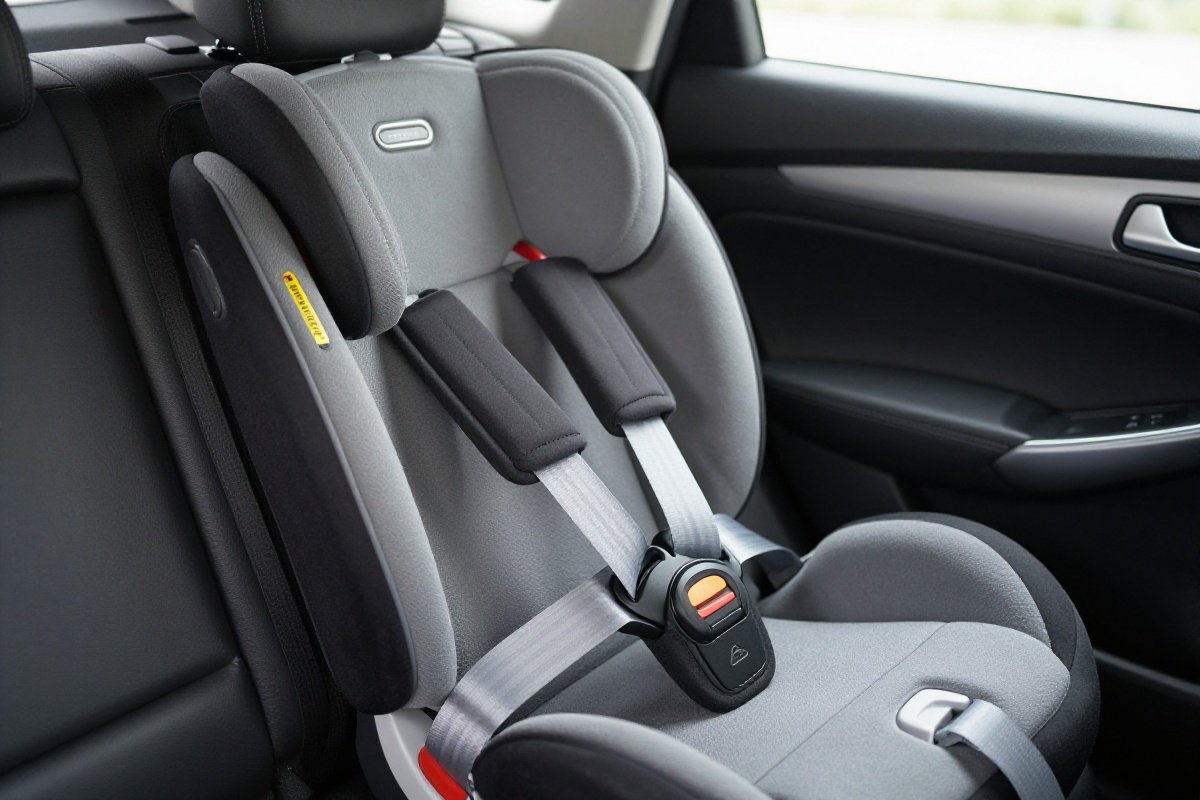
Your child is ready for the vehicle seat belt alone when they pass all five steps:
- Back against seat: Sits without slouching
- Knees bend comfortably: Legs hang naturally
- Lap belt on thighs: Across upper legs, not belly
- Shoulder belt centered: On shoulder, not neck
- Maintains position: Stays seated properly whole trip
Typical Age: Most children pass between 10-12 years old.
The 5-step test, developed by SafetyBeltSafe U.S.A., provides an objective assessment of seat belt fit. Each step must be achieved and maintained throughout an entire trip - not just at the beginning.
Detailed 5-Step Test Assessment
Step 1: Back Against Seat Your child should sit all the way back with their back flat against the vehicle seat back. Their bottom should be firmly against the seat back junction (where the seat bottom meets the back). If your child must slouch forward to achieve the other steps, or if sitting all the way back causes their knees to point upward, they’re not ready.
Why it matters: Sitting all the way back ensures the shoulder belt crosses the strongest part of the shoulder and chest. Slouching forward moves the shoulder belt toward the neck and allows the lap belt to ride up onto the abdomen.
Step 2: Knees Bend Comfortably Your child’s knees should bend naturally at the edge of the vehicle seat. Their lower legs should hang down comfortably without their legs sticking straight out or their feet dangling far from the floor.
Why it matters: If a child’s legs stick straight out, they’re too short for that vehicle seat. They’ll need to slouch forward to bend their knees, which compromises Step 1. Proper knee position also helps children brace themselves during normal driving maneuvers (turns, stops, accelerations).
Step 3: Lap Belt on Thighs The lap belt should lie flat across the upper thighs (at the hip joints), touching the tops of the thighs. It should never rest on the stomach or up near the ribcage.
Why it matters: The lap belt is designed to engage the pelvis - the strongest bone structure in the lower body. During a crash, the pelvis can withstand tremendous force without breaking. The abdomen, though, contains soft organs that can be severely damaged by crash forces transmitted through an improperly positioned lap belt.
Step 4: Shoulder Belt Centered The shoulder belt should cross the middle of the shoulder and the center of the chest. It should not touch the neck, slide off the shoulder, or rest near the edge of the shoulder.
Why it matters: The shoulder belt distributes crash forces across the strong bones of the shoulder and chest. If it crosses the neck, it can cause tracheal injuries or decapitation in severe crashes. If it slides off the shoulder or sits at the shoulder edge, it may not restrain the child properly - allowing them to be thrown forward or even ejected.
Step 5: Maintains Position Your child must maintain all four previous positions for the entire trip - through stops, turns, distractions, conversations, and especially while sleeping.
Why it matters: This is the maturity test. A belt that fits perfectly but isn’t worn properly provides no protection. Most children cannot maintain proper position for extended periods until age 10-12, which is why boosters remain necessary well into elementary school.
State Law vs. Safety
Many states allow children out of boosters at age 8, but safety experts recommend following the 5-step test. A child who meets legal minimums but not the 5-step test should continue using a booster.
State laws represent minimum legal requirements, not best safety practices. Some states still allow children as young as 6 years old to use vehicle seat belts alone, well short of what the AAP recommends.
State Law Examples (representative, not comprehensive):
| State | Booster Requirement | Until Age/Size | Safety Recommendation |
|---|---|---|---|
| California | Booster or appropriate restraint | Age 8 or 4’9” | Follow 5-step test (typically age 10-12) |
| Texas | Booster recommended | Age 8 and under 4’9” | Follow 5-step test |
| Florida | Child restraint required | Through age 5; seat belt permitted from age 6 | Follow AAP and 5-step test |
| New York | Booster required | Age 8 or 4’9” | Follow 5-step test |
Florida’s law requires child restraints through age 5 but permits seat belt use alone from age 6 - well before most children can safely use vehicle seat belts. Parents in Florida should follow AAP/NHTSA recommendations and use boosters until the child passes the 5-step test, typically around age 10-12.
The gap between legal requirements and safety recommendations exists because legislation is a political process that often involves compromise. Some states face lobbying from parents who view car seat requirements as burdensome, or from budget-conscious legislators concerned about requiring expensive equipment.
Your legal obligations:
- Follow your state’s minimum requirements at minimum
- Understand that you can always exceed minimum requirements
- Recognize that state laws protect you legally but may not protect your child optimally
- Consider that following safety research recommendations may prevent injury even if your state law is permissive
Your moral obligation: Follow the research and safety recommendations, not just the legal minimum. No parent wants to explain to their injured child that “we followed the law” if following the research would have prevented the injury.
Understanding Crash Forces and Belt Fit
The Physics of Vehicle Crashes
To understand why proper booster use matters so much, you need to understand what happens to your child’s body in a crash. When a vehicle strikes an object at 30 mph and stops suddenly, any unrestrained occupants continue moving at 30 mph until they strike something - the dashboard, windshield, or seat in front of them.
A properly positioned seat belt stops your child’s body by distributing crash forces across strong skeletal structures: the pelvis (lap belt) and the clavicle/shoulder/chest (shoulder belt). The force is substantial, many times the child’s own body weight, but when distributed properly the bones can withstand it.
An improperly positioned belt concentrates forces on weak structures:
- Lap belt on abdomen: Forces compress the liver, spleen, kidneys, intestines, and spine
- Shoulder belt on neck: Forces can fracture vertebrae, damage the trachea, or compress the carotid arteries
- Shoulder belt under arm: The child’s torso is unrestrained and may strike the vehicle interior or eject through a window
- Shoulder belt behind back: The child’s entire upper body is unrestrained
Common Myths About Booster Seat Safety
Myth 1: “My child is big for their age, so they don’t need a booster as long.”
Reality: Size alone doesn’t determine readiness. A tall, heavy 7-year-old still needs a booster if the vehicle seat belt doesn’t fit properly according to the 5-step test. Some tall children have long legs but short torsos, meaning the shoulder belt still crosses their neck without a booster.
Myth 2: “Boosters are just for tiny kids. My child will be embarrassed.”
Reality: Most children use boosters until age 10-12. As more parents follow safety recommendations, booster use among older elementary school children has become completely normalized. Many modern boosters, like backless styles, are low-profile and don’t draw attention.
Myth 3: “My child used the vehicle seat belt at their friend’s house and was fine.”
Reality: “Fine” in normal driving conditions doesn’t mean safe in a crash. Many parents don’t realize their child is at risk until a crash occurs. By then it’s too late. One trip without a booster doesn’t demonstrate safety - it demonstrates luck.
Myth 4: “The booster seat we bought is rated for children up to 100 pounds, so we can use it until then.”
Reality: The weight rating is a maximum, not a recommendation. Once your child passes the 5-step test for vehicle seat belt fit, they can transition out of the booster even if they haven’t reached the weight limit. But most children can’t pass the 5-step test until they’re a good deal bigger than the minimum.
Myth 5: “Expensive boosters are safer than cheap boosters.”
Reality: All boosters sold in the United States must meet FMVSS 213 safety standards. Expensive boosters typically offer better comfort, adjustability, and durability - not better basic safety. However, more comfortable boosters may improve compliance, which indirectly improves safety by keeping children properly positioned.
Shopping Guide
What to Look For
Highback Boosters:
- Adjustable headrest (grows with child)
- Side impact protection
- LATCH connectors (keep seat in place when unoccupied)
- Comfortable padding for long trips
- Easy-to-clean fabric or removable covers
- Cup holders (reduce reaching/distraction)
- Wide base for stability
- Rigid construction for side impact protection
- Clear belt routing guides
- Adequate weight range (40-100+ pounds)
Backless Boosters:
- Seat belt guide for shoulder positioning
- Non-slip bottom surface
- Armrests for comfort
- Portability if needed
- Dense foam construction
- Wide seating area for growing children
- Clear instruction labels
- Compatible with most vehicle seats
- Storage-friendly design
Features That Enhance Safety and Compliance
LATCH Connectors: Lower Anchors and Tethers for Children (LATCH) connectors aren’t required for booster seats because the vehicle seat belt restrains the child, not the booster itself. However, LATCH connectors on boosters serve an important purpose: they keep the booster in place when it’s unoccupied.
An unsecured booster can become a projectile in a crash, potentially injuring other occupants. LATCH connectors also make it easier to get children in and out of the booster because the booster stays in position rather than sliding around.
Note that LATCH connectors don’t secure your child - only the vehicle seat belt does that. Some parents mistakenly believe that LATCH connectors mean they don’t need to buckle their child, which is dangerous.
Adjustable Features: Adjustable headrests, armrests, and cup holders aren’t just conveniences - they improve compliance. A child who’s comfortable is less likely to complain, unbuckle, or move out of position. Premium models like the Chicco KidFit offer 10-position headrest adjustment, ensuring optimal fit as your child grows from age 4 to age 10 or beyond.
Side Impact Protection: Highback boosters with side wings put energy-absorbing material between your child’s head and the impact point in side crashes. While not as protective as the side impact systems in harnessed car seats, this feature still offers meaningful protection. Look for boosters with deep side wings that extend forward to protect the child’s temple and cheekbone areas.
Top Recommendations
For full write-ups of each pick below, see our booster seat reviews.
| Seat | Type | Value | Best For | Key Features |
|---|---|---|---|---|
| Graco TurboBooster LX | Backless only | Budget | Cheapest way into a booster | LATCH equipped, height-adjustable armrests |
| Chicco KidFit | Highback | Mid-Range | Premium comfort | 10-position headrest, superior padding, dual cup holders |
| Britax Grow With You | Harness/Booster | Premium | Extended harness | Forward-facing harness to 65 lbs, then booster to 120 lbs |
| Evenflo Big Kid AMP | Highback | Budget | Budget-conscious | Meets FMVSS 213, converts to backless, lightweight |
| Diono Solana 2 | Backless | Budget | Travel and carpools | Lightweight, LATCH connectors, packs down easily |
These recommendations span different price points and use cases. The key is matching the booster to your specific needs:
For most families: a highback is the better starting point, because it adds head and side support a backless seat can’t. Graco’s TurboBooster 2.0 Highback covers 40-100 lb and converts to backless later. The TurboBooster LX is the budget option if your child is already comfortably over 40 lb and 43 inches and your car has a proper headrest behind them.
For maximum comfort: The Chicco KidFit justifies its modest premium with exceptional adjustability and comfort features. If your child takes frequent long trips, the investment in comfort pays dividends in compliance.
For extended use: The Britax Grow With You ClickTight is premium-priced but eliminates the need for separate harness and booster seats. It keeps children in harness mode up to 65 pounds, then converts to a booster up to 120 pounds. For families who want to maximize harness time before transitioning to a booster, this combination design is ideal.
For budget-conscious families: The Evenflo Big Kid AMP proves you don’t need to spend a fortune for safe booster. At a budget-friendly price, it meets all federal safety standards and converts to a backless booster later. It lacks the comfort features of premium models but provides adequate safety.
For travel: The Diono Solana 2 excels in portability. It’s light enough to carry easily for travel, carpools, or grandparents’ vehicles. Measure your back seat before assuming it’ll make a three-across, though.
Installation and Use
Proper Positioning
Every Ride:
- Lap belt low across upper thighs
- Shoulder belt centered on chest
- Child sits all the way back
- No shoulder belt behind back
- Both sections of belt visible and untwisted
- Belt tight with no slack
- Booster stable and properly positioned
- Child’s bottom firmly against seat back
The National Highway Traffic Safety Administration recommends checking belt position every time your child gets in the vehicle. Children frequently adjust or reposition themselves when entering the vehicle, which can cause the belt to sit incorrectly. A quick visual check before you start driving can prevent serious injuries.
Optimal Vehicle Seating Position
Center rear seat (optimal): A 2008 study in Pediatrics (Kallan, Durbin and Arbogast) found that children aged 0 to 3 riding in a child restraint in the rear row had a 43% lower injury risk in the center position than in either rear outboard position. That position gives the most distance from impact points in side crashes and frontal offset crashes.
However, not all vehicles accommodate boosters well in the center position. Consider:
- Does the center position have a headrest? (Required for backless boosters)
- Is the center seat belt a lap-and-shoulder belt or lap-only? (Lap-only is not safe for boosters)
- Is the center seat belt buckle accessible without digging into the seat crack?
- Can your child sit comfortably without being squeezed by siblings?
Outboard rear seats (acceptable): If the center position isn’t suitable, either outboard rear seat is acceptable. The right rear seat (behind front passenger) is slightly safer than the left rear seat (behind driver) in countries where cars drive on the right side of the road, because it’s farther from oncoming traffic in head-on offset collisions.
Front seat (never): Never place a booster seat in the front seat. Airbags deploy with tremendous force - up to 200 mph - and can cause serious injuries or death to children in boosters. All children should ride in the rear seat until at least age 13, per AAP recommendations.
Common Mistakes
Never Allow:
- Shoulder belt under arm or behind back
- Lap belt across belly
- Slouching or leaning
- Unbuckling during rides
- Sharing a seat belt with a sibling
- Twisted seat belt webbing
- Slack in the seat belt
- Eating or drinking with seat belt fastened (choking risk if you brake suddenly)
The “Under Arm” Problem: Placing the shoulder belt under the arm is one of the most common and dangerous mistakes. In this configuration, the child’s upper body is completely unrestrained. In a crash, they can strike the vehicle interior with their head or torso, or be ejected through a side window. The lap belt alone - even if properly positioned - cannot prevent these injuries.
Why do children do this? Usually because the shoulder belt touches their neck or face when properly positioned - a clear sign they’re too short for vehicle seat belt use and need to continue using a booster.
The “Behind Back” Problem: Similar to the “under arm” mistake, placing the shoulder belt behind the back leaves the torso unrestrained. Some children find this more comfortable or use it as a way to lean or twist in their seat. Absolutely prohibit this behavior, as it provides virtually no crash protection.
Correcting Mistakes Through Training: If your child repeatedly makes these mistakes, they’re demonstrating they’re not mature enough for booster use yet. Consider returning to a harness seat until they’re developmentally ready. It’s better to face temporary resistance than permanent injury.
Further Reading
- When Can a Child Sit in the Front Seat? Safety Guidelines
- Car Seat Installation: A Complete Guide for Parents
- Car Seat After Accident: When to Replace & Insurance Coverage
Special Considerations
Children with Special Needs
Children with physical disabilities, developmental delays, or medical conditions may require specialized car seat solutions beyond typical boosters. These children often need extended harness use, additional positioning supports, or custom-modified seats.
The AAP recommends consultation with a certified Child Passenger Safety Technician with Special Needs training (CPST-SN) to determine appropriate restraint systems. Some children may need:
- Extended use harness seats: High-weight-limit harness seats (up to 90 pounds) for children who lack tone or position control
- Specialized car beds: For children with respiratory issues who can’t sit upright
- Modified boosters: Boosters with additional lateral supports, harness modifications, or custom padding
- Medical transport systems: Restraints built for children who travel with medical equipment or who can’t use a conventional seat. A CPST-SN can tell you which of these applies to your child and how to fit it.
Recommended Products
Graco TurboBooster LX Backless Booster
Best overall boosterVersatile booster that grows from highback to backless.
What We Like
- Light and easy to move between cars, which is most of the point of a backless booster
- Adjustable armrests for comfort
- Dual integrated cup holders
- LATCH connectors, so it stays put when nobody is sitting in it
What We Don't
- Backless only: no head or side support, so the vehicle needs its own headrest behind the child
- No side impact protection, unlike a highback booster with energy-absorbing foam in the wings
- Less padding than premium options like Chicco KidFit
Chicco KidFit
Best premium boosterPremium booster with superior adjustability and comfort.
What We Like
- 10-position headrest for growing children
- SuperCinch LATCH tightener for added stability
- Ergonomic seat design for comfort on long trips
- Removable washable fabrics for easy cleaning
What We Don't
- Higher price than basic belt-positioning boosters
- Takes up more vehicle space than backless boosters
- Larger footprint than backless-only boosters
Evenflo Big Kid AMP
Best budget boosterSolid budget option for families watching costs.
What We Like
- Budget-friendly price
- 6 height positions
- Converts to backless
- Multiple color options
What We Don't
- Basic padding and comfort
- Less durable than premium options
Britax Grow With You ClickTight
Best extended harnessExtended harness use before booster transition.
What We Like
- ClickTight installation system for secure, error-free installation
- Converts from harness to booster for extended use (25-120 lbs)
- 2-layer side impact protection with energy-absorbing foam
- Easy harness adjustment without rethreading
What We Don't
- Premium pricing for a harness-to-booster seat
- Forward-facing only - not suitable for infants or toddlers under 25 lbs
- Heavier than some competitors, reducing portability
Diono Solana 2
Best narrow backlessExcellent narrow backless booster for travel or multiple seats.
What We Like
- Lightweight (5.5 lbs) and highly portable
- LATCH connectors for added stability
- Slim design fits 3 across in most vehicles
- Extended 8-year lifespan for backless booster
What We Don't
- Backless design offers no head or side support
- Less comfortable for long trips without back cushioning
- Not suitable for children who sleep in car
- Requires vehicle seat with head restraint
Sources & Research
- Amazon Product Page
- Graco TurboBooster 2.0 Highback (model 2184597), read 2026-08-04. Source for the line's real limits, 40-100 lb / 43-57 in / at least 4 years old, in BOTH modes. The previously cited turbobooster-lx-highback URL 404s
- Chicco Official Product Page
- Evenflo AMP Booster Seat Instruction Manual
- Amazon Product Page
- Britax Official Page
- Diono Booster Seats
Continue Reading
Explore more car seat safety content or browse our other categories.
Frequently Asked Questions
- What age can a child move to a booster seat?
- There is no specific age when all children are ready for booster seats. According to the American Academy of Pediatrics (AAP), children should remain in a 5-point harness seat until they reach the maximum weight or height limits of their forward-facing harness seat - often age 5-7. Minimum requirements for booster seats are typically 4 years old AND 40 pounds, but maturity matters more than age. A child is ready for a booster when they can sit properly for the entire trip without slouching, leaning, playing with the seat belt, or trying to put the shoulder belt behind their back. Many 4-year-olds lack the maturity to sit correctly, while some 6-year-olds still need the containment of a harness. Evaluate your individual child's behavior, not just their age. The AAP emphasizes that extended harness use is safer, and there's no rush to transition to a booster.
- What are the weight and height requirements for booster seats?
- Booster seat requirements vary by specific seat model, but general guidelines are: Minimum weight of 40 pounds (some states require 30-35 pounds but 40 is safer), minimum age of 4 years (maturity is more important), and minimum height varies but typically requires the child's ears to be at or below the top of the vehicle seat headrest or highback booster. Most booster seats accommodate children from 40-100+ pounds and up to 57-63 inches tall. The child must be tall enough that the vehicle seat belt fits properly: the lap belt should lie low across the upper thighs (not the belly), and the shoulder belt should cross the chest and shoulder (not the neck or face). Weight requirements exist because lighter children can submarine under the lap belt in a crash. Height requirements ensure the seat belt geometry positions the belts correctly on the child's body. Always check your specific booster seat manual for exact limits, and remember that outgrowing a 5-point harness doesn't automatically mean a child is ready for a booster - maturity is the critical factor.
- How do I know if my child is mature enough for a booster seat?
- Maturity is the most important factor in booster readiness, more so than age or size. A child is mature enough for a booster seat when they can consistently: sit upright with their back against the vehicle seat without slouching or leaning, keep the seat belt properly positioned without playing with it or trying to remove it, leave the shoulder belt across their chest (never behind their back or under their arm), maintain this proper position for the entire trip (even when sleeping), and understand the importance of staying buckled and seated. Signs your child is NOT ready include: frequently unbuckling themselves, slouching down or leaning against windows, putting the shoulder belt behind their back, falling asleep and slumping forward or sideways, complaining about the seat belt and trying to adjust it constantly, and refusing to stay seated properly. If your child demonstrates any of these behaviors, they need more time in a 5-point harness. Remember, there's no shame in keeping a child in a harness longer - it's actually safer. Many children aren't truly ready until age 6-7.
- Is a highback or backless booster safer?
- Highback boosters are generally safer than backless boosters because they provide head and neck support, side impact protection, and help position the seat belt correctly. The AAP and NHTSA recommend using highback boosters as long as possible before transitioning to backless models. Highback boosters support sleeping children by preventing their heads from flopping forward or sideways, provide side wings that protect against intrusion in side-impact crashes, include belt guides that ensure proper shoulder belt positioning, and often have padded headrests for comfort on long trips. Backless boosters are acceptable for older children who have outgrown highback models or when vehicle headrests provide adequate head support. A child can use a backless booster when: their ears are at or below the vehicle seat headrest, they can sit properly without the side support, they are mature enough to maintain position, and the vehicle seat belt fits correctly with just the elevation. Never use a backless booster if the vehicle seat has no headrest - this leaves the child's head and neck unprotected. Even with older children who meet backless booster requirements, a highback model provides additional protection and is preferred for safety.
- What is the 5-step test for booster seats?
- "The 5-step test determines if your child is ready to ride without a booster seat and use the vehicle seat belt alone. Your child passes the test when they can do ALL of the following: 1) Sit with their back flat against the vehicle seat back without slouching, 2) Bend their knees naturally over the edge of the vehicle seat without their legs sticking straight out, 3) Have the lap belt lie flat across their upper thighs (not on their belly), touching the tops of their thighs, 4) Have the shoulder belt cross the middle of their shoulder and chest (not on their neck or sliding off their shoulder), and 5) Maintain this proper position for the entire ride, even when sleeping. Most children cannot pass all five steps until they are 10-12 years old. State laws vary widely - some allow children out of boosters at age 8, while others require them until age 12 or 4'9". However, safety experts recommend following the 5-step test rather than minimum legal requirements. A child who has outgrown their booster by height or weight but cannot pass the 5-step test needs a different booster model or needs to continue using their current seat until they grow more."
Written By
Kid Sitting Safe
Our team researches car seat safety standards, crash test data, and real-world usability to help parents make the safest choice.
Related Articles
Car Seat After Accident: When to Replace & Insurance Coverage
Learn when car seats must be replaced after accidents. NHTSA guidelines, insurance coverage options, and how to assess if your seat is still safe to use.
Car Seat Installation: A Complete Guide for Parents
Master car seat installation with our comprehensive guide. Learn LATCH vs. seat belt methods, common mistakes to avoid, and expert tips for secure installation every time.

Car Seat Laws by State: How to Find Yours, and Why the Lists Are Wrong
How to find your state's car seat law and read it properly, why the state-by-state lists in circulation are unreliable, and the three states wrongly listed as requiring rear-facing until age 2.