Affiliate Disclosure:Kid Sitting Safe is reader-supported. When you buy through links on our site, we may earn an affiliate commission at no additional cost to you. This does not influence our reviews or recommendations — we only recommend products we genuinely believe in.
Every parent who has taken a long drive with a sleeping infant has wondered: is it okay to leave them in the car seat a little longer? The short answer is that car seats are essential for vehicle safety but they are not designed for extended use outside the car. Understanding how long is too long can help you protect your baby from a rare but serious risk.
In this guide, we break down the age-specific guidelines from pediatric experts, the science behind the recommendations, and practical strategies for road trips with babies at every stage.
What the Experts Say About Car Seat Time Limits
Start with an honest note about where the advice comes from, because it matters here. The AAP’s own car seat page says a seat “should be used only for a child’s travel (not sleeping, feeding or any other use outside the vehicle)”, and their safe sleep advice is that a baby who falls asleep in a car seat “should be moved to a firm, non-inclined sleep surface as soon as possible”. That’s the guidance from the AAP. What they don’t publish is a number.
The “2-hour rule” isn’t an AAP guideline. No number of hours appears anywhere in the AAP’s published advice, and we couldn’t find one in NHTSA’s either. Neither does the UK’s Lullaby Trust give one, and they’re the organisation most associated with this warning: their car seat page talks about “long periods” and “regular breaks” without naming a limit. The two-hour figure has spread through hospital discharge sheets, manufacturer manuals and parenting sites until it reads like policy. It’s a sensible rule of thumb built on real physiology, so we use it below, but treat it as a convention rather than a published standard, and follow your own seat’s manual and your paediatrician over any figure on the internet, ours included.
The physiology behind it is well documented. Positional asphyxia is a condition where a baby’s airway becomes partially blocked because of their head position. Young infants have weak neck muscles and heavy heads relative to their body size. In the semi-reclined car seat angle, a baby’s head can slump forward and compress the airway, which is why car seats are designed for travel and not for unsupervised sleep.
Two studies in the journal Pediatrics measured what that does to oxygen levels. Kornhauser Cerar and colleagues (2009) compared healthy term infants in a hospital crib, a car bed and a car seat, and reported mean oxygen saturation of 97.9% in the crib against 95.7% in the car seat; the babies spent 23.9% of their time below 95% saturation in the seat, against 6.5% in the crib. Their conclusion was that car beds and car seats “should be used for protection during travel and not as replacements for cribs”. Earlier, Merchant and colleagues (2001) found saturation fell from 97% lying supine to 94% after 60 minutes in a car seat, and concluded that car seats “should be used only for travel, and travel should be minimized during the first months of life”. Neither study sets a time limit. Both point the same way: use the seat for the journey, then get the baby out of it.
Age-by-Age Car Seat Duration Guidelines
Guidelines vary based on your child’s age, development, and health status. Here is what experts recommend at each stage.
Newborns (0-4 Weeks)
Newborns are the most vulnerable group when it comes to car seat time limits. Their neck muscles are extremely weak, and their airways are narrow. For babies in this age range:
- Limit continuous car seat time to 30 minutes if possible, with a maximum of 2 hours
- Take breaks during any drive longer than 2 hours
- Premature babies and those born with low birth weight may need even stricter limits
- Ask your hospital about a car seat tolerance test before discharge if your baby was born early
Many hospitals perform a car seat tolerance test for premature infants before discharge. This test monitors the baby’s breathing and heart rate while sitting in their car seat for 90 to 120 minutes. If your baby showed any signs of distress during this test, your pediatrician may recommend shorter travel times or a car bed instead of a traditional car seat.
When traveling with a newborn, plan your route with stopping points every hour to hour and a half. Use these stops to take your baby out of the seat, check on them, and allow them to lie flat.
Infants (1-12 Months)
As babies grow stronger and their neck muscles develop, the positional risk decreases somewhat, but the 2-hour guideline still applies. For infants in this age range:
- Limit continuous car seat time to 2 hours maximum
- Take breaks every 1.5 to 2 hours during longer trips
- Watch for signs of distress, including unusual fussiness, sweating, or color changes
- Plan longer road trips around your baby’s feeding and nap schedule
Signs that your infant needs a break from the car seat include persistent crying, sweating (especially around the head), flushing or paleness, and unusual sleepiness. If you notice any of these signs, stop safely and remove your baby from the seat immediately.
When choosing an infant car seat for longer trips, look for models with generous padding and multiple recline positions. The Chicco KeyFit 30 is a popular choice known for its comfortable newborn insert and straightforward installation.
Toddlers (1-3 Years)
Toddlers have stronger neck muscles and better head control, which reduces the positional asphyxia risk. However, extended rear-facing remains the safest position for car travel, and toddlers still need regular breaks during long drives.
- Stick to 2-hour stretches with breaks for movement and snacks
- Extended rear-facing provides superior crash protection and should be maintained as long as possible
- Choose a convertible seat with good padding and legroom for longer trips
- Toddlers may get restless before they are physically uncomfortable, so plan entertainment
The Graco Extend2Fit is an excellent option for toddlers who still fit rear-facing. It extends the rear-facing weight limit to 50 pounds, allowing most children to ride rear-facing well into their toddler years. The adjustable extension panel gives growing legs more room, which helps with comfort on longer trips.
You can learn more about why extended rear-facing is safer in our guide to rear-facing car seats.
Preschoolers and Beyond (3+ Years)
By age 3 or 4, most children have transitioned to forward-facing seats with a harness or, eventually, booster seats. The positional asphyxia concern is minimal for this age group, but they still need movement breaks.
- Plan stops every 2 hours for stretching and bathroom breaks
- Forward-facing seats and boosters allow a more upright posture that is easier for breathing
- Highway rest stops are convenient for letting kids run around safely
- Continue using the appropriate seat type based on your child’s height and weight
For families wanting a seat that will last from toddler through booster age, the Graco 4Ever DLX is a 4-in-1 convertible seat spanning 4 to 120 pounds across its four modes, with rear-facing capped at 40 lb. Its longevity makes it a practical choice for growing families who take frequent road trips.
See our car seat types explained guide for a complete overview of which seat is appropriate for each stage.
The Science Behind Car Seat Time Limits
Understanding why these guidelines exist can help you appreciate their importance. The research points to several physiological factors.
Oxygen saturation studies: Studies monitoring healthy infants in car seats have shown small but measurable decreases in blood oxygen levels compared to when the same babies lie flat on their backs. The semi-reclined angle causes the baby’s chin to fall toward the chest, which can partially obstruct the airway. For most healthy full-term babies, this effect is mild, but for younger or smaller infants, it can be significant.
Breathing mechanics: Infants are obligate nose breathers, meaning they primarily breathe through their noses. If a car seat’s padding or harness position causes a baby’s head to slump forward, their nose can become blocked, forcing them to breathe through their mouth or struggle for air.
This is why experts unanimously recommend against using car seats for sleep outside the vehicle. The same angle that protects a baby during a crash can pose a breathing risk when the seat is used on the floor or in a stroller for extended periods. Always transfer your sleeping baby to a firm, flat sleep surface like a crib or bassinet when you arrive at your destination.
Road Trip Planning With a Baby
Long drives with a baby require advance planning. Here is how to make road travel safer and more comfortable for everyone.
Schedule stops every 1.5 to 2 hours. This gives you a chance to take the baby out of the seat, let them stretch on a flat surface, and check their diaper. For newborns, consider stopping even more frequently.
Plan around feeding times. If possible, time your departure so the first leg of the trip coincides with a feeding. After the baby eats, you can stop to burp them and change their diaper before continuing.
Use overnight driving strategically. Some families find that driving at night works better because the baby sleeps through more of the trip. While this can make for a smoother ride, remember that you still need to stop and check on the baby. Night driving is also more tiring for the driver, so use caution.
Watch for warning signs: Stop immediately if your baby shows any of these signs:
- Unusual sleepiness or difficulty waking
- Changes in skin color, especially around the lips
- Labored breathing or grunting
- Excessive sweating when the car is not hot
- Persistent crying that does not resolve
For more comprehensive travel advice, see our article on travelling with kids.
Common Mistakes Parents Make
Even well-intentioned parents sometimes use car seats in ways that extend a baby’s time in the seat beyond what is safe.
Letting the baby sleep in the car seat after arriving home. It is tempting to let a sleeping baby stay asleep, but the car seat should be removed from the car and the baby should be transferred to a flat sleep surface. If your baby has been in the seat for a drive, that time counts toward the 2-hour limit.
Using the car seat as a swing or bouncer substitute. Infant car seats click into strollers and some rocking bases, but these uses still count toward time in the semi-reclined position. Car seats are for travel, not for extended awake or sleep time.
Not checking the recline angle. Different vehicle seats affect the car seat’s installed angle. If the seat is too upright, a newborn’s head is more likely to slump forward. Most infant seats have a level indicator. Check it every time you install the seat, and refer to our car seat installation guide for detailed instructions.
Ignoring the car seat manual’s recommendations. Every manufacturer provides guidance on how long a baby can safely remain in the seat. Read your manual and follow its specific guidelines along with the general advice in this article.
Recommended Car Seats for Long Trips
If your family takes frequent road trips, some car seat features can make longer journeys more comfortable for your child.
Chicco KeyFit 30
The Chicco KeyFit 30 is one of the most popular infant car seats for good reason. Its newborn insert provides excellent support for smaller babies, and the base has a recline adjustment that helps achieve the correct angle in a variety of vehicles. The seat is easy to install correctly, which is crucial for safety. View on Amazon to compare current pricing and availability.
Graco Extend2Fit
For toddlers who are still rear-facing, the Graco Extend2Fit offers a weight limit of 50 pounds rear-facing, one of the highest available. The extendable legroom panel makes longer trips more comfortable for growing legs, and the seat includes a rapid remove cover for easy cleaning after snack-filled road trips. Check Price on Amazon for this versatile convertible seat.
UPPAbaby Mesa V3
The Mesa V3 is UPPAbaby’s current carrier, and it’s the premium pick here for families who already own a Vista or Cruz, because it clicks onto both without adapters. UPPAbaby give it a 25-position no-rethread headrest, up from four on the outgoing V2, plus magnetic buckle holders that keep the harness clear while you lift a sleeping baby in or out. On a long drive with a break every couple of hours, that loading and unloading is the part you repeat most. Two limits to plan around: rear-facing runs 4 to 30 lbs, lower than the V2’s 35, and the base has no load leg.
Graco 4Ever DLX
For families wanting a single seat that works from birth through booster age, the Graco 4Ever DLX converts through four stages. While convertible seats are not as portable for infant use, the 4Ever DLX works well as a primary seat in a family vehicle for longer trips with infants and toddlers. Its 10-year lifespan means it will be with your family for years of travel.
When to Talk to Your Pediatrician
Every baby is different. Talk to your pediatrician about car seat time if:
- Your baby was born prematurely or with low birth weight
- Your baby has any breathing or heart conditions
- Your baby has low muscle tone or developmental delays
- Your hospital performed a car seat tolerance test with any concerning results
- You are planning a very long trip and want personalized advice
Your pediatrician can give you specific guidance based on your child’s health and development.
Key Takeaways
Car seats save lives when used correctly for travel. The guidelines in this article are not about creating fear but about helping you make informed decisions.
- Newborns and young infants should spend minimal time in car seats outside of actual travel
- The 2-hour rule is a maximum, not a recommendation for routine use
- Always transfer sleeping babies to a flat, firm sleep surface when you arrive
- Plan breaks during long drives so your baby can stretch and you can check on them
- The right car seat with proper installation makes travel safer and more comfortable
For help choosing the right seat for your baby’s age and your travel needs, see our guide to choosing an infant car seat.
Recommended Products
Chicco KeyFit 30
Best infant seat for comfortPremium option if budget allows.
What We Like
- SuperCinch LATCH for easy, secure installation
- Top-rated installation by CPSTs
- Premium padding and infant support
- ReclineSure leveling system for proper angle
What We Don't
- Higher price than many competing infant seats
- Heavier carrier (9.5 lbs) compared to lightweight alternatives
- 30 lb limit means earlier outgrowth than KeyFit 35
- Only 3 harness height positions and a single crotch-strap position
- 6-year lifespan from manufacture, shorter than the 10 years Chicco give their all-in-one seats
Graco Extend2Fit Convertible Car Seat
Best for extended rear-facingBest value convertible with extended rear-facing capacity.
What We Like
- 50-pound rear-facing limit per AAP guidelines
- 10-year lifespan
- Excellent value for features offered
- Extension panel provides extra legroom for taller babies
What We Don't
- Basic installation without InRight LATCH system
- Bulky design takes up significant vehicle space
UPPAbaby Mesa V3 Infant Car Seat
Premium infant optionUPPAbaby's current Mesa carrier. A 25-position no-rethread headrest and magnetic buckle holders make the loading and unloading easier on a trip with a lot of stops, and it clicks onto a Vista or Cruz without adapters. Rear-facing caps at 30 lbs and the base has no load leg.
What We Like
- 25-position no-rethread headrest (V2 had 4 positions)
- Magnetic buckle holders keep straps clear during loading
- Full-coverage canopy with UPF 50+ and a mesh peek-a-boo window
- European Belt Routing for secure baseless installation
- FAA certified for aircraft use
What We Don't
- Base lacks a load leg (Bambi Baby flags this vs Nuna and Cybex)
- Rear-facing weight cap dropped from 35 lbs (V2) to 30 lbs
- More limited stroller cross-brand compatibility (Vista, Cruz direct; Minu, Ridge with adapters)
- MSRP and street price not publicly listed on extracted UPPAbaby pages at audit time
Graco 4Ever DLX
Best all-stage seatUltimate budget all-in-one solution for growing families.
What We Like
- 4-in-1 functionality grows with child
- 10-year lifespan from rear-facing to booster
- Simply Safe Adjust harness adjusts from front
- Budget-friendly compared to similar models
What We Don't
- Takes up significant space in vehicle
- Installation requires time and effort to secure properly
Sources & Research
Continue Reading
Explore more car seat safety content or browse our other categories.
Frequently Asked Questions
- Can I let my baby nap in the car seat at home?
- No. The AAP recommends transferring sleeping babies to a firm, flat surface as soon as you arrive. Car seats are designed for vehicle travel only - the semi-reclined angle can restrict breathing when used outside the car.
- Is it safe to take a newborn on a long road trip?
- Yes, with frequent stops. Plan breaks every 1.5-2 hours to remove your baby from the seat, allow them to stretch on a flat surface, and feed or change them. For a newborn, keep the total journey as short as you reasonably can and ask your paediatrician first if your baby was premature or has any breathing or heart condition.
- Do convertible car seats have the same time limits as infant seats?
- The same general guidelines apply - breaks every 2 hours. However, convertible seats often have a more upright recline angle in forward-facing mode, which reduces positional breathing concerns for older toddlers.
- What if my baby falls asleep 10 minutes before we arrive?
- It is fine to complete a short drive. The concern is extended periods, not brief naps. Once you arrive, transfer your baby to a crib or flat surface promptly rather than leaving them sleeping in the car seat.
Written By
Kid Sitting Safe
Our team researches car seat safety standards, crash test data, and real-world usability to help parents make the safest choice.
Related Articles

Car Seat After Accident: When to Replace & Insurance Coverage
Learn when car seats must be replaced after accidents. NHTSA guidelines, insurance coverage options, and how to assess if your seat is still safe to use.
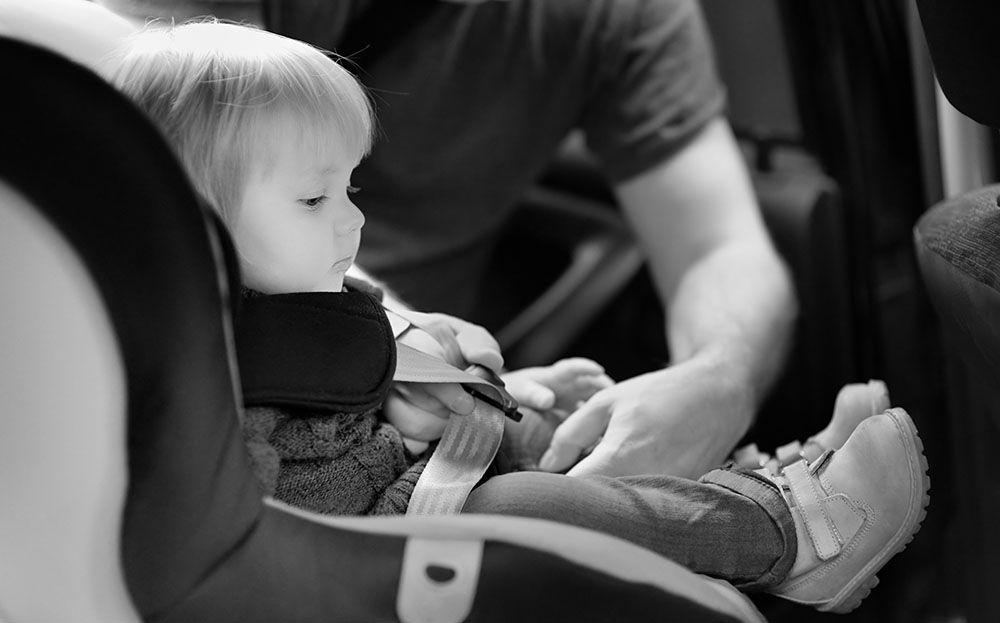
Car Seat Installation: A Complete Guide for Parents
Master car seat installation with our comprehensive guide. Learn LATCH vs. seat belt methods, common mistakes to avoid, and expert tips for secure installation every time.

Car Seat Laws by State: How to Find Yours, and Why the Lists Are Wrong
How to find your state's car seat law and read it properly, why the state-by-state lists in circulation are unreliable, and the three states wrongly listed as requiring rear-facing until age 2.