Affiliate Disclosure:Kid Sitting Safe is reader-supported. When you buy through links on our site, we may earn an affiliate commission at no additional cost to you. This does not influence our reviews or recommendations — we only recommend products we genuinely believe in.
Rideshare services like Uber and Lyft have transformed urban transportation, but traveling with children presents unique challenges. Unlike personal vehicles, rideshare cars don’t come equipped with car seats. This comprehensive guide explores your options for safely using Uber with kids, from bringing your own seat to using available services.
Understanding Uber Car Seat Options
Uber Car Seat Mode
Available In Limited Markets: As of September 2026, Uber list New York, Los Angeles, Orlando, San Francisco, Miami, Washington D.C. and Atlanta. That list has moved more than once, so check the app for your own city rather than trusting any published list, this one included.
The limited availability of Uber Car Seat reflects the logistical challenges of maintaining car seats across a fleet of independent drivers. Each seat must be properly installed, regularly cleaned, and meet safety standards. These operational costs explain why the service remains confined to high-demand urban markets where the volume justifies the investment.
What You Get:
- A Nuna RAVA convertible in most markets, an IMMI Go in Orlando and Washington D.C.
- In the RAVA, rear-facing 5-50 pounds or forward-facing 30-65 pounds, both to 49 inches
- In the IMMI Go, forward-facing only
- One seat per car, booked by reservation
- A $10 car seat surcharge
Whichever seat turns up, it travels with the vehicle rather than with your child, so you can’t verify its crash history or be sure it hasn’t been compromised. You also can’t inspect it before the car arrives. Uber put the responsibility for checking the fit and the installation on the parent, not the driver.
Limitations:
- Not available in most cities
- One seat per car, so no help for two children in seats
- Forward-facing only in the IMMI Go markets
- Must be reserved in advance
In the IMMI Go cities, the forward-facing-only restriction matters for families with younger toddlers. The American Academy of Pediatrics recommends extended rear-facing as long as possible, up to the highest weight or height the seat’s manufacturer allows. In those two markets, Uber Car Seat can’t offer the safest positioning for a young child, so families are choosing between convenience and that positioning. In the RAVA markets, the rear-facing option is there from 5 pounds.
Wait Times and Availability
When requesting an Uber Car Seat, expect longer wait times than standard rides. The limited number of equipped vehicles means you might wait 10-20 minutes or more, especially during peak hours. In some markets, Car Seat rides may be unavailable entirely during high-demand periods. Plan accordingly and request your ride well before you need to arrive at your destination.
Lyft Car Seat
Lyft run a Car seat mode too, but it’s thinner than Uber’s: Lyft’s own help pages list New York City as the only market. It uses the IMMI Go, carries the same $10 fee, and Lyft cap the child tighter than the seat itself does, at 22 to 48 pounds and 31 to 52 inches, with the seat not suitable for children under 2. Check the Lyft app for your area, since availability moves.
Both services require you to specify the car seat option when requesting your ride - you cannot add a car seat after a standard ride has been dispatched. This means last-minute changes aren’t possible if you arrive at your pickup location and realize you need a seat.
Bringing Your Own Car Seat
The Safest Option
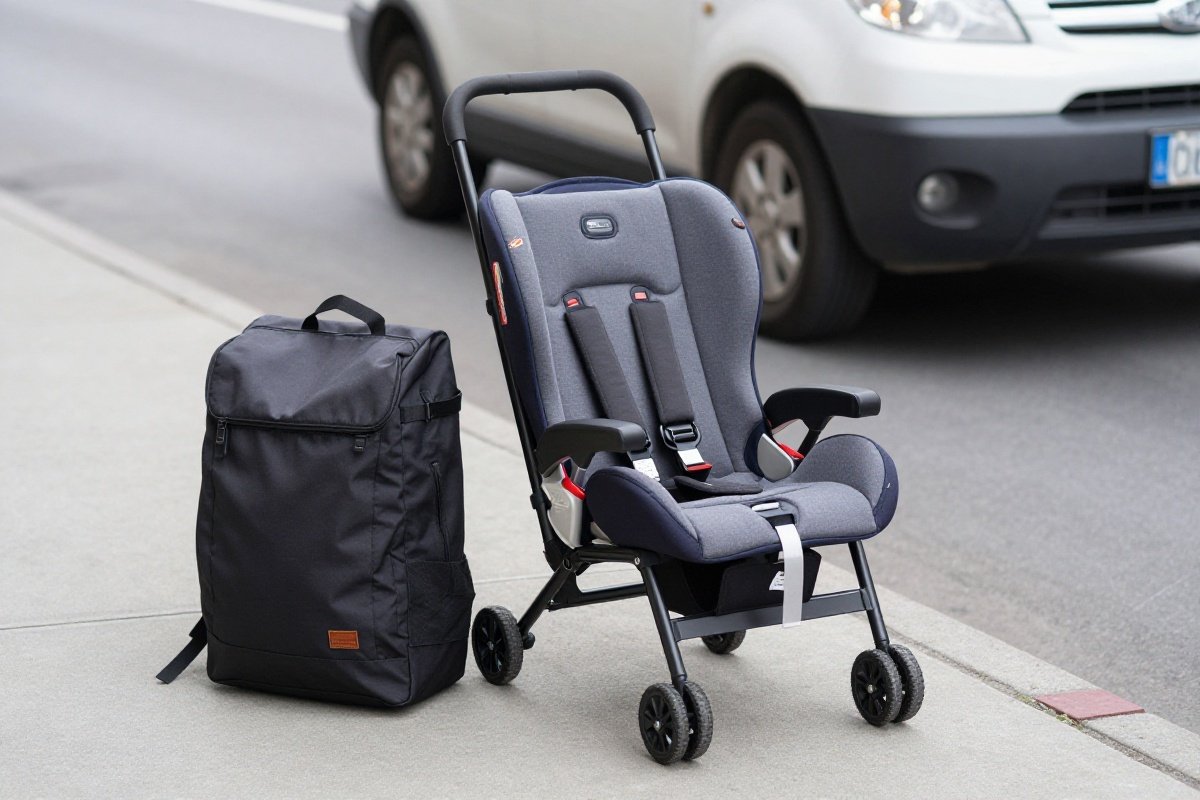
Bringing your own car seat ensures:
- Appropriate size for your child
- Familiar installation
- Known safety history
- Proper fit guarantee
Beyond these core advantages, using your own seat allows you to maintain the positioning and harness adjustment your child is accustomed to. Children are more likely to tolerate car rides when the environment feels familiar, reducing stress during travel. You also eliminate concerns about hygiene - your child sits in a seat you’ve cleaned rather than one used by dozens of other children.
Your own seat also accommodates your specific family needs. If your child has special requirements due to medical conditions or developmental considerations, your seat is already adjusted appropriately. For children who have outgrown rear-facing in most seats but still fit rear-facing in their extended rear-facing convertible, you can maintain that safer positioning.
Choosing the Right Travel Car Seat
The ideal travel car seat balances three factors: safety, portability, and ease of installation. Full-size convertible seats offer excellent safety but prove cumbersome for frequent rideshare use. Ultra-portable options sacrifice some features for convenience. The sweet spot typically lies with seats specifically designed for travel.
Weight Considerations: Seats under 10 pounds are easiest to carry through airports, up stairs, and between locations. However, even seats in the 10-15 pound range remain manageable for most adults when traveling. Consider how far you’ll typically carry the seat - gate-checking at airports versus carrying several city blocks affects the acceptable weight.
Installation Speed: In rideshare situations, you’ll install and uninstall frequently. Seats that thread belts through simple, clearly-marked paths save time and reduce stress. Complex LATCH installations work well in your own vehicle but prove impractical when you’re standing on a curb while a driver waits. The seat belt method works universally and, once mastered, installs in under 60 seconds.
Folding Capability: Some travel seats fold or collapse, making them easier to pack and carry. The Wayb Pico, for example, folds to roughly the size of a small backpack. Folding seats often cost more and may have slightly less robust frames, but the portability advantage can be significant for families who rideshare daily or travel frequently.
Best Travel Car Seats
| Seat | Weight | Value | Best For |
|---|---|---|---|
| Wayb Pico | 8 lbs | Premium | Frequent travelers |
| Safety 1st Grow and Go | 17.2 lbs | Budget | Budget all-in-one |
| IMMI Go | 10 lbs | Mid-Range | Rideshare specific |
| Nuna Pipa | 8 lbs | Premium | Infant travel |
The Wayb Pico represents the premium end of travel car seats. Its compact fold makes it airline carry-on compatible, and its construction meets all US safety standards despite the light weight. Parents who fly monthly or use rideshare multiple times weekly often find the investment worthwhile. Note that it’s forward-facing only, for children 22 to 50 pounds, so it picks up where a rear-facing seat leaves off rather than replacing one. Safety 1st’s Grow and Go proves that budget doesn’t mean unsafe. This versatile 3-in-1 seat meets all federal safety standards and installs easily. It lacks the compact portability of premium travel-specific options, but for families who need an affordable all-in-one seat for rideshare and everyday use, it delivers excellent value. Many families keep one as a dedicated backup seat, leaving their primary seat installed in their own vehicle.
Installation Tips
Seat Belt Method:
- Works in every vehicle
- No need to find LATCH anchors
- Practice at home first
- Quick installation once familiar
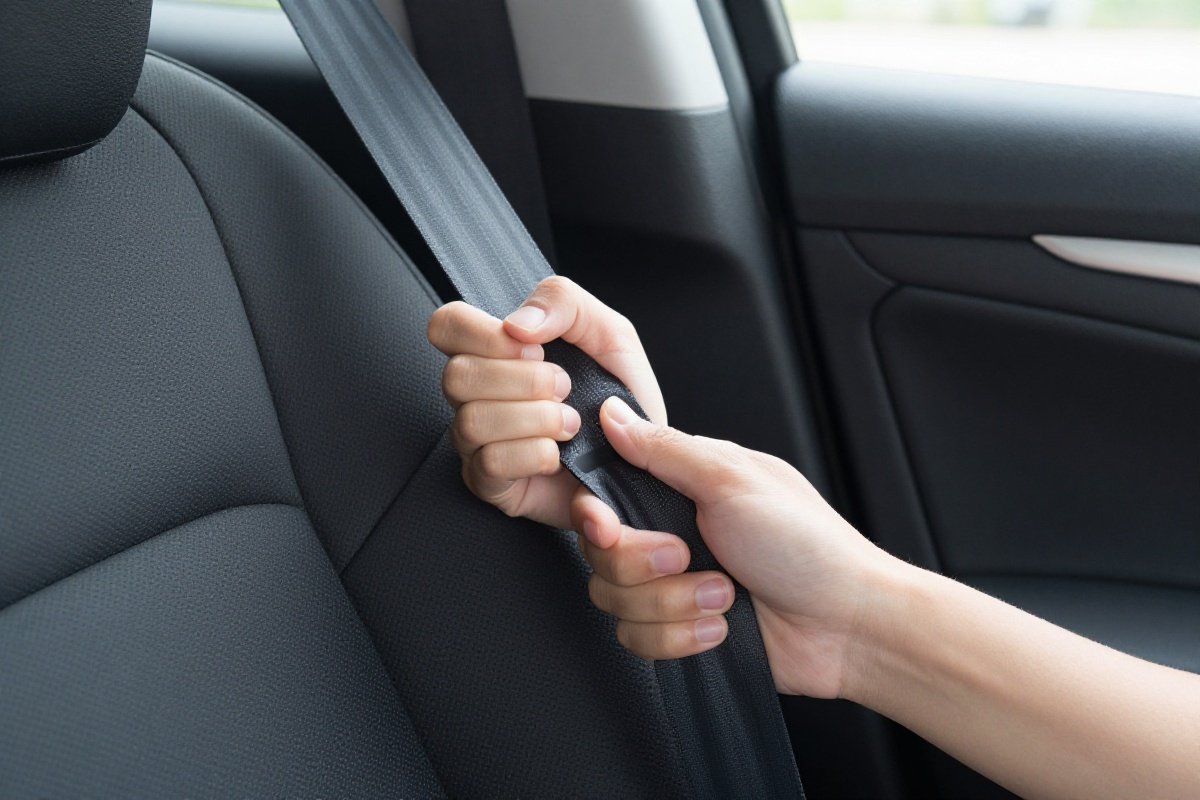
The seat belt method proves superior for rideshare use because LATCH anchors vary in location and accessibility between vehicle models. Some vehicles have deeply buried anchors that require significant time to locate and access. Seat belt installation, in contrast, works identically in virtually every vehicle manufactured in the past 30 years.
Step-by-Step:
- Thread belt through correct path
- Buckle and lock the belt
- Push down while tightening
- Verify less than 1 inch movement
Detailed Installation Process:
Place the car seat in the vehicle’s back seat, preferably in the center position if the seat belt allows. The center position offers the greatest protection in side-impact collisions, though not all vehicles have a center lap-and-shoulder belt suitable for car seat installation.
Thread the vehicle seat belt through the appropriate belt path. Convertible seats typically have different paths for rear-facing and forward-facing installation - double-check you’re using the correct path for your child’s current position. The belt path should be clearly marked with blue (rear-facing) or red (forward-facing) indicators or labels.
Buckle the seat belt and ensure it’s not twisted. Twisted belts reduce strength and may not lock properly. Pull the shoulder portion of the belt all the way out until it stops. This engages the locking mechanism in most vehicle seat belts. As you slowly release the belt, you’ll feel it lock into increments rather than sliding freely.
Press down firmly on the car seat with your body weight - place your knee on the seat and push down hard. While maintaining this pressure, pull the slack out of the seat belt. The goal is to compress the vehicle seat cushions so the car seat sits firmly against the vehicle seat back.
Test the installation by grasping the car seat at the belt path and attempting to move it side-to-side and front-to-back. Movement should be less than one inch in any direction. If the seat moves more than this, the installation is too loose - repeat the process, applying more downward pressure when tightening the belt.
Common Installation Mistakes:
Many parents don’t apply enough downward force when tightening. Don’t worry about damaging the vehicle seat - use significant body weight to compress the cushions. The car seat should feel rock-solid when properly installed.
Another frequent error is using the wrong belt path. Some convertible seats have three different belt paths (rear-facing lower position, rear-facing higher position, forward-facing). Using the wrong path compromises installation and may not properly secure the seat.
Ensure the chest clip sits at armpit level. While technically not part of installation, proper harness positioning is critical for safety. The harness should be snug enough that you cannot pinch any slack at the child’s shoulder.
Practice Makes Perfect
Install your travel car seat multiple times in your own vehicle before attempting it in a rideshare situation. Time yourself to build speed and confidence. Practice in different seating positions - left, right, and center - as you may need flexibility depending on the rideshare vehicle.
Consider practicing with a friend or partner watching to verify your installation. They can check for common mistakes you might miss. Some local fire stations or certified child passenger safety technicians offer free installation checks and can provide personalized guidance for your specific seat model.
Record a video of yourself performing a correct installation while at home. If you become confused during actual rideshare use, you can reference your own video rather than trying to decipher manual diagrams in a parking lot.
The IMMI Go: Rideshare Specific
What Is It?
The IMMI Go is a portable car seat specifically designed for rideshare and taxi use:
- Hybrid harness-to-booster design
- Forward-facing only
- Folds compactly
- Easy installation
The IMMI Go emerged specifically to address the rideshare car seat gap. Its design prioritizes quick installation and durability over features like rear-facing capability or extended harnessing. For families with children in the appropriate age range who frequently use rideshare services, the IMMI Go offers a purpose-built solution.
The hybrid design means the seat grows with your child. Younger children ride in five-point harness mode, while older children use it as a backless belt-positioning booster with the vehicle lap and shoulder belt. This extended usability justifies the investment for families who will use it regularly over several years.
Specifications
Straight from IMMI’s user guide:
- Harness mode: 22-65 pounds on the vehicle belt, 22-55 pounds on the lower anchors, 31-52 inches
- Booster mode: 40-100 pounds, 43-57 inches, 4 years and older, backless
- Age: IMMI’s own minimum is 1 year; Uber and Lyft set their floor at 2
- Installation: vehicle belt or lower anchors, and harness mode always needs the top tether
Watch the two numbers that don’t match. The harness runs to 65 pounds on a seat belt but only 55 on the lower anchors, so a heavier child has to be belt-installed. And IMMI are blunt about the tether: harness mode must use it, and if the vehicle has no tether anchor in that seating position, don’t use the restraint there at all. That’s a real problem in a rideshare, because you won’t know what the car has until it pulls up.
The weight range covers most preschool through early elementary children. But the 22-pound minimum means the seat won’t work for smaller toddlers who have outgrown infant seats and haven’t yet reached this threshold. These in-between children are a challenging group for rideshare travel, too big for infant seats and too small for the IMMI Go.
Belt installation is the practical default at the kerb anyway. Lower anchors sit in different places in every car and hunting for them wastes time while a driver waits, so most parents will thread the belt and skip them.
Availability
- Uber Car Seat cities
- Some taxi companies
- Purchase for personal use (check current price on Amazon)
Purchasing an IMMI Go for personal use makes sense for families who use rideshare frequently but can’t rely on Uber Car Seat availability. The seat is lightweight enough to carry but substantial enough to provide real protection. It folds to fit in a large bag or can be carried by its built-in handle.
Some forward-thinking taxi companies have begun equipping their fleets with IMMI Go seats, particularly in cities where family transportation is common. These services typically charge a per-ride car seat surcharge similar to Uber’s. Call ahead to verify availability rather than assuming a taxi will have a seat when it arrives.
Alternative Booster Solutions
BubbleBum Inflatable Booster
For children who have outgrown harnessed seats but still need boosters (typically ages 4-8, depending on size), the BubbleBum offers remarkable portability. This inflatable booster seat weighs just one pound and packs flat when deflated, easily fitting in a purse or small backpack. Advantages:
- Extremely portable
- Meets FMVSS 213 safety standards
- Kids enjoy the novelty
- Minimal carrying burden
Considerations:
- Requires inflation (30-60 seconds)
- Less robust than hard-shell boosters
- No side-impact wings
- Requires good vehicle seat belt geometry
The BubbleBum works best for planned trips where you know you’ll need a booster. The inflation time, while brief, makes it less ideal for quick, spontaneous rides. However, for parents who want to ensure their booster-age child always has appropriate positioning, the BubbleBum’s packability means you can carry it everywhere without burden.
RideSafer Travel Vest
Innovative Alternative
The RideSafer Travel Vest is a wearable child restraint:
- Folds to fit in a bag
- Quick to put on
- Kids often prefer it
- Meets FMVSS 213
The Travel Vest represents a fundamentally different approach to child restraint. Rather than sitting in a seat, children wear the vest over their clothing. The vest connects to the vehicle seat belt and distributes crash forces across the chest and pelvis, similar to how adult seat belts function with more appropriate geometry for children’s smaller frames.
Best For:
- Booster-age children (3+, 30+ pounds)
- Frequent travelers
- Multiple vehicle transitions
Limitations:
- No side impact protection
- Requires vehicle head support
- Not for younger children
The Travel Vest excels in scenarios involving multiple vehicle changes in a single day - perhaps several Uber rides, then a rental car, then another rideshare. Rather than installing and uninstalling a seat repeatedly, children simply wear the vest. This convenience particularly appeals to families traveling in cities where they’ll take multiple short trips.
Children often prefer the vest because it feels less restrictive than being buckled into a seat. They can see out windows more easily and feel more “grown up” than siblings in traditional car seats. This psychological acceptance means fewer battles about buckling up.
The vest’s lack of side-impact protection represents its primary safety compromise. Traditional car seats provide wings or padding that protect the head and torso during side collisions. The vest offers only the protection of the vehicle seat belt plus the improved positioning from the vest’s design. For short urban trips at lower speeds, many families accept this trade-off. For highway travel or longer distances, traditional seats offer better protection.
The head support requirement means the vehicle seat back must extend above the child’s head. This rules out some smaller vehicles or rear jump seats. Check the vehicle when entering to ensure adequate head support exists before relying on the vest.
Installation and Use
Put the vest on your child before entering the vehicle, adjusting the straps for a snug fit. Once in the vehicle, thread the seat belt through the vest’s designated openings and buckle normally. The vest should not be loose - adjust the vest straps so it fits snugly against your child’s torso.
Some Travel Vest models include a tether strap that connects to the vehicle’s LATCH anchors, providing additional upper-body restraint. While not required for compliance, this tether improves safety when available and time permits installation.
Airport Transportation
From Airport
Options:
- Family-friendly car services
- Rental car with your own seat
- Public transit (varies by city)
- Uber with your own seat
Airport arrivals with children and car seats require planning. Managing luggage, tired children, and car seat installation simultaneously challenges even experienced travelers. Consider these strategies for smoother transitions.
Airport-Specific Services: Some airports offer:
- Car seat rentals
- Family taxi services
- Shuttle buses with restraints
Major international airports increasingly recognize family travel needs. Specialized family car services in some cities maintain fleets with installed car seats. They cost more than standard rideshare and need booking ahead, but they take the installation out of an arrival where you’re already managing jet-lagged children and multiple bags. Availability varies by city, so check before you fly rather than on landing.
Car seat rental services at airports function similarly to stroller rentals. You reserve in advance, pick up the seat at a designated counter, and return it before departure. This option works well if you’ll have a rental car for your trip but don’t want to travel with your bulky home car seat. Verify the rental seats meet current safety standards and haven’t been in crashes.
Tips for Airport Rides
- Install seat while waiting for bags
- Have seat ready to grab quickly
- Consider lightweight travel seat
- Pre-book family-friendly services
Detailed Airport Strategy:
Before your flight, practice folding and carrying your travel car seat with your typical luggage load. Airport terminals require significant walking - ensure you can manage everything without becoming overwhelmed. Some families use a luggage cart specifically to transport car seats through terminals.
When landing, request your rideshare as you collect your luggage. This timing typically results in your driver arriving as you exit the terminal, minimizing wait time in pickup zones where standing is limited. However, be prepared to message your driver if you’re delayed - most will wait a few extra minutes if you communicate clearly.
Gate-check your car seat in a protective travel bag to prevent damage. Car seat travel bags are affordable and significantly reduce the risk of damage during handling. Some bags include backpack straps, transforming the seat into easier-to-carry luggage.
If using airport public transit, research restraint options in advance. Some airport trains have seats wide enough to accommodate car seats, while others prohibit their use due to space constraints. Buses may allow car seat installation if space permits, but crowded vehicles make this impractical.
Departing from Airport
When leaving the airport at your trip’s end, prioritize speed. Your child is likely tired, you’re managing multiple bags, and you want to reach the airport efficiently. This is when portable solutions like the Travel Vest or BubbleBum prove their value - minimal setup time means faster departures.
Pre-arrange your ride the night before if possible. Some premium car services allow advance booking with guaranteed car seat availability, eliminating last-minute scrambling. While more expensive than standard Uber, the stress reduction during already-hectic airport departures often justifies the cost.
Safety Considerations
Legal vs. Safe
The Reality:
- Taxis/rideshare often exempt from car seat laws
- Legal doesn’t mean safe
- Children equally vulnerable in all vehicles
The legal exemption for taxis and rideshare vehicles in many jurisdictions creates confusion. Parents sometimes interpret “legal” as meaning “safe enough.” In reality, the exemption exists for practical enforcement reasons, not because children are somehow safer in commercial vehicles.
Children’s bodies don’t distinguish between vehicle types. Their smaller size, developing bones, and proportionally larger heads create vulnerability in all vehicles. Understanding car seat types helps you choose the right restraint for any transportation scenario. The physics of a crash affect children identically whether in a personal vehicle, taxi, or Uber. The legal exemption reflects policy compromise between child safety ideals and practical transportation access, not a scientific determination that restraints are unnecessary in commercial vehicles.
Risk Assessment:
- Short urban trips vs. highway travel
- Age and size of child
- Availability of alternatives
- Your risk tolerance
Detailed Risk Evaluation:
Distance and speed significantly affect crash severity. A 2-mile, 25-mph urban trip presents measurably less risk than a 45-minute highway journey at 70 mph. While crashes can occur anywhere, highway speeds generate forces that require restraints to survive. Many parents comfortable taking short neighborhood rides without seats would never consider unrestrained highway travel.
Child age and size matter substantially. A 7-year-old weighing 60 pounds has better crash survivability unrestrained than a 2-year-old weighing 25 pounds. Larger children’s proportions more closely resemble adults, meaning adult seat belts function better, though still imperfectly. Smaller toddlers’ proportionally large heads and weaker necks make them especially vulnerable without proper restraint.
Consider realistic alternatives. In suburban areas with minimal public transit, rideshare may be your only practical option for specific trips. In cities with extensive train systems, perhaps you can use public transit instead. When safe alternatives exist, prioritize them. When they don’t, make the best decision you can within your constraints.
Your personal risk tolerance influences these decisions. Some parents never allow unrestrained travel regardless of circumstance. Others accept calculated risks for specific scenarios. Neither approach is objectively wrong - you’re weighing probability and severity to make informed choices for your family. Understanding the actual risks rather than operating on assumptions allows for better decisions.
Best Practices
Always:
- Use appropriate restraint when possible
- Bring your own seat for regular use
- Communicate with drivers about seats
- Practice installation for speed
Driver communication prevents surprises. When requesting a ride, message the driver: “I have a car seat I’ll install, will take 2 minutes.” Most drivers appreciate the heads-up and will wait patiently when forewarned. Surprising them with an unexpected delay creates tension and rush.
Some drivers worry that car seat installation will damage their vehicles. Reassure them that you’re experienced and will not harm anything. Offer to install in whichever position they prefer, though the center rear is safest when possible.
If you’re traveling to an area you’ll visit regularly, invest in a dedicated travel seat rather than repeatedly renting or going without. The upfront cost quickly pays for itself in convenience and safety. Many families keep a travel seat even if they don’t own a car, specifically for rideshare use.
When You Must Ride Without:
- Hold child securely (not recommended but reality)
- Choose back seat
- Use seat belt for older children
- Minimize travel distance
Emergency Unrestrained Travel Protocol:
If circumstances force you to travel without proper restraint, treat it as the emergency measure it is. In the back seat, sit in the center if possible - this position is farthest from impact zones in side collisions. Hold smaller children securely on your lap, not side-by-side on the seat where they could become projectiles.
For children large enough to use seat belts, ensure proper positioning. The lap belt should lie across the upper thighs, not the stomach. The shoulder belt should cross the chest and shoulder, not the neck or face. If the shoulder belt crosses the child’s neck, they’re too small to safely use the adult belt, though this remains better than riding completely unrestrained.
Ask the driver to take the safest route, not the fastest. Highways, while quicker, involve higher speeds and therefore higher risk. Request surface streets when practical. Drive defensively - this is no time for aggressive driving.
Keep the trip as short as possible. If you’re choosing between a 45-minute ride to your destination and a 15-minute ride to a friend’s house where you can borrow a car seat, choose the shorter unrestrained segment.
International Travel
Different Standards
Europe:
- ISOFix (similar to LATCH)
- i-Size regulations
- More portable seat options
European car seat regulations differ substantially from US standards, but the anchor hardware is closer than you’d think. ISOFIX uses the same lower anchor bars LATCH does, and manufacturers say so: Diono’s Radian 3RXT manual tells owners the LATCH strap “can also be used in vehicle seating positions that are equipped with ISOFIX”. What stops you abroad is approval, not the connectors.
i-Size represents Europe’s newer regulation system, categorizing seats by child height rather than weight. This approach more accurately matches children to appropriate seats, but it means US-purchased seats approved under FMVSS 213 may not comply with European regulations even if they’d provide equivalent safety.
European countries typically enforce car seat requirements more strictly than the US, including in taxis. Rideshare vehicles in cities like London, Paris, and Berlin usually don’t provide seats but require children to use them. This means you must bring your own seat, use taxi-provided options (where available), or face legal consequences.
European car seat designs often prioritize portability differently than US models. The prevalence of smaller vehicles and frequent vehicle changes has driven development of compact seats that still meet stringent safety standards. Some European families consider these more convenient than US equivalents.
Asia:
- Varies widely by country
- Some have limited requirements
- Bring your own seat recommended
Asia’s car seat landscape spans from highly regulated (Japan, South Korea, Singapore) to essentially unregulated (many developing nations). Research specific to your destination country is essential - don’t assume regional norms apply universally.
In heavily regulated Asian markets, requirements often mirror European standards more than US ones. This means your US-purchased seat may not legally comply, even if it provides adequate safety. Some countries require seats to carry specific local certification marks.
In countries with minimal car seat requirements, rideshare drivers may seem confused by car seat requests. Cultural norms often include children riding unrestrained or held on laps. Don’t interpret this acceptance as meaning it’s safe - it reflects different risk assessments and regulations, not physics.
Australia:
- Strict standards different from US
- May need Australian-approved seat
Australia maintains particularly strict car seat requirements with standards that differ from both US and European regulations. US-purchased seats typically don’t carry Australian approval marks and therefore can’t legally be used, even for visitors. This creates genuine challenges for traveling families.
Options for Australia include purchasing or renting an Australian-approved seat upon arrival, though this involves significant expense. Some families shipping household goods include an Australian-standard seat in their shipment. Short-term visitors face difficult choices - violate local law with a US seat, rent locally, or significantly limit mobility.
Research Before You Go
- Local car seat laws
- Rideshare availability
- Rental car seat options
- Public transit safety
Create a comprehensive transportation plan before international travel with children. Your US assumptions about rideshare availability and regulations won’t necessarily apply abroad.
Rideshare availability varies tremendously. Uber and Lyft operate in many international cities but with different service options. The US Uber Car Seat service doesn’t exist in most international markets. Other countries have local rideshare services that may or may not provide child restraint options.
Research rental car seat availability and quality in your destination country. Rental car seats internationally range from current-standard equipment to seats that would be considered expired or unsafe in the US. Some families bring their own seats internationally despite the hassle, knowing they’ll have safe, familiar equipment.
Public transit safety considerations differ from US systems. Some countries’ trains and buses include restraint requirements for children, while others don’t. Metro systems may prohibit bulky items like car seats during peak hours, affecting your ability to transport a seat between locations.
Join international family travel forums specific to your destination. Parents who’ve recently traveled there can provide current, practical advice about managing car seat challenges in that specific location. Their real-world experience proves more valuable than official tourism information.
Cost Considerations
Uber Car Seat Pricing
- Base ride fare + car seat surcharge
- Comparable to regular UberX in many markets
- Worth the cost for convenience
The car seat surcharge can represent a significant portion of the base fare for short rides. However, when you factor in the hassle savings - no carrying, no installation, no gate-checking - many families find the premium worthwhile for occasional use.
Compare the total cost including time value. If struggling with car seat installation adds 10 minutes to each trip, and your time has any value, the convenience surcharge becomes more attractive. For vacation travel when you’re relaxed and not rushed, perhaps the installation time doesn’t matter. During business travel when you’re racing to meetings, the time savings justify the cost.
The limited availability in most markets means Uber Car Seat isn’t a realistic regular solution for most families. Where available, it works well for occasional trips or as a backup when you’ve forgotten your portable seat.
Bringing Your Own Costs
Travel Seat Investment:
- Budget option: Safety 1st Grow and Go
- Mid-range: Various options available
- Premium: Wayb Pico
Break-Even Analysis: If you use rideshare weekly, a dedicated travel seat pays for itself vs. Uber Car Seat surcharges relatively quickly.
The math becomes more compelling with frequent use. Daily rideshare users break even on even premium travel seats within months. A budget-priced option like the Safety 1st Grow and Go pays for itself in just a few Uber Car Seat rides.
Factor in versatility. A travel car seat functions in rideshare, rental cars, taxis, friend/grandparent vehicles, and as a backup in your own vehicle. This multi-purpose functionality increases value beyond pure rideshare economics.
Consider resale value. Quality travel seats retain significant value on secondhand markets. A well-maintained Wayb Pico retains strong resale value, meaning your net cost after your child outgrows it is significantly reduced. Budget seats have minimal resale value but also minimal initial investment.
Extended family might share costs. If grandparents frequently transport your child but don’t have car seats, suggesting they purchase a travel seat for their use solves their safety concerns while giving you a backup option when visiting.
Hidden Costs
Factor in carrying solutions when budgeting. A car seat backpack or travel bag is a modest investment that significantly improves portability. Some families purchase a small luggage cart specifically for car seat transport in airports and cities.
Replacement costs matter for frequently-traveled seats. TSA handling, repeated installation, and general wear-and-tear mean travel seats may need replacement sooner than primary vehicle seats. Budget seats handle this through low replacement cost; premium seats through more durable construction.
Protection during flight travel requires either a car seat travel bag or risking damage during gate check. Multiple damaged car seats become expensive quickly - the protective bag pays for itself by preventing even one replacement.
Further Reading
- Travelling with Kids: Practical Tips for Stress-Free Family Trips
- Flying with a Car Seat: FAA-Approved Seats & Essential Tips for 2026
- Benefits of a Load Leg Car Seat: Enhanced Safety Explained
Real-World Scenarios and Solutions
Scenario 1: Daily Commute with Toddler
Situation: Parent commutes to work via Uber daily with a 3-year-old who attends daycare.
Best Solution: Purchase a portable travel seat (Wayb Pico) to keep at daycare. Each morning, quickly install in Uber for the ride to daycare, then leave the seat there. At pickup, reinstall for the return trip. At just 8 pounds and foldable, it’s ideal for daily rideshare use.
Alternative: If the child is large enough (40+ pounds), use a BubbleBum inflatable booster that packs in your work bag. Less protection than a full seat, but maximum portability for twice-daily installations.
Scenario 2: Weekend City Trips
Situation: Family living in suburbs occasionally visits the city on weekends for museums, restaurants, and activities. Parking is expensive and difficult, making rideshare preferable.
Best Solution: Invest in a portable seat for each child at their appropriate level (rear-facing convertible for younger, IMMI Go or Travel Vest for older). The occasional use doesn’t justify premium seats - mid-range options work well. Keep seats in the trunk of your car so they’re always available when you drive to the city and then use rideshare.
Alternative: For older children, Travel Vests offer supreme portability for multiple stops. If you’ll take four different Uber rides during a day of activities, the vest eliminates repeated installation hassles.
Scenario 3: Airport Travel for Vacation
Situation: Family flying to vacation destination and needing car seat for rental car at destination, plus airport transportation on both ends.
Best Solution: If you’ll have a rental car at your destination, bring your regular car seat. Gate-check it in a protective travel bag. Use it in the Uber to the airport (install before requesting ride to save time). Upon landing, use it in the rental car throughout the trip. Use it again for the Uber home.
Alternative: For destinations where you won’t have a car, consider leaving home car seats behind and renting at your destination for any needed rides. Bring a Travel Vest or BubbleBum for older children since these pack easily in luggage and work for any occasional rides.
Scenario 4: Emergency Medical Appointments
Situation: Child needs urgent transport to medical facility, and parent’s vehicle is unavailable (in shop, other parent has it, etc.).
Best Solution: Keep a lightweight backup seat at home always, even if it’s not your primary seat. A budget-friendly option like the Safety 1st Grow and Go works well as a dedicated backup. In emergencies, quickly install in Uber. The modest investment provides peace of mind for exactly these situations.
Alternative: If you don’t have a backup seat and can’t wait for delivery, request a neighbor or friend to borrow their seat. Most parents understand emergencies and will help. Return with a thorough cleaning and heartfelt thanks.
Scenario 5: Visiting Grandparents
Situation: Grandparents without car seats regularly drive child places during visits.
Best Solution: Grandparents purchase a budget-friendly seat (Safety 1st Grow and Go) to keep in their vehicle. The minimal cost is worthwhile for safety and eliminates the hassle of transferring seats from parents’ vehicles during visits.
Alternative: Parents bring a travel seat during visits and install it in grandparents’ vehicle for the duration. This ensures the seat meets the parents’ standards but requires transportation and installation effort.
Recommended Products
Wayb Pico
Best travel car seatPremium travel seat for frequent rideshare users.
What We Like
- Folds compact to 16 x 13 x 9 inches for travel
- FAA approved for aircraft use
- 5-point harness accommodates children 22-50 lbs
- Lightweight at 8 pounds for easy portability
What We Don't
- Premium pricing for a folding travel harness seat
- Minimal padding compared to full-size car seats
- Forward-facing only, not suitable for younger toddlers under 22 lbs
Safety 1st Grow and Go
Best budget travel seatAffordable backup seat for travel and rideshare.
What We Like
- Budget-friendly price without sacrificing safety standards
- QuickFit harness for easy height adjustments without rethreading
- Machine washable and dryer safe seat pad
- 10-year usable life span
What We Don't
- Bulkier than premium models
- Lower weight limits in each mode compared to competitors
RideSafer Gen 5 Travel Vest, Small
Best booster alternativeCompact alternative to booster seats.
What We Like
- Ultra-compact design fits in diaper bag
- Simple to install and use
- Children find it comfortable and less restrictive
- FMVSS 213 certified for safety
What We Don't
- Only suitable for children in booster seat age/size range
- Does not provide side impact protection like traditional car seats
BubbleBum Inflatable Booster
Best portable boosterUltra-portable booster for older kids.
What We Like
- Inflates and deflates for ultra-compact packing
- Weighs only 1 pound making it ideal for travel
- FAA-approved for aircraft use
- Fits in carry-on bags and backpacks
What We Don't
- Booster-only design requires child to be 40+ pounds minimum
- Less structured support than rigid boosters
- May require reinflation during extended use
Sources & Research
Continue Reading
Explore more travel content or browse our other categories.
Frequently Asked Questions
- Does Uber provide car seats?
- Uber offers an "Uber Car Seat" option in a handful of markets. As of September 2026 Uber list New York, Los Angeles, Orlando, San Francisco, Miami, Washington D.C. and Atlanta, and the app is the only reliable check for your own city. Most of those markets now use a Nuna RAVA convertible, which Uber rate rear-facing for 5-50 pounds and forward-facing for 30-65 pounds, both up to 49 inches. Orlando and Washington D.C. still use the IMMI Go, which is a forward-facing harness-to-booster seat and so no help to a baby or a young toddler who should still be rear-facing. There's a $10 car seat surcharge, rides are by reservation, and there's one seat per car. In cities without the option, standard Uber and UberX vehicles don't provide car seats. Drivers are independent contractors and don't keep car seats in their vehicles. If you need a car seat you must bring your own, use the Car Seat option where available, or arrange other transport. Lyft run a similar "Car seat mode", currently in New York City only, using the IMMI Go for the same $10 fee. Always verify availability in your specific city before relying on either service.
- Can I bring my own car seat for Uber?
- Yes, you can and should bring your own car seat for Uber rides when traveling with children who require them. This is the safest and most reliable option. Most Uber drivers will accommodate car seats, though you should inform them in advance through the app or a quick text that you're traveling with a car seat. Tips for bringing your own car seat: Choose a lightweight, travel-friendly seat that's easier to carry and install quickly. Inform the driver you're bringing a seat when they accept the ride. Be prepared to install it yourself; drivers aren't required to install a passenger's seat and most won't. Know how to install with a seat belt since you won't know if the vehicle has LATCH. Practice installation at home so you can do it quickly on the street. Have a bag to carry the seat if needed. Consider travel-specific seats like the Wayb Pico or IMMI Go that are designed for portability. Remember that Uber drivers can cancel rides if they feel unprepared for car seat installation, so clear communication is important. Bringing your own seat ensures your child has an appropriate, properly fitted restraint that you know how to install correctly.
- What is the best car seat for Uber and travel?
- The best car seat for Uber and travel balances portability, ease of installation, and safety. Top recommendations include: The Wayb Pico is the premium choice - weighing only 8 pounds, folding compactly, and FAA approved for airplanes. It uses a 5-point harness up to 50 pounds but is premium-priced. The The Safety 1st Grow and Go is a budget-friendly 3-in-1 option that's FAA approved and meets all safety standards, though it's heavier than premium travel seats. The IMMI Go is designed specifically for rideshare - it's what Uber uses in their Car Seat cities. It's a portable harness-to-booster that's relatively easy to install but only forward-facing. The RideSafer Travel Vest is a unique option for booster-age kids (30+ pounds, 3+ years) - it's wearable, packs tiny, and meets FMVSS 213, though it offers less protection than a traditional seat. The BubbleBum Inflatable Booster is great for older kids (40+ pounds, 4+ years) - it inflates for use and deflates to fit in a bag. For infants, the Nuna Pipa series is lightweight at 7-8 pounds with a load leg and rigid LATCH, making it easier to install quickly. Choose based on your child's age, weight, and how frequently you use rideshare.
- How do I install a car seat in an Uber?
- Installing a car seat in an Uber requires preparation and efficiency since you're working on the street with a waiting driver. Follow these steps: First, choose a seat belt installation - most drivers won't know their LATCH locations, and seat belts work in every vehicle. Before the car arrives, have your seat ready with harness adjusted for your child. When the car arrives, greet the driver and confirm they're okay with the car seat installation - most are, but some may cancel. Place the seat in the back seat. Thread the vehicle seat belt through the correct belt path on your car seat. Buckle the seat belt. Lock the seat belt by pulling it all the way out until it clicks, then feeding it back in slowly - this engages the locking mechanism. Push down on the car seat with your body weight while pulling the shoulder belt tight. Check for tightness - the seat shouldn't move more than 1 inch at the belt path. Secure your child in the seat. Thank the driver for their patience. Practice this process at home with your own vehicle's seat belt so you can do it quickly and confidently. Most installations take 2-3 minutes once you're practiced. Always verify the seat is tight before closing the door.
- Are taxis required to have car seats?
- Taxis are generally exempt from car seat requirements in most US jurisdictions, though laws vary by state and city. This exemption exists because taxi drivers cannot maintain multiple seats for different age children, and requiring car seats would effectively prevent families with young children from using taxi services. However, exemption from legal requirement doesn't mean riding without a car seat is safe. Children are just as vulnerable in taxi crashes as in private vehicle crashes. For infants and young children, bringing your own car seat or using a rideshare service with car seat options (where available) is the safest approach. Some cities have specific regulations: New York City requires taxis to allow parents to install their own car seats and prohibits drivers from refusing rides to passengers with car seats. In London, black cabs are exempt from child seat requirements but some services like Uber offer family options. When traveling internationally, research local laws as requirements vary significantly by country. Even where car seats aren't legally required in taxis, using one is always safer. For short urban trips with older children (school age), some parents accept the risk of riding without a booster, though this is a personal risk assessment decision. The safest choice for all children is using an appropriate restraint regardless of vehicle type.
Written By
Kid Sitting Safe
Our team researches car seat safety standards, crash test data, and real-world usability to help parents make the safest choice.
Related Articles
Flying with a Car Seat: FAA-Approved Seats & Essential Tips for 2026
Essential guide to flying with car seats. Learn FAA-approved options, installation on airplanes, gate-checking tips, and traveling with children safely by air.
Best Travel Car Seats 2026: Lightweight and FAA-Approved
We compared the best travel car seats of 2026 for flying, taxis, and road trips. Compare lightweight, FAA-approved options that keep your child safe away from home.

Travelling with Kids: Practical Tips for Stress-Free Family Trips
Essential travel tips for families with kids. Learn packing strategies, airport navigation, in-flight entertainment, and destination preparation for smooth vacations.