Affiliate Disclosure:Kid Sitting Safe is reader-supported. When you buy through links on our site, we may earn an affiliate commission at no additional cost to you. This does not influence our reviews or recommendations — we only recommend products we genuinely believe in.
Short answer: age 13. The American Academy of Pediatrics recommends that every child younger than 13 ride in the back seat, a position it reaffirmed in February 2025. It isn’t a judgement about your child’s height or maturity. It’s about front airbags, which are calibrated for adult bodies, and about the back seat sitting further from the impact in the crash type that does the most damage.
Most state laws will let you move a child forward sooner, often at 8, and several set no age at all. Those are legal minimums rather than safety advice, and the distance between the two is what this guide is about.
| Recommended minimum age | 13, per the AAP |
| Typical legal minimum | Age 8 in many states, no age restriction in several |
| Height for adult belt fit | 4’9” (57 inches) |
| Safest position in the car | Rear center, when the belt fits correctly |
| Does switching the airbag off make it safe? | No. It removes one risk out of several |
Moving to the front seat is a milestone children push for, and both the American Academy of Pediatrics and NHTSA hold the same line on it: the back seat is the safest place for a child through age 12. What follows is where that comes from. What the crash data actually shows, why front airbags and children’s bodies are a poor match, how far state law sits below the evidence, and what to do when a vehicle leaves you no back seat at all.
The Age 13 Recommendation
AAP Guidelines
The American Academy of Pediatrics explicitly recommends:
“All children younger than 13 years should be restrained in the rear seats of vehicles for optimal protection.”
This isn’t arbitrary - it’s based on decades of crash data and injury research. The AAP reviews and updates their recommendations regularly based on emerging safety data, crash test results, and field studies of real-world injuries. Their current position represents the strongest evidence-based guidance available to families.
The recommendation applies regardless of your child’s height, maturity level, or how safely they claim they’ll sit. Even children who have outgrown booster seats and use adult seat belts correctly benefit significantly from rear seat positioning through their early teen years.
Why 13?
By age 13, most children have:
- Skeletal maturity to withstand crash forces
- Adult-like body proportions
- Height for proper seat belt fit
- Better impulse control for safe positioning
Developmental Considerations:
The age 13 threshold accounts for multiple developmental factors beyond simple height. Skeletal development continues through puberty, with bone density and structural integrity reaching adult-like characteristics in early adolescence. Before this maturation, children’s bones are more susceptible to fracture and compression injuries during crashes.
Body proportions also matter significantly. Younger children have proportionally larger heads relative to their bodies, creating different crash dynamics than adults experience. Their centers of gravity differ, affecting how forces distribute through their bodies during impact. By age 13, most children have achieved body proportions closer to adult ratios, making adult-designed safety systems more effective.
Crash Data Analysis:
A 2009 analysis in Traffic Injury Prevention examined 16,920 children in 10,670 crashes, restricted to 1998-and-newer vehicles with advanced frontal airbags. After adjusting for crash, vehicle and child factors, children aged 0-8 riding in the rear were 64% less likely to be injured than those in front (relative risk 0.36), and children aged 9-12 were 31% less likely (relative risk 0.69). The authors’ own summary is that children in the rear rows were “one half to two thirds as likely to sustain injury” as those in front.
That protection holds even when the child is properly belted. The rear seat provides distance from the dashboard, steering wheel and windshield, all common sources of injury in frontal crashes.
Studies of serious and fatal injuries consistently demonstrate that rear-seated children experience better outcomes across all crash types. While frontal crashes pose the most obvious front seat risks, side-impact crashes and rear-end collisions also demonstrate safety advantages for rear-positioned occupants in the 5-12 age range.
Front Seat Dangers
Airbag Risks
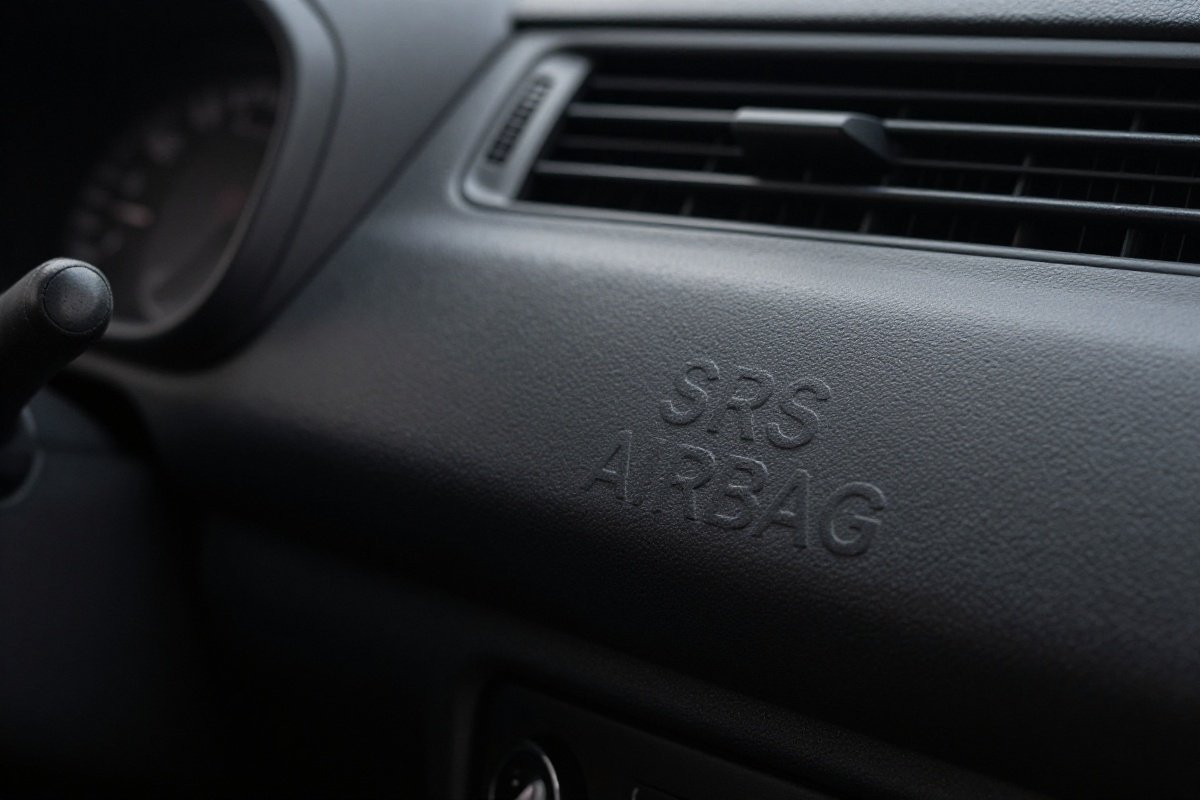
Deployment Force:
- Inflate in a fraction of a second, with enough energy to injure anyone sitting close to the module
- Designed for adult chest height
- Can kill children positioned too close
Front airbags save adult lives, but they’re engineered specifically for adult body proportions and positioning. The deployment force that safely cushions an adult’s chest can deliver catastrophic impact to a child’s head, neck, or upper chest. Even modern “depowered” airbags, introduced after early-generation airbags caused numerous child fatalities, deploy with sufficient force to injure children seriously.
NHTSA Statistics:
NHTSA’s Special Crash Investigations programme counted 180 confirmed child fatalities from frontal airbag deployment through 1 January 2008, out of 284 confirmed deployment deaths across all ages. Twenty-eight of those 180 children were in rear-facing child safety seats; the other 152 weren’t. Most of those killed were unbelted or improperly restrained, and sitting close to the module when it fired.
In frontal crashes, front airbags reduce driver fatalities by 29% and fatalities of front-seat passengers age 13 and older by 32%, per the IIHS citing NHTSA’s 2015 evaluation. Airbag designs are far safer for children now than the first generation was, but the mismatch between a child’s body and a system calibrated for adults hasn’t gone away.
Proximity Problems:
The most dangerous scenario involves children sitting within the airbag deployment zone - typically within 10 inches of the steering wheel or dashboard. Children often sit closer than adults because they’re shorter and may slide forward in seats. They also lack the understanding to maintain safe positioning throughout a trip, potentially leaning forward to adjust the radio or look at something just before a crash occurs.
When an airbag deploys, it needs space to inflate fully before contacting the occupant. An occupant too close to the airbag module receives the full deployment force before the bag inflates completely, resulting in violent impact rather than cushioning deceleration. Children’s shorter stature places their heads and upper bodies precisely where this dangerous early deployment phase occurs.
Crash Physics
Frontal Collisions:
- Most common crash type
- Most severe forces
- Front seat closer to impact
- Less protection than rear seat
Frontal impacts accounted for 59% of passenger vehicle occupant deaths in 2024, per IIHS analysis of federal crash data. The front seat occupant position places children significantly closer to the initial impact point, reducing the time and distance available for deceleration. In rear seats, children benefit from the vehicle structure in front of them absorbing crash energy before forces reach their position.
Crumple Zone Protection:
Modern vehicles employ crumple zones - engineered areas designed to deform and absorb crash energy. These zones function most effectively when occupants are positioned farther from the impact point. Rear seat passengers benefit from multiple crumple zones and structural elements between them and the collision, while front seat passengers have minimal protection distance.
In frontal offset crashes (where one front corner impacts an object), the front passenger side often experiences more severe intrusion than the driver’s side in some vehicle designs. Children in the front passenger seat may be positioned directly in the path of maximum vehicle deformation.
Injury Data:
Children in front seats suffer more severe injuries than those in rear seats, even with proper restraints. Studies examining matched crashes - similar vehicles, crash severity, and child restraint use - consistently show worse outcomes for front-seated children. Injury types differ too, with front-seated children experiencing more head, neck, and chest injuries, while rear-seated children more commonly sustain extremity injuries with better overall outcomes.
The Insurance Institute for Highway Safety sizes that advantage up as a fatal injury risk cut of “about three-quarters for children up to age 3, and almost half for children ages 4 to 8” when children ride in rear seats rather than front ones. So the front seat should be the last resort for child positioning in any vehicle configuration.
State Laws vs. Safety
Variation by State
Rather than summarise fifty sets of rules badly here, our car seat laws by state guide explains how to look your own state up and read it properly, and why the state-by-state lists in circulation, ours included, turned out not to be reliable. The short version on front seats: state minimums vary a lot, several states set no age restriction at all, and the AAP’s recommendation of 13 sits above nearly all of them.
State laws regarding front seat positioning vary dramatically, creating confusion for families who travel across state lines or relocate. Some states address only car seat and booster requirements without specifying seating position. Others establish minimum ages for front seat riding but set those minimums well below safety recommendations.
Understanding Legal Minimums:
State legislatures balance multiple factors when establishing child passenger safety laws, including enforcement practicality, public acceptance, and political considerations. The result is often laws that represent compromise positions rather than optimal safety practices. Legal compliance should be viewed as the absolute minimum standard, not the goal for safety-conscious families.
Legal vs. Safe
State laws set minimums, not optimal safety. Even where legal, front seat riding before age 13 increases risk.
Best Practice: Follow AAP recommendations regardless of state law.
Consider the parallel with motorcycle helmet laws - some states don’t require them, but their safety value remains regardless of legal requirements. Similarly, just because a state permits 8-year-olds in the front seat doesn’t make it safe. The physics of crashes and child vulnerability don’t change at state borders.
Law Enforcement and Liability:
Police officers enforce state laws, not medical recommendations. You won’t receive a citation for seating your 10-year-old in the front seat where state law permits it. However, in the event of a crash resulting in injury, insurance companies and civil courts may consider whether you followed published safety guidelines when determining liability and settlements.
Medical providers, safety advocates, and law enforcement officers consistently emphasize that the back seat remains safer for children under 13, even where laws don’t require it. Many police departments and fire departments provide free car seat inspections and safety education that reinforce AAP recommendations beyond legal requirements.
Legislative Trends:
More states are strengthening child passenger safety laws as research evidence accumulates. Several states have recently increased age requirements or added height/weight criteria to their statutes. However, the legislative process moves slowly, and current laws may not reflect the most recent safety research. Families should seek current recommendations from pediatricians and certified child passenger safety technicians rather than relying solely on state law.
When Front Seat Is Unavoidable
Single-Cab Trucks
If No Back Seat Exists:
- Use age-appropriate car seat or booster
- Push vehicle seat back as far as possible
- Deactivate airbag if vehicle allows
- Ensure child sits upright, back against seat
- Verify proper seat belt or harness fit
Single-cab pickup trucks and certain sports cars present unique challenges - they simply lack rear seating. For families who must transport children in these vehicles, risk mitigation becomes critical. However, families should seriously consider whether owning only a single-cab vehicle is appropriate when they have children under 13.
Airbag Deactivation:
Many modern trucks include a passenger airbag deactivation switch specifically to address the single-cab scenario. Airbags are governed by FMVSS 208, the occupant crash protection standard, rather than by the child restraint standard, and factory-fitted on-off switches are permitted for exactly this case. Check your owner’s manual for the procedure, which usually means a key-operated switch in the dashboard or glove compartment.
If your vehicle has no factory switch, there is a legal route but it isn’t a trip to the parts shop. Under 49 CFR Part 595, you petition NHTSA for authorization, and if it’s granted a dealer or repair business may fit a retrofit on-off switch.
Never disable an airbag yourself by cutting or disconnecting wiring. That can create electrical faults, trigger warning lights, and leave the airbag inert for an adult who later sits in that seat. It also risks violating federal law and may affect insurance coverage.
Positioning Strategies:
Maximum distance from the dashboard is crucial. Slide the seat fully rearward and ensure the child cannot reach or lean toward the dashboard during the trip. Some trucks offer limited seat travel, creating unavoidable risk that should factor into vehicle choice decisions for families.
Legal Requirements:
Some states require airbag deactivation; others require physician approval for front seat riding. Check specific state requirements through your state’s transportation department or DMV website. A few states mandate special documentation or medical exemptions for front seat transportation of children under certain ages, even in single-cab vehicles.
Consider also that “no rear seat” doesn’t always mean transportation is necessary in that specific vehicle. Families often have multiple vehicles or access to alternatives. The marginal convenience of using a single-cab truck versus a safer vehicle option is rarely worth the increased risk to a child.
Emergency Situations
True emergencies (medical transport, etc.) may require front seat use. Take all possible precautions and return to back seat as soon as possible.
Defining True Emergencies:
An emergency means an immediate, unplanned situation where no safer alternative exists and transportation cannot be delayed. This might include rushing an injured child to an emergency room when an ambulance isn’t available, or evacuating during a natural disaster when only one vehicle is accessible.
Not Emergencies:
Running late, vehicle preference, child complaints about the back seat, or simply finding front seat placement more convenient don’t constitute emergencies warranting exception to safety guidelines. Many parents rationalize risky decisions as “necessary” when safer alternatives exist with minor inconvenience.
Emergency Positioning:
If true emergency front seat use is unavoidable:
- Position the seat as far back as possible
- Use appropriate restraints (car seat, booster, or seat belt based on age/size)
- Instruct the child to sit fully back against the seat
- Avoid high-speed travel when possible
- Return to proper rear seat positioning immediately when the emergency resolves
The 4’9” Height Guideline
Proper Seat Belt Fit
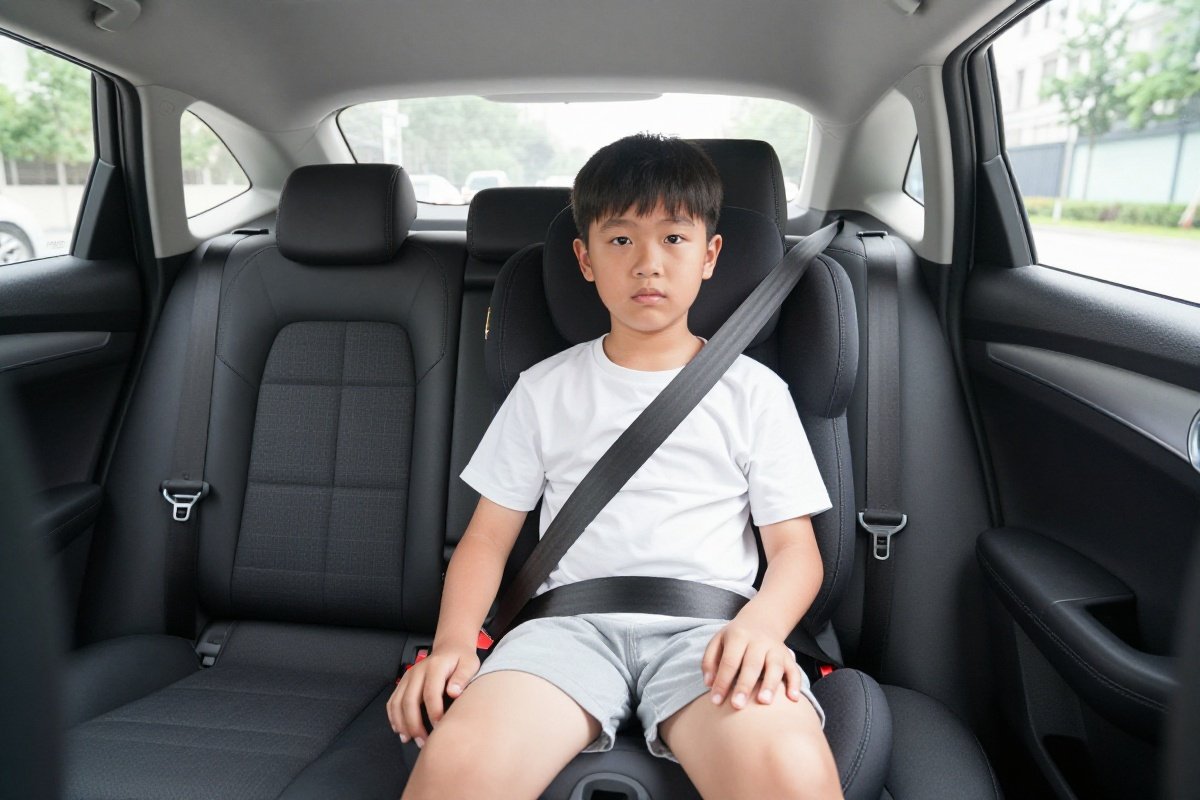
Children should be at least 4’9” (57 inches) tall for proper seat belt fit:
Lap Belt:
- Lies across upper thighs
- Touches tops of thighs
- Not across belly
Shoulder Belt:
- Crosses center of shoulder
- Across chest
- Not on neck or face
The 4’9” guideline represents the approximate height at which most children achieve proper geometry for adult seat belt systems. However, this is an average - some children reach proper fit slightly shorter, others need to be taller. Always verify actual fit rather than relying solely on height measurements.
The Five-Step Test:
Use this test to verify proper seat belt fit:
- Child sits all the way back against the vehicle seat
- Knees bend comfortably at the seat edge
- Lap belt lies across upper thighs, not stomach
- Shoulder belt crosses chest center and shoulder
- Child can stay positioned properly for entire trip
If any of these criteria aren’t met, the child needs to continue using a booster seat, regardless of age or height. Proper fit requires all five elements - four out of five isn’t sufficient for safety.
Vehicle Seat Variation:
Different vehicles have different seat depths, cushion angles, and belt geometry. A child might achieve proper fit in one vehicle but not another. Always check fit in each vehicle the child will ride in regularly. Booster seats like Graco’s TurboBooster line accommodate children up to 100 pounds and 57 inches, allowing proper positioning until they genuinely achieve correct seat belt fit across various vehicles.
Height Alone Isn’t Enough
Even tall children under 13 benefit from back seat protection:
- Skeletal immaturity
- Developing muscle strength
- Smaller body mass than adults
Height determines seat belt fit, but age/maturity determines appropriate seating position. A tall 10-year-old who no longer needs a booster still belongs in the back seat. The AAP age 13 recommendation is independent of the height/booster guidance - both standards apply.
Body Mass Considerations:
Vehicle safety systems, including airbags and seat belt pretensioners, calibrate based on adult weight ranges. A tall but slender child may not trigger weight sensors properly or may experience different injury patterns than adults in equivalent crashes. Body mass affects crash dynamics - how occupants move during impact and how forces distribute through body structures.
Bone Density and Development:
Children’s bones have different composition than adult bones. They’re more flexible but also more vulnerable to certain fracture types. Growth plates - areas of developing bone near joint ends - present injury risks not present in skeletally mature individuals. These developmental factors persist until mid-adolescence, regardless of height attainment.
Behavioral Maturity:
Taller children may look more adult-like, but behavioral and cognitive maturity develop on different timelines than height. Young children lack impulse control to maintain proper positioning throughout trips. They fidget, slouch, lean forward, or adjust their bodies in ways that compromise safety system effectiveness. This behavioral element represents another reason why age-based guidelines matter beyond physical measurements.
Understanding Vehicle Safety Features
Advanced Airbag Systems
Modern vehicles include increasingly sophisticated airbag systems with features like:
- Multi-stage deployment (adjusting force based on crash severity)
- Occupant detection sensors (weight and position sensing)
- Side-curtain airbags (protecting in side-impact crashes)
- Knee airbags (preventing occupant submarine effect)
These advances improve adult safety significantly. However, they’re calibrated for adult occupants. Occupant detection sensors may not function reliably with children, particularly those near threshold weights. Some systems might not deploy at all for a small child, leaving them unprotected. Others might deploy with inappropriate force for a child’s size.
Sensor Limitations:
Occupant classification systems (OCS) use weight sensors in passenger seats to determine whether to enable or suppress airbag deployment. These systems have threshold ranges - typically designed to detect whether an adult, child seat, or no occupant is present. However, a large child near adult weight might trigger full-force deployment despite being physically smaller than an adult. Conversely, a child in certain positions might not be detected reliably.
NHTSA testing has revealed instances where OCS systems misclassified occupants or failed to provide consistent results. While manufacturers continue improving these systems, they represent another reason why rear seat positioning remains preferable for children - it removes reliance on these imperfect detection systems.
Seat Belt Technology
Modern seat belts include several features designed for adult protection:
- Pre-tensioners (tightening belts instantly at crash detection)
- Load limiters (allowing controlled belt payout to prevent chest injury)
- Emergency locking retractors (locking during sudden deceleration)
Pre-tensioners remove slack from seat belts before occupants move forward, reducing potential for secondary impacts with vehicle interior. However, the force applied during pre-tensioning may be excessive for small children, potentially causing restraint-related injuries. Load limiters then allow controlled belt release to prevent excessive chest compression - but calibration is for adult chest dimensions and tolerance.
These technologies make seat belts more effective for adults while highlighting the importance of age-appropriate restraints for children. Children who have outgrown boosters should still ride in the rear seat where these systems provide protection without the added front seat risks.
Special Circumstances and Exceptions
Children with Medical Conditions
Some children have medical conditions that complicate standard safety recommendations:
- Respiratory conditions requiring monitoring during travel
- Seizure disorders necessitating direct observation
- Medical equipment requiring adult manipulation during transport
- Post-surgical restrictions on specific positioning
Medical Consultation:
Families with children requiring special medical accommodations should consult both their pediatrician and a certified child passenger safety technician (CPST). Some situations might warrant physician-approved exceptions to standard positioning guidelines. However, medical need should be documented and reviewed regularly as the child’s condition changes.
Many situations that parents perceive as requiring front seat positioning actually have safer alternatives. For example, children requiring monitoring during travel might be safely accommodated in rear-facing positions where a rear-seat adult can observe them, or with specialized mirrors allowing driver monitoring. Front seat positioning should remain a last resort even for children with special medical needs.
Multiple Children and Vehicle Capacity
Families with multiple children often face challenges fitting appropriate restraints in available rear seating positions:
- Three across installations in compact vehicles
- Combining different restraint types (rear-facing, forward-facing, booster)
- Ensuring proper installation for each restraint
- Accommodating teenage and younger siblings together
Three-Across Solutions:
Before resorting to front seat positioning, exhaust all rear seat options. Several restraints are built narrow specifically for three-across installation. The BubbleBum is one of the narrower backless boosters on the market, and it’s sold on exactly that job.
Certified CPSTs can evaluate your specific vehicle and restraint combination, often finding three-across solutions that families believed impossible. Belt routing variations, restraint positioning adjustments, and selecting compatible restraint models can enable safe rear seating for all children in many situations.
Priority Positioning:
If front seat use becomes unavoidable for one child in a multi-child family, position the oldest, tallest child in front while maintaining rear positioning for younger siblings. Never place rear-facing or forward-facing harnessed car seats in the front seat under any circumstances when alternatives exist.
Consider whether three-across rear seating with some restraints installed less-than-ideally might still be safer than front seat positioning. Consult a CPST for professional evaluation of these trade-offs in your specific situation.
Ride-Sharing and Taxis
Ride-sharing services and taxis present unique challenges for child passenger safety:
- Vehicles often lack appropriate child restraints
- Installation time is limited
- Driver unfamiliarity with child restraint requirements
- Variable vehicle configurations
Planning Ahead:
Families relying on ride-sharing or taxis should carry portable restraints appropriate for their child’s age and size. Inflatable boosters like the BubbleBum Inflatable Booster pack compactly for travel and can be installed quickly in unfamiliar vehicles. Some ride-sharing services now offer vehicles with pre-installed car seats, though availability varies by location. For more on navigating this challenge, see our guide on using Uber with a car seat. Never compromise child safety for convenience - if a ride-sharing vehicle lacks appropriate restraints and you cannot install your own, request a different vehicle or seek alternative transportation. Many jurisdictions exempt taxis from child restraint requirements, but these legal exemptions don’t eliminate the physical risks.
Age Considerations:
Older children who fit properly in adult seat belts may ride safely in taxis and ride-shares, but they should still occupy rear seats following AAP guidelines. The challenges of ride-sharing and taxi travel represent another reason to ensure your child transitions through restraint stages appropriately at home - premature transitions create dependencies on improper restraint in these situations.
Transitioning to Front Seat
At Age 13
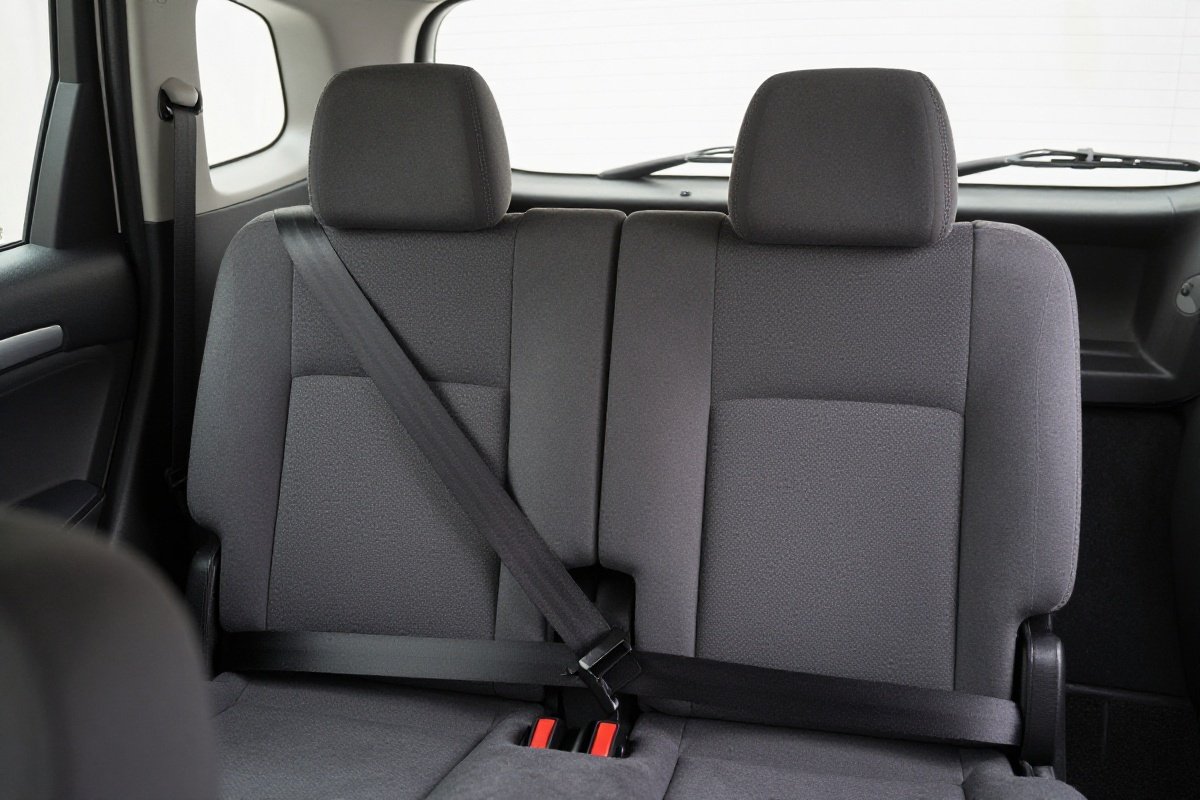
When your child reaches age 13:
- Verify seat belt fit: Check 5-step test
- Adjust seat position: Push back from dashboard
- Teach proper posture: Back against seat, no slouching
- Set rules: No unbuckling, proper belt positioning
The transition to front seat riding at age 13 should be treated as a significant milestone requiring preparation and clear expectations. This isn’t simply about granting permission - it’s about ensuring your teen understands and consistently demonstrates safe practices.
Initial Transition Period:
Consider implementing a graduated approach where front seat riding is initially limited to specific situations with high parental supervision. This allows you to observe your teen’s behavior and ensure they maintain proper positioning without constant reminders. Gradually expand front seat privileges as they demonstrate responsible behavior.
Some families establish a “probationary period” where front seat riding is a privilege that can be revoked if the teen fails to follow safety rules consistently. This approach emphasizes that front seat riding carries greater responsibility than rear seat positioning.
Size Verification:
At age 13, verify your teen has reached the 4’9” height threshold for proper seat belt fit. While most 13-year-olds meet this standard, individual growth patterns vary. Don’t assume height achievement based on age alone - measure and verify proper belt fit using the five-step test.
Vehicle Familiarization:
Teach your teen to adjust front seat positioning properly in each vehicle they ride in. Different vehicles have different seat adjustment ranges, belt angles, and dashboard distances. Your teen should understand how to position themselves safely rather than accepting whatever positioning exists when they enter the vehicle.
Ongoing Safety
Even teenagers need reminders:
- Seat belt use every ride
- Proper positioning
- No distractions for driver
- Appropriate behavior
Establishing consistent safety habits during the transition to front seat riding builds foundations for lifelong safe driving and riding practices. The front seat transition represents an opportunity to reinforce broader traffic safety principles.
Common Teen Issues:
Teenagers may resist safety guidance as they assert independence. Address concerns about appearance (belt wrinkles on clothing), comfort (belt pressure), or perceived uncoolness (being safety-conscious). Emphasize that serious injuries and fatalities affect teens disproportionately in traffic crashes, making safety vigilance especially important during these years.
In NHTSA’s 2024 crash data, 13- and 14-year-olds had the highest unrestrained percentages of any child age group. The transition to front seat positioning may inadvertently increase this risk if teens perceive greater freedom and less supervision. Maintain consistent expectations and consequences for seat belt non-compliance.
Further Reading
- When Can Kids Sit in a Booster Seat? Age & Weight Guidelines
- Benefits of a Load Leg Car Seat: Enhanced Safety Explained
Beyond the Basics: Creating a Safety Culture
Family Safety Standards
Establishing comprehensive family safety standards creates consistency across all transportation situations:
- Everyone wears seat belts on every trip, regardless of distance
- Children occupy rear seats through age 13 without exception
- Appropriate restraints are used and properly installed
- Vehicles are maintained with functional safety equipment
- Distracted driving is prohibited
Consistency Across Caregivers:
Ensure all adults who transport your children understand and follow your safety standards. Grandparents, babysitters, and other caregivers must receive clear instruction about seating positions, restraint use, and safety rules. Inconsistency confuses children and undermines safety habits.
Provide portable restraints if needed for caregivers who transport your children in vehicles other than your primary family car. Ensure these caregivers know how to install and use these restraints properly.
Vehicle Selection Considerations
When purchasing vehicles, consider child passenger safety factors:
- Adequate rear seating capacity for your family size
- LATCH positions for all rear seating positions
- Ease of car seat installation
- Rear door child safety locks
- Good visibility for checking rear-seated children
Families with young children should prioritize vehicles offering superior rear seat accommodation over features that primarily benefit front seat occupants. The few years of intensive child-rearing represent a relatively brief period where vehicle priorities may shift toward child-specific considerations.
Safety Ratings:
Review IIHS and NHTSA safety ratings when selecting vehicles, paying attention to rear seat safety evaluations. Some vehicles that perform well in frontal crash tests provide less impressive rear seat protection. Look for vehicles with good rear seat safety ratings across multiple crash test scenarios.
Education and Resources
Numerous resources help families make informed decisions about child passenger safety:
- NHTSA’s website (nhtsa.gov) provides comprehensive guidelines and car seat recommendations
- The AAP (aap.org) publishes regularly updated safety recommendations
- Safe Kids Worldwide (safekids.org) offers local car seat inspection events
- State highway safety offices provide free educational materials
Car Seat Inspection Stations:
Take advantage of free car seat inspection events staffed by certified CPSTs. These professionals can verify proper installation, check that your child’s restraint is appropriate for their size, and answer questions about transitions between restraint types. Many families discover they’ve been using restraints incorrectly - professional inspection provides valuable peace of mind.
Staying Current:
Child passenger safety recommendations evolve as new research emerges and vehicle technology advances. Periodically review current guidelines rather than relying on outdated information from when your first child was born.
Recommended Products
Graco TurboBooster LX Backless Booster
Extended back seat useKeep older kids in back seat with proper booster longer.
What We Like
- Light and easy to move between cars, which is most of the point of a backless booster
- Adjustable armrests for comfort
- Dual integrated cup holders
- LATCH connectors, so it stays put when nobody is sitting in it
What We Don't
- Backless only: no head or side support, so the vehicle needs its own headrest behind the child
- No side impact protection, unlike a highback booster with energy-absorbing foam in the wings
- Less padding than premium options like Chicco KidFit
BubbleBum Inflatable Booster
Best travel boosterConvenient backup booster for carpools and travel.
What We Like
- Inflates and deflates for ultra-compact packing
- Weighs only 1 pound making it ideal for travel
- FAA-approved for aircraft use
- Fits in carry-on bags and backpacks
What We Don't
- Booster-only design requires child to be 40+ pounds minimum
- Less structured support than rigid boosters
- May require reinflation during extended use
Chicco GoFit Plus
Best LATCH backlessStable backless booster with LATCH security.
What We Like
- Ergonomic contoured design for comfort
- Dual-layer foam padding
- Built-in carry handle for portability
- Machine washable seat cover
What We Don't
- Backless only - no side or head support
- No highback conversion option available
- Not suitable for children who sleep in the car
Sources & Research
Continue Reading
Explore more car seat safety content or browse our other categories.
Frequently Asked Questions
- When can my child legally sit in the front seat?
- State laws vary significantly regarding when children can ride in the front seat. Some states have no specific law, while others set minimum ages ranging from 8 to 13 years. However, legal requirements are minimums, not safety recommendations. The American Academy of Pediatrics (AAP) recommends that all children under 13 years old ride in the back seat, regardless of state law. This recommendation is based on extensive safety data showing the back seat is significantly safer for children due to distance from front airbags and better protection in frontal crashes. Even if your state allows younger children in the front, following the AAP guideline of age 13 provides the best protection. Check your specific state laws in our car seat laws by state guide, or your state's DMV website, but remember that safety recommendations often exceed legal minimums. The safest practice is keeping children in the back seat until they are teenagers.
- Why is the front seat dangerous for children?
- The front seat poses multiple dangers for children that don't affect adults the same way. First, front airbags deploy with tremendous force and are designed for adult-sized bodies. Children sitting too close can suffer severe head, neck, and chest injuries from airbag deployment. The National Highway Traffic Safety Administration (NHTSA) counted 284 confirmed frontal airbag deployment fatalities through 1 January 2008, 180 of them children. Second, the front seat offers less protection in frontal crashes, which are the most common and severe type of collision. The back seat is physically farther from the point of impact and provides a larger crush zone. Third, children are more vulnerable to injury due to their smaller size and developing bodies. Their heads are proportionally larger, neck muscles are weaker, and organs are less protected than adults'. Finally, vehicle safety features are designed and tested with adult crash test dummies in the front seat, not children. For these reasons, the back seat is universally recommended as the safest place for children under 13.
- Can I turn off the airbag if my child must ride in front?
- If absolutely necessary for a child to ride in the front seat, disabling the passenger airbag can reduce (but not eliminate) risk. However, this should be a last resort, not a routine practice. If you must transport a child in the front: ensure the vehicle seat is pushed back as far as possible from the dashboard, verify the child is properly restrained in an age-appropriate car seat or booster, make sure the child sits upright against the seat back, and follow all car seat manufacturer guidelines. Some vehicles have switch-operated airbag deactivation systems - consult your vehicle manual. Never manually disconnect airbags yourself, as this is illegal in many jurisdictions and may void insurance coverage. Airbags fall under FMVSS 208, not the child restraint standard. If your vehicle has no factory switch, the legal route is to petition NHTSA under 49 CFR Part 595 for authorization, after which a dealer or repair business may install a retrofit on-off switch. That route covers vehicles manufactured before 1 September 2015. The safest approach is simply keeping all children under 13 in the back seat. If you regularly need to transport more children than rear seat positions allow, consider a vehicle with a third row rather than routinely putting children in the front.
- What height should a child be to sit in the front seat?
- Height requirements for front seat riding are not as clearly defined as age recommendations, but the general guideline is that children should be at least 4 feet 9 inches (57 inches) tall before considering front seat use. This height ensures that the vehicle's seat belt system fits properly: the lap belt should lie across the upper thighs (not the belly) and the shoulder belt should cross the chest and shoulder (not the neck or face). However, height alone is not sufficient - age and maturity matter significantly. Even a child who is 4'9" should not ride in the front if they are under 13 years old according to AAP guidelines. The combination of height, weight, and skeletal maturity that comes with age makes teenagers better able to withstand crash forces in the front seat. Additionally, proper seat belt fit depends on vehicle design - some vehicles have seat belts that don't fit children well regardless of height. If the shoulder belt crosses the neck or the lap belt rides up on the belly, the child is not positioned safely, even if they meet height minimums. Always prioritize the back seat for children under 13.
- Are there any exceptions for putting a child in the front seat?
- Exceptions for putting children in the front seat should be extremely rare and limited to true emergencies or vehicle limitations. Potential exceptions include: single-cab pickup trucks with no back seat (use appropriate car seat, push seat back fully, and deactivate airbag if possible), two-seat sports cars (same precautions as trucks), and emergency situations where no other transportation option exists. In single-cab trucks, some states require airbag deactivation; others require special approval. Check your local laws. For routine transportation of multiple children, consider alternatives rather than routinely putting children in the front: carpool with other families who have larger vehicles, rent a larger vehicle for family trips, or consider upgrading to a vehicle with a third row. The risk of front seat riding for children is well-documented and significant. No convenience reason justifies routinely placing children in danger. If you find yourself regularly needing more seating positions than your vehicle provides, that indicates a need for a different vehicle, not an exception to safety guidelines.
Written By
Kid Sitting Safe
Our team researches car seat safety standards, crash test data, and real-world usability to help parents make the safest choice.
Related Articles
Car Seat After Accident: When to Replace & Insurance Coverage
Learn when car seats must be replaced after accidents. NHTSA guidelines, insurance coverage options, and how to assess if your seat is still safe to use.
Car Seat Installation: A Complete Guide for Parents
Master car seat installation with our comprehensive guide. Learn LATCH vs. seat belt methods, common mistakes to avoid, and expert tips for secure installation every time.

Car Seat Laws by State: How to Find Yours, and Why the Lists Are Wrong
How to find your state's car seat law and read it properly, why the state-by-state lists in circulation are unreliable, and the three states wrongly listed as requiring rear-facing until age 2.