Affiliate Disclosure:Kid Sitting Safe is reader-supported. When you buy through links on our site, we may earn an affiliate commission at no additional cost to you. This does not influence our reviews or recommendations — we only recommend products we genuinely believe in.
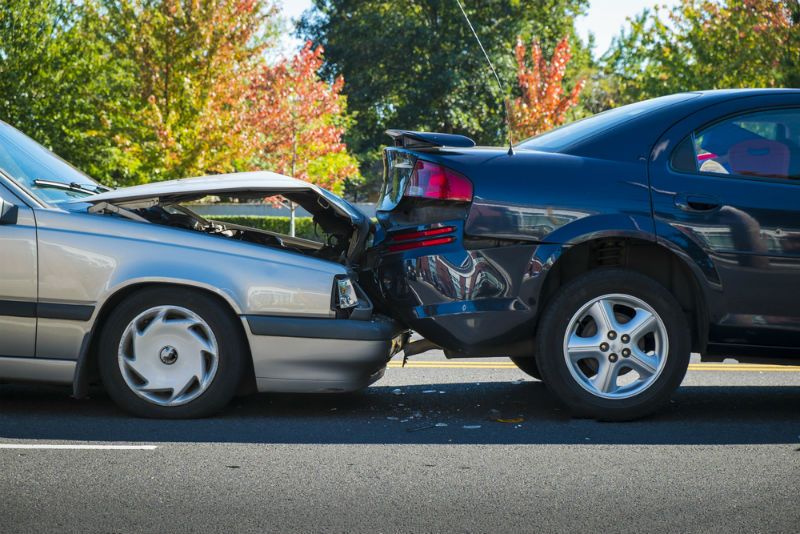
After a vehicle accident, parents face a critical question: Is my child’s car seat still safe to use? According to NHTSA guidelines and manufacturer recommendations, the answer depends on crash severity. Below: when replacement is necessary, how to file an insurance claim, and what to do with the old seat.
NHTSA Guidelines for Car Seat Replacement
The Minor Crash Criteria
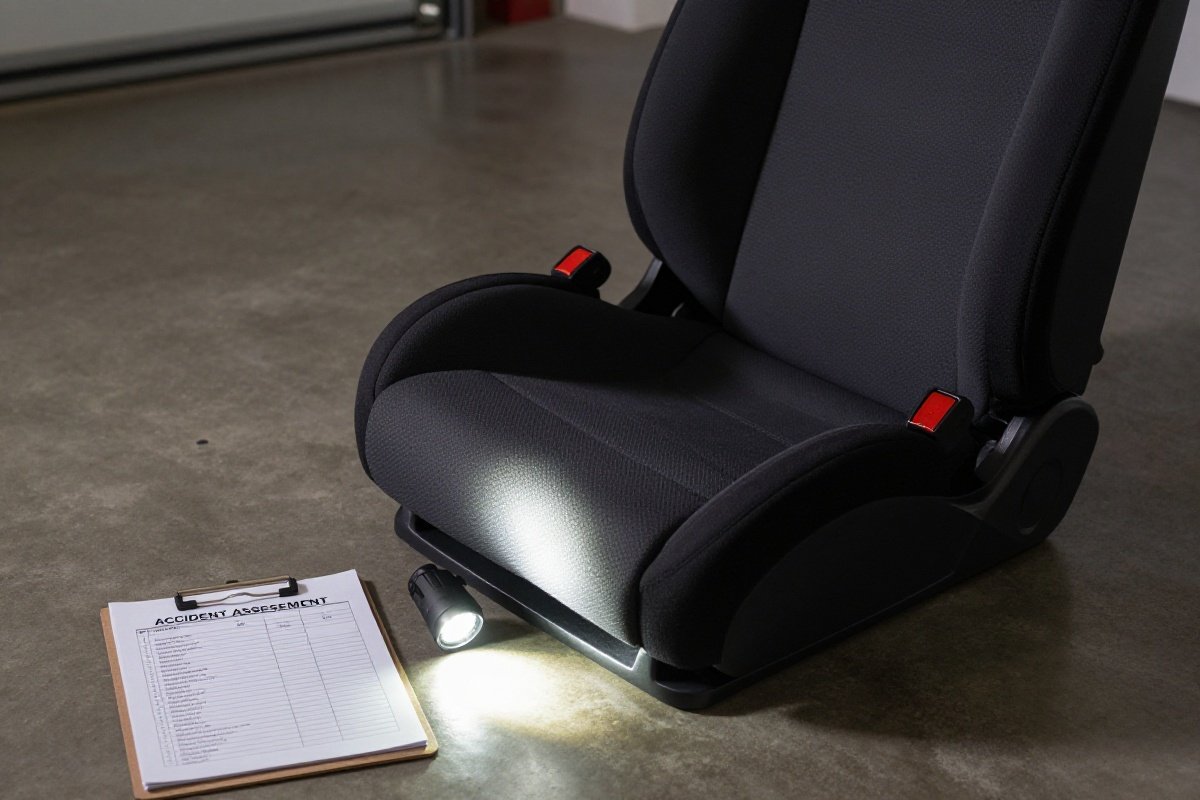
NHTSA states that car seat replacement may not be necessary after a minor crash - but only if ALL five conditions are met:
- Vehicle was driven away: The vehicle could be driven from the crash site
- No door damage: The door nearest the safety seat was undamaged
- No injuries: No occupants were injured in the crash
- Air bags didn’t deploy: No air bag deployment occurred
- No visible damage: The car seat shows no visible damage
If ANY of these conditions are not met, the crash is considered moderate or severe, and the seat MUST be replaced.
Understanding the Science Behind the Criteria
The five-point NHTSA criteria aren’t arbitrary - each addresses a specific aspect of crash dynamics and structural integrity. When a vehicle experiences sufficient force to cause door damage near a car seat, that energy has traveled through the vehicle’s frame directly to the seat mounting location, which can compromise LATCH anchors and seat belt mounting points.
Air bag deployment serves as an indicator that the vehicle’s crash sensors detected significant deceleration forces. These same forces affect car seats, potentially causing internal structural damage to the shell, energy-absorbing foam, or harness retention systems. Even if the car seat appears undamaged externally, the internal components may have absorbed crash energy and lost their ability to protect in a subsequent impact.
The ability to drive the vehicle away indicates that structural damage was limited, but this criterion alone is insufficient. Rear-end collisions at parking lot speeds may leave a vehicle drivable while still generating enough force to stress a rear-facing infant seat’s base connection or compromise a forward-facing seat’s tether anchor point.
Why Replacement Matters
Car seats are designed to withstand ONE significant crash, and like car seat expiration, this is a non-negotiable safety boundary. The energy-absorbing materials, structural components, and harness systems may be compromised after impact, even without visible damage. In a subsequent crash, a previously stressed seat may fail to protect your child adequately.
FMVSS 213 (Federal Motor Vehicle Safety Standard 213) establishes the dynamic crash testing requirements for new car seats. These tests involve subjecting seats to controlled crash forces that simulate real-world accidents. The seats are designed with materials that deform, compress, or absorb energy during a crash - this one-time energy absorption is what protects your child. Once these materials have performed their function, they cannot regenerate their protective properties.
The Insurance Institute for Highway Safety (IIHS) reports that harness-based child restraints “reduce fatal injuries by 58%-71% for infants (younger than 1) and by 54%-59% for 1-4-year-olds compared with no restraint”. Note the comparison there is with no restraint at all, not with an adult seat belt. Those numbers also describe seats that haven’t been compromised by a previous crash. No comprehensive data exists on the protective capability of previously crashed seats because ethical research constraints prevent intentionally testing children in potentially compromised equipment.
When Replacement Is Absolutely Required
Beyond NHTSA’s moderate/severe crash criteria, certain situations demand immediate replacement regardless of visible damage: High-Speed Impacts: Any crash occurring above 35 mph should be considered severe, even if the vehicle appears minimally damaged. Modern vehicle crumple zones are designed to absorb energy by deforming, which means the passenger compartment may appear intact while significant forces were transmitted through the structure.
Rollover Accidents: Vehicles that roll over subject car seats to multiple impact angles and gravitational forces. Even a single rollover compromises the seat’s structural integrity in ways that cannot be reliably assessed through visual inspection.
Vehicle Totaled: If the insurance company declares your vehicle a total loss, the car seat must be replaced regardless of the NHTSA minor crash criteria. A total loss declaration indicates structural damage significant enough to compromise all safety systems.
Multiple Occupant Injuries: When several vehicle occupants sustain injuries, the crash forces were distributed throughout the vehicle. Your child’s car seat absorbed impact energy even if your child was uninjured.
Insurance Coverage for Car Seat Replacement
What Insurance Covers
Most auto insurance policies include car seat replacement under:
- Property damage liability: If another driver was at fault
- Personal property coverage: Under your comprehensive or collision policy
- Personal injury protection: In no-fault states
Understanding your policy’s specific language helps maximize your claim. Property damage liability coverage applies when another driver is found at fault for the accident. This coverage typically has fewer restrictions and may provide full replacement cost without depreciation arguments. Your own collision or comprehensive coverage applies for single-vehicle accidents or when you’re at fault, but may be subject to your deductible.
Personal Injury Protection (PIP) coverage, required in no-fault states like Florida, Michigan, and New York, often covers car seat replacement as part of accident-related expenses. PIP claims may process faster than property damage claims because they don’t require fault determination, making this an attractive option when you need immediate replacement.
Check Your Own State’s Rules
Insurance is regulated state by state, so what your insurer must do depends on where you live. Your state’s department of insurance is the place to confirm that, rather than any website’s summary.
If your insurer resists covering a car seat, cite NHTSA guidelines and request a written explanation for the denial. A written denial is what your state regulator will want to see if you escalate.
Filing Your Claim
Step 1: Document Everything
- Photograph the car seat from multiple angles
- Note the make, model, and manufacture date
- Get a copy of the police accident report
Take photographs immediately after the accident, even if no visible damage exists. Photograph the seat installed in the vehicle, showing its position relative to the damaged areas. Remove the seat and photograph all sides of the shell, the harness system, LATCH connectors, and the base (for infant seats). Photograph the manufacture date label, typically located on the seat’s side or back.
The police accident report provides critical documentation of crash severity. Even if the accident seems minor, request an official report. The report’s description of vehicle damage, impact location, and estimated speeds supports your claim that replacement is necessary. In some jurisdictions, officers note the presence of child passengers and car seats in their reports - this documentation strengthens your claim.
Step 2: Contact Your Insurer
- Report the accident immediately
- Explicitly mention car seat replacement needs
- Reference NHTSA guidelines
When reporting the accident, specifically state: “My child’s car seat was in the vehicle during the accident, and according to NHTSA guidelines, it requires replacement.” This establishes the replacement claim as part of your initial accident report rather than an afterthought, which can prevent delays or disputes later.
Ask your claims adjuster whether to file under property damage liability (if the other driver was at fault) or your own collision/comprehensive coverage. Also inquire about PIP coverage if applicable in your state. Understanding which coverage provides the best terms - such as no deductible or no depreciation - helps you make an informed decision.
Step 3: Submit Documentation
- Provide photos and accident report
- Request reimbursement for comparable replacement
- Keep receipts for any purchases
Compile your documentation package systematically. Include a cover letter explaining the replacement need, referencing NHTSA guidelines, and citing any applicable state laws. Attach your photographs, the police report, and copies of your car seat’s manual pages showing the manufacturer’s replacement policy.
When purchasing a replacement seat, keep all receipts including the itemized sales receipt, credit card statement, and warranty registration. If you hire a Certified Child Passenger Safety Technician (CPST) to install the new seat - which some insurers cover - keep those receipts as well.
Typical Settlement Amounts
Insurance companies typically reimburse:
- Full replacement cost of a comparable seat
- Sales tax on the replacement
- Installation costs (if you use a professional)
If your seat was several years old, some insurers may apply depreciation, but fight this - safety equipment should be replaced with new, comparable items.
The average car seat replacement claim varies significantly depending on whether the damaged seat was a budget infant seat, a mid-range convertible, or a premium all-in-one model.
Overcoming Insurance Challenges
Depreciation Disputes: If your insurer attempts to apply depreciation to your car seat replacement, respond with a written objection citing the following arguments:
-
Car seats carry expiry dates, typically 6-10 years from manufacture. Those dates are set by the manufacturer and printed on the seat: Graco’s 4Ever DLX manual, for instance, says “STOP using this car seat and throw it away 10 years after the date of manufacture.” (They don’t come from FMVSS 213, which contains no reference to expiration.) A seat already has a limited useful life built in, so applying depreciation on top of that means the replacement wouldn’t protect for as long.
-
The Consumer Product Safety Commission (CPSC) treats car seats as children’s products subject to federal safety rules. Unlike other personal property, safety equipment has to function at full capacity to meet its intended purpose at all.
-
Ask your state’s department of insurance whether depreciation on safety equipment is permitted where you live, and quote the answer back to the adjuster.
“Comparable Replacement” Disputes: Insurers sometimes argue that the least expensive car seat on the market represents a “comparable replacement.” Counter this by documenting your original seat’s specific safety features:
- Side-impact protection technology
- Steel-reinforced frame
- Load leg or anti-rebound bar
- Extended rear-facing or forward-facing limits
- FAA approval for air travel (if applicable)
Create a comparison chart showing your original seat’s features versus the insurer’s proposed replacement. If features are missing, the replacement is not comparable. The term “comparable” must account for safety features, not merely basic functionality.
Claim Delays: Insurance companies must process claims within state-mandated timeframes, typically 15-30 days. If your claim extends beyond this period, send a written demand citing your state’s prompt payment statute. Many states impose penalties on insurers who delay without valid reason, giving them strong incentive to process your claim quickly.
Assessing Visible Damage
Signs a Seat Needs Replacement
Plastic Shell:
- Cracks or stress marks
- White stress lines in colored plastic
- Bent or deformed areas
Plastic car seat shells are typically made from high-density polyethylene (HDPE) or polypropylene. These materials are chosen for their ability to flex and absorb energy during a crash, then return to their original shape. However, when stressed beyond their design limits, they develop visible indicators of structural compromise.
White stress lines, also called “stress crazing,” appear when the polymer chains within the plastic begin separating. These microscopic fractures scatter light, creating visible white lines even in colored plastic. Once stress crazing appears, the plastic has permanently lost structural integrity and will fail at lower force thresholds than it was designed to withstand.
Check these specific areas where stress concentrates:
- Harness slots: Where webbing passes through the shell
- LATCH connector attachment points: Where metal hardware attaches to plastic
- Recline mechanism: Where moving parts create stress during adjustment
- Seat belt path: Where the vehicle belt threads through the shell
- Base connection points: On infant seat carriers where the base and carrier interlock
Harness System:
- Frayed or torn straps
- Damaged stitching
- Buckle that doesn’t click properly
- Chest clip that won’t stay closed
The harness system is your child’s primary restraint in a crash. FMVSS 213 S5.4.1.2 sets a minimum breaking strength for new webbing of 11,000 N for the webbing that secures a child to the restraint, and 15,000 N for the webbing that secures the restraint to the vehicle. Note the word “new”: that’s a bench test on undamaged webbing. Crash forces stretch harness straps, potentially weakening the weave and reducing their load-bearing capacity.
Examine the harness splitter plate - the triangular piece where the two shoulder straps come together. This component endures concentrated force during crashes. Cracks, bends, or sharp edges indicate the seat has experienced significant impact forces.
The harness adjuster mechanism, which tightens and loosens the straps, contains springs and metal components that can bend during impacts. If the adjuster requires unusual force to operate or doesn’t maintain tension properly, internal damage likely occurred.
Metal Components:
- Bent or rusted LATCH connectors
- Deformed seat belt path
- Broken adjustment mechanisms
LATCH (Lower Anchors and Tethers for Children) connectors must maintain precise dimensions to function correctly. Even slight bending reduces their ability to grip vehicle anchor hardware, potentially allowing the seat to separate during a crash. The loads involved are not small: FMVSS 225, the standard for the anchorages built into your vehicle, tests lower anchorages at 11,000 N and tether anchorages at 15,000 N. Bent connectors have already absorbed energy.
Top tether anchors, used with forward-facing seats, are particularly critical. The tether’s job is to limit how far the top of the seat, and your child’s head, moves forward in a crash, and a damaged tether strap or connector can’t do that job.
Foam Padding:
- Compressed or torn areas
- Missing chunks
- Separation from shell
Energy-absorbing foam serves two functions: comfort and crash protection. The foam between your child and the seat shell compresses during a crash, slowing deceleration rates and distributing forces across a larger body area. This is particularly important for infants, whose bodies are more vulnerable to concentrated pressure points.
Expanded polystyrene (EPS) foam, similar to bicycle helmet foam, is designed to compress once and cannot recover its original structure. If the foam feels firmer, thinner, or shows compression marks, it has absorbed energy and lost its protective capability. Some premium seats use expanded polypropylene (EPP) foam, which can recover from minor compression but still suffers permanent deformation from crash-level forces.
Hidden Damage Concerns
Even without visible damage, internal components may be compromised:
- Micro-cracks in the plastic shell
- Weakened energy-absorbing foam
- Stressed metal frame components
- Stretched harness webbing
This is why NHTSA recommends replacement after moderate/severe crashes even without visible damage.
Advanced Inspection Techniques
Beyond visual inspection, several methods can reveal hidden damage:
Flex Testing: Gently apply pressure to the seat shell in different areas, listening for cracking sounds or feeling for unusual flex. Undamaged shells should resist flexing with firm, consistent resistance. Areas that flex more easily than they should may have internal cracks compromising structural integrity.
Harness Tension Testing: Thread the harness straps through your hands, feeling for inconsistent thickness, rough patches, or areas that feel stretchy. Quality harness webbing has uniform thickness and texture throughout its length. Variations indicate potential fiber damage from crash forces.
LATCH Connector Function Testing: Attach and detach the LATCH connectors multiple times, assessing the force required and the solidity of the connection. Connectors should click positively into place with moderate hand pressure and resist removal until the release mechanism is activated. Loose connections or connectors that release easily may have been bent or weakened.
Ask the Manufacturer: For a borderline case, contact the manufacturer’s customer service with photos, the model number and the manufacture date, as this article’s FAQ describes. Treat what they tell you as guidance on their own policy rather than as clearance for a specific seat.
Manufacturer Guidelines
Manufacturer Policies Differ From Each Other
Some manufacturers require replacement after any crash, regardless of severity. Others adopt NHTSA’s minor crash exception. Policies also get revised, which is why brand-by-brand lists on other sites disagree with each other.
The one we can quote directly: Britax’s own post-crash FAQ tells owners that “if your car seat was involved in a moderate or severe crash, discontinue use immediately”, and points to the NHTSA guidelines for minor crashes. That is NHTSA’s minor crash exception rather than a blanket replace-after-any-crash rule.
Always check your specific seat’s manual, and call the manufacturer if it’s borderline. Manufacturer guidelines take precedence over NHTSA recommendations for that particular seat. Don’t take a third party’s word for what your manufacturer requires, including ours.
Why Manufacturers Differ from NHTSA
The discrepancy between NHTSA’s minor crash exception and some manufacturers’ stricter policies reflects different priorities and liability concerns. NHTSA developed the minor crash criteria based on crash reconstruction data and real-world accident analysis, determining that crashes meeting all five criteria generate forces too low to compromise seat structure.
Manufacturers, however, cannot inspect individual seats after crashes. Their blanket replacement policies reflect conservative risk management - without examining each seat’s specific circumstances, they cannot guarantee post-crash integrity. Companies like Britax and Diono have determined that the cost and liability risk of potentially compromised seats remaining in use exceeds the customer service cost of liberal replacement policies.
Manufacturers sometimes run crash replacement programs that discount a replacement seat after an accident. Terms change, so rather than quote figures, call your manufacturer’s customer service with your accident documentation and ask directly whether a program exists and what it requires.
Your seat’s manual is the authority on what that seat requires. Manufacturers post PDF copies on their support sites if yours has gone missing.
International Standards Comparison
Parents shopping for replacement seats may encounter references to European or Canadian safety standards. Understanding these differences helps evaluate seat designs, though all seats sold in the United States must meet FMVSS 213 regardless of their origin.
ECE R129 (i-Size): European standard requiring extended rear-facing until at least 15 months, with a side-impact test built in. The US has its own side-impact standard now, FMVSS 213a, and it’s in the Code of Federal Regulations. But it isn’t being enforced yet: NHTSA announced on 2 July 2025 (90 FR 28909) that it “will not take enforcement action against regulated entities for failing to comply with Federal Motor Vehicle Safety Standard (FMVSS) No. 213a, Child restraint systems—side impact protection until the publication of any final rule finalizing NHTSA’s May 30, 2025 proposal” to move the compliance date. So “does this seat meet a side-impact standard” is a question to put to the manufacturer rather than assume either way.
Transport Canada CMVSS 213: Canadian standard similar to FMVSS 213 but with stricter requirements for harness strap adjustment force and buckle release force. Canadian-specific seats may not be certified for U.S. sale, though many manufacturers sell compliant versions in both markets.
UN Regulation No. 129: International standard harmonizing global car seat requirements. Gradually being adopted worldwide, though the United States maintains FMVSS 213 as its governing standard.
When replacing a crashed seat, ensure your new seat displays FMVSS 213 compliance certification, typically found on a label on the seat’s side or back. This certification guarantees the seat meets or exceeds all federal safety requirements for use in the United States.
Replacement Shopping Guide
What to Look For
When replacing a car seat after an accident:
- Comparable or better: Don’t downgrade from what you had - review our top-rated car seats for guidance
- Current model: Avoid seats that have been discontinued
- Proper fit: Ensure correct fit for your child’s current size
- Vehicle compatibility: Verify fit in your specific vehicle
Understanding Safety Feature Parity
“Comparable or better” replacement extends beyond basic functionality to encompass specific safety technologies. If your crashed seat included advanced features, your replacement should as well:
Side-Impact Protection (SIP): Deep wings, energy-absorbing foam, or structural reinforcement that extends beyond the seat’s main shell. If your previous seat was marketed on its side-impact structure, look for the same in the replacement.
Load Legs: Rear-facing seat supports that extend from the seat base to the vehicle floor, reducing rotation during frontal crashes. Consumer Reports’ crash testing found an average 46% reduction in head injury risk for infant seats with a load leg compared with the same seats without one. If your previous seat had a load leg, prioritize this feature in replacements.
Anti-Rebound Bars: Bars that sit against the vehicle seat back and limit how far a rear-facing seat rotates up and back during the rebound phase of a crash. If your previous seat had one, it’s reasonable to want the same in the replacement.
Steel-Reinforced Frames: Internal structural components made from steel rather than plastic, providing enhanced crash protection. Seats like the Britax Poplar S feature steel frames that maintain integrity under higher force loads than plastic-only frames. Energy-Absorbing Harness: Advanced harness designs that stretch slightly during crashes, slowing deceleration rates. This technology, found in premium seats, reduces the force transmitted to a child’s body by allowing controlled harness give rather than rigid restraint.
Evaluating Safety Ratings and Testing
While FMVSS 213 establishes minimum safety requirements, independent testing organizations conduct additional evaluations that help identify superior seats:
NHTSA Ease of Use Ratings: NHTSA rates car seats for installation ease, harness adjustment, and instruction clarity. While not safety ratings per se, these factors influence real-world safety - seats that install incorrectly provide diminished protection. When selecting a replacement, particularly if your previous seat was difficult to install correctly, prioritize seats with higher ease-of-use ratings.
IIHS Best Bet Ratings: The Insurance Institute for Highway Safety evaluates booster seats specifically, testing their ability to position vehicle seat belts correctly on child-sized dummies. For families replacing boosters, IIHS Best Bet designations identify superior performers.
Consumer Reports Testing: Consumer Reports conducts independent crash testing beyond FMVSS 213 requirements, including side-impact scenarios. Their ratings identify seats that exceed minimum standards, though their testing methodology differs from federal protocols and should be considered supplementary rather than definitive.
Budget Considerations
If insurance doesn’t cover full replacement:
- Look for sales and discounts
- Check for registry completion discounts
- Consider mid-range options with good safety ratings
- Don’t compromise on safety for price
Strategic Timing for Replacement Purchases
Seasonal Sales: Retailers run promotions at predictable points in the year, and car seats are often included. The ones worth diarising:
- Amazon Prime Day, in July
- Black Friday and Cyber Monday
- Target’s car seat trade-in events, which pair disposal with a coupon
- Registry completion discounts, if you have a registry open
Check the retailer’s own terms for what any of these are worth in a given year.
Manufacturer Coupons and Rebates: Subscribe to manufacturer email lists before purchasing. Companies frequently email exclusive discount codes to subscribers. Additionally, manufacturers sometimes offer mail-in rebates after purchase.
Credit Card Rewards: Several credit cards offer elevated rewards for baby product purchases. Some cards provide 5% cashback at specific retailers or during promotional quarters. These rewards can meaningfully offset the cost of a quality replacement seat.
Alternative Funding Sources
HSA/FSA Eligibility: Health Savings Accounts and Flexible Spending Accounts increasingly cover car seats with a Letter of Medical Necessity from your pediatrician. The letter should state that the car seat is necessary for your child’s health and safety, particularly if your child has medical conditions affecting seating positioning. Using pre-tax HSA/FSA funds effectively provides a discount equivalent to your tax rate.
Non-Profit Assistance Programs: Several organizations provide free or reduced-cost car seats to families with financial need:
- Safe Kids Worldwide: Local coalitions offer seats to income-qualified families
- Local Health Departments: Many health departments operate car seat programs funded by grants
- Hospital Programs: Children’s hospitals often have injury prevention programs that provide seats to families in need
Payment Plans: Some retailers offer interest-free payment plans for baby products, typically splitting a purchase into four payments across several weeks. It won’t reduce the cost, but it can let you replace a crashed seat immediately rather than waiting on a settlement.
Proper Disposal of Damaged Seats
Never Donate or Sell
A potentially compromised seat should never be passed to another family. Proper disposal options include:
Retailer Trade-In Programs:
- Target and Walmart periodic events
- Receive coupons for new seats
- Safe recycling guaranteed
Local Recycling:
- Some centers accept car seats
- May require disassembly
- Call to confirm acceptance
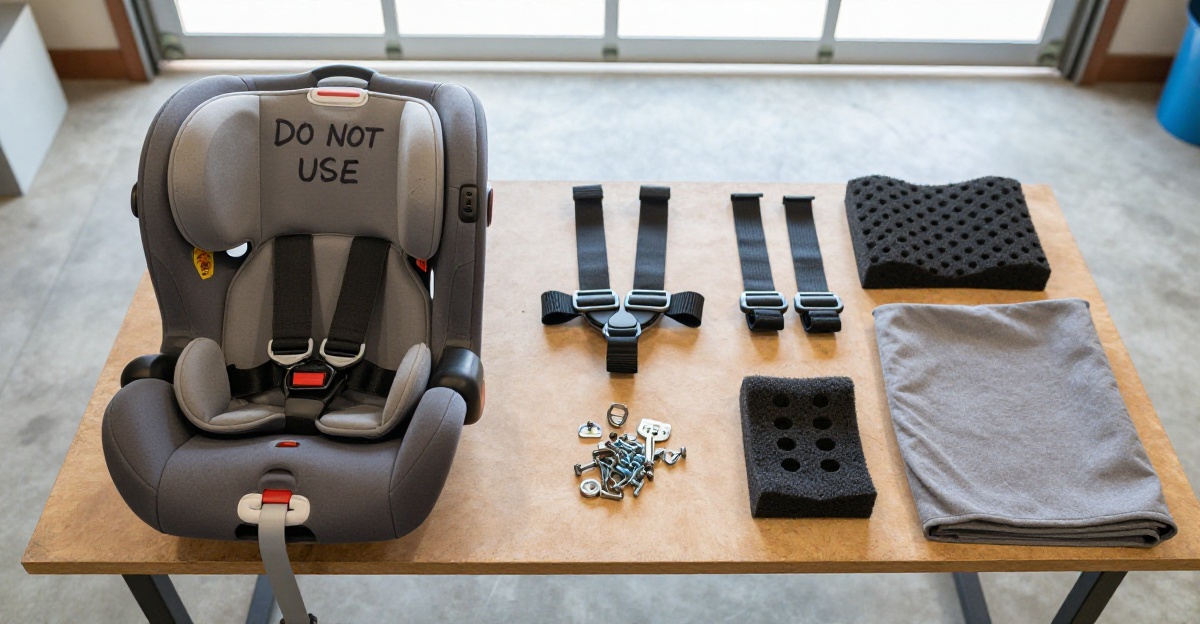
Destruction and Trash:
- Cut harness straps completely
- Remove fabric covers
- Mark “DO NOT USE” on shell
- Dispose with regular trash
Why Proper Disposal Matters
Car seats contain recoverable materials including high-density polyethylene plastic, polyester fabric, steel and aluminium, which is why the recycling routes below are worth the effort. You’ll find various figures quoted online for how many seats are scrapped and recycled each year in the US; we haven’t been able to trace them to the bodies they’re attributed to, so we’re not repeating them here.
Beyond environmental concerns, improper disposal creates safety hazards. Crashed or expired seats left at donation centers or posted on community give-away sites may end up used by unsuspecting families. Even when well-intentioned donors note that seats were in accidents, subsequent transfers may omit this crucial information. A seat donated after a crash might pass through several hands before reaching a family who has no knowledge of its history.
Step-by-Step Destruction Procedure
Before disposing of a crashed seat, render it completely unusable:
Step 1: Remove All Fabric Components
- Strip off seat covers, padding, and harness covers
- Remove infant insert if present
- Set aside any reusable items (cup holders, toys)
Step 2: Destroy the Harness System
- Use heavy-duty scissors or utility knife to cut all harness straps into pieces
- Cut through the splitter plate
- Remove and destroy the buckle by breaking it with pliers or a hammer
- Cut the chest clip into pieces
Step 3: Mark the Shell
- Use permanent marker to write “UNSAFE - DO NOT USE” across all sides
- Write “IN CRASH - NOT SAFE” on the seat back
- Include the date of destruction
Step 4: Damage the Shell
- Drill holes through the plastic shell at multiple points
- Crack the shell by applying force with a hammer at harness slots
- If recycling isn’t available, break the shell into smaller pieces
Step 5: Document and Dispose
- Photograph the destroyed seat for insurance records
- Place pieces in trash bags
- Dispose with regular trash or deliver to recycling center
Recycling Program Details
Target Car Seat Trade-In Program: Held twice yearly (typically April and September), this program accepts all car seats regardless of condition, brand, or age. Features include:
- Drop seats at designated collection area near store entrance
- Receive 20% discount coupon valid on baby/toddler purchases including new car seats
- Seats are disassembled, with plastics, metals, and textiles recycled into new products
- Check Target’s own event page for the current dates and terms before you drive over
Walmart Trade-In Events: Less frequent than Target but operates similarly when available. Check Walmart’s website or contact local stores to inquire about upcoming events.
Municipal Recycling Programs: Some cities operate specialty recycling events accepting car seats. These programs vary significantly by location:
- Seattle, WA: Accepts car seats at transfer stations year-round with a small processing fee
- Portland, OR: Quarterly e-waste events include car seat recycling
- San Francisco, CA: Recology program accepts car seats at no charge
- Denver, CO: Annual Hard-to-Recycle event includes car seats
TerraCycle Zero Waste Boxes: For families unable to access retail or municipal programs, TerraCycle offers car seat recycling boxes available for purchase. These boxes may be cost-prohibitive for single seat disposal but work well for community organizations, daycare centers, or families disposing of multiple seats simultaneously.
Donating Non-Crashed Seats
If you’re replacing a car seat for sizing reasons (child outgrew it) or preference rather than after a crash, and the seat has never been in any accident and hasn’t expired, donation becomes appropriate. Follow these guidelines:
Verify Seat History:
- Confirm manufacture date and expiration date
- Check recall status at NHTSA.gov/recalls
- Ensure all original parts are present
- Verify you have the owner’s manual
Prepare for Donation:
- Clean thoroughly with mild soap and water
- Include the owner’s manual or print replacement from manufacturer website
- Create an information sheet documenting: manufacture date, purchase date, confirm never in any accident, confirm all parts original, your contact information for questions
Appropriate Donation Recipients:
- Established non-profit organizations with safety equipment programs
- Hospital injury prevention programs
- Women’s shelters with family programs
- Community resource centers serving low-income families
Never Donate To:
- Garage sales, yard sales, or consignment shops without accident history disclosure
- General donation centers (Goodwill, Salvation Army) that lack expertise to verify safety
- Online marketplaces or community boards where history cannot be reliably communicated
Further Reading
- Benefits of a Load Leg Car Seat: Enhanced Safety Explained
- When Can a Child Sit in the Front Seat? Safety Guidelines
- When Can Kids Sit in a Booster Seat? Age & Weight Guidelines
Preventing Future Issues
Best Practices
- Register your seat: Manufacturer will contact you about recalls
- Keep manual accessible: Reference for replacement guidelines
- Photograph receipts: Document purchase for insurance
- Know your policy: Understand coverage before accidents happen
Creating a Car Seat Safety File
Organize a comprehensive file - physical or digital - containing all car seat related documents:
Essential Documents to Maintain:
- Original purchase receipt with date and price
- Product registration confirmation
- Owner’s manual (or digital PDF)
- Installation photos showing proper installation in your vehicle
- Professional installation certificate if installed by CPST
- Insurance policy pages covering property damage and PIP
- Contact information for manufacturer customer service
- Photos of the seat label showing model number and manufacture date
This file serves multiple purposes. After an accident, you’ll have immediate access to all information needed for insurance claims. During recalls, you can quickly verify whether your seat is affected. When your child outgrows the seat, the documentation helps you determine appropriate donation or disposal methods.
Vehicle Maintenance for Car Seat Safety
The vehicle itself matters as much as the seat. Regular maintenance and checks ensure the vehicle’s safety systems work properly:
LATCH Anchor Inspection:
- Visually inspect LATCH anchors quarterly for damage, rust, or debris
- Test anchor strength by pulling firmly with hands
- Have mechanic inspect anchors annually, especially in older vehicles or after accidents
Seat Belt Examination:
- Check seat belts used with car seats for fraying, twisting, or sticking
- Ensure seat belt buckles click firmly and release smoothly
- Verify seat belt retractors lock properly in emergency situations
Vehicle Seat Condition:
- Repair worn or damaged vehicle seats before they affect car seat installation
- Ensure vehicle seat back recline mechanisms function properly
- Address any vehicle seat wobble or looseness affecting car seat stability
Secondary Seat Strategy
Consider keeping an inexpensive backup seat:
- Use for travel or secondary vehicles
- Reduces urgency of immediate replacement
- Wayb Pico is a lightweight, FAA-approved travel option at just 8 lbs
Implementing a Backup Seat Strategy
Many families benefit from maintaining a second car seat for several strategic reasons beyond emergency replacement: Travel Convenience: Lightweight travel seats like the Wayb Pico weigh only 8 pounds compared to 20-30 pounds for premium convertible seats. This weight difference significantly impacts air travel comfort. The Wayb Pico also folds compactly, fitting in overhead bins and making gate-checking unnecessary.
Rideshare Safety: Families using Uber or Lyft with children benefit from a dedicated rideshare car seat. Installing and removing seats multiple times increases wear on both the seat and your patience. A backup seat designated for rideshare use remains in its carrying bag ready for quick installation.
Grandparent and Caregiver Vehicles: Rather than moving your primary seat between vehicles - which risks installation errors and increases wear - a secondary seat can live in grandparent or caregiver vehicles. This arrangement ensures consistent, correct installation and eliminates the dangerous practice of leaving children unrestrained “just for short trips.”
Multiple Car Families: Households with multiple vehicles often find that purchasing a second seat costs less than the time and hassle of moving a single seat between vehicles daily. This is particularly true for families with both a commuter car and a family vehicle.
Professional Installation and Inspection
Certified Child Passenger Safety Technician (CPST) Services: Locate certified technicians through:
- Safe Kids Worldwide: National network with local coalitions offering free inspection stations
- National Highway Traffic Safety Administration: Inspection station locator at NHTSA.gov/equipment/car-seats-and-booster-seats
- Hospital Programs: Many children’s hospitals employ CPSTs who offer free or low-cost inspections
- Fire Departments and Police Stations: Some have CPSTs on staff, though availability varies by jurisdiction
CPST inspection appointments typically last 30-60 minutes. Technicians verify:
- Seat selection appropriate for child’s age, height, and weight
- Correct installation in your specific vehicle
- Proper harness adjustment and chest clip positioning
- Recline angle appropriate for child’s age
- LATCH vs. seat belt
Recommended Products
Chicco KeyFit Max ClearTex Infant Car Seat
Best replacement infant seatChicco's current infant flagship and a reliable replacement choice. Adds an integrated anti-rebound bar over the KeyFit 35 and meets both FMVSS 213a (side impact) and 213b (frontal impact).
What We Like
- Integrated anti-rebound bar (the upgrade over the KeyFit 35 line) adds ~1.5 inches of legroom and reduces forward rotation in a frontal crash
- SuperCinch push-on lower LATCH connectors make a tight installation achievable with minimal force
- Integrated European belt routing for secure baseless installation in taxis, rideshares, or grandparent cars
- 5-position no-rethread harness with an extra inch of headroom vs the KeyFit 30
- Meets FMVSS 213b frontal impact standard and FMVSS 213a side impact standard; GREENGUARD Gold and Baby Safety Alliance verified; FAA approved
What We Don't
- Heavy carrier at 10 lbs, tiring for parents carrying it daily
- Canopy needs two hands to extend fully
- Belt threading under the guides is tedious for baseless installation
- No load leg (a feature Cybex, Nuna, and UPPAbaby offer at higher price points)
Graco Extend2Fit Convertible Car Seat
Best value replacementCost-effective long-term replacement with extended use.
What We Like
- 50-pound rear-facing limit per AAP guidelines
- 10-year lifespan
- Excellent value for features offered
- Extension panel provides extra legroom for taller babies
What We Don't
- Basic installation without InRight LATCH system
- Bulky design takes up significant vehicle space
Britax Poplar S
Best steel-framed replacementCarbon steel frame with a SafeCell crumple zone, and ClickTight to get the reinstall right.
What We Like
- ClickTight installation removes most of the guesswork from a tight fit
- Slim 17-inch shell is designed to fit three across
- Extended rear-facing to 50 lbs, matching the premium tier
- ReboundReduce stability bar limits rear-facing rebound movement
- 14-position no-rethread headrest and harness adjust together
What We Don't
- Only 6 recline positions against 10 on the Nuna RAVA
- 1-year limited warranty is short for the price
- At 28 lbs it is no lighter than seats without the slim shell
- Cover is washable but lacks the natural-fibre options of premium rivals
Safety 1st Grow and Go
Best budget backupBudget-friendly backup seat for travel or secondary vehicles.
What We Like
- Budget-friendly price without sacrificing safety standards
- QuickFit harness for easy height adjustments without rethreading
- Machine washable and dryer safe seat pad
- 10-year usable life span
What We Don't
- Bulkier than premium models
- Lower weight limits in each mode compared to competitors
Evenflo Gold Revolve360
Best rotating seat for extended rear-facingThe reason to buy this one is the 50 lb rear-facing cap, which buys most children a year or more of extended rear-facing over a 40 lb seat. The rotation is what sells it and the rear-facing range is what matters. Heavy, and it needs the space, so measure before you commit.
What We Like
- Rear-facing all the way to 50 lb, which is 10 to 15 lb beyond most convertibles
- One-hand 360-degree rotation, so you load your child facing the door
- No-rethread harness, and one install covers both rear and forward-facing
- Limited lifetime warranty from Evenflo
- Side impact protection, and SensorSafe on this trim
What We Don't
- 32.4 lb, so it's not a seat you move between cars casually
- The rotation mechanism needs real front-to-back space; check your vehicle first
- Forward-facing minimum is 30 lb, higher than many seats, which is a feature rather than a fault but does affect timing
Sources & Research
- Chicco USA Official Product Page
- Chicco KeyFit Max Infant Car Seat Product Manual
- The Car Seat Pros Review
- Amazon Product Listing
- Amazon Product Page
- Graco Official Product Page
- Britax Official Product Page
- Amazon Product Page
- Amazon Product Page
- Safety 1st Official
- Evenflo official product page, read 2026-08-03. Source for every per-mode limit, the 32.4 lb weight, the no-rethread harness and the limited lifetime warranty. Evenflo's own copy calls it the "Evenflo Gold Revolve360 Extend", which is why this record's name is not a mismatch
Continue Reading
Explore more car seat safety content or browse our other categories.
Frequently Asked Questions
- Does insurance cover car seat replacement after an accident?
- Yes, most auto insurance policies cover car seat replacement after accidents. According to NHTSA guidelines, car seats should be replaced after moderate to severe crashes. When filing your claim, explicitly request car seat replacement coverage. Most insurers will reimburse you for a comparable seat or provide a settlement amount. Keep your receipt for the replacement seat. Some insurers may want to inspect the damaged seat, but most accept NHTSA guidance that seats should be replaced. If the at-fault driver's insurance is paying, car seat replacement should be included in property damage. For your own comprehensive or collision coverage, car seats typically fall under personal property coverage. Document everything: take photos of the damaged seat, keep the accident report, and save all receipts. If your insurer resists, cite NHTSA guidelines and your state's insurance regulations.
- When does NHTSA say to replace a car seat after a crash?
- NHTSA recommends replacing car seats after moderate or severe crashes. A crash is considered minor - and replacement may not be necessary - only if ALL of the following are true: the vehicle was driven away from the crash site, the vehicle door nearest the safety seat was undamaged, there were no injuries to any vehicle occupants, the air bags did not deploy, and there is no visible damage to the car seat. If ANY of these conditions are not met, the crash is considered moderate or severe and the seat should be replaced. Even in minor crashes where replacement might not be required, NHTSA recommends closely inspecting the seat for damage. Many manufacturers take a more conservative approach and require replacement after ANY crash. Always check your car seat manual - manufacturer guidelines supersede NHTSA recommendations. When in doubt, replace the seat. The cost of a new car seat is minimal compared to your child's safety.
- What are the signs a car seat was damaged in an accident?
- Visible signs of car seat damage after an accident include: cracks or stress marks in the plastic shell, bent or broken frame components, frayed or torn harness straps, damaged buckle or chest clip that doesn't click properly, stretched or loose LATCH straps, deployed locking clips, loose or rattling internal components, and torn or compressed padding. However, many types of damage are not visible to the naked eye. The internal structure may be compromised even if the exterior looks fine. Micro-cracks in the plastic shell, weakened foam energy absorbers, and stressed metal components may not be apparent but can fail in a subsequent crash. This is why NHTSA and manufacturers generally recommend replacement after moderate to severe crashes even without visible damage. If you notice any of the visible signs listed, the seat definitely needs replacement. Even without visible damage, the forces of a crash may have compromised the seat's structural integrity. When in doubt, contact the manufacturer with photos and your seat's model number and manufacture date for guidance.
- Can I donate or sell a car seat that was in an accident?
- No, you should never donate, sell, or give away a car seat that was in any accident. Even if the crash seemed minor and the seat appears undamaged, you cannot guarantee its safety for another child. Selling or donating a potentially compromised seat could put another child at serious risk. Proper disposal is essential. Options include: retailer trade-in programs (Target and Walmart periodically offer car seat trade-in events where you receive a coupon for a new seat), local recycling centers that accept car seats (call to confirm), disassembling the seat and recycling components separately (plastic shell, metal frame, foam padding), and as a last resort, destroying the seat and placing it in regular trash. Before disposing, cut the harness straps so the seat cannot be reused. Some communities have hazardous waste programs that accept car seats. Check with your local waste management authority for specific guidelines in your area. Never pass a potentially damaged seat to another family.
- How do I file an insurance claim for car seat replacement?
- To file an insurance claim for car seat replacement, follow these steps: First, report the accident to your insurance company immediately. When describing damages, explicitly mention that car seats were in the vehicle and need replacement per NHTSA guidelines. Request claim forms for personal property damage. Document everything: take clear photos of the car seats from multiple angles showing any visible damage, get a copy of the police accident report, note the make, model, and manufacture date of each seat, and keep receipts if you purchase replacements before settlement. Submit your documentation with the claim form, citing NHTSA's guidance on car seat replacement after crashes. If the other driver was at fault, their insurance should cover replacement as part of property damage. If you're using your own coverage, car seats typically fall under personal property provisions. Most insurers process car seat claims quickly once proper documentation is provided. If your insurer resists, escalate to a supervisor and cite NHTSA guidelines. Insurance rules vary by state, so if you get a written denial, your state department of insurance is the next place to take it.
Written By
Kid Sitting Safe
Our team researches car seat safety standards, crash test data, and real-world usability to help parents make the safest choice.
Related Articles
Car Seat Installation: A Complete Guide for Parents
Master car seat installation with our comprehensive guide. Learn LATCH vs. seat belt methods, common mistakes to avoid, and expert tips for secure installation every time.

Car Seat Laws by State: How to Find Yours, and Why the Lists Are Wrong
How to find your state's car seat law and read it properly, why the state-by-state lists in circulation are unreliable, and the three states wrongly listed as requiring rear-facing until age 2.
Car Seat Recycling and Disposal Guide: How to Responsibly Get Rid of Old Seats
How to recycle, trade in, or safely dispose of old, expired, or crashed car seats. Covers Target trade-in events, DIY disassembly, and why you should never donate an expired seat.