Affiliate Disclosure:Kid Sitting Safe is reader-supported. When you buy through links on our site, we may earn an affiliate commission at no additional cost to you. This does not influence our reviews or recommendations — we only recommend products we genuinely believe in.
Quick Picks
Choosing the right car seat is one of the most important decisions parents make for their child’s safety. With hundreds of options on the market, finding the best car seat can feel overwhelming.
This comprehensive guide reviews the top-rated car seats for 2026 across all categories - from infant carriers to convertible seats to boosters. Every seat featured meets or exceeds FMVSS 213 safety standards, with selections based on expert evaluations, ease of use, and parent feedback.
Quick Comparison: Best Car Seats 2026
| Category | Top Pick | Rating | Value | Best Feature |
|---|---|---|---|---|
| Infant Seat | Chicco KeyFit Max ClearTex | 4.8/5 | Mid-Range | Integrated anti-rebound bar |
| All-in-One | Graco Extend2Fit | 4.7/5 | Mid-Range | 10-year lifespan |
| Premium Convertible | Britax Poplar S | 4.5/5 | Premium | ClickTight, 17” shell |
| Luxury Convertible | Nuna RAVA | 4.7/5 | High-End | Fire-retardant free |
| Booster Seat | Graco TurboBooster LX | 4.4/5 | Budget | Cheapest backless option |
| 3 Across Fit | Diono Radian 3RXT | 4.3/5 | Mid-Range | Slim design |
Ratings are our editorial assessment, weighing published specs, manufacturer documentation and independent reviewer consensus. We don’t test products ourselves.
Understanding Car Seat Categories
Before diving into specific recommendations, understanding the different types of car seats helps you make an informed decision based on your child’s age, size, and your family’s needs.
Infant Car Seats (Birth to 12-15 Months)
Infant car seats are rear-facing only and designed specifically for newborns through approximately 12-15 months (depending on weight and height limits). These seats typically accommodate babies from 4-35 pounds and up to 32 inches tall.
Key advantages:
- Optimal newborn positioning: Deeply reclined angle protects newborn airways
- Portability: Detach from base and carry without disturbing sleeping babies
- Travel system compatibility: Click directly into compatible strollers
- Easier installation: Smaller size simplifies achieving proper angle
Limitations:
- Relatively short lifespan (outgrown by 9-15 months on average)
- Additional purchase required when child outgrows
- Takes up trunk space when traveling
Convertible Car Seats (Birth Through Preschool)
Convertible seats transform from rear-facing (for infants and toddlers) to forward-facing (for preschoolers), typically accommodating children from birth through 65 pounds or more.
Why parents choose them:
- Extended use: One seat covers multiple years
- Better value: Eliminates need for separate infant seat
- Higher rear-facing limits: Many accommodate 40-50 pounds rear-facing
- Sturdy construction: Larger frame provides robust protection
Limitations:
- Less portable than infant carriers
- More challenging to achieve proper recline for newborns
- Cannot be used as travel system carrier
All-in-One Car Seats (Birth Through Age 10+)
All-in-one seats (also called 3-in-1 or combination seats) function as rear-facing infant seats, forward-facing harnessed seats, and belt-positioning boosters, covering your child from birth through approximately age 10-12.
What makes them appealing:
- Maximum value: Single purchase from birth to booster years
- Consistency: Child stays in familiar seat throughout development
- Extended rear-facing: Most offer 40-50 pound rear-facing limits
- Long expiration dates: Typically 10 years from manufacture
Limitations:
- Bulkier and heavier than dedicated seats
- Wear and tear across many years
- May not excel in any single category
- Difficult to pass down to younger siblings
Booster Seats (Ages 4-12)
Booster seats position the vehicle’s seat belt correctly across a child’s body once they’ve outgrown forward-facing harnesses (typically around 40-65 pounds, depending on the seat).
The upsides:
- Lightweight and portable: Easy to move between vehicles
- Affordable: Most quality boosters are budget-friendly
- Child independence: Older children can buckle themselves
- Long usability: Most accommodate children to 100-120 pounds
Limitations:
- Requires mature child who will keep belt positioned correctly
- No 5-point harness for additional security
- Depends entirely on proper vehicle belt fit
Best Infant Car Seat: Chicco KeyFit Max ClearTex
The Chicco KeyFit Max ClearTex is Chicco’s current infant flagship, succeeding the KeyFit 35 in the lineup. It carries over the SuperCinch LATCH and ReclineSure levelling that made the KeyFit line consistently rated #1 by Child Passenger Safety Technicians for installation ease, and adds an integrated anti-rebound bar that the KeyFit 35 didn’t have.
What Makes It Best
Installation Confidence The ReclineSure leveling system and RideRight bubble indicators take the guesswork out of achieving the correct angle. The SuperCinch LATCH tightener allows you to achieve a secure fit with minimal effort. Integrated European belt routing in the carrier makes baseless installs in rental and shared cars secure.
Safety Certifications Meets both FMVSS 213a (side impact) and 213b (frontal impact), plus GREENGUARD Gold and FAA approved.
Practical Features
- Integrated anti-rebound bar (reduces forward rotation in a frontal crash)
- 5-position no-rethread harness
- Removable newborn head and body support
- ~1 inch more headroom than the original KeyFit 30
- Compatible with Chicco Bravo travel systems
- Machine washable fabrics
Why Parents Love It
Parents consistently praise the KeyFit line’s ability to achieve a tight installation quickly, a critical factor since installation errors are the leading cause of car seat ineffectiveness. The Max ClearTex adds the integrated ARB and side-impact certification without losing that installation pedigree.
Installation Tips for the KeyFit Max ClearTex
When installing the KeyFit Max ClearTex, start by positioning the base in your vehicle’s seating position. The base features a spring-loaded foot that helps achieve the proper recline angle automatically. Engage the SuperCinch LATCH tightener by pulling the strap firmly until the base doesn’t move more than one inch in any direction. Check the bubble indicators, they should sit in the correct zone for proper recline. The integrated anti-rebound bar sits against the vehicle seat back; verify it makes contact and is positioned per the manual.
For seat belt installation (useful in vehicles without LATCH or for centre seat placement), thread the vehicle belt through the clearly marked belt path, buckle it, then use the built-in lock-off to secure the belt tension. The integrated European belt routing in the carrier also supports secure baseless installs.
Weight and Height Considerations
The KeyFit Max ClearTex accommodates infants from 4 to 30 pounds and up to 32 inches tall. The 30 lb rear-facing cap is lower than the KeyFit 35’s 35 lb cap, but most babies outgrow infant seats by height rather than weight, so it rarely matters in practice. Most babies outgrow this seat between 9 and 15 months. Always check the height limit indicator on the back of the seat; when your baby’s head reaches the marker, it’s time to transition to a convertible seat regardless of weight. If you specifically need the 35 lb cap, the legacy KeyFit 35 remains FMVSS 213 certified, see our Chicco KeyFit 35 review.
Best All-in-One: Graco Extend2Fit 3-in-1
For parents wanting one seat to last from birth through the booster years, the Extend2Fit 3-in-1 delivers exceptional value.
Extended Rear-Facing
The Extend2Fit accommodates children rear-facing to 50 pounds - well beyond the 40-pound limit of most seats. This aligns with AAP recommendations to keep children rear-facing as long as possible; our AAP child passenger safety research summary covers the data behind that guidance, and the best rear-facing car seats for 2026 roundup ranks the seats with the highest rear-facing limits.
3-in-1 Versatility
- Rear-facing: 4-50 pounds
- Forward-facing: 22-65 pounds
- Highback booster: 40-100 pounds
Extension Panel Innovation
The 4-position extension panel provides up to 5 inches of additional legroom, keeping taller children comfortable in rear-facing mode longer.
Real-World Performance
In everyday use, the Extend2Fit shines in suburban and city environments where parents make multiple short trips daily. The 10-year expiration date means you can potentially use this single seat for your child’s entire car seat journey, then pass it along to a younger sibling if there are several years remaining before expiration.
The simply safe adjust harness system allows you to adjust the harness height without rethreading - a significant time-saver as your child grows. Ten harness positions ensure you can find the perfect fit for children of various heights and proportions. The fuss-free harness storage system keeps straps out of the way during boarding, preventing that frustrating moment when children sit on twisted straps.
Transitioning Between Modes
Converting from rear-facing to forward-facing takes approximately 15-20 minutes and requires reading the manual carefully. You’ll need to adjust the recline angle, reposition the tether, and potentially adjust the LATCH installation. The transition from forward-facing harness to highback booster is simpler - just remove the harness system and guide your child to use the vehicle seat belt.
When using booster mode, ensure the vehicle’s seat belt sits across your child’s shoulder (not neck or face) and across the hips (not stomach). The Extend2Fit’s adjustable headrest helps position the shoulder belt correctly as your child grows.
Best Premium Convertible: Britax Poplar S
Britax has retired the whole ClickTight convertible line, the Boulevard, Marathon and Advocate included, so the premium pick is now the Poplar S. It keeps the ClickTight installation system that made those seats worth recommending, in a slimmer 17-inch shell, and adds a rebound bar the old seats never had.
It also stretches rear-facing further than the Boulevard did: 5 to 50 lbs against the Boulevard’s 5 to 40.
ClickTight Installation
Open the seat’s front panel like a car door, thread the vehicle belt through the path, close until it clicks. The system automatically tensions to the correct tightness - no wrestling required.
Advanced Safety
- Carbon steel frame provides structural reinforcement
- SafeCell crumple zone absorbs crash forces
- 14-position no-rethread headrest and harness grows with your child
- ReboundReduce stability bar limits rear-facing rebound
- Rear-facing to 50 lbs, forward-facing to 65
The ClickTight Advantage Explained
Traditional car seat installation requires significant upper body strength to achieve proper tension - a barrier for many caregivers. ClickTight eliminates this challenge entirely. The mechanical compression system ensures consistent, correct tension every time, regardless of the installer’s physical capabilities.
This innovation particularly benefits families where multiple caregivers (grandparents, babysitters, partners) need to install and reinstall the seat. Everyone can achieve the same secure installation without training or physical strength. This consistency dramatically reduces installation errors, which according to NHTSA affect a significant percentage of traditionally installed car seats.
Side Impact Protection Technology
Britax’s SafeCell Impact Protection system pairs a steel frame with an energy-absorbing crumple zone and a V-shaped tether. The crumple zone is designed to compress during an impact, absorbing energy before it reaches your child, and the tether limits how far the seat pitches forward.
While all car seats must pass the same federal safety standards, which primarily test frontal impacts, side impacts are second only to frontal crashes for occupant deaths. Britax’s additional side impact protection provides extra reassurance, though proper installation and appropriate positioning (rear-facing as long as possible) still matter far more than any single feature.
Fabric and Comfort Features
The Poplar S uses Britax’s SafeWash fabrics, made without added flame-retardant chemicals. The cover comes off without disassembling the harness and is both washer and dryer safe, which matters more than plushness the first time a journey ends badly. Britax puts the warranty at 1 year and the seat’s expiry at 10 years from manufacture.
Best Luxury Convertible: Nuna RAVA
The Nuna RAVA targets discerning parents who want premium materials without compromising on safety.
Premium Materials
- Naturally fire-retardant fabrics (no chemical treatments)
- Steel frame construction
- Ventilation panels for temperature regulation
- Premium padding for comfort
Thoughtful Design
The bubble-free recline adjustment allows infinite positioning for the perfect angle. Simply squeeze and adjust - no preset notches to fight with.
The Flame-Retardant-Free Advantage
Nuna distinguishes itself on materials chemistry rather than on any single fibre. Their stated approach is to source every element, fabric through to foam, to be flame resistant without added fire-retardant chemicals. All car seats sold in the US must meet federal flammability standards (FMVSS 302), and most manufacturers get there with chemical treatments applied to fabrics and foam; Nuna get there by material choice instead.
Parents concerned about chemical exposure appreciate that approach, though it’s worth understanding that all approved car seats, whatever the flame retardant method, meet safety standards for both crash protection and fire resistance. Choosing between chemically-treated and naturally flame-resistant fabrics is a personal preference rather than a safety differentiation.
The fabrics differ by seat rather than following one house material. The RAVA uses a bamboo blend that’s breathable and moisture-wicking; the PIPA Aire uses a micro-knit. Both are machine washable, and Nuna don’t publish a fibre content for every seat, so treat any specific “this seat is wool” or “this seat is cotton” claim you read elsewhere with suspicion unless Nuna themselves say it.
Installation Options and Vehicle Compatibility
The RAVA offers both LATCH and seat belt installation methods. Its True Tension Door indicators give visual confirmation of proper installation tension - a helpful feature for parents who worry whether they’ve achieved adequate tightness. The indicators show green when tension is correct and red when adjustment is needed.
At 28 pounds, the RAVA is heavier than budget convertible seats but similar in weight to other premium models. The added weight comes from the steel frame construction and dense energy-absorbing foam. While this makes the seat less portable for frequent vehicle transfers, it provides reassuring solidity and stability when installed.
Extended Rear-Facing Capabilities
Like other premium convertibles, the RAVA accommodates children rear-facing from 5-50 pounds and 25-49 inches tall. The 49-inch height limit is higher than many competing seats, allowing exceptionally tall children to remain rear-facing longer. The seat’s deep shell and tall headrest provide ample room for growing toddlers without feeling cramped.
Best Budget Booster: Graco TurboBooster LX (backless)
Not every purchase needs to be premium. The TurboBooster LX offers reliable booster functionality cheaply, provided you know it’s backless only: 40-100 lb, 43-57 inches, at least 4 years old, and no head or side support.
Dual-Mode Design
Use as a highback booster (40-100 pounds) until your child needs less support, then convert to backless mode (40-120 pounds) for older children.
Practical Features
- Adjustable armrests for growing kids
- Integrated cup holders
- Machine washable seat pad
- Lightweight for easy transfers between vehicles
When to Transition to a Booster Seat
Children are ready for booster seats when they outgrow their forward-facing harnessed car seat - typically around 40-65 pounds depending on the specific seat’s limits. However, weight and height aren’t the only considerations. Your child must also demonstrate the maturity to sit properly positioned throughout every car ride.
Proper booster positioning means:
- Sitting with back against the vehicle seat back
- Keeping the shoulder belt across the chest (not neck or face)
- Maintaining lap belt position across the hips (not stomach)
- Staying seated without slouching or leaning forward
- Not adjusting or removing the seat belt during travel
If your child cannot consistently maintain this positioning, they’re not ready for a booster seat regardless of size. Many children aren’t mature enough for boosters until age 5-6, even if they physically fit the weight requirements earlier.
Highback vs. Backless Boosters
Boosters come in two formats, and the choice matters more than the brand. Younger children transitioning from harnessed seats typically need a highback, which provides:
- Side impact protection for head and torso
- Support for children who fall asleep in the car
- Proper shoulder belt positioning
- Visual reminder to sit correctly
Older children (typically ages 8-10) who demonstrate consistent proper positioning may move to a backless booster, which is what the TurboBooster LX is. Backless boosters work well for:
- Vehicles with well-designed headrests and seat backs
- Children who stay awake during trips
- Multiple vehicle transfers (lighter and more portable)
- Carpool situations where space is limited
However, if your vehicle lacks integrated headrests or has low seat backs, stick with highback mode for continued head and neck support.
Cost-Effectiveness for Multiple Children
The budget-friendly Turbobooster LX represents exceptional value for families with multiple children. You can purchase one for each vehicle without significant financial impact. The 6-year expiration date typically provides enough lifespan to serve one child through the booster years, then potentially serve a younger sibling for several additional years.
The lightweight construction (under 10 pounds in highback mode) makes the Turbobooster ideal for carpools, grandparent vehicles, and vacation travel. Unlike heavy convertible seats that require significant effort to transfer between vehicles, the Turbobooster moves easily and installs in seconds.
Best for 3 Across: Diono Radian 3RXT
Families with multiple children or compact vehicles face unique challenges. The Radian 3RXT’s slim profile (17 inches wide) allows fitting three seats across in many vehicles.
Slim but Substantial
Don’t let the narrow profile fool you - the Radian features:
- Steel alloy frame and aluminum reinforced sides
- 12-position headrest
- Expandable sides for shoulder room
- Memory foam padding
Travel-Friendly
The Radian folds flat for travel and fits in airplane overhead compartments, making it ideal for families who fly frequently.
The Three-Across Challenge
Installing three car seats across a single vehicle row presents significant challenges. Most car seats measure 18-20 inches wide, making three-across installations impossible in vehicles with rear seats narrower than 54-60 inches. Even in vehicles with adequate width, LATCH anchor placement often prevents three-across installations using LATCH systems.
The Radian 3RXT addresses this challenge with its 17-inch width - approximately 2-3 inches narrower than typical convertible seats. This seemingly small difference enables three-across configurations in many midsize sedans, compact SUVs, and vehicles where traditional seats won’t fit.
Installation Strategies for Multiple Seats
When installing three seats across, consider these approaches:
Center seat placement: If possible, place one seat in the center position using the vehicle seat belt (saving LATCH anchors for outboard seats). The center position is statistically the safest location in the vehicle, furthest from potential side-impact zones.
Outboard LATCH usage: Install outboard seats using LATCH systems (if your vehicle’s LATCH positions allow) and the center seat with seat belt. Never use a single LATCH anchor for multiple seats - each seat needs its own dedicated anchor points.
All seat belt installation: In some vehicles, installing all three seats with seat belts (rather than LATCH) provides more flexibility and equally secure installation. Seat belt installation is just as safe as LATCH when performed correctly.
Strategic seat selection: Position infant seats on outboards where you’ll need to access them most frequently. Place older children in less accessible positions where they can buckle themselves.
Extended Use and Versatility
The Radian 3RXT functions as a convertible seat accommodating:
- Rear-facing: 5-45 pounds
- Forward-facing: 20-65 pounds
- Booster mode: 50-120 pounds
This 3-in-1 functionality combined with a 10-year expiration date makes the Radian an investment that can serve multiple children. Many families purchase three Radians for three-across configurations, then continue using them as older children graduate to booster mode while younger siblings use them as rear-facing or forward-facing harnessed seats.
Weight and Portability Considerations
The Radian’s steel construction contributes to its 28-pound weight - significantly heavier than budget seats but standard for premium convertibles. That weight makes frequent vehicle transfers challenging, but the folding design partially compensates. The seat folds to approximately 12 inches thick, allowing it to fit in airline overhead bins or vehicle trunks without consuming excessive space.
For air travel, the Radian is FAA-approved and labeled for aircraft use. However, be aware that airline seat widths vary, and the Radian’s 17-inch width may fit snugly or not at all in some regional aircraft with narrower seats. Always check your specific aircraft configuration before depending on using the Radian during flight.
Understanding Car Seat Safety Ratings
NHTSA Ease-of-Use Ratings
NHTSA rates car seats on ease of use (not safety), evaluating:
- Instruction clarity
- Installation features
- Labeling
- Harness adjustment
All car seats must meet the same FMVSS 213 safety standards to be sold in the US.
The Real Safety Factor
The “safest” car seat is the one that:
- Fits your child’s current size
- Fits your vehicle properly
- Can be installed correctly every time
- You’ll use consistently
A budget seat installed correctly is safer than a premium seat installed incorrectly.
Beyond Federal Standards: Additional Testing
FMVSS 213 requires every car seat to withstand a 30 mph frontal crash and meet specific force limits on the dummy’s head and chest. However, these federal standards represent the minimum acceptable performance, last substantially updated in 1981 with incremental improvements since then. Many manufacturers now exceed these requirements significantly.
Consumer Reports conducts more rigorous independent testing, including frontal impacts at 38.5 mph (versus the federal 30 mph) and side impacts at 30 mph (not required by federal standards at all). Their testing uses crash test dummies equipped with sensors measuring forces on the head, chest, and torso. They also evaluate how consistently seats can be installed correctly by average parents - a seat with superior crash test performance but confusing installation instructions may perform poorly in actual use.
Other organizations conduct valuable testing: ADAC (Germany) includes severe side-impact scenarios, Which? (UK) uses rigorous safety protocols, and the IIHS provides occasional vehicle-specific testing. While international results don’t always directly apply to US-market seats, they provide insights into engineering approaches that enhance safety across all markets.
It’s crucial to understand that passing additional voluntary tests doesn’t make a seat “safer” in absolute terms - it demonstrates the seat performs well under different test conditions. The most rigorous additional testing cannot overcome improper installation or incorrect use.
The Role of Crash Test Performance
Manufacturers sometimes promote superior crash test performance in marketing materials. While impressive-sounding, parents should understand that:
- All car seats must pass identical federal crash tests to be sold
- Additional testing uses different protocols, making comparisons difficult
- Real-world crash outcomes depend more on installation quality than test performance
- Proper use and fit matter more than test scores
Focus your selection on seats that fit your child and vehicle correctly, with features that ensure you’ll install and use them properly every time. These factors have more impact on real-world safety than crash test performance differences between compliant seats.
Advanced Safety Features Explained
Anti-Rebound Bars and Load Legs
These features attach to vehicle surfaces to limit car seat rotation during crashes. Anti-rebound bars brace against the vehicle seat back, while load legs extend to the vehicle floor.
In a frontal crash, a car seat rotates forward as the vehicle decelerates. This rotation increases head excursion - how far forward the child’s head travels. Anti-rebound bars can reduce head excursion by 10-20%, while load legs may reduce it by 20-30% depending on the crash scenario. However, effectiveness varies based on vehicle seat geometry and floor structure, and these features don’t work in all vehicles.
Energy-Absorbing Foam Technologies
Modern car seats use various foam types for energy absorption:
- EPP (Expanded Polypropylene): Lightweight, recovers shape after impact, maintains properties across temperature extremes. Used in many mid-range and premium seats.
- EPS (Expanded Polystyrene): Lighter and less expensive, crushes permanently during impact but provides excellent energy absorption. Common in budget seats.
- Multi-density systems: Combine materials with different compression characteristics for graduated energy absorption: soft initial contact followed by firmer resistance.
The foam type matters less than its placement and thickness. Strategic positioning around the head and torso, particularly for side-impact protection, provides more benefit than uniform padding throughout the seat.
Shell Materials and Design
Car seat shells are typically made from high-impact polypropylene (good strength-to-weight ratio), reinforced composites (additional strength at added weight), or steel-reinforced frames (structural support while the plastic shell manages energy absorption).
Shell design affects safety through geometry and material distribution. Deep side wings protect the head during side impacts. Proper curves distribute crash forces across the shell rather than concentrating stress points. Adequate thickness in critical areas prevents failure while allowing appropriate energy absorption through controlled deformation.
Installation Best Practices
LATCH System Fundamentals
Lower Anchors and Tethers for Children (LATCH) were introduced in 2002 to simplify car seat installation. The system provides dedicated anchor points built into vehicles, eliminating the need to use vehicle seat belts for installation.
Understanding LATCH limits: Most vehicle manufacturers rate LATCH anchors for 65 pounds total weight (child + car seat). Once combined weight exceeds this limit, you must switch to seat belt installation. Always check your vehicle’s manual for specific LATCH weight limits - some vehicles have lower limits.
Lower anchor positioning: Most vehicles have LATCH anchors in outboard rear seating positions. Some vehicles include LATCH anchors in the center position. Never use a single set of LATCH anchors for multiple car seats - each seat needs dedicated anchors.
Tether anchors: All seating positions in vehicles manufactured after 2000 include tether anchors, used for forward-facing car seat installation. Tethers significantly reduce forward head movement during crashes and should always be used when available.
Seat Belt Installation Technique
Seat belt installation provides equally secure attachment when performed correctly:
- Route the belt properly: Follow the car seat’s belt path precisely - rear-facing and forward-facing positions use different paths
- Create tension: Push down firmly on the car seat while pulling the seat belt tight
- Lock the belt: Use either the car seat’s built-in lock-off or the vehicle seat belt’s locking mechanism
- Test tightness: The seat should not move more than one inch side-to-side or front-to-back at the belt path
Common Installation Mistakes
Loose installation: The most common error. A properly installed seat moves less than one inch in any direction when tested at the belt path. Many parents don’t apply enough force when tightening, resulting in excessive movement.
Incorrect recline angle: Rear-facing seats require specific recline angles to protect infant airways and provide proper crash protection. Too upright risks airway obstruction in young infants; too reclined reduces crash protection. Use the seat’s built-in angle indicators and adjust until achieving the correct range.
Harness too loose: The harness should be snug enough that you cannot pinch any webbing at the child’s shoulder. Loose harnesses allow excessive movement during crashes, increasing injury risk. Tighten the harness from the front (pulling the adjustment strap) after buckling your child, not before.
Chest clip positioned incorrectly: The chest clip should sit at armpit level, keeping harness straps on the child’s shoulders. Clips positioned too low (on the abdomen) or too high (on the neck) don’t properly restrain the child and can cause injuries in crashes.
Twisted straps: Twisted harness straps reduce effectiveness and can cause injury during crashes. Always ensure straps lie flat against your child’s body.
Rear-Facing: Staying Longer Saves Lives
Current Recommendations
The American Academy of Pediatrics recommends children remain rear-facing until they reach the maximum height or weight limit for their car seat’s rear-facing mode - typically age 3-4 or beyond. Learn more about extended rear-facing and why it matters. This represents a significant change from previous recommendations of turning forward-facing at age 2.
The Science Behind Extended Rear-Facing
Rear-facing car seats support a child’s head, neck, and spine in crashes, distributing crash forces across the entire back rather than concentrating forces on the neck. Young children have proportionally large heads (25% of body weight vs. 6% in adults) supported by underdeveloped neck muscles and cartilage-rich spinal structures. This anatomy makes children especially vulnerable to spinal cord injuries during forward-facing crashes.
Studies from Sweden, where children typically remain rear-facing until age 4-5, show dramatic injury reduction compared to countries where children turn forward-facing younger. Swedish data indicates rear-facing children are five times less likely to be seriously injured in crashes compared to forward-facing children.
Addressing Common Concerns
“Their legs are cramped”: Children are naturally flexible and comfortable with bent legs. Sitting cross-legged or with bent knees doesn’t cause discomfort. Additionally, leg injuries are relatively minor compared to potential neck and spinal cord injuries prevented by rear-facing positioning.
“They want to see out the window”: While children may initially prefer forward-facing views, rear-facing children can still see out side windows. Provide toys, books, or mirrors designed for rear-facing entertainment. Your child’s safety takes priority over their viewing preferences.
“They get car sick rear-facing”: True motion sickness triggered by rear-facing positioning is uncommon. If you suspect motion sickness, consult your pediatrician. Solutions may include medication, dietary adjustments, or positioning changes that don’t require turning forward-facing prematurely.
When to Replace Your Car Seat
After Crashes
Replace car seats after moderate to severe crashes even if no visible damage appears. The seat’s structure may be compromised in ways not visible externally. NHTSA provides guidance on crash severity - minor fender-benders may not require replacement, but any crash involving airbag deployment, vehicle damage, injuries, or inability to drive the vehicle away requires seat replacement.
Many insurance policies cover car seat replacement after crashes. Contact your insurer promptly after any collision and save the car seat as evidence until the claim processes.
Expiration Dates
Car seats expire 6-10 years from manufacture date (check the label on your specific seat). Expiration accounts for:
- Plastic degradation from temperature cycling and UV exposure
- Wear and tear from daily use
- Outdated safety technology as standards evolve
- Missing or faded instruction labels
Never use expired car seats, even if they appear undamaged. The structural integrity cannot be guaranteed beyond the expiration date.
Other Replacement Scenarios
Unknown history: Never use car seats with unknown history - gifts from strangers, garage sales, or thrift stores. You cannot verify whether the seat has been in crashes or stored improperly.
Missing parts: Car seats missing any components (harness parts, LATCH straps, instruction manuals) should not be used. Contact the manufacturer - many provide replacement parts and manuals for free or minimal cost.
Recall status: Check whether your car seat has been recalled at NHTSA’s recall website. Register your car seat with the manufacturer to receive automatic recall notifications.
Visible damage: Cracks in the plastic shell, frayed harness straps, damaged buckles, or broken adjustment mechanisms compromise safety and require seat replacement.
Special Considerations for Newborns
Proper Fit for Small Infants
Many newborns, especially those born prematurely or with low birth weight, require special considerations for car seat safety.
Weight minimums: Most car seats list 4-5 pound weight minimums. Infants below these weights may not be properly supported by standard car seats. Hospitals typically require car seat fit testing before discharge for infants under 5 pounds.
Harness slot positioning: Rear-facing harness slots should be at or below the infant’s shoulders. Many newborns need the lowest harness slot position, which may not provide adequate support in some convertible seats designed for wider age ranges. Infant-specific seats typically provide better positioning for small newborns.
Recline angle: Newborns need sufficient recline to keep airways open. Underdeveloped neck muscles prevent small infants from keeping their heads from falling forward, potentially obstructing breathing. Use the car seat’s recline adjusters to achieve the proper angle - typically 30-45 degrees from vertical.
Additional support: Most car seats include infant inserts providing extra support for small babies. These inserts typically include head support, body cushions, and sometimes additional pieces for positioning. Use only inserts provided by or approved by the car seat manufacturer - aftermarket products may interfere with proper positioning.
Car Seat Tolerance Screening
Hospitals often perform car seat tolerance screening for premature or medically complex infants before discharge. This screening places the infant in their car seat while monitoring oxygen levels, heart rate, and breathing patterns for 90-120 minutes. If the infant shows signs of distress, healthcare providers may recommend a different car seat, specialized positioning products, or a car bed designed for flat positioning during travel.
Further Reading
- Best Car Seats for Small Cars 2026: Compact & Narrow Options
- Britax vs Chicco: Which Car Seat Brand Is Best for Your Family?
- Evenflo Embrace LX Review: Budget-Friendly Infant Car Seat
Making Your Final Decision
Selecting a car seat involves balancing safety, usability, budget, and your family’s specific needs. While the seats reviewed here represent excellent options across various categories, the “best” car seat for your family depends on factors unique to your situation.
Consider your priorities:
- Budget-conscious families: The Graco Extend2Fit 3-in-1 or Turbobooster LX provide exceptional value
- Installation confidence: The Chicco KeyFit Max ClearTex or Britax Poplar S eliminate installation anxiety
- Premium materials preference: The Nuna RAVA offers luxury features and chemical-free fabrics
- Multiple children or compact vehicles: The Diono Radian 3RXT solves three-across challenges
- Extended rear-facing priority: Both the Graco Extend2Fit and Nuna RAVA accommodate 50-pound rear-facing limits
Remember that the most important factors are proper fit for your child, correct installation in your vehicle, and consistent proper use. A moderately-priced seat that you install correctly and use consistently will always outperform an expensive seat installed incorrectly or used improperly.
Take advantage of free resources like CPST inspections, manufacturer customer service lines, and online video tutorials specific to your car seat model. Your investment in proper car seat selection and use is one of the most important safety decisions you’ll make for your child.
Our Top Picks
Chicco KeyFit Max ClearTex Infant Car Seat
Best overall infant car seat for installation easeChicco's current infant flagship. Carries the KeyFit installation pedigree and adds an integrated anti-rebound bar; meets FMVSS 213a (side impact) and 213b (frontal impact).
What We Like
- Integrated anti-rebound bar (the upgrade over the KeyFit 35 line) adds ~1.5 inches of legroom and reduces forward rotation in a frontal crash
- SuperCinch push-on lower LATCH connectors make a tight installation achievable with minimal force
- Integrated European belt routing for secure baseless installation in taxis, rideshares, or grandparent cars
- 5-position no-rethread harness with an extra inch of headroom vs the KeyFit 30
- Meets FMVSS 213b frontal impact standard and FMVSS 213a side impact standard; GREENGUARD Gold and Baby Safety Alliance verified; FAA approved
What We Don't
- Heavy carrier at 10 lbs, tiring for parents carrying it daily
- Canopy needs two hands to extend fully
- Belt threading under the guides is tedious for baseless installation
- No load leg (a feature Cybex, Nuna, and UPPAbaby offer at higher price points)
Graco Extend2Fit 3-in-1
Best all-in-oneBest all-in-one solution covering all stages with extended rear-facing.
What We Like
- Extended rear-facing up to 50 pounds per AAP guidelines
- Adjustable leg extension panel for growing children
- 10-year lifespan from birth to booster
- InRight LATCH for quick one-second attachment
What We Don't
- Large footprint requires substantial back seat space
- Bulky when switching between vehicles
Britax Poplar S
Best premium convertiblePremium safety with easiest installation for parents wanting top protection.
What We Like
- ClickTight installation removes most of the guesswork from a tight fit
- Slim 17-inch shell is designed to fit three across
- Extended rear-facing to 50 lbs, matching the premium tier
- ReboundReduce stability bar limits rear-facing rebound movement
- 14-position no-rethread headrest and harness adjust together
What We Don't
- Only 6 recline positions against 10 on the Nuna RAVA
- 1-year limited warranty is short for the price
- At 28 lbs it is no lighter than seats without the slim shell
- Cover is washable but lacks the natural-fibre options of premium rivals
Nuna RAVA
Best luxury convertibleLuxury convertible seat with premium materials and extended rear-facing.
What We Like
- Bamboo blend fabric is breathable, moisture-wicking and free of added flame retardants
- Ventilated side panels for enhanced airflow and comfort
- No-rethread harness simplifies height adjustments
- Side impact protection pods with EPO energy-absorbing foam
- Extended rear-facing capability up to 50 pounds
What We Don't
- Highest price point in convertible car seat category
- Heavy at 27.9 pounds, making transfers difficult
- Wide base may not fit well in smaller vehicles
Graco TurboBooster LX Backless Booster
Best budget boosterBest value booster seat for growing children transitioning from harness.
What We Like
- Light and easy to move between cars, which is most of the point of a backless booster
- Adjustable armrests for comfort
- Dual integrated cup holders
- LATCH connectors, so it stays put when nobody is sitting in it
What We Don't
- Backless only: no head or side support, so the vehicle needs its own headrest behind the child
- No side impact protection, unlike a highback booster with energy-absorbing foam in the wings
- Less padding than premium options like Chicco KidFit
Diono Radian 3RXT
Best for 3 acrossPerfect for families needing multiple seats or compact vehicle fit.
What We Like
- Slim 17-inch width fits 3 across in most vehicles
- Steel alloy frame with aluminum reinforced sidewalls for superior safety
- Extended 12-year lifespan from rear-facing through booster
- Folds flat for travel and storage
What We Don't
- Requires top tether for forward-facing installation
- Narrow seat width may be snug for larger toddlers
- Heavy weight makes installation and repositioning challenging
Sources & Research
- Chicco USA Official Product Page
- Chicco KeyFit Max Infant Car Seat Product Manual
- The Car Seat Pros Review
- Amazon Product Listing
- Amazon Product Page
- Graco Official Product Page
- Britax Official Product Page
- Amazon Product Page
- Amazon Product Page
- Amazon Product Page
- Graco TurboBooster 2.0 Highback (model 2184597), read 2026-08-04. Source for the line's real limits, 40-100 lb / 43-57 in / at least 4 years old, in BOTH modes. The previously cited turbobooster-lx-highback URL 404s
- Amazon Product Page
- Diono Radian 3RXT instruction manual (archived; diono.com returns HTTP 423 to all clients)
Continue Reading
Explore more car seat comparisons content or browse our other categories.
Frequently Asked Questions
- What is the safest car seat for 2026?
- There is no single "safest" car seat - all models sold in the US must meet the same FMVSS 213 safety standards. However, seats with additional safety features like the Britax Boulevard (2-layer side impact protection, steel frame) or Nuna RAVA (fire-retardant free materials) may offer enhanced protection. The "safest" seat is ultimately the one that fits your child, fits your vehicle, and can be installed correctly every time. Seats with easier installation systems like Chicco's SuperCinch or Britax's ClickTight tend to be installed more correctly, which improves real-world safety. Always prioritize proper installation over brand prestige.
- How do I choose between infant and convertible car seats?
- Start with an infant seat if you want portability and travel system compatibility. Infant seats (like the Chicco KeyFit) are lightweight carriers that click into strollers and allow you to transport sleeping babies undisturbed. However, they're outgrown by 9-15 months. Convertible seats (like the Graco Extend2Fit) last longer (birth to 65+ pounds) and often offer better value, but aren't portable. Many parents choose an infant seat first for convenience, then transition to a convertible. If budget is tight, a convertible seat rated for newborns (4+ pounds) can work from birth, though you lose the portability benefit.
- When should I switch from rear-facing to forward-facing?
- Per AAP guidelines, children should remain rear-facing until they reach the maximum height or weight limit of their rear-facing car seat, not at a specific age. Most modern convertible seats allow rear-facing to 40-50 pounds, which means many children can stay rear-facing until age 3 or 4. Rear-facing is significantly safer because it supports the head, neck, and spine in a crash. Only turn your child forward-facing when they've exceeded the rear-facing limits of their specific seat AND are at least 2 years old. Premature forward-facing increases injury risk.
- Are expensive car seats safer than budget options?
- Not necessarily. All car seats sold in the US must meet the same FMVSS 213 safety standards regardless of price. A budget Cosco seat that passes the same crash tests as a premium Nuna provides the same baseline protection. Higher-priced seats often include premium features like easier installation, higher weight limits, better fabrics, or additional side impact protection, but these are conveniences, not safety requirements. The safest seat is the one you can install correctly every time. If a budget seat fits your vehicle and your child well, it's just as safe as a premium option.
- How does Consumer Reports test car seat safety?
- Consumer Reports conducts independent crash testing beyond federal FMVSS 213 requirements. Their testing includes frontal impact tests at higher speeds than federal standards (38.5 mph vs 30 mph), side impact testing (not required by federal standards), ease-of-use evaluations for proper installation, and fit-to-vehicle assessments in various car models. They test how well the seat protects a child's head, chest, and overall injury risk. Their ratings combine simulated crash performance with real-world usability factors, making them particularly valuable for parents evaluating overall safety.
- Are NHTSA star ratings a good indicator of car seat safety?
- NHTSA star ratings measure ease-of-use, not crash safety. The 5-star system evaluates instruction clarity, installation features, labeling, and securing the child. While easier-to-use seats tend to be installed more correctly (improving real-world safety), the stars don't indicate which seats provide better crash protection. A 3-star seat properly installed is safer than a 5-star seat installed incorrectly. For crash protection data, look to Consumer Reports testing and the seat's construction features (steel frame, side impact protection, load legs).
- What features make a car seat safer beyond basic compliance?
- While all seats must meet FMVSS 213, several features may provide enhanced protection: steel or metal frame construction for structural integrity, extended rear-facing weight limits (50 lbs vs. 40 lbs) allowing safer positioning longer, side impact protection systems with multiple foam layers, load legs that prevent rotation in crashes, anti-rebound bars that limit rearward motion, and easy installation systems (ClickTight, rigid LATCH) that reduce installation errors. However, the single biggest safety factor remains proper installation - a basic seat installed correctly outperforms a premium seat installed incorrectly.
- How long can I use a car seat before it expires?
- Car seat expiration varies by type: infant seats typically expire 6-7 years from manufacture date; convertible seats 8-10 years; booster seats 6-10 years. Check the expiration date on the label or stamped into the plastic shell. Materials degrade over time due to temperature extremes, UV exposure, and wear. Never use an expired seat, even if it looks fine. Also retire any seat that has been in a moderate or severe crash, even if there's no visible damage. Minor crashes (under 10 mph with no airbag deployment, no injuries, no vehicle damage) may allow continued use - check your manual.
Written By
Kid Sitting Safe
Our team researches car seat safety standards, crash test data, and real-world usability to help parents make the safest choice.
Related Articles

Britax Boulevard vs Marathon vs Advocate: All Three Are Retired
Britax has retired all three ClickTight convertibles. What separated them, what to check if you own one or are buying secondhand, and which current Britax seat replaces them.
Convertible vs All-in-One Car Seats: Which Should You Buy?
Convertible or all-in-one car seat? A decision-stage comparison covering rear-facing limits, lifespan, value, and which seat fits your family across each stage.
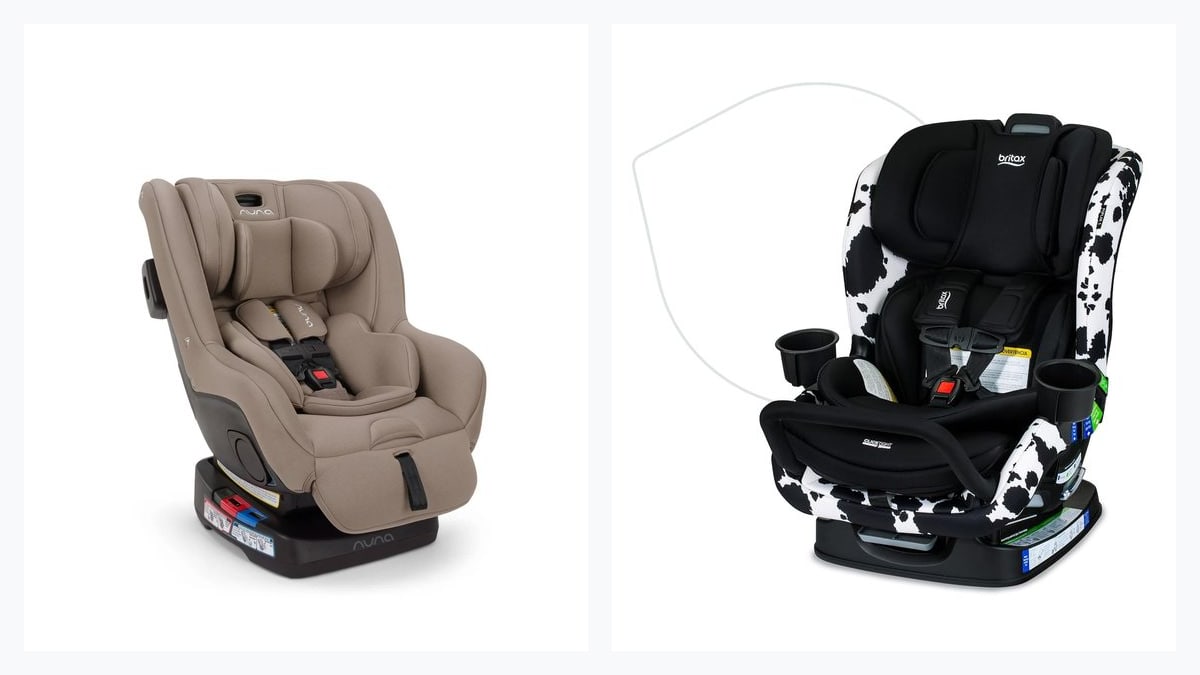
Nuna RAVA vs Britax Poplar S: Premium Convertible Compared
The Nuna RAVA and Britax Poplar S take the same child from 5 to 65 pounds on identical limits. The real differences are the installation system, a rebound bar, two inches of width, and recline range.