Affiliate Disclosure:Kid Sitting Safe is reader-supported. When you buy through links on our site, we may earn an affiliate commission at no additional cost to you. This does not influence our reviews or recommendations — we only recommend products we genuinely believe in.
Load leg technology represents one of the most significant safety innovations in infant car seat design. Common in European markets and increasingly available in the United States, load legs can reduce crash forces on infants by up to 50%. This guide explains how load legs work, their proven benefits, and which car seat types feature this technology.
According to the National Highway Traffic Safety Administration (NHTSA), car seats reduce the risk of fatal injury by 71% for infants under 1 and 54% for toddlers aged 1 to 4, in passenger cars. Load leg technology builds on this foundation, offering an additional layer of protection that addresses specific vulnerabilities in frontal impact scenarios.
What Is a Load Leg?
The Basic Design
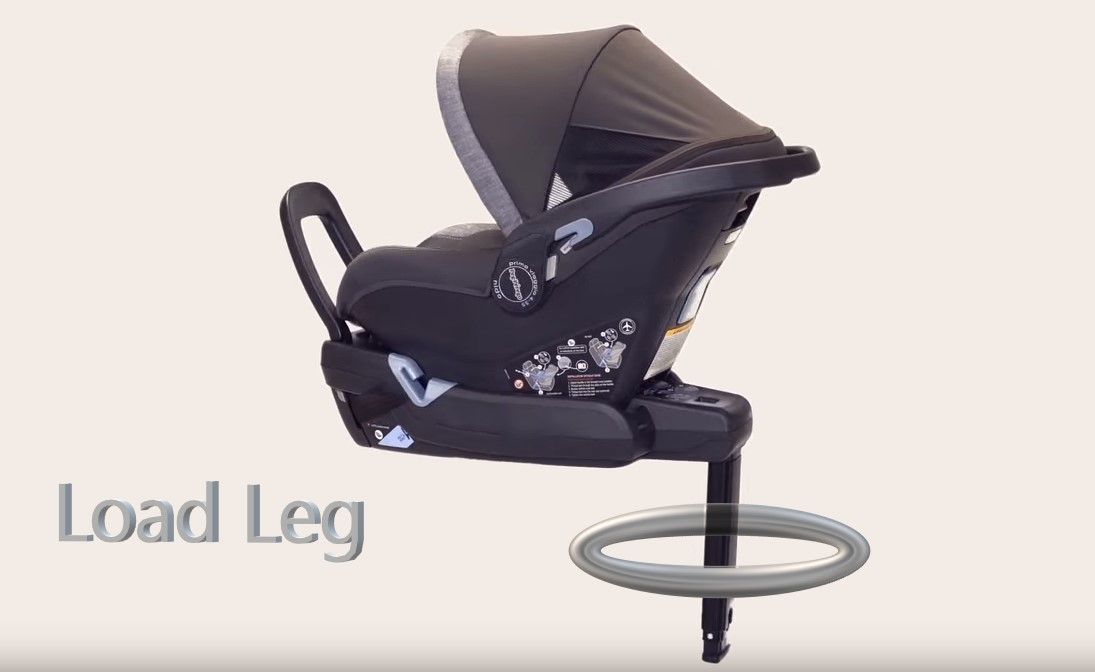
A load leg is a rigid support leg that extends from the front of an infant car seat base to the vehicle floor. This creates a third point of contact, forming a stable triangle with the two LATCH anchors or seat belt connection points.
Scandinavian countries pioneered the concept, where rigorous safety testing pushed manufacturers beyond minimum regulatory requirements. Swedish crash testing protocols, in particular, emphasised reducing rotational forces and head excursion - measurements that standard two-point installations don’t optimally address.
Modern load legs typically feature telescoping construction with multiple locking positions, accommodating various vehicle floor heights. Don’t let the simplicity fool you - the engineering involves precise calculations of force distribution, material strength, and energy absorption characteristics.
How It Works
During a Frontal Crash:
- Without Load Leg: Seat rotates toward vehicle seat back, concentrating forces
- With Load Leg: Forces transfer down through the leg into vehicle floor
- Result: Reduced rotation and lower forces on child
The physics here involves redirecting kinetic energy. In a frontal collision, the primary concern is the car seat rotating backward (toward the vehicle seat back) and the infant being thrust forward within the carrier. That motion creates significant forces on the child’s neck and spine.
With a load leg in place, impact energy has an alternative pathway. Instead of all forces concentrating at two upper attachment points and causing rotation, a substantial portion transfers downward through the load leg into the vehicle’s floor pan. Since the floor structure is part of the vehicle’s engineered crumple zones and safety cage, it can absorb and dissipate this energy far more effectively than rotational movement allows.
The Biomechanical Advantage: According to research cited by the American Academy of Pediatrics (AAP), an infant’s head represents approximately 25% of total body weight, compared to about 6% in adults. This disproportionate head-to-body ratio makes infants particularly vulnerable to head excursion injuries. By limiting the seat’s rotational movement, load legs significantly reduce the distance an infant’s head travels during impact, thereby reducing the risk of contact injuries and the strain on developing neck structures.
Physical Components
- Telescoping leg: Adjusts for vehicle floor height
- Locking mechanism: Secures leg at proper length
- Foot pad: Distributes force across floor contact point
- Release button: Allows leg to fold for storage
Material Construction: Premium load legs typically use steel or reinforced aluminum alloy construction. These materials provide the necessary rigidity to resist compression during a crash event while maintaining a reasonable overall seat weight. Some manufacturers use tubular construction for optimal strength-to-weight ratios, while others employ solid bar designs for maximum durability.
Don’t overlook the foot pad. It has to accomplish two seemingly contradictory goals: firm, stable contact with the vehicle floor without damaging the covering or structure. High-quality implementations use rubberised or padded contact surfaces that grip without marring finishes. Contact area is typically 3-6 square inches, sized to distribute forces without concentrating pressure enough to punch through weaker flooring materials.
Adjustment Mechanisms: Most load legs feature push-button or trigger-style release mechanisms that allow one-handed length adjustment. This convenience factor matters significantly in real-world use - caregivers frequently transfer bases between vehicles or adjust positions within the same vehicle. The locking mechanism typically uses a spring-loaded pin system that engages notches along the telescoping shaft, similar to adjustable crutches or camera tripods.
Quality indicators in load leg construction include:
- Smooth, wobble-free extension and retraction
- Positive, audible clicks when locking positions engage
- Resistance to accidental release under pressure
- Minimal flex or lateral movement when properly installed
The Safety Benefits
Force Reduction
Consumer Reports’ crash testing demonstrates:
- 46% average reduction in head injury risk
- Decreased head excursion (forward head movement)
- Lower neck tension measurements
- Reduced seat rotation toward vehicle seat
These percentages come from standardised crash testing conducted by organisations like the Insurance Institute for Highway Safety (IIHS) and independent European testing bodies. Testing protocols typically involve frontal impact simulations at 30-35 mph - speeds representing the majority of real-world collisions.
Understanding the Measurements:
Head Excursion: This metric measures how far forward the test dummy’s head moves during impact. In infant seats without load legs, head excursion can exceed 20 inches in severe frontal crashes. With a properly installed load leg, this distance typically reduces to 10-12 inches - a difference that can prevent contact with the vehicle seat back or other interior structures.
Neck Tension: Measured in Newtons, neck tension represents the pulling force on the cervical spine during impact. Infants’ neck muscles and vertebrae are still developing and cannot withstand the same forces as older children or adults. Load legs reduce these forces by preventing the whiplash-like motion that occurs when a seat rotates rapidly backward.
Chest Clip Measurements: While not always publicized, some testing also measures forces at the chest clip and harness points. Load legs help distribute crash forces more evenly across the harness system rather than concentrating them at specific points.
Real-World Impact
While all FMVSS 213-certified seats provide excellent protection, load legs offer:
- Additional safety margin
- Enhanced protection in severe crashes
- Better force distribution
- European safety engineering
Clinical Evidence: Research published in injury prevention journals has examined real-world crash outcomes comparing seats with and without load legs. While controlled studies are ethically challenging (researchers cannot deliberately expose children to varying safety conditions), retrospective analysis of crash data suggests that load leg-equipped seats show favorable outcomes in moderate to severe frontal impacts.
Euro NCAP incorporates load leg performance into their child seat safety ratings. Seats achieving top ratings typically include load legs or anti-rebound bars as standard features. While Euro NCAP standards differ from US FMVSS 213 requirements, their testing methodology provides valuable independent validation of load leg effectiveness.
The Safety Margin Concept: All car seats certified for US sale must meet FMVSS 213 requirements, which establish minimum performance standards. But many safety experts advocate for exceeding those minimums when feasible. Load legs represent one way to build in additional safety margin - extra protection that may prove critical in crashes exceeding test protocol severity or involving unusual impact angles.
According to NHTSA data, approximately 35% of child passenger fatalities occur in frontal impacts. While side-impact and rollover crashes also pose significant risks, the prevalence of frontal collisions makes technologies specifically addressing this scenario particularly valuable.
Secondary Safety Benefits
Beyond primary crash protection, load legs offer additional advantages:
Installation Feedback: A load leg gives you tactile and visual confirmation of proper installation. When it contacts the floor with appropriate tension, you can feel confident the base is positioned correctly. That feedback helps address one of the most persistent car seat safety challenges - user error.
Stability During Use: Even during normal driving, a load leg reduces seat movement and bounce. Enhanced stability prevents the gradual loosening of installation that sometimes occurs with two-point systems over time.
Multi-Impact Protection: In multi-vehicle pileups or crashes involving multiple impacts, the load leg maintains structural integrity better than installations relying solely on anchor points that may deform or loosen after the initial collision.
Load Leg vs. Standard Installation
Crash Test Comparison
| Measurement | Standard Base | With Load Leg | Improvement |
|---|---|---|---|
| Head excursion | Higher | Lower | Reduced |
| Neck forces | Higher | Lower | Reduced |
| Seat rotation | More | Less | Significant |
| Rebound velocity | Higher | Lower | ~30-40% |
| Harness forces | Higher | Lower | ~20-30% |
Test Protocol Context: These measurements come from standardized frontal impact tests using crash test dummies calibrated to represent 6-month and 12-month infants. The tests typically simulate a 30 mph frontal impact into a rigid barrier, representing a moderate-severity collision. Real-world crashes vary tremendously in speed, angle, and circumstances, but standardized testing provides a consistent basis for comparison.
Rebound Velocity measures how quickly the seat bounces back after initial impact. Lower rebound reduces secondary impact forces and prevents the child from striking vehicle interior surfaces during the rebound phase.
Harness Forces represent the pressure exerted by the five-point harness system on the child’s body. While necessary to restrain the child, excessive harness forces can cause injury. Load legs help moderate these forces by controlling the overall motion dynamics of the seat during crash.
Visual Representation
Standard Base:
    Child
      |
      ▼
    Seat ----> rotates backward
      |
    LATCH (2 points)
With Load Leg:
    Child
      |
      ▼
    Seat - stable triangle
    /     \
   /       \
LATCH    Load Leg
(points)  (to floor)
This triangulation principle is fundamental to structural engineering. Three-point contact creates inherent stability that two-point systems cannot match. The load leg essentially transforms the car seat from a pendulum (two upper pivot points) into a tripod (three-point base).
Installation Reliability
Beyond crash performance, load legs offer practical installation advantages. The AAP emphasizes that the safest car seat is one that’s installed correctly 100% of the time. Studies suggest that 46-73% of car seats are installed with at least one error that could reduce effectiveness.
Load leg systems can improve installation accuracy by:
- Providing clear installation endpoints (leg must reach floor)
- Offering physical feedback when properly positioned
- Preventing common angle errors (the leg naturally positions the seat correctly)
- Creating visual confirmation of proper setup
Caregiver Confidence: Many parents report feeling more confident in their installation when using a load leg. The visible, tangible third point of contact provides reassurance that the seat is secured properly - a psychological benefit that translates to more consistent correct use.
Car Seats with Load Legs
Premium Infant Seats
Nuna Pipa Series:
- Steel load leg construction
- Rigid LATCH connectors
- Lightweight carrier (6-8 lbs)
- Premium price point Nuna’s Pipa line represents the premium tier of load leg implementation. Steel construction provides maximum rigidity while engineers have managed to keep carrier weight remarkably low - addressing the common concern that enhanced safety features necessarily mean heavier, more cumbersome seats.
Design-wise, the Pipa emphasises both safety and usability. Its load leg folds compactly when not in use, letting the base function in vehicles where floor contact isn’t possible (though with reduced safety benefits). Rigid LATCH connectors complement the load leg by eliminating flex at upper attachment points, creating a truly rigid three-point installation.
Cybex Aton/Sirona:
- Integrated load leg
- Linear side-impact protection
- European engineering
- SensorSafe technology Cybex brings German engineering precision to load leg design, integrating it with their Linear Side-Impact Protection (LSP) system. LSP extends from the side of the seat to absorb lateral impact energy, while the load leg addresses frontal crashes - tackling the two most common serious crash scenarios together.
SensorSafe technology, while not directly related to load leg function, reflects Cybex’s broader safety approach. Chest clips equipped with sensors alert caregivers if the child unbuckles, if the seat becomes too warm or cold, or if the child has been seated too long.
Clek Liing:
- Metal load leg
- Rigid LATCH
- 9-year expiry
- Compact design Clek’s Canadian engineering team designed the Liing with durability front and centre. Metal load leg construction suggests a seat built to withstand years of use and multiple children. Clek publishes a 9-year expiry on it, longer than most infant seats carry, which reflects that confidence in material durability.
Where it really shines is in smaller vehicles. The Liing’s narrower footprint allows three-across installation in many sedans while maintaining the structural advantages of load leg technology.
Mid-Range Options
Peg Perego Primo Viaggio:
- Load leg base available separately
- Italian design
- Extendable headrest
- Premium fabrics
Peg Perego offers an interesting approach: the load leg base is available as a separate purchase option. This allows budget-conscious families to start with the standard base and upgrade later, or to equip their most-used vehicle with the load leg base while using standard bases in secondary vehicles.
This modular approach recognizes that many families need multiple bases but may not require (or be able to use) load legs in every vehicle. The flexibility helps make load leg technology more accessible while maintaining premium construction quality throughout the system.
Emerging Mid-Range Market
This market is evolving fast. As manufacturing processes mature and consumer awareness grows, more manufacturers are introducing mid-range options with load leg technology. More accessible price points mean more families can benefit.
Load legs may well follow the trajectory of other safety features like side-impact protection and anti-rebound bars - initially premium, gradually becoming standard across price ranges as manufacturing scaled up and competition increased.
Vehicle Compatibility
Compatible Vehicles
Most vehicles accommodate load legs:
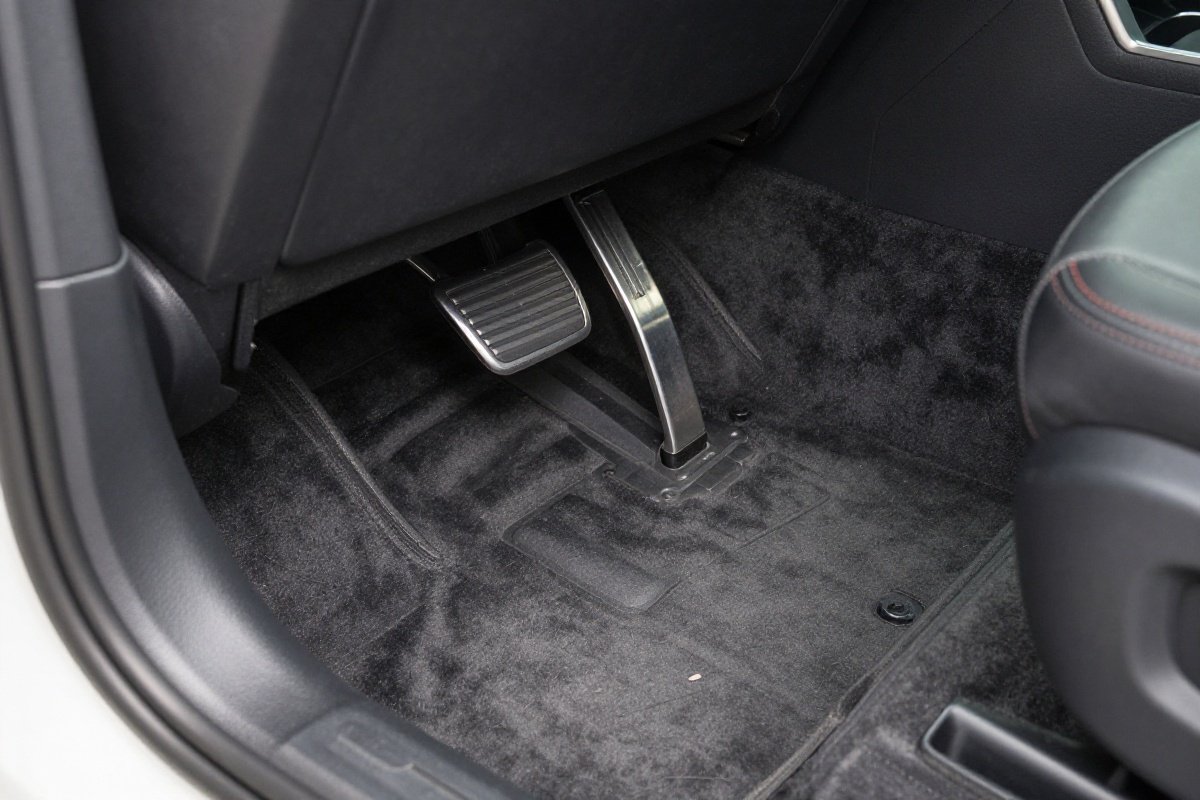
- Flat floor pans
- Adequate leg room for extension
- Solid floor structure
- Standard rear seat configuration
Ideal Vehicle Characteristics:
Modern vehicles designed with child passenger safety in mind typically feature flat, reinforced floor areas in rear seating positions. Many manufacturers now include specific anchor points and installation guidance for child seats, and these designs generally accommodate load legs well.
Vehicles with the best load leg compatibility include:
- Sedans with flat floor tunnels: Most mid-size and large sedans have relatively flat floor structures
- Crossovers and SUVs: Generally offer ample floor space and flat surfaces
- Minivans: Designed with child passengers in mind, usually excellent compatibility
- Station wagons: European wagons particularly, often engineered for load leg seats
The distance from the vehicle seat back to the floor typically ranges from 18 to 24 inches in compatible vehicles. Load legs usually adjust through a 12-16 inch range, accommodating most configurations.
Potentially Incompatible
Some vehicles present challenges:
- Deep floor wells
- Raised floor humps
- Storage compartments in floor
- Uneven floor surfaces
- Sloped floor designs
- Aftermarket floor modifications
Specific Compatibility Issues:
Transmission Tunnels: Rear-wheel-drive vehicles often have pronounced transmission tunnels running down the center of the floor. Installing a load leg-equipped seat in the center position may be impossible, though outboard positions typically work fine.
In-Floor Storage: Some SUVs and crossovers feature storage compartments beneath the rear seats. If the load leg would rest on a storage compartment cover rather than the structural floor pan, the installation may not provide the intended safety benefits. Some manufacturers specifically prohibit load leg use over storage compartments.
Commercial and Work Vehicles: Pickup trucks and commercial vehicles may have uneven floor surfaces, rubber floor mats designed for heavy-duty use, or floor-mounted equipment that interferes with load leg placement.
Older Vehicles: Cars manufactured before widespread child passenger safety awareness may have floor designs not conducive to load leg installation. This doesn’t mean these vehicles can’t safely transport children, but load leg seats may not be the best choice.
Checking Your Vehicle
- Measure floor space in front of seat
- Check for flat contact surface
- Verify no obstructions
- Review vehicle manual for notes
- Test the actual base before purchasing (if possible)
Detailed Compatibility Assessment:
Step 1 - Measurement: Use a tape measure to determine the distance from the vehicle seat back to the floor at the point where the load leg would contact. Measure at the specific seating position where you’ll install the seat (positions vary slightly). Ensure this measurement falls within the load leg’s adjustment range (check the car seat manufacturer’s specifications).
Step 2 - Surface Evaluation: Run your hand along the floor surface. The load leg needs a continuous, solid surface for contact. Small variations are acceptable, but significant slopes, gaps, or soft surfaces (like thick carpeting over hollow spaces) may prevent proper installation.
Step 3 - Obstruction Check: Look for any items that would interfere with load leg placement:
- Floor vents or heating ducts
- Rear entertainment system components
- Storage bins or cup holders
- Seat adjustment tracks (in some vehicles)
- Aftermarket accessories like floor organizers
Step 4 - Documentation Review: Consult your vehicle owner’s manual section on child safety seats. Some manufacturers include specific guidance about load leg compatibility or restrictions. European vehicle manuals often provide more detailed information, as load legs are more common in that market.
Step 5 - Practical Testing: If possible, visit a retailer that displays load leg car seats and bring your vehicle. Many baby specialty stores allow customers to test-fit seats in their vehicles before purchase. This hands-on verification is the most reliable way to confirm compatibility.
Vehicle-Specific Resources
Many car seat manufacturers maintain vehicle compatibility lists on their websites. These databases allow you to enter your vehicle make, model, and year to determine which seats will fit properly. However, these lists aren’t always comprehensive, particularly for newer vehicle models or less common configurations.
Online parenting forums and car seat safety communities often include vehicle-specific installation photos and advice. These user-generated resources can provide real-world insights beyond manufacturer specifications.
Certified Child Passenger Safety Technicians (CPSTs) can assess your specific vehicle and recommend appropriate seats. Many hospitals, police departments, and fire stations offer free car seat inspection services staffed by CPSTs.
Installation Considerations
Using the Load Leg
Step-by-Step:
- Install base with LATCH or seat belt normally
- Extend load leg to floor
- Adjust length until firmly contacting floor
- Lock in place
- Verify all three points secure
- Perform installation check
Detailed Installation Process:
Pre-Installation Preparation: Before beginning installation, remove the base from packaging and familiarize yourself with all components. Locate the load leg release mechanism, adjustment controls, and locking indicators. Read the manufacturer’s instruction manual completely - each model has specific requirements and features.
Clear the installation area of items like floor mats, toys, or debris. While you may reinstall floor mats after base installation, the initial setup should be done on the bare vehicle floor to ensure proper positioning.
Base Installation Foundation: The load leg enhances a properly installed base - it cannot compensate for incorrect LATCH or seat belt installation. According to NHTSA guidelines, the base should be installed tightly enough that it moves less than one inch side-to-side or front-to-back at the belt path.
When using LATCH, ensure the anchor connectors click securely onto the vehicle’s lower anchors. Some rigid LATCH systems require significant pressure to engage fully. When using seat belt installation, follow the manufacturer’s specific routing instructions and ensure the seat belt locks properly (most infant seat bases include belt lock-offs for this purpose).
Load Leg Deployment: Once the base is secured through its primary attachment method, deploy the load leg. Most systems require pressing a release button while pulling the leg downward. Extend the leg until the foot pad contacts the vehicle floor.
Achieving Proper Tension: The load leg should contact the floor firmly but not with excessive force. You’re looking for solid contact, not maximum tension. Some manufacturers specify that the leg should support the front of the base without creating upward pressure. Others design their systems to have the leg under slight tension, actually bearing some of the base’s weight.
Visual indicators on many bases show when the load leg is properly positioned. Green/red indicator systems, alignment marks, or tension indicators provide feedback. Don’t rely solely on these indicators - supplement visual checks with physical testing.
The Installation Check: After all components are secured, perform a comprehensive check:
- Push and pull the base at the belt path (less than 1 inch movement in any direction)
- Verify the base recline angle meets manufacturer specifications
- Ensure the load leg hasn’t slipped or loosened
- Check that all LATCH connectors or seat belt routing remain correct
- Confirm the carrier clicks securely onto the base
Important:
- Load leg must contact floor
- Should not be used if floor contact is impossible
- Must be unlocked and folded when not in use
- Recheck installation weekly initially, then monthly
- Reinstall completely if seat is in a crash, even minor
Common Installation Errors
Understanding common mistakes helps ensure correct installation:
Error 1 - Insufficient Load Leg Extension: The leg contacts the floor but with minimal pressure. Solution: Extend the leg one or two clicks further until you feel firm resistance.
Error 2 - Excessive Tension: Over-tightening the load leg can actually raise the front of the base, affecting the recline angle. Solution: Back off the leg slightly until the base sits naturally while maintaining floor contact.
Error 3 - Uneven Floor Contact: The load leg foot pad rocks or sits unevenly. Solution: Adjust the vehicle seat position slightly forward or backward to find a flat contact point, or reposition the base laterally within the available installation space.
Error 4 - Interference with Primary Installation: Focusing too much on the load leg while compromising LATCH or seat belt tightness. Solution: Always secure the primary attachment first, achieving proper tightness, then add the load leg as a supplementary feature.
Error 5 - Forgetting Recline Adjustment: The load leg can affect the base’s recline angle. Solution: After deploying the load leg, recheck that the recline indicator shows the correct angle for your infant’s age and size.
When NOT to Use
- Floor prevents proper contact
- Storage compartment would be blocked
- Leg cannot lock securely
- Vehicle manufacturer prohibits
- Floor surface is damaged or modified
- Installation creates gaps or instability
Specific Scenarios Requiring Alternative Approaches:
Scenario 1 - Aircraft Installation: Load legs are not approved for use on aircraft. When traveling by air with a load leg-equipped seat, you must fold the leg completely and use only the two-point installation. Many families choose to purchase a lighter, travel-specific infant seat without a load leg for air travel while using their load leg seat for ground transportation.
Scenario 2 - Taxi/Rideshare Use: The brief installation time available in rideshare vehicles often makes load leg deployment impractical. Families who frequently use these services should practice quick two-point installations and consider whether a load leg seat is their best option given usage patterns.
Scenario 3 - Vehicle Damage: If your vehicle’s floor has been damaged in a previous accident or has rust, corrosion, or structural weakness, the load leg may not function as intended. Consult a CPST about alternative installation methods.
Scenario 4 - Temporary Installations: When installing the seat temporarily in someone else’s vehicle (grandparents, friends), ensure you have adequate time to properly deploy and verify the load leg. A rushed, incorrect load leg installation provides false security - better to omit it and focus on perfect two-point installation if time is limited.
Load Leg vs. Anti-Rebound Bar
Similarities
Both features:
- Limit rearward seat rotation
- Reduce crash forces
- Enhance beyond minimum standards
- Improve protection margins
- Provide installation stability
- Offer user feedback mechanisms
The fundamental goal of both technologies is identical: prevent the car seat from rotating excessively backward during a frontal impact. This rotation is the primary mechanism by which crash forces translate into injuries - the child’s head and torso move forward within the carrier while the carrier itself rotates backward, creating a compounding effect that stresses the neck and spine.
Both features emerged from European safety research in the 1990s and 2000s, where extended rear-facing practices and enhanced safety testing protocols drove innovation beyond US FMVSS 213 requirements.
Differences
| Feature | Load Leg | Anti-Rebound Bar |
|---|---|---|
| Location | Extends to floor | Braces against seat |
| Current availability | Mainly infant seats | Infant and convertible |
| Injury-risk reduction | 46% (head injury risk) | Significant (varies) |
| Vehicle compatibility | Floor-dependent | More universal |
| Ease of installation | Moderate complexity | Generally simpler |
| Weight addition | Moderate | Minimal |
| Price impact | Significant premium | Moderate premium |
Detailed Comparison Analysis:
Structural Approach: Load legs transfer energy downward into the vehicle’s floor structure - essentially using the entire vehicle chassis to absorb crash forces. Anti-rebound bars brace against the vehicle seat back, using that surface to resist rotation. Both approaches are effective but rely on different structural elements.
The floor-based approach (load leg) benefits from the vehicle’s engineered crumple zones and frame structure. Vehicle floors are specifically designed to absorb and distribute impact energy. The seat-back approach (anti-rebound bar) depends on the strength and geometry of the vehicle seat, which varies considerably between makes and models.
Installation Context: Anti-rebound bars generally require less precise adjustment. The bar simply needs to contact the vehicle seat back firmly - no measurement or fine-tuning needed. Load legs require proper extension to achieve floor contact, which can be more challenging for first-time users.
However, load legs provide more objective installation feedback. You can see and feel when the leg contacts the floor. Anti-rebound bar contact can be more subjective - is there enough pressure? Too much? The variability of vehicle seat back angles and padding thickness creates uncertainty.
Durability and Longevity: Load legs, being mechanical devices with moving parts, may require occasional maintenance or adjustment. The telescoping mechanism can accumulate dirt or debris, affecting smooth operation. Anti-rebound bars, typically being simpler fixed or minimally adjustable components, require less maintenance.
Which Is Better?
Both provide real benefits. Choose based on:
- Vehicle compatibility
- Seat type needed
- Budget considerations
- Availability
- Installation confidence
- Usage patterns
Some premium European seats include both, providing redundant anti-rotation protection.
Decision Framework:
Choose a Load Leg If:
- Your vehicle has a flat, accessible floor surface
- You primarily use the seat in one vehicle with verified compatibility
- You want maximum tested force reduction
- You’re comfortable with slightly more complex installation
- Budget allows for premium options
- You value European safety engineering standards
Choose an Anti-Rebound Bar If:
- You need universal vehicle compatibility
- You frequently move the seat between vehicles
- You want simpler, faster installation
- Budget is more limited
- You need a convertible seat (load legs are rare on convertibles)
- Your vehicle floor presents compatibility challenges
Consider Both If:
- Maximum safety margin is your top priority
- Budget allows for ultra-premium options
- Your vehicle accommodates both features
- You plan extended rear-facing (convertible seats with both features)
The Evidence Base
Research comparing load legs and anti-rebound bars directly is limited because the features appear on different seat models with varying additional safety technologies. However, independent testing by organizations like the Swedish Plus Test and German ADAC suggests both features significantly improve crash outcomes compared to standard installations.
The AAP doesn’t specifically endorse one technology over the other, instead emphasizing that any additional anti-rotation device provides valuable protection beyond minimum standards. Their guidance focuses on correct installation and appropriate seat selection for the child’s size and age rather than specific technological features.
The European Influence
i-Size and R129 Standards
Load leg technology became widespread through European regulation. The i-Size standard (formally known as R129) represents the European approach to car seat safety, emphasizing:
Enhanced Testing Protocols:
- Side-impact testing requirements (not mandated by FMVSS 213)
- Rear-facing until 15 months minimum (US recommends 2 years per AAP)
- ISOFIX installation standardization (equivalent to LATCH)
- Q-series crash test dummies with more biofidelic responses
Load legs became virtually standard on i-Size infant seats because the regulation’s testing methodology heavily weights rotational control and head excursion - measurements where load legs excel.
ISOFIX Plus Designation: Seats meeting enhanced stability requirements earn “ISOFIX Plus” designation, which typically requires either a load leg or support leg. This regulation-driven requirement spurred innovation and manufacturing scale, making load legs more affordable and widely available.
Bringing European Innovation to the US Market
Several European manufacturers (Cybex, Nuna, Maxi-Cosi, Peg Perego) have adapted their i-Size seats for the US market. This process involves:
- Testing to FMVSS 213 requirements
- Adjusting for FAA approval (if desired)
- Converting ISOFIX components to LATCH compatibility
- Adapting measurement systems (kilograms to pounds)
- Translating materials and instructions
The result is US-market seats that incorporate European safety innovations while meeting American regulatory requirements. Load legs represent one of the most significant technologies transferred through this process.
Cultural Differences in Safety Priorities
European child passenger safety culture differs from American practices in several ways:
- Extended rear-facing: Many European countries require or strongly encourage rear-facing to age 4+
- Separate infant seats: Less emphasis on convertible seats, more acceptance of purchasing multiple seats as children grow
- Installation standards: Greater standardization of vehicle ISOFIX attachment points
- Testing transparency: More publicly available crash test results and comparative ratings
These cultural factors create market conditions favorable to features like load legs, which provide maximum protection in rear-facing configurations during the critical infant period.
Beyond Infancy: Load Legs on Convertible Seats
While load legs appear most commonly on infant seat bases, some manufacturers have introduced convertible seats with load leg technology:
Convertible Load Leg Challenges
Implementing load legs on convertible seats presents unique engineering challenges:
Rear-Facing vs. Forward-Facing: Load legs provide benefits primarily in rear-facing mode. When the seat transitions to forward-facing, the load leg would need to be removed or repositioned - adding complexity to an already complex product.
Extended Use Periods: Convertible seats serve children from infancy through toddlerhood (and sometimes beyond). The load leg must accommodate this size range or be designed as a rear-facing-only feature.
Weight and Bulk: Unlike infant seats that regularly detach from their bases, convertible seats stay installed. Adding a load leg increases weight and bulk in a product category where parents already complain about portability. For families exploring convertible options, our best convertible car seat guide covers the top models in this category.
Despite these challenges, models like the Cybex Sirona S have successfully integrated rotating seats with load legs, allowing easy transitions between rear and forward-facing while maintaining load leg protection in rear-facing mode.
Making the Investment Decision
Cost-Benefit Analysis
Load leg-equipped seats typically carry a noticeable premium over comparable seats without this feature. Is the investment worthwhile?
Quantifying the Benefit: While crash testing can measure a head injury criterion, translating that into real-world injury risk is more complex. Most child passengers, thankfully, will never experience a severe crash. The load leg provides maximum benefit in moderate to severe frontal collisions - scenarios that represent a small percentage of overall trips but a significant percentage of serious injuries.
Risk Assessment Factors: Consider your personal risk factors:
- Commute patterns: Highway driving at high speeds increases severe crash risk
- Traffic density: Urban areas have higher crash rates but typically lower speeds
- Weather conditions: Areas with frequent ice, snow, or heavy rain see more severe crashes
- Driver experience: Newly licensed drivers have higher crash involvement rates
- Vehicle safety: Newer vehicles with advanced safety features reduce crash severity
The Insurance Analogy: Load leg investment resembles insurance - you pay for protection you hope never to need. Families comfortable with this concept and who can afford the premium find load legs worthwhile. Those on tight budgets or with lower risk exposure might prioritize other safety investments (like a better-rated vehicle or earlier upgrade to a larger convertible seat).
Budget Allocation Strategies
For families concerned about cost, consider:
Strategy 1 - Premium for Primary Vehicle: Purchase a load leg base for the vehicle used most frequently, use standard bases for secondary vehicles.
Strategy 2 - Mid-Range Load Leg Option: Choose a mid-range load leg seat rather than premium non-load-leg seat, effectively trading brand prestige for safety technology.
Strategy 3 - Extended Use Justification: If planning multiple children, the per-child cost decreases significantly. A premium seat serving three children brings the per-child investment to a very reasonable level for the protection provided.
Strategy 4 - Resale Value: Premium safety features maintain resale value better than standard seats. Load leg seats often sell for 50-60% of original price secondhand (verify the seat hasn’t been in any crashes and hasn’t expired).
Further Reading
- Car Seat After Accident: When to Replace & Insurance Coverage
- When Can a Child Sit in the Front Seat? Safety Guidelines
- How Tight Should Car Seat Straps Be? Proper Harness Fit Guide
Installation Support Resources
Professional Installation Assistance
Given the slightly more complex installation requirements for load leg seats, professional assistance can be valuable:
Certified Child Passenger Safety Technicians (CPSTs): These certified professionals receive extensive training in car seat installation and can:
- Assess your vehicle’s load leg compatibility
- Demonstrate proper installation technique
- Check your installation and provide feedback
- Recommend optimal seating positions
- Answer specific questions about your seat and vehicle combination
Find CPSTs through:
- Safe Kids Worldwide (safekids.org)
- National Highway Traffic Safety Administration (nhtsa.gov/equipment/car-seats-and-booster-seats)
- Local hospitals, fire departments, or police stations
- Car seat manufacturer websites (many host installation events)
Manufacturer Resources: Most load leg seat manufacturers offer:
- Installation video libraries showing step-by-step procedures
- Live chat support with product specialists
- Phone support during business hours
- Detailed PDF instruction manuals with vehicle-specific notes
- Social media communities where users share tips
Retailer Support: Baby specialty retailers often provide installation assistance:
- In-store demonstration models for practice
- Staff trained in car seat installation basics
- Test-fit services before purchase
- Installation events with CPSTs
- Registration assistance for warranty and recall information
Self-Education Approaches
For DIY-oriented parents, educational resources abound:
**Online
Recommended Products
Cybex Sirona S
Best load leg with rotationPremium seat with load leg and innovative rotation.
What We Like
- Load leg reduces rotation and absorbs crash energy
- 360-degree rotation for easy access
- SensorSafe chest clip alerts for safety concerns
- European engineering with side-impact protection
What We Don't
- Premium price point
- Requires significant vehicle space due to load leg
- Heavy weight makes transfer between vehicles difficult
Nuna Pipa RX
Best infant seat with load legPremium infant seat with excellent load leg implementation.
What We Like
- Rigid LATCH with integrated load leg for enhanced stability
- Exceptionally lightweight at 7.6 pounds for easy carrying
- Dream drape canopy provides full coverage and sun protection
- Installs with a vehicle belt and no base, which suits taxis and rideshares
- Flame resistant with no added fire retardant chemicals, GREENGUARD Gold certified
What We Don't
- High price point compared to competitors
- Weight limit of 30 pounds is lower than most infant seats, which now reach 32-35 lbs
- Rear-facing only, so it is outgrown sooner than a convertible
Clek Liing
Best metal load legCanadian-engineered seat with robust load leg system.
What We Like
- Metal load leg construction provides superior stability
- Rigid LATCH connectors for secure installation
- 9-year expiry, longer than most infant seats
- Compact footprint fits well in smaller vehicles
What We Don't
- Premium pricing compared to competitors
- Limited color and fabric options available
Cybex Aton 2
Best mid-range load legExcellent safety features at moderate premium price.
What We Like
- Load leg included for enhanced stability
- Linear Side-Impact Protection (LSP) system
- Lightweight carrier at 9.9 lbs without base
- Meets European safety standards
What We Don't
- Premium pricing compared to basic infant seats
- Base with load leg takes up more vehicle space
Peg Perego Primo Viaggio 4-35
Best load leg upgrade optionQuality seat with load leg option available.
What We Like
- Optional load leg base available for enhanced stability
- Premium Italian design with attention to detail
- High-quality fabrics that are easy to clean
- Extendable headrest grows with baby for extended use
- Compatible with multiple stroller brands
What We Don't
- Load leg base must be purchased separately, increasing total cost
- Heavier carrier than some competitors at 9.5 pounds
- Premium price point may be prohibitive for some families
Sources & Research
Continue Reading
Explore more car seat safety content or browse our other categories.
Frequently Asked Questions
- What is a load leg on a car seat?
- A load leg is a rigid support leg that extends from the base of an infant car seat to the floor of the vehicle, providing a third point of contact beyond the standard two LATCH anchors or seat belt. The load leg is designed to absorb and distribute crash forces downward into the vehicle floor rather than allowing the car seat to rotate toward the back of the vehicle seat during a frontal collision. This metal or reinforced plastic leg telescopes to adjust for different vehicle floor heights and locks securely in place. Load legs are common on European car seats and are becoming increasingly available on premium US models. They are currently found almost exclusively on infant car seat bases, not on convertible or all-in-one seats. The load leg extends from the front of the base (nearest the vehicle seat back) down to the floor pan of the vehicle, creating a triangle of stability with the two lower anchor points. This third contact point significantly changes how crash forces are managed during a collision.
- How much does a load leg reduce crash forces?
- Consumer Reports' crash testing found an average 46% reduction in head injury risk for infant seats with a load leg compared with the same seats without one, using infant-sized dummies. The mechanism is that load legs reduce head excursion (how far the child's head moves forward during impact) by limiting the car seat's rotation toward the vehicle seat back. In tests conducted by consumer organizations and manufacturers, seats with load legs demonstrated significantly lower neck tension and head acceleration measurements compared to identical seats without load legs engaged. The load leg transfers energy into the vehicle's floor structure - which is designed to absorb significant forces - rather than concentrating forces at the seat belt or LATCH attachments. This force distribution reduces the overall energy that reaches the child. It's important to note that seats without load legs still meet all FMVSS 213 safety requirements and provide excellent protection. The load leg represents an enhancement above minimum standards, similar to how side impact protection or anti-rebound bars provide additional safety margins. That 46% figure represents improvement in a specific measured injury criterion, not overall safety, which remains high with or without the feature.
- Which infant car seats have load legs?
- Several infant car seats available in the US market feature load legs, though they tend to be premium models. Current options include the Nuna Pipa series (Pipa, Pipa RX, Pipa Lite RX), which feature a steel load leg integrated into the base. The Cybex line includes load legs on the Sirona S convertible and Aton series infant seats. Clek offers the Liing infant seat with a robust metal load leg and rigid LATCH. The Peg Perego Primo Viaggio 4-35 offers a load leg as an optional base upgrade. The Silver Cross Dream infant seat includes a load leg in its base. The GB Idan (a lesser-known European brand) also features load leg technology. When shopping for a seat with a load leg, verify that the specific model includes this feature - some manufacturers offer base options with and without load legs. Load legs are much more common in the European market where they've been standard on many seats for years. US adoption is growing but remains primarily in the premium segment. As the safety benefits become more widely recognized, load legs may become standard features on more moderately priced seats.
- Can I use a load leg in any vehicle?
- Load legs cannot be used in every vehicle. The load leg requires a solid floor pan to brace against, which creates some limitations. Vehicles with humped floors, deep floor wells, or uneven floor surfaces may not accommodate load legs properly. Additionally, some vehicles have floor mats or coverings that interfere with proper load leg contact. Most vehicle floors are compatible, but you should verify: the floor surface is flat where the load leg would contact, there's no storage compartment or hatch that would be blocked, the leg can extend to the proper height and lock securely, and the floor pan is solid (not a temporary cover or mat that could shift). Vehicle owner's manuals sometimes mention load leg compatibility - check yours. Some vehicles with center floor humps (common in rear-wheel-drive vehicles) may only accommodate load legs in outboard positions. When purchasing a seat with a load leg, verify return policies in case it doesn't fit your specific vehicle. Many retailers allow returns or exchanges if the seat proves incompatible. If your vehicle cannot accommodate a load leg, the seat will still function safely using just the LATCH or seat belt installation - the load leg is an enhancement, not a requirement for safe use.
- Is a load leg better than an anti-rebound bar?
- Load legs and anti-rebound bars (ARBs) serve similar functions - limiting rearward seat rotation - but work differently and each has advantages. Load legs work from the bottom of the base, bracing against the floor to prevent upward rotation. They cut head injury risk substantially in crash testing. Anti-rebound bars work from the back of the seat, bracing against the vehicle seat to limit backward rotation. Both are effective safety enhancements. Load legs are currently found primarily on infant seats and provide the added benefit of force distribution into the vehicle floor. ARBs are found on both infant and convertible seats and don't require specific vehicle floor geometry. Some premium seats, particularly European models, include both features for maximum protection. Neither feature is required by US safety standards - seats without either still provide excellent protection meeting FMVSS 213. If choosing between them, both offer genuine safety benefits. Load legs may have a slight edge in force reduction data, but ARBs are more widely available across seat types. The best choice depends on your specific vehicle compatibility and the seat that fits your child and budget.
Written By
Kid Sitting Safe
Our team researches car seat safety standards, crash test data, and real-world usability to help parents make the safest choice.
Related Articles

Car Seat After Accident: When to Replace & Insurance Coverage
Learn when car seats must be replaced after accidents. NHTSA guidelines, insurance coverage options, and how to assess if your seat is still safe to use.

Car Seat Installation: A Complete Guide for Parents
Master car seat installation with our comprehensive guide. Learn LATCH vs. seat belt methods, common mistakes to avoid, and expert tips for secure installation every time.

Car Seat Laws by State: How to Find Yours, and Why the Lists Are Wrong
How to find your state's car seat law and read it properly, why the state-by-state lists in circulation are unreliable, and the three states wrongly listed as requiring rear-facing until age 2.