Affiliate Disclosure:Kid Sitting Safe is reader-supported. When you buy through links on our site, we may earn an affiliate commission at no additional cost to you. This does not influence our reviews or recommendations — we only recommend products we genuinely believe in.
Rear-facing car seats provide the best protection for young children, but some advanced safety features can enhance this protection even further. Rear-facing tethers and anti-rebound bars represent European safety innovations that are becoming more common in the US market. This guide explains these technologies and helps you decide if they’re right for your family.
According to the National Highway Traffic Safety Administration (NHTSA), car seats reduce the risk of fatal injury by 71% for infants under 1, in passenger cars. While all FMVSS 213-compliant rear-facing seats meet rigorous federal safety standards, anti-rebound technologies add an extra layer of protection that addresses specific crash dynamics identified through decades of European research.
Understanding Rear-Facing Tethers
What Is a Rear-Facing Tether?
A rear-facing tether is a strap that connects the top of a rear-facing car seat to a tether anchor point in the vehicle. Unlike the more common forward-facing tether (which prevents forward rotation), rear-facing tethers limit rebound motion - the backward movement that occurs after the initial impact.
The concept differs fundamentally from forward-facing tether usage. While forward-facing tethers pull the top of the seat toward the vehicle’s back, reducing forward head excursion, rear-facing tethers work in the opposite direction. They anchor the top of the seat to prevent it from rotating backward after the initial forward crash pulse.
How Rear-Facing Tethers Work
During a Crash:
- Initial Impact: Seat moves forward with crash forces
- Rebound Phase: Seat moves backward toward vehicle seat
- Tether Function: Limits rearward motion
- Result: Reduced forces on child’s head and neck
In more technical terms, the tether modifies the kinematics of the crash event. When a vehicle experiences frontal impact - the most common severe crash type - the car seat initially travels forward as the vehicle decelerates. This forward motion compresses the vehicle seat cushion and generates elastic energy. Without a rear-facing tether or anti-rebound bar, this stored energy releases during the rebound phase, causing the car seat to rotate rapidly backward. This rebound motion can generate significant forces on the child’s head and neck, particularly at the cervical spine.
The rear-facing tether introduces a tensile restraint that limits this rearward rotation. By anchoring the top of the seat, the tether changes the pivot point and reduces the arc of rotation. Rear-facing tethers are standard practice in Sweden, where extended rear-facing is the norm, and the mechanism is well understood: anchoring the top of the shell limits rotation and the head travel that comes with it. Published figures putting a percentage on the reduction are harder to come by, so treat the benefit as real but unquantified here.
The Swedish Connection
Rear-facing tethers are sometimes called “Swedish-style” tethers because they’re standard in Sweden, where children typically remain rear-facing until age 4-6. Swedish crash data informed the development of these systems.
Sweden has maintained one of the world’s lowest child traffic fatality rates for decades, with extended rear-facing travel playing a central role in this achievement. The Swedish approach to child passenger safety emerged from extensive biomechanical research in the 1960s and 70s, led by pioneers like Professor Bertil Aldman at Chalmers University of Technology. This research demonstrated that rear-facing orientation protects the child’s proportionally large head and underdeveloped neck by distributing crash forces across the entire back rather than loading the cervical spine.
Swedish safety researchers didn’t stop at orientation, however. They recognized that rebound motion represented a secondary crash phase that could be mitigated through proper restraint design. The addition of top tethers or anti-rebound bars became standard in Swedish child restraint systems by the 1990s, contributing to injury reduction data that prompted the American Academy of Pediatrics (AAP) to update its recommendations in 2011 to support extended rear-facing.
Today, Swedish children typically remain rear-facing until they outgrow the height or weight limits of their seats - often not until age 4, 5, or even 6. This extended rear-facing period, combined with anti-rebound technologies, has resulted in near-zero child traffic fatalities in properly restrained Swedish children over the past two decades.
Understanding Anti-Rebound Bars
What Is an Anti-Rebound Bar?
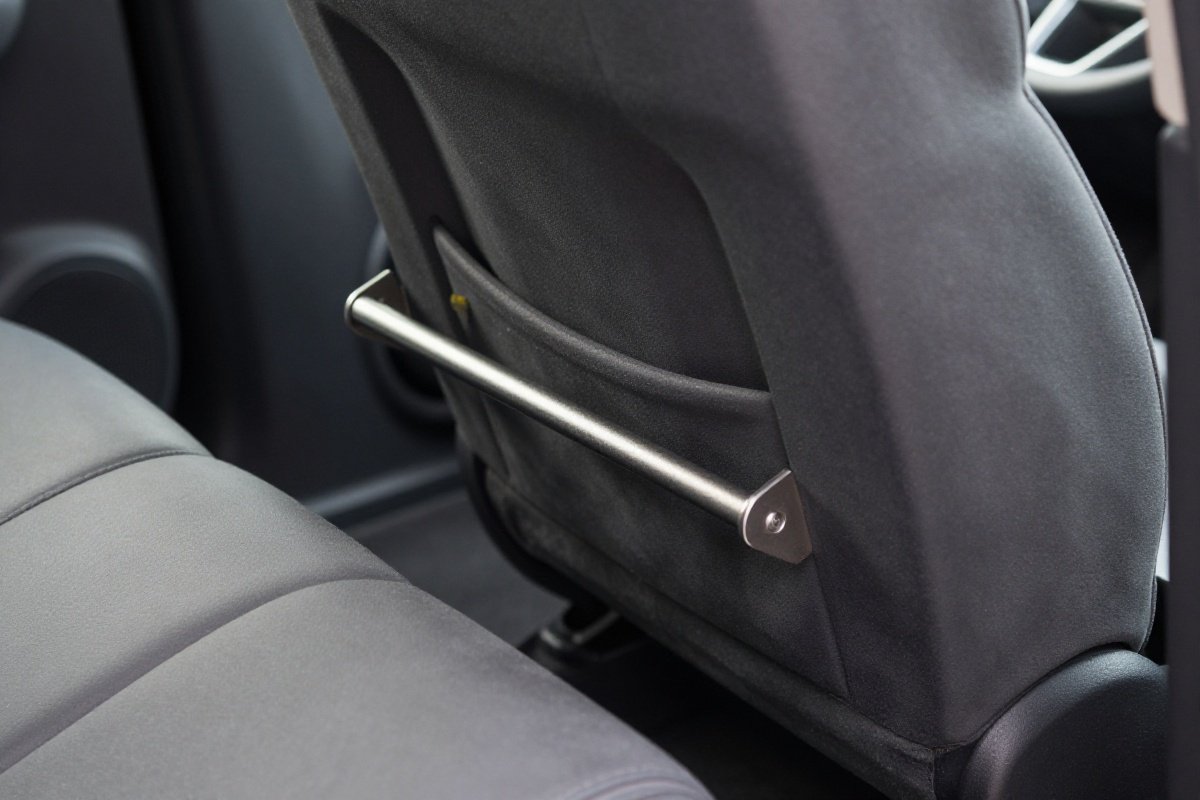
An anti-rebound bar (ARB) is a rigid metal bar that extends from the base of a rear-facing car seat to brace against the vehicle seat back. Like rear-facing tethers, ARBs limit rebound rotation.
Typically constructed from steel or aircraft-grade aluminum, anti-rebound bars fold out from the car seat base to rest against the lower portion of the vehicle seat back. The bar creates a physical stop that prevents rearward rotation beyond a certain point. Unlike flexible tethers, which allow some controlled movement before engaging, rigid ARBs provide immediate resistance to rebound motion.
The engineering principle resembles a door stop - the bar creates a wedge effect that converts rotational energy into compression force distributed across the vehicle seat cushion. This mechanical advantage reduces the peak forces experienced by the child during the rebound phase while also decreasing the duration of the rebound event.
ARB Benefits
Crash Performance:
- Limits rearward seat rotation
- Reduces head excursion (movement)
- Lowers neck forces
- Provides more stable ride
Real-World Data: Studies show ARBs can reduce rearward seat movement by 3-6 inches - a significant improvement in crash protection.
Independent testing conducted by organizations like the Insurance Institute for Highway Safety (IIHS) and Transport Canada has documented measurable improvements in crash test performance when anti-rebound bars are properly deployed. In frontal impact testing at 30 mph (a standard test speed for FMVSS 213), seats equipped with anti-rebound bars typically demonstrate 20-30% reduction in peak head excursion compared to the same seat tested without the ARB deployed.
These reductions translate to meaningful safety improvements. The human head and neck system - particularly in young children - is vulnerable to both linear acceleration (straight-line forces) and rotational acceleration (twisting forces). By reducing the range of motion during rebound, anti-rebound bars decrease both types of loading on the cervical spine and brain.
It’s important to note that these benefits occur even though standard rear-facing seats without anti-rebound devices already provide excellent protection. FMVSS 213 sets rigorous performance criteria that all certified seats must meet, including limits on head excursion, chest acceleration, and belt forces. Anti-rebound bars provide safety margins beyond these already stringent requirements - moving from “excellent” to “exceptional” in engineering terms.
ARB vs. Rear-Facing Tether
| Feature | Anti-Rebound Bar | Rear-Facing Tether |
|---|---|---|
| Mechanism | Rigid bar at base | Flexible strap at top |
| Installation | Automatic with seat | Requires attachment |
| Vehicle needs | None specific | Tether anchor point |
| Availability | More common in US | Less common in US |
| Effectiveness | Both reduce rebound motion effectively | |
| Visual check | Easily visible | May be hidden behind seat |
| Potential issues | Vehicle seat contours | Anchor accessibility |
The choice between these two technologies often comes down to vehicle compatibility and market availability rather than safety superiority. Both approaches address the same crash dynamics through different mechanical means. Anti-rebound bars have gained wider adoption in the North American market primarily because they don’t require specific vehicle features - any vehicle seat back can accommodate an ARB, whereas rear-facing tethers require accessible tether anchors in appropriate positions.
From a biomechanical perspective, anti-rebound bars excel at controlling rotation at the base of the seat, while rear-facing tethers control rotation at the top. Some European seats employ both technologies simultaneously, creating a “belt and suspenders” approach that limits rebound through multiple mechanisms. However, the incremental benefit of using both versus one properly deployed system appears minimal based on available crash test data.
Installation simplicity also favors anti-rebound bars. Once the car seat is installed via LATCH or seat belt, the ARB simply folds down until it contacts the vehicle seat back - a simple, one-step process that’s easy to verify visually. Rear-facing tethers require locating the appropriate anchor point, routing the strap correctly, and achieving proper tension - steps that introduce more opportunity for installation error.
Car Seats with These Features
Integrated Anti-Rebound Bars
Clek Foonf/Fllo:
- Rigid ARB built into base
- Steel substructure
- Extended rear-facing to 50 lbs
- Premium construction The Clek family of seats pioneered the widespread adoption of anti-rebound bars in the North American market. Their rigid metal ARB fits neatly into the seat’s steel safety cage design, creating a cohesive structural system. The bar deploys with a single motion and locks into position with an audible click, providing clear feedback that it’s properly engaged.
Peg Perego Primo Viaggio:
- Integrated ARB
- Extendable side wings
- Italian design
- Premium fabrics
Peg Perego brings European design sensibilities and safety philosophy to the US market with the Primo Viaggio line. The integrated anti-rebound bar reflects the company’s Italian engineering heritage, where such features have been standard for decades. The bar coordinates with the seat’s extended rear-facing capacity and side-impact protection system.
Cybex Sirona S:
- Integrated ARB
- 360-degree rotation
- Load leg included
- European engineering
The Cybex Sirona S represents the convergence of multiple European safety innovations. Beyond the anti-rebound bar, this seat incorporates a load leg - another rebound-limiting device that extends from the base to the vehicle floor. The combination of ARB and load leg provides redundant rebound control through different mechanical pathways. The 360-degree rotation mechanism adds convenience without compromising the safety benefits of these anti-rebound technologies.
Optional Anti-Rebound Bars
Britax ClickTight Series:
- ARB available as accessory
- Works with Boulevard, Marathon and Advocate, all now retired by Britax
- Easy installation
- Separate purchase Britax takes a modular approach with their ClickTight convertible seats, offering the anti-rebound bar as an optional accessory rather than an integrated feature. This strategy allows budget-conscious families to purchase the base seat initially and add the ARB later if desired. The accessory bar attaches to the seat’s existing structure and deploys in the same manner as integrated designs.
The optional approach has both advantages and disadvantages. On the positive side, it reduces the initial purchase price and allows families to make a staged investment. It also means that if the ARB is damaged or lost, it can be replaced without replacing the entire seat. On the negative side, the separate purchase creates friction - many families never follow through on adding the accessory, leaving the safety benefit unrealized. Installation also introduces an additional step and potential failure point compared to integrated designs.
Rear-Facing Tether Capable
Rear-facing tethers are less common in the US market. Some European imports offer this feature, but verify US certification before purchasing.
Families interested in rear-facing tethers face practical challenges in the North American market. Few seats certified to FMVSS 213 include rear-facing tether systems, as the European Plus Test (which effectively requires anti-rebound technology) doesn’t apply to US-market seats. Some Canadian-market seats offer rear-facing tethers, as Canadian safety standards allow this feature more readily than US regulations have historically.
When considering European-import seats with rear-facing tethers, verification of proper US/Canadian certification is critical. Some seats marketed internationally may not meet FMVSS 213 requirements, making them illegal to use in the United States regardless of their safety merits. The seat’s label should clearly indicate compliance with FMVSS 213 or CMVSS 213 (the Canadian equivalent). Never use a seat that lacks this certification, even if it appears to offer superior safety features.
For families who prioritize rear-facing tether technology, consulting with a certified Child Passenger Safety Technician (CPST) can help identify currently available options and ensure proper installation. Available seats change regularly as manufacturers introduce new models and discontinue older ones, so professional guidance helps you stay current.
Do You Need These Features?
The Safety Perspective
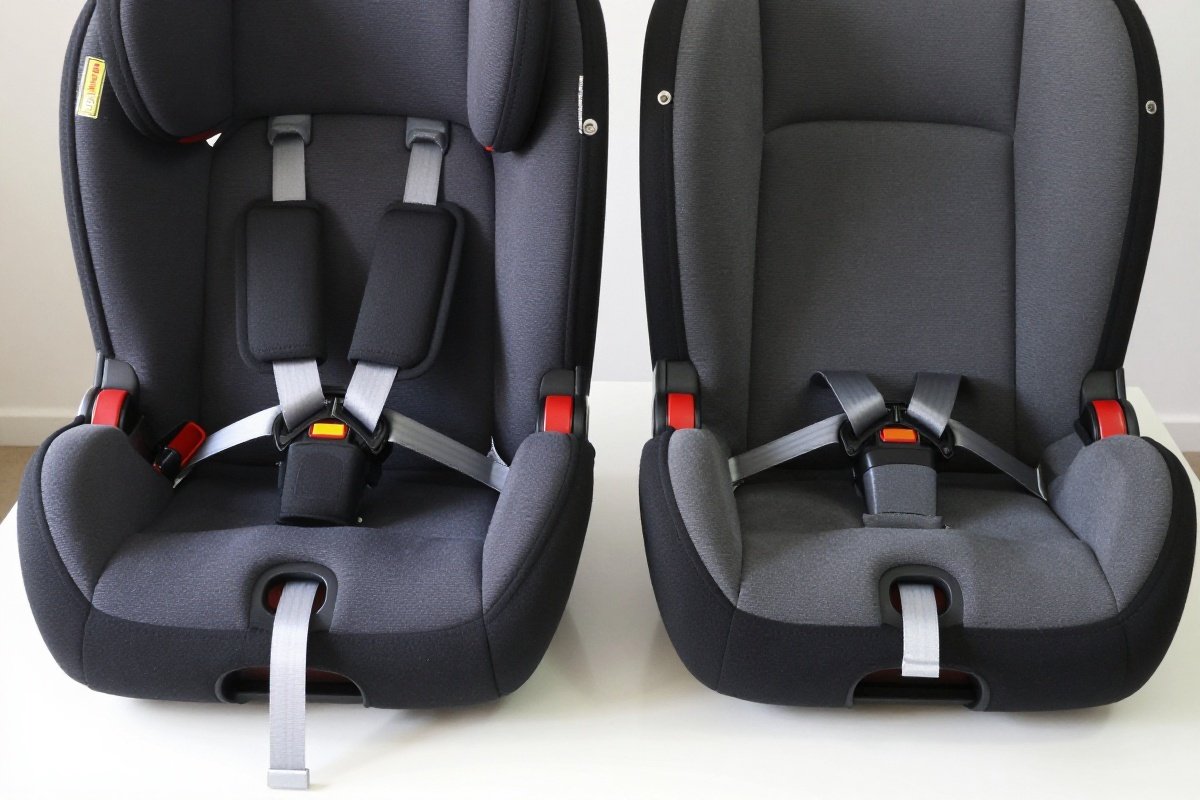
Standard Rear-Facing Seats:
- Meet all FMVSS 213 requirements
- Provide excellent protection
- Used safely by millions
All rear-facing car seats certified to FMVSS 213 undergo rigorous crash testing that validates their ability to protect children in frontal, side, and rear impacts. The standard requires performance criteria including maximum head excursion limits, chest acceleration limits, and belt force limits. Seats must pass these tests at multiple crash speeds and angles to achieve certification.
The National Highway Traffic Safety Administration puts the reduction in fatal injury at 71% for infants under 1, in passenger cars. Even standard seats without anti-rebound features achieve these impressive results. The fundamental protection comes from the rear-facing orientation itself - the way crash forces distribute across the child’s back - rather than from any particular advanced feature.
With ARB/Tether:
- Enhanced protection beyond minimums
- Reduced rebound forces
- Added peace of mind
- Not required for safety
Anti-rebound technologies provide measurable improvements in crash test metrics, but these improvements build on an already excellent foundation. The difference resembles upgrading from a four-star safety vehicle to a five-star vehicle - both are safe, but one performs at an even higher level.
According to biomechanical research published in peer-reviewed journals, anti-rebound bars reduce peak head excursion by 20-30% and decrease neck tension forces by similar margins. In practical terms, this means the child’s head moves less distance during the crash, and the neck experiences lower peak loads. These reductions occur in the rebound phase specifically - the phase that anti-rebound technologies target.
One thing to keep in mind: the American Academy of Pediatrics doesn’t specifically require anti-rebound features in their child passenger safety recommendations. The AAP emphasises rear-facing orientation for as long as possible within the seat’s limits, proper installation, and correct harness adjustment as the primary safety factors. Anti-rebound features are additional refinements rather than fundamental requirements in the AAP’s framework.
The Practical Perspective
Consider ARB/Tether If:
- You want maximum protection
- Budget allows premium seats
- You prioritize European safety features
- Vehicle compatibility is good
Families who prioritize cutting-edge safety technology and have the budget flexibility to choose premium seats will find meaningful value in anti-rebound features. The measurable crash test improvements, while modest in percentage terms, could make a difference in severe crashes where every inch of head excursion and every percentage point of force reduction matters.
Vehicle compatibility deserves careful evaluation before purchasing a seat with anti-rebound bar. Some vehicle seat backs have pronounced contours, lumbar support protrusions, or shallow seat cushions that interfere with proper ARB contact. The bar must rest firmly against the vehicle seat back across its entire width to function as designed. If the bar only contacts at certain points, or if gaps exist between the bar and seat back, the effectiveness diminishes and the installation may not meet the manufacturer’s requirements.
Testing fit before purchasing is ideal. Many retail locations have floor models that can be test-fitted in your vehicle, and some stores offer generous return policies if fit issues arise after purchase. Alternatively, consulting with a certified CPST who has experience with multiple seat models can help identify likely fit issues before investing in a premium seat.
Standard Seat May Suffice If:
- Budget is primary concern
- Your current seat fits well
- Installation is secure
- Child is comfortable
For families working within tight budgets, standard rear-facing seats provide excellent protection at more accessible price points. Models like the Graco Extend2Fit offer extended rear-facing capacity without premium pricing, allowing families to keep children rear-facing longer - a safety benefit that rivals or exceeds the advantage of anti-rebound features. Our best convertible car seat guide covers top options across all price ranges.
Installation quality matters more than advanced features. A standard seat that’s installed correctly, with tight installation, proper recline angle, and snug harness adjustment, will outperform a premium seat that’s installed loosely or incorrectly. The NHTSA estimates that approximately 46% of car seats are installed with at least one critical error, highlighting that execution of basics deserves more attention than pursuit of advanced features for many families.
If your child is comfortable and fits well within their current seat’s limits, and if the seat installs securely in your vehicle, replacing a functional seat solely to gain anti-rebound features may not represent the best use of limited resources. Other safety investments - such as rear-facing until reaching the seat’s maximum limits, proper booster use for older children, or vehicle safety features like electronic stability control - may provide greater safety benefit per pound spent.
Installation Considerations
Vehicle Compatibility
For ARBs:
- Must fit between car seat and vehicle seat
- Some vehicle seats have contours that interfere
- Test fit before purchasing
Vehicle compatibility issues typically fall into several categories. First, vehicles with aggressive lumbar support in the seat back may prevent the anti-rebound bar from achieving flat, full-width contact. The bar may bridge across the lumbar protrusion, leaving gaps on either side. Second, vehicles with very upright seat backs may position the bar at an angle that reduces its mechanical effectiveness. The bar works best when perpendicular to the direction of rebound motion.
Third, some vehicles have shallow seat cushions that position the car seat base very close to the seat back. In these configurations, there may not be enough space between the installed car seat and the vehicle seat back for the ARB to deploy fully. The bar needs approximately 2-4 inches of clearance (depending on the specific seat model) to extend properly. Finally, vehicles with unusual seat back designs - such as split folding rear seats with gaps between the sections - may create installation challenges if the car seat straddles the gap.
Checking the car seat manufacturer’s vehicle fit guide before purchasing can identify known compatibility issues with specific vehicle models. These guides compile real-world installation feedback and testing results to flag problematic combinations. However, fit guides may not be exhaustive, particularly for newer or less common vehicle models, making test fitting valuable.
For Rear-Facing Tethers:
- Requires accessible tether anchor
- Anchor must be in correct position
- Check vehicle manual for anchor locations
Rear-facing tether installation introduces different compatibility concerns. The primary issue is tether anchor location. Most vehicles have tether anchors positioned for forward-facing installation - located on the rear shelf behind the rear seat, on the ceiling near the rear window, or on the back of the seat itself. These locations work well for forward-facing tethers but may not provide the correct geometry for rear-facing tethers.
For rear-facing tether use, the anchor point ideally should be located low on the vehicle seat back, roughly aligned with the top of the car seat. This positioning allows the tether strap to run nearly vertically (or slightly rearward), creating the correct line of pull to limit rebound rotation. When rear-facing tethers are anchored to the typical forward-facing tether points behind the seat, the strap angle may be too shallow to provide effective rebound control.
Some vehicles, particularly those marketed in Canada or Europe, include lower tether anchors specifically designed for rear-facing tether use. These anchors are less common in US-market vehicles. The vehicle owner’s manual should indicate the location and intended use of all tether anchors. Never use tether anchors in ways not specified by the vehicle manufacturer, as they may not have been tested for the resulting load paths.
Installation Steps with ARB
- Install base/seat normally
- Extend ARB until it touches vehicle seat
- Ensure ARB is perpendicular to seat back
- Verify no gaps between ARB and vehicle seat
Following the manufacturer’s specific installation instructions is critical, as details vary between seat models. However, the general sequence follows a consistent pattern. Begin by installing the car seat base (or convertible seat) using either the LATCH system or vehicle seat belt according to the manufacturer’s instructions. Achieve tight installation - the base should not move more than one inch side-to-side or front-to-back when tested at the belt path.
With the seat installed, locate the anti-rebound bar mechanism. Most designs fold out from underneath the base, though some attach via a separate bracket. Extend the bar until it contacts the vehicle seat back. The bar should rest against the lower portion of the seat back - typically where the seat back meets the seat cushion, or slightly above.
Check that the bar achieves full-width contact across the vehicle seat back. Run your hand along the length of the bar to feel for gaps. If you can fit your fingers between the bar and vehicle seat at any point, installation adjustment may be needed. Try different recline angles within the seat’s approved range, or experiment with LATCH versus seat belt installation, as these variables can affect bar contact.
Verify that the bar is roughly perpendicular to the vehicle seat back. Some angle variation is acceptable, but if the bar appears to be at a 45-degree angle or more extreme, the installation may not be optimal. Consult the seat’s manual for acceptable bar angles. Finally, many seats include visual indicators - often colored windows or alignment marks - that confirm proper ARB deployment. Check these indicators as a final verification step.
Common Installation Mistakes to Avoid
Forgetting to Deploy the ARB: Perhaps the most common error is simply forgetting to extend the anti-rebound bar after installation. The bar typically ships in the folded position for packaging efficiency, and it’s easy to overlook this final step. Make ARB deployment part of your installation checklist every time you move the seat between vehicles or reinstall after cleaning.
Accepting Poor Contact: Some caregivers proceed with installation even when the bar clearly doesn’t achieve good contact with the vehicle seat back. This compromise defeats much of the feature’s purpose. If fit issues prevent proper ARB contact, consider different installation methods, alternative seating positions in the vehicle, or a different car seat model that fits your vehicle better.
Interference with Seat Belt or LATCH: When deploying the anti-rebound bar, ensure it doesn’t interfere with the seat belt or LATCH strap routing. The bar should not pin, pinch, or alter the path of these primary installation components. If interference occurs, the installation may not be secure even if the ARB appears properly deployed.
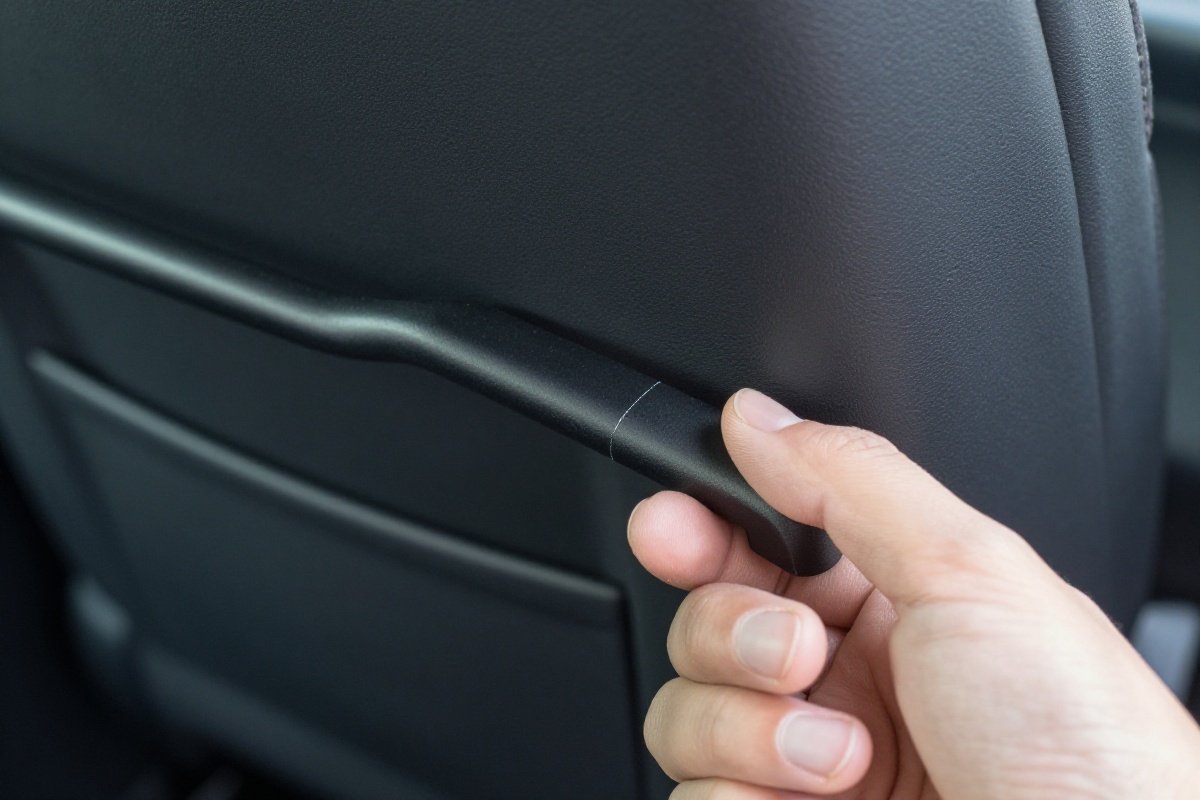
Using ARB as Installation Handle: Some seats resemble similar-looking components, and caregivers sometimes mistake the anti-rebound bar for a carry handle or installation handle. Never use the ARB to lift or carry the seat, and don’t pull on it during installation to create tension. The bar is designed exclusively to rest against the vehicle seat back, not to bear weight or installation forces.
Shopping Guide
Budget Considerations
| Feature Level | Price Tier | Examples |
|---|---|---|
| Standard (no ARB) | Budget to mid-range | Graco Extend2Fit, Evenflo Platinum |
| Mid-range ARB | Mid-range to upper mid-range | Britax with ARB accessory |
| Premium integrated | Premium | Clek Foonf, Peg Perego |
The price premium for anti-rebound features is typically significant compared to functionally similar seats without these features. This premium reflects several factors: the engineering and testing costs of developing the anti-rebound system, the additional materials (particularly steel or aluminum components), and the market positioning of seats with advanced features.
For families planning to use the seat for multiple children, or for many years with a single child through extended rear-facing, the per-year cost difference becomes more modest. A moderate premium spread over four years of use and two children amounts to a very modest per-child annual cost - a reasonable investment for enhanced safety features. Conversely, for families who may transition to a different seat relatively quickly due to changing needs or unexpected circumstances, the premium may be harder to justify.
Value Assessment
Worth the Premium If:
- You keep seats for multiple children
- You prioritize maximum safety
- Your budget allows
Value extends beyond raw safety metrics to include factors like seat longevity, ease of use, and quality of materials. Premium seats with anti-rebound bars typically also feature better fabrics that clean more easily, more intuitive installation systems, and more durable construction that withstands years of use and multiple children. The Clek Foonf, for example, features Merino wool fabrics that resist staining and odors naturally, and a steel frame that maintains structural integrity through extreme use.
Premium seats also tend to offer extended weight limits that support longer rear-facing use. While a budget seat might have a rear-facing limit of 35-40 pounds, premium seats often extend to 45-50 pounds. This extended capacity allows larger children to remain rear-facing longer, providing a safety benefit beyond the anti-rebound feature itself.
Standard Acceptable If:
- You follow all other safety guidelines
- Installation is correct
- Seat fits child and vehicle well
Standard seats represent excellent value when families prioritize extended rear-facing duration over advanced features. The Graco Extend2Fit, positioned in the budget-friendly category, offers a 50-pound rear-facing limit - matching or exceeding many premium seats - without the premium price. The seat includes innovative features like an extension panel that provides additional legroom, addressing one of the common challenges of extended rear-facing: where the child’s legs go as they grow. For families with multiple vehicles, budget-friendly seats may enable purchasing several seats rather than moving a single premium seat between vehicles. Having dedicated seats for each vehicle improves installation quality (no reinstallation errors), increases proper use (no forgotten transfers), and provides backup options if one seat becomes unavailable due to cleaning or recall.
Additional Cost Factors to Consider
Replacement After Crash: Car seats must be replaced after moderate or severe crashes, even if no visible damage is apparent. The forces experienced during a crash can compromise the seat’s structural integrity in ways that aren’t visible to casual inspection. Premium seats represent a larger replacement cost after a crash, though many insurance policies and some manufacturers offer crash replacement programs that offset this expense.
Accessories and Add-ons: Premium seats may require or benefit from additional accessories - replacement covers, climate-regulating inserts, travel bags - that add to total cost of ownership. Budget-friendly seats typically have fewer available accessories, which can be either a benefit (lower total cost) or limitation (fewer customization options).
Resale Value: Premium seats generally maintain better resale value if you plan to sell after your children outgrow them. Models from manufacturers like Clek, Nuna, and Cybex command significant resale prices on secondary markets, potentially recovering 30-50% of original cost. Budget seats typically have minimal resale value. However, seat age and condition significantly affect resale value, and seats approaching their expiration dates have little market appeal regardless of brand.
Further Reading
- Car Seat Installation: A Complete Guide for Parents
- Car Seat After Accident: When to Replace & Insurance Coverage
- How Tight Should Car Seat Straps Be? Proper Harness Fit Guide
Understanding the Broader Safety Context
What Matters Most for Child Passenger Safety
While anti-rebound features provide measurable improvements, they exist within a broader safety framework where several factors matter more significantly:
Rear-Facing Duration: According to the AAP, keeping children rear-facing for as long as possible within the seat’s limits - ideally until age 2 at minimum, but preferably to age 4 or beyond - provides greater safety benefit than any particular seat feature. A child rear-facing at age 3 in a basic seat has better crash protection than the same child forward-facing at age 2 in a premium seat. For a broader overview, see our essential car seat safety tips.
Proper Installation: NHTSA’s National Child Restraint Use Special Study put the combined misuse rate for car seats and boosters at 46%, counting installation and how the child is restrained. Common errors include loose installation, incorrect recline angle, harness straps not at or below shoulders for rear-facing, and twisted straps. A correctly installed standard seat provides better protection than incorrectly installed premium seat.
Appropriate Harness Adjustment: The harness must be snug - you shouldn’t be able to pinch any slack at the child’s shoulder. The chest clip should sit at armpit level. Straps should be at or below the child’s shoulders when rear-facing. Bulky clothing should not be worn under the harness. These adjustment factors affect crash protection directly and must be correct every time the child rides.
Consistent Use: Features only provide benefit if used consistently. Many crashes occur on short, routine trips where families may be tempted to skip proper restraint. According to NHTSA data, crashes during short trips account for a significant portion of child injuries.
Vehicle Safety Features Matter Too
The vehicle’s own safety features interact with car seat effectiveness:
Vehicle Crash Test Ratings: A five-star frontal crash rating from NHTSA indicates the vehicle protects occupants well in frontal impacts - the crash type where anti-rebound features provide benefit. Modern vehicles with advanced structures, crumple zones, and airbag systems create a safer environment for car seats to operate within.
Electronic Stability Control (ESC): ESC reduces crash likelihood by preventing skids and loss of control. Standard on all vehicles since 2012, ESC has dramatically reduced certain crash types. Crash avoidance provides more safety benefit than improved crash protection - the best crash is the one that doesn’t happen.
LATCH System Quality: Some vehicles have LATCH anchors that are easier to access and use than others. Deep seat crevices, hard-to-reach anchor positions, and weight limits all affect LATCH usability. Better LATCH systems enable better installations, improving crash protection across the board.
Recommended Products
Clek Foonf
Best anti-rebound bar seatPremium seat with built-in anti-rebound technology.
What We Like
- Anti-rebound bar reduces rotation in rear-facing collisions
- Rigid LATCH installation provides secure attachment
- Steel and magnesium construction offers superior crash protection
- REACT safety system absorbs impact energy
What We Don't
- Highest price point in convertible category
- Very heavy at 38 pounds makes vehicle transfers impractical
- Only 2 recline positions may not suit all vehicles
Britax Poplar S
Best built-in rebound barReboundReduce stability bar is integrated, so there is no accessory to forget.
What We Like
- ClickTight installation removes most of the guesswork from a tight fit
- Slim 17-inch shell is designed to fit three across
- Extended rear-facing to 50 lbs, matching the premium tier
- ReboundReduce stability bar limits rear-facing rebound movement
- 14-position no-rethread headrest and harness adjust together
What We Don't
- Only 6 recline positions against 10 on the Nuna RAVA
- 1-year limited warranty is short for the price
- At 28 lbs it is no lighter than seats without the slim shell
- Cover is washable but lacks the natural-fibre options of premium rivals
Peg Perego Primo Viaggio Convertible
Best European designEuropean-style seat with integrated ARB protection.
What We Like
- Integrated anti-rebound bar enhances stability
- Premium Italian design and build quality
- Extendable side wings for growing children
- High-quality fabrics and padding
What We Don't
- Higher price point than competitors
- Limited retail availability in some regions
Graco Extend2Fit Convertible Car Seat
Best budget extended RFGreat extended rear-facing without premium price.
What We Like
- 50-pound rear-facing limit per AAP guidelines
- 10-year lifespan
- Excellent value for features offered
- Extension panel provides extra legroom for taller babies
What We Don't
- Basic installation without InRight LATCH system
- Bulky design takes up significant vehicle space
Nuna RAVA
Best premium without ARBPremium safety features without anti-rebound bar.
What We Like
- Bamboo blend fabric is breathable, moisture-wicking and free of added flame retardants
- Ventilated side panels for enhanced airflow and comfort
- No-rethread harness simplifies height adjustments
- Side impact protection pods with EPO energy-absorbing foam
- Extended rear-facing capability up to 50 pounds
What We Don't
- Highest price point in convertible car seat category
- Heavy at 27.9 pounds, making transfers difficult
- Wide base may not fit well in smaller vehicles
Sources & Research
Continue Reading
Explore more car seat safety content or browse our other categories.
Frequently Asked Questions
- What is a rear-facing tether and how does it work?
- A rear-facing tether is a strap that anchors the top of a rear-facing car seat to the vehicle frame, typically at a tether anchor point located behind the vehicle seat (on the rear shelf, seat back, or floor). Unlike forward-facing tethers that prevent forward rotation, rear-facing tethers (also called Swedish-style tethers) primarily limit downward rotation and rebound motion after the initial impact. In a frontal crash, the car seat first moves forward, then rebounds backward toward the vehicle seat. The rear-facing tether limits this rebound motion, reducing the forces on the child's head and neck. Rear-facing tethers are more common in European car seats and some premium US models. They're used in addition to the standard lower anchor or seat belt installation at the base - not as a replacement. The tether provides an additional connection point that stabilizes the seat during the rebound phase of a crash, which can reduce head excursion by several inches.
- What is an anti-rebound bar and do I need one?
- An anti-rebound bar (ARB) is a rigid metal bar that extends from the bottom of a rear-facing car seat to brace against the vehicle seat back. It limits the seat's ability to rotate toward the back of the vehicle during the rebound phase of a crash. After a frontal impact, the car seat first moves forward with the crash force, then rebounds backward. The ARB stops this backward rotation, reducing the forces on the child's head and neck. ARBs are standard on some European seats and available as accessories for certain US models. While not required by FMVSS 213, ARBs provide a genuine safety benefit by reducing rebound motion. Studies show they can reduce rearward movement by several inches, potentially reducing injury risk. If you're purchasing a new rear-facing seat and the option is available within your budget, an ARB is a worthwhile safety feature. However, a properly installed rear-facing seat without an ARB still provides excellent protection - don't feel you must upgrade if your current seat is appropriate and correctly installed.
- Which car seats come with anti-rebound bars?
- Several car seats on the US market include anti-rebound bars as standard or optional features. Premium seats with integrated ARBs include the Clek Foonf and Fllo (rigid ARB integrated into base), Peg Perego Primo Viaggio Convertible (integrated ARB), and Cybex Sirona S (integrated ARB with 360-degree rotation). Some seats offer ARBs as optional accessories: the Britax Boulevard, Marathon, and Advocate ClickTight models have an ARB available as a separate purchase. European brands like Maxi-Cosi and BeSafe often include ARBs on their rear-facing seats. When shopping for a seat with ARB, verify whether it's included or must be purchased separately. Aftermarket ARBs that claim to work with any seat are not recommended - they haven't been crash-tested with specific seats and may interfere with proper function. Only use ARBs that are specifically designed and approved for your car seat model by the manufacturer.
- Can I add a rear-facing tether to any car seat?
- No, you cannot add a rear-facing tether to a car seat that wasn't designed for one. Rear-facing tether systems must be engineered into the seat structure and tested as part of the overall safety system. Adding an aftermarket tether or modifying a seat to accept one could compromise its safety, void the warranty, and potentially make it illegal to use. Only car seats that specifically include rear-facing tether capability in their design and manual should use this feature. Some parents confuse rear-facing tethers with the standard top tether used for forward-facing seats - never use a forward-facing tether on a rear-facing seat unless the manufacturer explicitly permits it in the manual. If you want the benefits of a rear-facing tether or anti-rebound bar, you must purchase a seat that includes these features from the manufacturer. Retrofitting is not an option for car seats. The safety systems are integrated into the seat's structure and tested as complete units.
- Is a rear-facing tether or anti-rebound bar better?
- Both rear-facing tethers and anti-rebound bars (ARBs) serve similar purposes - limiting rebound motion after a frontal crash - but they work differently and have different trade-offs. Anti-rebound bars are generally simpler to use and more common on available seats. They don't require a separate tether anchor point and are built into the seat base. Once installed, they work automatically without additional steps. Rear-facing tethers require a tether anchor in the vehicle and must be properly attached and tightened. Tethers may provide more direct control over the top of the seat, while ARBs work at the base. Both are effective at reducing rebound. Currently, ARBs are more widely available in the US market, with several excellent seat options including them. Rear-facing tethers are more common on European seats. If choosing between the two, either provides a safety benefit over a standard installation. The best option is the one that fits your vehicle properly and that you can install correctly every time. Some high-end seats even include both systems for maximum protection.
Written By
Kid Sitting Safe
Our team researches car seat safety standards, crash test data, and real-world usability to help parents make the safest choice.
Related Articles
Car Seat After Accident: When to Replace & Insurance Coverage
Learn when car seats must be replaced after accidents. NHTSA guidelines, insurance coverage options, and how to assess if your seat is still safe to use.
Car Seat Installation: A Complete Guide for Parents
Master car seat installation with our comprehensive guide. Learn LATCH vs. seat belt methods, common mistakes to avoid, and expert tips for secure installation every time.

Car Seat Laws by State: How to Find Yours, and Why the Lists Are Wrong
How to find your state's car seat law and read it properly, why the state-by-state lists in circulation are unreliable, and the three states wrongly listed as requiring rear-facing until age 2.