Affiliate Disclosure:Kid Sitting Safe is reader-supported. When you buy through links on our site, we may earn an affiliate commission at no additional cost to you. This does not influence our reviews or recommendations — we only recommend products we genuinely believe in.
The LATCH system (Lower Anchors and Tethers for Children) revolutionized car seat installation when it became standard in 2002. Before LATCH, parents struggled with locking seat belts and complex routing - LATCH provided dedicated attachment points specifically designed for car seats.
However, LATCH has limitations and rules that every parent must understand to ensure safe installation. This guide covers everything from basic installation to weight limits and when to switch to seat belt installation.
The History and Development of LATCH
The push for standardized child restraint anchorage systems began in the 1990s, when research revealed that improper car seat installation was a leading factor in child injury during vehicle crashes. According to NHTSA, LATCH became mandatory in vehicles and car seats after September 1, 2002, marking one of the most significant regulatory changes in child passenger safety history.
Prior to federal standardization, car seat installation relied entirely on vehicle seat belts, which were designed for adult occupants, not child restraints. NHTSA created the system in a final rule published on 5 March 1999, which established FMVSS 225 and required a full anchorage system at two rear seating positions plus a tether anchorage at a third. Tether anchorages phased in from September 1999 and lower anchorages from September 2000, with the temporary alternative provisions running out on 1 September 2002.
The implementation of LATCH represented a collaborative effort between NHTSA, vehicle manufacturers, and car seat companies. FMVSS 225 establishes requirements for child restraint anchorage systems in vehicles, ensuring compatibility across brands and models. This standardization means any compliant car seat will attach securely to any compliant vehicle.
What Is LATCH?
LATCH consists of two components:
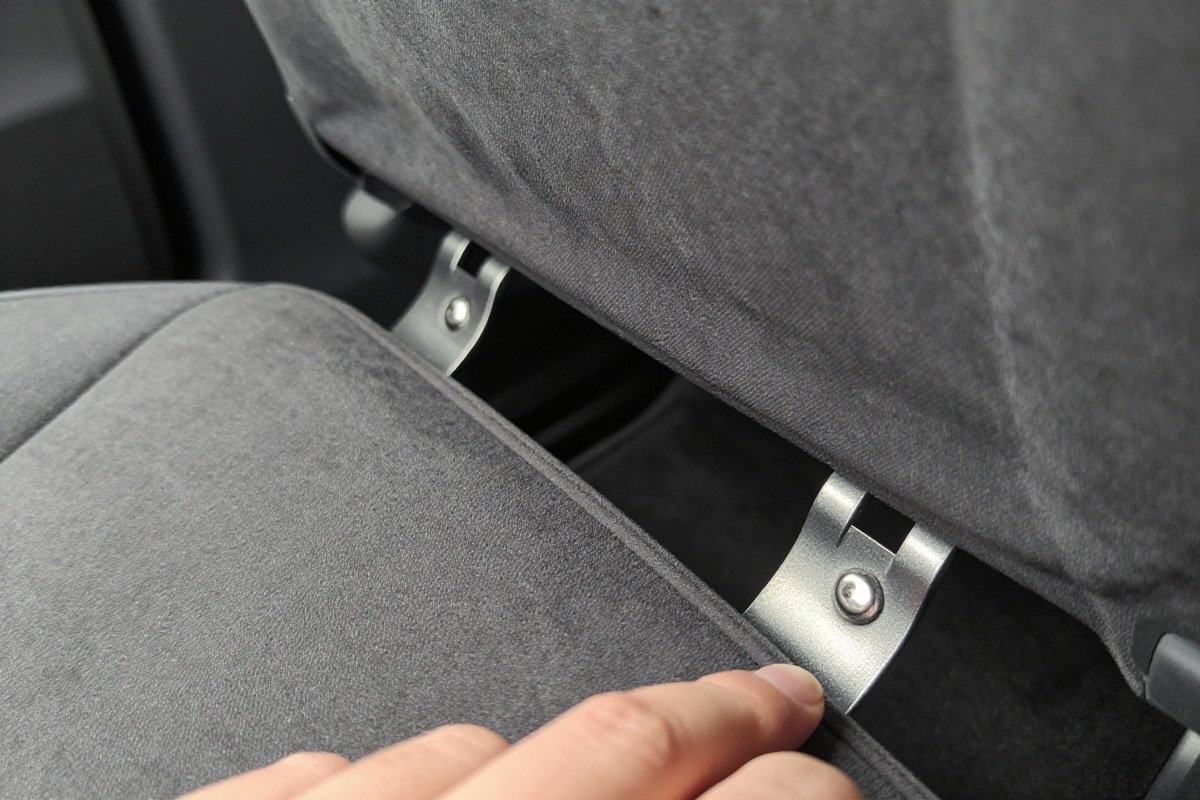
Lower Anchors
- Location: In the seat crease where the seat cushion meets the back
- Appearance: U-shaped metal bars
- Quantity: Two per seating position
- Marking: Usually indicated by a symbol or “LATCH” label
Top Tether Anchor
- Location: Rear deck shelf (sedans), seat back, floor, or cargo area (SUVs/minivans)
- Purpose: Reduces forward head movement in a crash
- Required for: All forward-facing installations
FMVSS 225 Technical Requirements
Federal Motor Vehicle Safety Standard 225 specifies the technical requirements for child restraint anchorage systems, ensuring consistent performance across all vehicles and car seats sold in the United States. These regulations mandate specific strength requirements, spacing measurements, and accessibility standards.
The standard tests the anchorages with a static pull rather than a crash pulse. Under S9.4, the lower anchorages have to hold an 11,000 N forward force without letting the test device shift more than 175 mm, and a 5,000 N lateral force without shifting more than 150 mm. Understanding what happens in a car seat accident illustrates why installation integrity matters.
FMVSS 225 establishes requirements for top tether anchorage points, including minimum strength standards and locations. In a vehicle with three or more forward-facing rear seating positions, it requires a complete anchorage system at two of them plus a tether anchorage at a third, so three tether anchors is the floor, and many models provide more.
Technical specifications cover the bars themselves (6 mm ±0.1 mm in diameter, at least 25 mm of usable length) and how reachable they have to be (an anchorage depth of 25 mm or less, and a clearance angle of at least 54 degrees). These precise measurements ensure any FMVSS 225-compliant car seat attaches securely to any compliant vehicle.
Rigid vs. Flexible LATCH Connectors
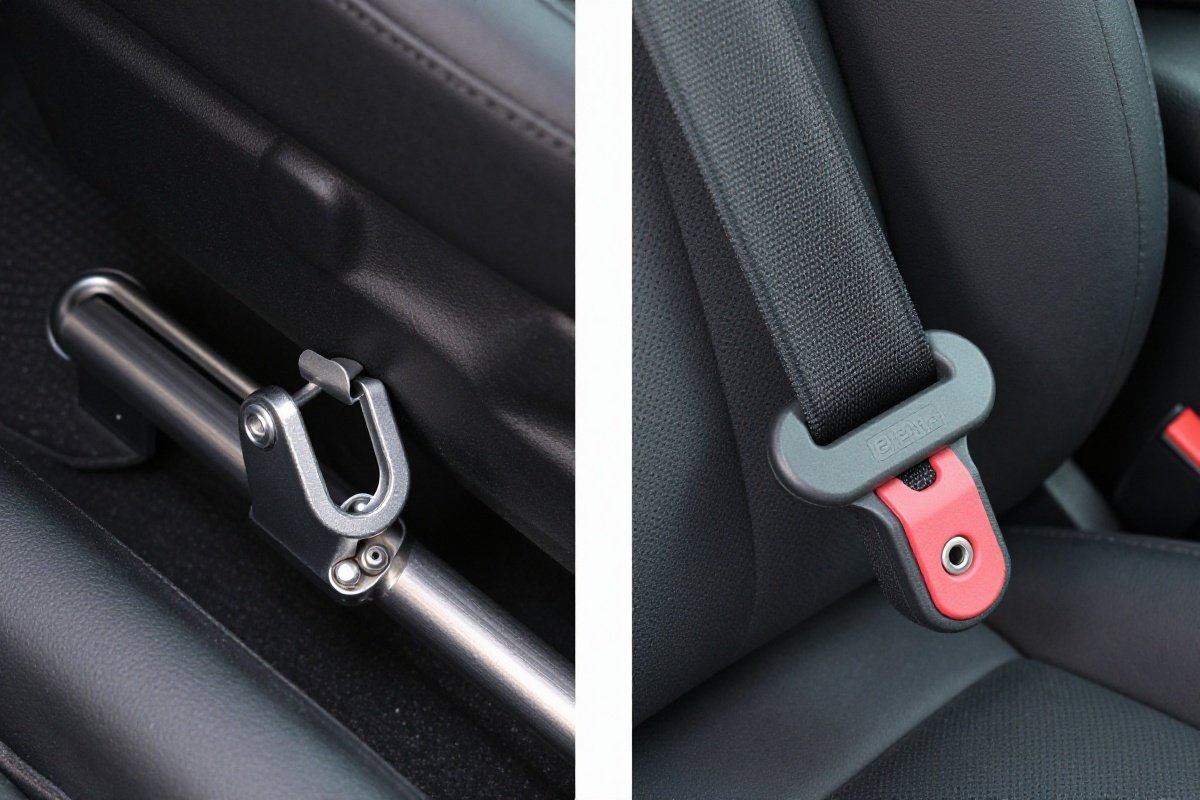
Car seat manufacturers utilize two distinct types of LATCH connectors, each with specific advantages for installation.
Rigid LATCH Connectors
Rigid connectors feature inflexible attachment arms extending directly from the car seat base to vehicle lower anchors. These connectors provide a direct, solid connection with minimal strap length. Vehicles with easily accessible lower anchors often work best with rigid systems.
Flexible LATCH Connectors
Flexible connectors use webbing straps with attachment hooks at the ends. These connectors offer greater versatility in vehicles with unconventional anchor placements. The flexible nature allows parents to maneuver connectors into position more easily.
Both types have to meet the same FMVSS 213 requirements. The AAP is explicit that “the top tether should always be used with a forward-facing seat, whether you use the seat belt or lower anchors to secure it.”
LATCH Weight Limits: The Critical Rule
The 65-Pound Rule
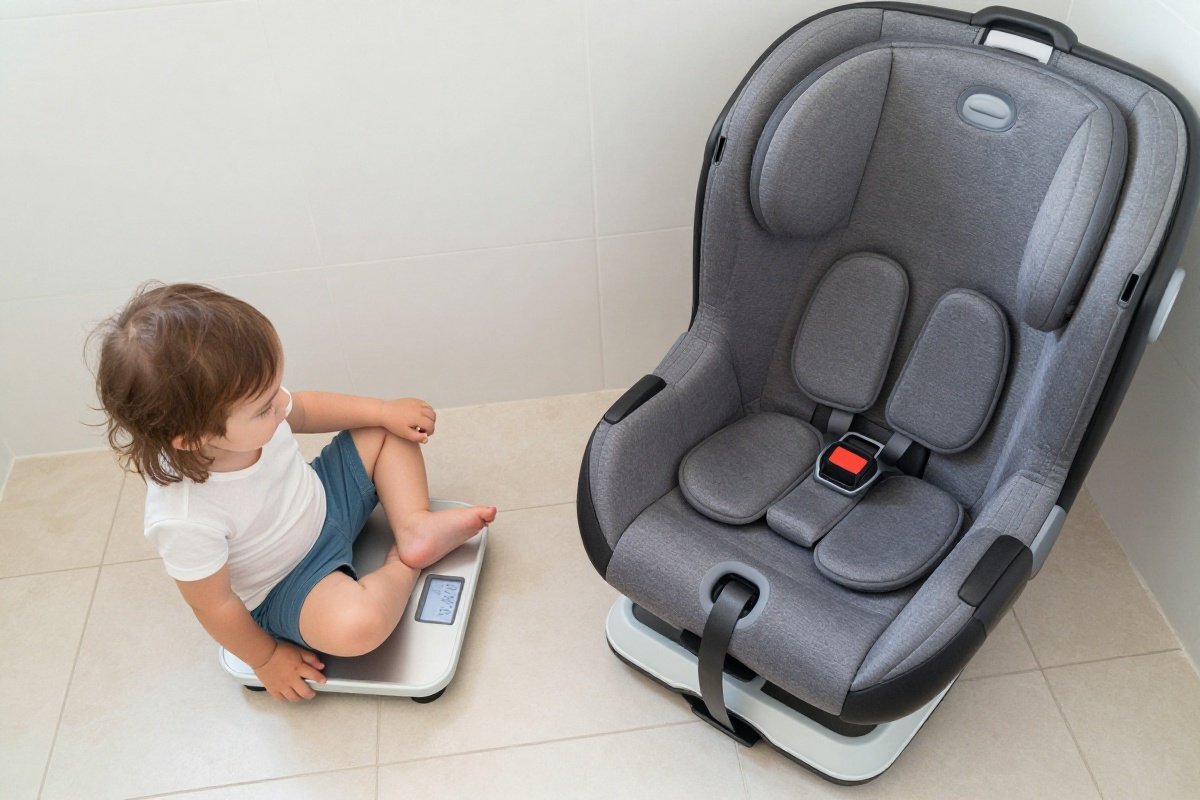
Federal regulations set the maximum LATCH weight limit at 65 pounds - this includes:
- Child’s weight
- Car seat weight
Example: If your car seat weighs 25 pounds, you must switch to seat belt installation when your child reaches 40 pounds (25 + 40 = 65).
That sum is the fallback, not the rule. NHTSA’s instruction is to read the warning label or installation diagram on the side of the seat first, and only do the subtraction if there isn’t one. FMVSS 213 is what puts that label there, and its rounding table for rear-facing use starts from 60 pounds rather than 65.
Manufacturer Variations
Many manufacturers recommend switching before reaching 65 pounds:
- Vehicle manufacturers: May cap the lower anchors well below the combined figure
- Car seat manufacturers: May have different limits in their manuals
Critical: Check BOTH your vehicle manual and car seat manual. Use the lower of the two limits.
Top Tether Exceptions
The top tether anchor typically has a higher weight limit than the lower anchors, or no separately specified limit. Even after switching to seat belt for the lower installation, you can usually continue using the top tether. Your vehicle manual is the place to confirm it.
How to Install with LATCH
Rear-Facing Installation
- Locate lower anchors in your vehicle’s seat crease
- Extend LATCH straps from your car seat
- Attach connectors to the anchors (listen for click)
- Tighten straps while pressing down on the car seat
- Test tightness: Less than 1 inch movement at belt path
Forward-Facing Installation
- Follow steps 1-5 above for lower anchor attachment
- Locate top tether anchor in your vehicle
- Route tether strap over the top of the vehicle seat
- Attach tether hook to the anchor (listen for click)
- Tighten tether to remove slack
Safety Note: The top tether is required for ALL forward-facing installations, whether using LATCH lower anchors or seat belt. Safe Kids Worldwide reports that a child’s head can move an additional 4 to 6 inches forward when the top of the seat isn’t secured.
When to Switch to Seat Belt
By Weight
Switch to seat belt installation when:
- The label on the side of your seat says to
- Child + car seat weight = 65 pounds, if there’s no label to read
- Child reaches your vehicle manufacturer’s lower limit
- Child reaches car seat manufacturer’s specified limit
Use the lowest applicable limit.
By Car Seat Stage
- Infant seats: Most never reach LATCH limits (outgrown by height first)
- Convertible seats: Often reach limits in forward-facing mode
- Booster seats: Most require seat belt installation exclusively
A worked example, and a reason not to trust your own arithmetic. The Britax Poplar S weighs 28 lb, so 65 minus 28 suggests a 37 lb child. Britax publish a lower number than that. Their Poplar S user guide says “do not install with the lower anchors attachment for a child weighing more than 35 lbs (15.9 kg) rear-facing and forward facing”, well short of the 65 lb the seat itself takes forward-facing. Past that weight you’re on the vehicle belt, which is what its ClickTight belt path is built for. An infant carrier never gets close: the UPPAbaby Mesa V3 stops at 30 lb and 32 inches, and its manual says “no tether is required with this rear-facing carrier. Only lower anchors are used.”
Note that the lower anchors are an alternative to the belt, not an addition to it. Britax’s Poplar S guide describes the anchorage system as one “that offers an alternative to vehicle seat belt installation methods.”
Common LATCH Installation Mistakes and Troubleshooting
Understanding common installation errors helps parents achieve safer car seat attachment. FMVSS 225 establishes requirements for child restraint anchorage systems in vehicles, but proper usage depends on correct installation.
Double Installation Conflicts
Using both LATCH lower anchors and vehicle seat belt simultaneously creates competing force paths. NHTSA’s rule for this “double installation” leaves no room: “Every car seat needs to be installed using either the lower anchors or a seat belt to secure it in place, never both.” Choose one method - either lower anchors OR seat belt.
Weight Limit Oversights
Parents frequently miss weight limit transitions. Knowing your car seat type and its specific limits prevents this error. The labelled lower-anchor weight limit only became a requirement for seats built from 27 February 2015, so an older seat may not carry one. Create reminders to check combined weight monthly.
Tether Strap Routing Errors
The top tether must follow specific routing paths. Routing under headrests or through incorrect slots reduces effectiveness. The 4 to 6 inches of extra head movement Safe Kids Worldwide describes is what a tether buys back, and only a correctly routed one collects it.
Loose Installation
Improperly engaged connectors may appear attached but release during crash forces. Always verify the “click” sound when attaching. The AAP says the top tether should always be used with a forward-facing seat, whether you use the seat belt or lower anchors to secure it.
Further Reading
- Car Seat Laws by State: Complete Guide for Parents 2026
- Car Seat Safety Guide: AAP Guidelines & Essential Tips for Parents
- Car Seat Statistics 2024: Usage, Safety & Misuse Data
LATCH vs. Seat Belt: Comparative Analysis for Decision Making
A seat is certified to FMVSS 213 in both configurations,. Both methods, when correctly executed, provide equivalent protection.
When LATCH Is the Optimal Choice
According to NHTSA, LATCH became mandatory in vehicles and car seats after September 1, 2002, providing standardized installation points parents find more intuitive than seat belt routing. Vehicles with accessible lower anchors often yield tighter LATCH installations.
When Seat Belt Installation Prevails
Seat belt installation becomes necessary when LATCH weight limits approach. FMVSS 225 establishes requirements for child restraint anchorage systems, but only mandates two LATCH positions, leaving most center rear seats without lower anchors. The AAP still wants the top tether on a forward-facing seat either way.
Center Position Considerations
The rear center position often represents the safest seating location, being farthest from side impact zones. Most center positions include top tether anchors even when lower anchors are absent.
Installation Quality Assessment
Regardless of attachment method, installation quality determines safety effectiveness. Less than one inch of movement at the belt path indicates proper tightness. Pair a tight installation with properly adjusted harness straps for complete protection. Choose the method achieving the tightest, most secure fit.
Recommended Products
UPPAbaby Mesa V3 Infant Car Seat
Lower-anchor install, no tether neededUPPAbaby's 2025 refresh of the Mesa carrier focuses on small-fit ergonomics (25-position headrest, magnetic buckle holders) rather than installation hardware (no load leg). Mesa V3 is the natural pick if you already own a Vista or Cruz; the lower 30 lb cap and no load leg are the trade-offs.
What We Like
- 25-position no-rethread headrest (V2 had 4 positions)
- Magnetic buckle holders keep straps clear during loading
- Full-coverage canopy with UPF 50+ and a mesh peek-a-boo window
- European Belt Routing for secure baseless installation
- FAA certified for aircraft use
What We Don't
- Base lacks a load leg (Bambi Baby flags this vs Nuna and Cybex)
- Rear-facing weight cap dropped from 35 lbs (V2) to 30 lbs
- More limited stroller cross-brand compatibility (Vista, Cruz direct; Minu, Ridge with adapters)
- MSRP and street price not publicly listed on extracted UPPAbaby pages at audit time
Britax Poplar S
Seat-belt install with ClickTightClickTight installation and a genuinely slim shell, at a lower price than the premium imports.
What We Like
- ClickTight installation removes most of the guesswork from a tight fit
- Slim 17-inch shell is designed to fit three across
- Extended rear-facing to 50 lbs, matching the premium tier
- ReboundReduce stability bar limits rear-facing rebound movement
- 14-position no-rethread headrest and harness adjust together
What We Don't
- Only 6 recline positions against 10 on the Nuna RAVA
- 1-year limited warranty is short for the price
- At 28 lbs it is no lighter than seats without the slim shell
- Cover is washable but lacks the natural-fibre options of premium rivals
Sources & Research
Continue Reading
Explore more car seat safety content or browse our other categories.
Frequently Asked Questions
- What does LATCH stand for?
- LATCH stands for "Lower Anchors and Tethers for Children." It's a standardized car seat installation system required in all vehicles manufactured after September 2002 and all car seats manufactured after the same date. LATCH consists of lower anchor points (U-shaped metal bars) located in the vehicle seat crease and top tether anchors typically found on the vehicle's rear shelf, floor, or seat back.
- What is the LATCH weight limit?
- The LATCH weight limit is 65 pounds, which includes both the car seat weight and the child's weight combined. This means if your car seat weighs 25 pounds, you must switch to seat belt installation once your child reaches 40 pounds (25 + 40 = 65). NHTSA treats that sum as the fallback, so check the warning label or installation diagram on the side of the seat first, because plenty of manufacturers publish a lower figure than the arithmetic gives. Always check both your vehicle owner's manual and car seat manual for specific limits.
- Can I use LATCH and seat belt together?
- No. You should never use the LATCH system and vehicle seat belt simultaneously for the same car seat installation. NHTSA puts it plainly: "Every car seat needs to be installed using either the lower anchors or a seat belt to secure it in place, never both." Either use the lower anchors (LATCH) OR the seat belt, plus the top tether for forward-facing seats. Using both can create conflicting force paths and may actually reduce safety in a crash.
- When should I use the top tether?
- The top tether should be used with ALL forward-facing car seat installations, regardless of whether you use LATCH lower anchors or the seat belt. The top tether is a separate strap that attaches to an anchor point in your vehicle (usually on the rear shelf, seat back, or floor). Safe Kids Worldwide reports that without the top of the seat secured, a child's head can move an additional 4 to 6 inches forward, far enough to strike the seat in front, the console or another occupant. FMVSS 213 tests forward-facing seats for head excursion both with and without the tether attached, and allows 720 mm with the tether against 813 mm without it.
- Where are LATCH anchors located in my vehicle?
- Lower anchors are located in the seat crease (where the seat cushion meets the back) in at least two rear seating positions. They're often marked with a symbol showing a child seat or the letters "LATCH." Top tether anchors are typically found on the rear deck shelf (sedans), seat back, floor, or cargo area (SUVs/vans). Consult your vehicle owner's manual for exact locations - some vehicles have anchors hidden behind plastic covers or under removable caps.
Written By
Kid Sitting Safe
Our team researches car seat safety standards, crash test data, and real-world usability to help parents make the safest choice.
Related Articles
Car Seat After Accident: When to Replace & Insurance Coverage
Learn when car seats must be replaced after accidents. NHTSA guidelines, insurance coverage options, and how to assess if your seat is still safe to use.
Car Seat Installation: A Complete Guide for Parents
Master car seat installation with our comprehensive guide. Learn LATCH vs. seat belt methods, common mistakes to avoid, and expert tips for secure installation every time.

Car Seat Laws by State: How to Find Yours, and Why the Lists Are Wrong
How to find your state's car seat law and read it properly, why the state-by-state lists in circulation are unreliable, and the three states wrongly listed as requiring rear-facing until age 2.