
Affiliate Disclosure:Kid Sitting Safe is reader-supported. When you buy through links on our site, we may earn an affiliate commission at no additional cost to you. This does not influence our reviews or recommendations — we only recommend products we genuinely believe in.
Quick Picks
Compact vehicle owners face unique challenges when selecting car seats. Limited rear seat dimensions, reduced headroom, and tight clearances between front and rear seats require careful selection of space-efficient car seats.
This guide identifies the best car seats specifically designed - or well-suited - for compact vehicles, helping you keep your little one safe without sacrificing passenger comfort.
What Makes a Car Seat “Small Car Friendly”
Key Dimensions
Width: Under 17.5 inches at the base Rear-Facing Depth: Under 30 inches front-to-back Shell Height: Proportional to available headroom Base Footprint: Compact design without overhang
Installation Considerations
- Recline angle: Must achieve proper angle without pushing front seat
- Seat belt/LATCH access: Clear paths for secure installation
- Loading clearance: Enough room to maneuver baby into seat
Understanding these specifications requires context. Width measurements are typically taken at the widest point of the seat base, which may differ from the shoulder width at the top of the seat. A seat that’s 17 inches at the base but flares to 19 inches at shoulder height can still work in compact vehicles because the base dimensions determine fitment.
Rear-facing depth becomes critical in vehicles like the Honda Fit, Toyota Yaris, or Mazda3. When a car seat is installed rear-facing, it angles backward, eating precious space between the rear seat back and the front seat. Convertible seats with adjustable recline angles offer flexibility - you can position them more upright (within safe parameters) as your child grows and develops better head control, reclaiming several inches for front passengers.
Shell height matters particularly in vehicles with sloped rooflines or limited headroom. Sporty compact cars and hatchbacks often sacrifice rear headroom for aerodynamics. A tall seat shell may contact the ceiling, preventing proper installation or making it impossible to achieve the correct recline angle. Lower profiles and streamlined designs become essential.
Don’t overlook base footprint. Some car seat bases include protruding components - anti-rebound bars, load legs, or base extensions - that occupy additional space. In tight installations, these can interfere with adjacent seats or vehicle components. Seats designed for compact vehicles minimise these protrusions while maintaining safety standards.
Material and Construction Factors
Materials affect both dimensions and performance in small vehicles. Steel-frame seats like the Diono Radian series achieve narrow widths through efficient engineering but add weight - a problem if you’re lifting the seat into a two-door car. Aluminium and magnesium frames, as found in the Clek Fllo, provide strength with less heft.
Plastic shell seats typically offer more moulded contours and integrated features, but that approach can add bulk. It’s a balancing act: structural integrity, comfort features, and space efficiency. Manufacturers targeting compact vehicles deliberately minimise padding thickness and streamline shell shapes without compromising side-impact protection.
Harness adjustment mechanisms also impact usability in tight spaces. Seats with front-adjust harnesses allow you to tighten straps without reaching behind the seat - a significant advantage when the seat sits close to the front passenger seat back. This feature becomes particularly valuable in daily use when you’re securing a squirming toddler in cramped quarters.
Quick Comparison: Best Small Car Seats
| Seat | Width | Type | Value | Best For |
|---|---|---|---|---|
| Diono Radian 3RXT | 17” | Convertible | Mid-Range | 3 across |
| Chicco KeyFit Max ClearTex | Compact base | Infant | Mid-Range | Infant phase |
| Graco SlimFit3 LX | 16.7” | All-in-One | Budget | Budget option |
| Chicco Fit3x ClearTex | 16.7” | All-in-One | Mid-Range | Lightest all-in-one |
| Clek Fllo | 16.9” | Convertible | Premium | Premium choice |
This comparison provides starting points, but your specific vehicle dimensions should guide final selection. The “best” seat depends on your vehicle’s particular constraints, your child’s size, your budget, and how long you plan to use each seat configuration.
Best Narrow Convertible: Diono Radian 3RXT
The Radian’s 17-inch width makes it the go-to choice for fitting multiple seats or compact vehicles.
Slim Profile Benefits
- Fits where wider seats won’t
- Leaves room for passengers between seats
- Steel construction despite narrow width
Space Considerations
While narrow, the Radian requires significant front-to-back space for rear-facing. Measure your vehicle’s rear-facing depth before purchasing.
Diono’s design philosophy here prioritises width reduction over depth efficiency. The steel frame lets them build vertically and longitudinally while keeping the horizontal footprint minimal. That trade-off works brilliantly for three-across installations or leaving room for adult passengers, but front passengers may need to slide their seats forward when the Radian is rear-facing.
In practice, the Radian excels in vehicles with decent front-to-back space but limited width - think Honda Civic sedans, where rear seat width is constrained but depth is adequate. Forward-facing, the upright profile returns valuable legroom to front passengers.
The fold-flat design also appeals to compact car owners who occasionally need to remove the seat for cargo or adult passengers. You shouldn’t routinely install and uninstall car seats, but when temporary removal is necessary, the Radian stores more efficiently than most.
Weight considerations matter here: at approximately 28 pounds, the Radian requires strength to install in two-door vehicles. However, once installed, the steel frame provides exceptional stability. The seat barely budges during crash forces or daily use, which contributes to its strong safety record.
Best Infant Seat: Chicco KeyFit Max ClearTex
The KeyFit Max ClearTex has succeeded the KeyFit 35 as Chicco’s current infant flagship. It adds an integrated anti-rebound bar for additional crash protection and meets both FMVSS 213a (side impact) and 213b (frontal impact), in exchange for a slightly lower 30 lb rear-facing cap (versus 35 lb on the KeyFit 35, which Chicco still sells). The compact base design carries over and still works well in small vehicles.
Small Car Advantages
- Base occupies minimal footprint
- SuperCinch installation works in tight spaces
- Carrier detaches for easy loading
- Integrated European belt routing for baseless installs (useful in rental and shared cars)
Temporary Solution
Remember that infant seats are outgrown by 9-15 months. Plan for a compact convertible seat as your next purchase.
Chicco clearly understands that infant car seats serve a transitional role. Rather than adding features that increase bulk, they focused on installation simplicity and compact dimensions. The base installs in minutes, even in tight rear seat areas where belt paths are difficult to access.
SuperCinch LATCH tightening uses a pull strap accessible from the front of the base, so you can achieve a secure installation without squeezing your hand behind the seat. In compact vehicles where space between the car seat and front seat back might be measured in inches rather than feet, that matters a lot.
At 10 pounds empty with an ergonomic handle, the carrier loads through tight door openings without drama. Two-door vehicle owners particularly appreciate the KeyFit’s manoeuvrability, you can angle the carrier through the front door opening and click it onto the base without elaborate contortions.
The 30-pound rear-facing weight limit and roughly one extra inch of headroom over the original KeyFit 30 mean most babies fit comfortably through 12-15 months, though tall percentile babies may exceed the shell’s capacity earlier. Budget for your next seat purchase accordingly. If you specifically want the higher 35 lb cap, the legacy KeyFit 35 remains FMVSS 213 certified.
The KeyFit’s compatibility with Chicco strollers creates an efficient travel system for urban compact car owners who rely on public transit and walking in addition to driving. The carrier clicks directly onto compatible stroller frames, eliminating the need to wake a sleeping baby during transitions.
Best Budget Option: Graco SlimFit3 LX
Graco engineered the SlimFit specifically for space-constrained vehicles.
Space-Saving Features
Rotating Cup Holders: Fold inward when not in use, saving 10% width Compact Design: 16.7 inches at widest point All-in-One: Birth through booster in one seat
Graco built the SlimFit3 LX as a direct response to demand for budget-friendly narrow seats. The rotating cup holder innovation seems minor until you attempt a three-across installation - those two inches of saved space can determine whether three seats fit or not.
As an all-in-one seat (rear-facing 5-40 pounds, forward-facing 22-65 pounds, booster 40-100 pounds), the SlimFit3 LX offers exceptional value. You purchase one seat that theoretically lasts from birth through elementary school, eliminating the need for multiple seat purchases. This longevity particularly benefits budget-conscious families driving compact vehicles who may lack storage space for multiple seats.
Fabric and padding strike a balance between comfort and bulk reduction. Not as plush as premium seats, but the materials provide adequate cushioning without adding unnecessary width. The cover removes easily for washing - a practical consideration given the multi-year lifespan.
Installation varies by configuration. Rear-facing in compact vehicles requires careful positioning but proves manageable in most sedans and hatchbacks. Forward-facing becomes notably easier as the footprint shrinks. Booster mode? Most compact configuration of all, essentially converting to a simple cushion with minimal space demands.
A no-rethread harness design lets you move a lever to adjust both harness height and headrest position simultaneously. During rapid growth phases when you might adjust monthly, that convenience matters. And the mechanism operates from the front, accessible even in tight installations.
Graco’s Safety Surround side-impact protection adds safety-critical foam panels to the headrest area without dramatically increasing width at shoulder level. The engineering focuses protection where it matters most - around the child’s head and chest - while keeping the lower base narrow.
Best Lightweight All-in-One: Chicco Fit3x ClearTex
Chicco’s Fit3x measures 16.7 inches across, the same as the Graco above, so the two are direct rivals for the same job. What separates them is weight and what you give up to get the width.
Where the Width Comes From
At 21 pounds the Fit3x is the lightest all-in-one here, and that changes what you can do with it. A 30-pound narrow seat is a seat you install once and leave; a 21-pound one is realistic to move between cars, take to a grandparent’s house, or check on a flight. If you’re fitting three across because you occasionally carry three children rather than always, that portability is worth more than a few dollars of price difference.
Chicco rate it to fit three across a single bench, and the cup holders fold flat to keep the profile. The shell is steel-reinforced with Advanced Side Impact Protection, and Chicco state it’s engineered to meet FMVSS 213a, the federal side impact standard, which is a specific claim rather than a general “side impact tested” line.
The Honest Trade-off
The narrow shell buys outside width, not inside room. Interior hip width is 12.5 inches, and that’s where a bigger toddler will feel it first. Measure your child, not just your car.
Two other numbers to plan around. LATCH can’t be used above 40 pounds with the internal harness, against a 65-pound forward-facing harness limit, so a child in that upper band has to be belt-installed. And forward-facing starts at 26.5 pounds rather than the 22 the Graco allows. That’s a safety benefit, since it keeps a smaller toddler rear-facing longer, but if you were counting on turning a seat forward early it narrows the window.
Reclined it takes up 30 inches front to back, which is the measurement to check against your front seats before you commit. Fabrics are ClearTex with no added flame retardant chemicals and the seat is GREENGUARD Gold certified. Rear-facing runs 5 to 40 pounds, forward-facing 26.5 to 65, and high-back booster 40 to 100 pounds with a minimum age of 4. There’s no backless booster stage.
Best for: Families who need three across but also need to move the seat between vehicles.
Best Premium Choice: Clek Fllo
The Fllo combines narrow width with premium construction.
Compact Premium Features
- 16.9-inch width
- Low profile for easier rear-seat loading
- Steel and magnesium construction
- Extended rear-facing to 50 pounds
Canadian-engineered specifically for urban families with compact vehicles, the Clek Fllo is one of the narrowest convertible seats available at 16.9 inches. Yet it still offers extended rear-facing capabilities that meet or exceed AAP recommendations. For a detailed comparison between the Fllo and its larger sibling, see our Clek Foonf vs Clek Fllo review.
A magnesium substructure reduces weight compared to all-steel seats while maintaining rigidity - a real benefit for two-door vehicle owners who must lift and manoeuvre the seat during installation. At roughly 25 pounds, the Fllo weighs noticeably less than steel-frame alternatives while providing comparable structural integrity.
Clek’s rigid LATCH system eliminates connectors that can add bulk and complicate installation in tight spaces. It clicks into place with audible confirmation, and the streamlined design means fewer components to navigate around adjacent seats or vehicle seat belt buckles. Works particularly well in vehicles where traditional LATCH proves challenging due to deeply recessed anchors.
Low-profile shell height addresses headroom constraints in vehicles with sloping rooflines. Sports cars, performance hatchbacks, and coupes often sacrifice rear headroom for styling, and the Fllo’s reduced height permits installation where taller seats would hit the ceiling or prevent proper recline angles.
Fabric and foam selection in the Fllo emphasizes performance over bulk. The seat uses dense, high-quality foam that provides impact protection and comfort without excess thickness. The crypton fabric resists stains and moisture while adding minimal material thickness. These choices create a seat that feels premium without the bulk associated with over-padded seats.
Extended rear-facing capacity to 50 pounds (when installed with UAS rigid latch or vehicle belt) allows most children to stay rear-facing until age 4-5, aligning with current safety recommendations. For safety-conscious families, that extended use in the safest orientation justifies the premium price.
Clek offers the Fllo in multiple colorways, including fashion-forward options that appeal to style-conscious buyers. While color shouldn’t drive safety decisions, the aesthetic options help the premium seat feel like a design choice rather than a purely functional compromise in your vehicle’s interior.
Measuring Your Vehicle
Step-by-Step Measurement Guide
-
Width at Belt Path:
- Measure between side bolsters where seat belts emerge
- This is your available width
-
Rear-Facing Depth:
- Adjust front seat to normal driving position
- Measure from vehicle seat back to back of front seat
- Add 2-3 inches for proper recline angle
-
Head Clearance:
- Measure from seat cushion to ceiling
- Compare to seat’s overall height
Reference Measurements
| Vehicle Type | Typical Rear Seat Width | Rear-Facing Depth |
|---|---|---|
| Subcompact | 48-50 inches | 26-28 inches |
| Compact | 50-52 inches | 28-30 inches |
| Mid-size | 52-56 inches | 30-34 inches |
These measurements provide starting points, but individual vehicle architecture varies significantly. Two vehicles in the same category may offer dramatically different rear seat accommodations based on design priorities. A sports-oriented compact sedan may sacrifice rear legroom for front seat sport bucket designs, while a family-oriented compact prioritizes rear passenger space.
Advanced Measuring Techniques
Beyond basic dimensions, several additional measurements help predict car seat compatibility:
Seat belt buckle position: Measure from the vehicle seat back to where the buckle naturally rests. If the buckle sits far forward, it may interfere with the car seat base or create installation challenges. Some car seats include belt lock-offs or routing channels designed to manage buckle position, but severe interference may prevent secure installation.
Seat cushion depth: Measure the horizontal distance of the vehicle’s seat cushion. Shallow cushions (common in subcompacts) may not provide adequate support for car seat bases, potentially affecting stability. Deeper cushions generally accommodate car seats better but may limit rear-facing installation options in vehicles with minimal rear legroom.
Seat back angle: Use a smartphone level app to measure your vehicle’s seat back angle. More reclined seat backs can complicate car seat installation by changing the effective rear-facing depth. Some vehicles allow rear seat back angle adjustment - use the most upright position to maximize space for rear-facing car seats.
Door opening dimensions: Measure both the height and width of rear door openings (or front door openings for two-door vehicles). These dimensions determine how easily you can maneuver car seats during installation and babies during daily loading. Smaller door openings may necessitate removing car seats for installation, then reinstalling them, which isn’t ideal for security.
Testing Before Purchase
Many specialty baby stores and some big-box retailers allow test fitting car seats in vehicles before purchase. Take advantage of these opportunities:
- Bring your vehicle measurements to the store and share them with knowledgeable staff
- Request floor models of your top candidates to test in your parking lot
- Practice installation with each seat to assess difficulty and fit
- Evaluate passenger space with seats installed - sit in front seats at normal positions
- Test door clearance by installing the seat, then attempting to load a baby-sized doll
This hands-on evaluation reveals issues that specifications alone might miss. A seat with perfect dimensions on paper may prove frustrating to install due to LATCH anchor positioning in your specific vehicle. Another seat might install easily but leave front passengers uncomfortably cramped.
Some car seat retailers and CPST inspection stations offer “fitting appointments” where staff measure your vehicle and recommend compatible seats. For more on car seat installation techniques, see our detailed guide. These services save time and reduce the likelihood of purchasing an incompatible seat.
Installation Tips for Small Cars
Angle Adjusters
Some seats allow more upright rear-facing angles for older babies with good head control, saving front-to-back space.
Seat Selection
- Front Passenger: Move seat forward to accommodate rear-facing seat behind
- Driver: Keep your normal position; install seat behind passenger if space is tight
Professional Help
Consider consulting a Child Passenger Safety Technician (CPST) for challenging installations.
Proper installation requires understanding how car seats and vehicles interact. Even “perfect fit” seats can be installed incorrectly, compromising safety. Small vehicle installations present unique challenges that benefit from systematic approaches.
Rear-Facing Installation Strategies
Pool noodle technique: CPSTs sometimes recommend placing a rolled towel or pool noodle section under the car seat base (between the seat and vehicle) to achieve proper recline angle without consuming excess front-to-back space. This technique works when the vehicle seat is too flat or when a seat’s recline adjuster creates excessive depth. However, always verify that your car seat manufacturer permits this modification - some explicitly prohibit placing anything under the base.
Vehicle seat repositioning: Some vehicles allow forward and backward adjustment of rear seats. If your vehicle offers this feature, position the rear seat to maximize front-to-back space for rear-facing installation, then adjust front seats forward as needed. This distributes space constraints across both front and rear passengers rather than concentrating discomfort solely on front occupants.
Center position consideration: When possible, install rear-facing seats in the center position. This location typically offers the most front-to-back depth (no front seat directly in front) and provides optimal crash protection. However, center installation requires proper LATCH anchors or a seat belt that locks correctly. Not all vehicles offer center position LATCH anchors, and some vehicles explicitly prohibit center installation due to structural limitations.
Forward-Facing Installation Optimization
Forward-facing installation reduces front-to-back space demands significantly, but proper technique still matters:
Tether anchor usage: Always use the top tether when forward-facing, as it reduces head excursion during crashes and stabilizes the seat. Tether anchor location varies by vehicle - consult your owner’s manual. Some compact vehicles place tether anchors in inconvenient locations (trunk area, requiring routing through split seats), which can complicate installation.
Seat belt vs. LATCH: LATCH weight limits apply to the combined weight of the child and car seat. Many narrow seats reach LATCH limits (typically 65 pounds total) before children outgrow forward-facing harnessing. Learn proper seat belt installation as a backup method. Seat belt installation often proves equally secure and sometimes easier in compact vehicles where LATCH anchors are deeply recessed.
Recline adjustment: Forward-facing seats typically offer less recline than rear-facing positions. Use the most upright position that keeps your child comfortable while maximizing front passenger space. Older children rarely need significant recline while forward-facing, so an upright position usually works well.
Managing Multiple Car Seats
Installing multiple car seats in compact vehicles requires strategic planning:
Narrowest seats in outer positions: Place your narrowest seats (17 inches or less) in outboard positions, keeping slightly wider seats in the center. This configuration makes buckling and unbuckling easier since you access harnesses from outside edges rather than reaching across adjacent seats.
Age-appropriate positioning: Place older, more independent children in harder-to-access positions (center or behind passenger). Reserve the most accessible position (typically behind driver) for younger children who need more assistance with buckling.
Staggered installation: When installing three across, slightly stagger forward and rear positions if seats allow adjustment. This creates more shoulder room for children and makes harness tightening easier.
Two-Door Vehicle Considerations
Two-door vehicles present unique challenges requiring adapted techniques:
Memory seat settings: If your vehicle offers memory seat positions, program a “loading position” with maximum forward position and reclined seat back. This simplifies access to rear seats.
Front seat tilting: Learn your vehicle’s front seat tilt mechanism thoroughly. Some seats tilt and slide forward simultaneously, while others require separate operations. Efficient operation speeds up daily loading routines.
Installation order: Install car seats before children arrive for trips when possible. Reaching into rear seats is easier without time pressure and active children.
Seat protectors: Use seat protectors on front seat backs to prevent car seat contact damage during the tilting process. Over time, car seats can mar leather or cloth upholstery during repeated front seat folding operations.
Understanding Seat Type Trade-offs
Selecting between infant seats, convertible seats, and all-in-one seats involves balancing convenience, longevity, and space efficiency.
Infant Seats
Advantages in compact vehicles:
- Carrier convenience allows parking farther from destinations
- Compact bases occupy minimal vehicle footprint
- Easy installation/removal for occasional users
- Compatible with travel systems for stroller integration
Disadvantages:
- Limited lifespan (9-18 months typically)
- Requires subsequent seat purchase
- Carrier becomes heavy with growing babies
- Additional gear to store at home
Infant seats work exceptionally well for urban compact car owners who combine driving with public transit and walking. The carrier portability justifies the short lifespan and additional purchase. However, suburban families who primarily drive may find convertible seats more practical, eliminating the interim infant seat phase entirely.
Convertible Seats
Advantages:
- Longer usable lifespan (birth to age 4-7)
- No transition period between rear-facing and forward-facing
- Single purchase for extended period
- Often narrower than all-in-one alternatives
Disadvantages:
- Installed permanently (no carrier portability)
- Requires subsequent booster seat
- May lack features found in dedicated infant seats
- Rear-facing depth can challenge compact vehicles
Convertible seats suit families comfortable with permanent installation and who don’t need carrier portability. Models like the Clek Fllo and Diono Radian optimize for narrow width, making them ideal for compact vehicles planning to install car seats semi-permanently.
All-in-One Seats
Advantages:
- Single seat from birth through booster stage
- Maximum value per purchase
- No transitions between seat types
- Booster mode extremely space-efficient
Disadvantages:
- Often wider than dedicated convertibles
- Heavier to install (especially in two-door vehicles)
- Wear and tear accumulates over years
- Fabric may become dated before child outgrows seat
All-in-one seats like the Graco SlimFit3 LX appeal to budget-conscious families and those who want to minimize transitions. See our all-in-one car seat reviews for a broader look at this category. The long usable lifespan justifies slightly compromised space efficiency compared to dedicated convertibles. However, mechanical wear over 8-10 years of use may limit effective lifespan.
Special Scenarios and Solutions
Sports Cars and Coupes
Sports cars present extreme compact car challenges: limited rear headroom, two-door access, sloped rooflines, and sport bucket front seats that don’t slide far forward.
Optimal seats for sports cars prioritize low shell height and compact rear-facing depth. The Clek Fllo works well due to its low profile. Some families find infant seats like the Chicco KeyFit practical for sports cars during the infant phase, then transition to a compact convertible.
Rear seat access in two-door sports cars often requires removing car seats for installation, reinstalling them once positioned in the rear. This approach isn’t ideal for daily removal but works acceptably for semi-permanent installations.
Hatchbacks and Wagons
Compact hatchbacks often offer better rear seat space than compact sedans due to more upright rooflines. However, cargo area access requires folding rear seats, which becomes impossible with installed car seats unless you use the split rear seat side without car seats.
Consider cargo needs when planning car seat positions. If you regularly haul cargo requiring folded rear seats, install car seats to allow access to remaining cargo capacity. Most hatchbacks with 60/40 split seats allow a car seat behind the passenger while keeping driver-side cargo access.
Shared Vehicles and Rental Cars
Families who share compact vehicles between parents or occasionally use rental cars need car seats that install and uninstall easily without compromising safety.
Seats with clear installation instructions, straightforward LATCH or seat belt routing, and level indicators simplify repeated installations. The Chicco KeyFit Max ClearTex base installs quickly for infant seat sharing, and its integrated European belt routing also supports secure baseless installs in occasional rental cars. For convertible seats, models with vehicle belt lock-offs provide secure installation without LATCH, useful since LATCH anchor positions vary between vehicles.
Consider purchasing two car seats for frequently shared vehicles rather than constantly moving a single seat. The time savings and reduced installation errors justify the additional expense for many families.
Further Reading
- Top Rated Car Seats for 2026: Expert Reviews & Buying Guide
- Britax vs Chicco: Which Car Seat Brand Is Best for Your Family?
Making Your Final Decision
Selecting the best car seat for your compact vehicle involves balancing multiple factors: safety standards, dimensional fit, budget constraints, usability features, and expected lifespan. Prioritize proper fit and correct installation over convenience features or aesthetics.
Start by measuring your vehicle comprehensively. Width, depth, and height dimensions determine your available options. Compare these measurements against manufacturer specifications for your candidate seats, adding a margin for installation hardware and safety buffer space.
Consider your child’s current and projected size. Tall percentile children may outgrow compact seats faster than average-sized children. Factor potential growth into your selection, balancing immediate fit against projected longevity.
Evaluate your daily routine and loading scenarios. Two-door vehicle owners should prioritize lighter seats with straightforward installation. Urban families who combine driving with public transit benefit from infant seat portability. Suburban families with garage parking and minimal seat removal needs can optimize purely for dimensional fit.
Budget realistically for your child’s entire car seat journey. An inexpensive seat that’s outgrown quickly may cost more over time than a premium all-in-one seat used for eight years. However, premium seats only provide value if they fit your vehicle properly - an expensive seat that doesn’t fit serves no purpose.
Test installation before committing to a purchase when possible. Many retailers accept returns of unused car seats, but installation testing may void return eligibility. Clarify return policies before opening packaging, and consider visiting stores offering test-fit programs.
Ultimately, the best car seat for your small car is the one that fits your vehicle’s dimensions, installs correctly, meets safety standards, works with your family’s routine, and keeps your child properly restrained through each developmental stage. Narrow your options through measurement and research, then make your final decision based on hands-on evaluation and expert guidance when available.
Our Top Picks
Diono Radian 3RXT
Best narrow convertibleNarrowest convertible seat for fitting multiple seats.
What We Like
- Slim 17-inch width fits 3 across in most vehicles
- Steel alloy frame with aluminum reinforced sidewalls for superior safety
- Extended 12-year lifespan from rear-facing through booster
- Folds flat for travel and storage
What We Don't
- Requires top tether for forward-facing installation
- Narrow seat width may be snug for larger toddlers
- Heavy weight makes installation and repositioning challenging
Chicco KeyFit Max ClearTex Infant Car Seat
Best infant seat for small carsChicco's KeyFit line has been the CPST darling for nearly two decades, and the KeyFit Max ClearTex carries that reputation forward with the headline upgrade most parents asked for: an integrated anti-rebound bar. Installation is genuinely easy, the seat fits a wide range of vehicles, and FMVSS 213a/b compliance is explicit.
What We Like
- Integrated anti-rebound bar (the upgrade over the KeyFit 35 line) adds ~1.5 inches of legroom and reduces forward rotation in a frontal crash
- SuperCinch push-on lower LATCH connectors make a tight installation achievable with minimal force
- Integrated European belt routing for secure baseless installation in taxis, rideshares, or grandparent cars
- 5-position no-rethread harness with an extra inch of headroom vs the KeyFit 30
- Meets FMVSS 213b frontal impact standard and FMVSS 213a side impact standard; GREENGUARD Gold and Baby Safety Alliance verified; FAA approved
What We Don't
- Heavy carrier at 10 lbs, tiring for parents carrying it daily
- Canopy needs two hands to extend fully
- Belt threading under the guides is tedious for baseless installation
- No load leg (a feature Cybex, Nuna, and UPPAbaby offer at higher price points)
Graco SlimFit3 LX
Best budget optionBest budget narrow option with all-in-one functionality.
What We Like
- 16.7 inches wide - fits 3-across in many vehicles
- Rotating cup holders save space when not in use
- 3-in-1 functionality from infant to big kid
- Budget-friendly price point
What We Don't
- Taller shell requires more headroom in vehicle
- Basic padding compared to premium models
Chicco Fit3x ClearTex Ultra-Slim All-in-One Car Seat
Best lightweight all-in-one for three acrossThe reason to buy this one is width. At 16.7 inches it solves the three-across problem that makes most all-in-one seats impossible in a mid-size car, and it does it without dropping a stage or a certification. What you give up is interior hip room and the ability to use LATCH once your child passes 40 lbs, and neither is a dealbreaker so much as something to know before you fit three of them.
What We Like
- 16.7 inch shell is one of the narrowest all-in-one seats sold, and Chicco rate it to fit three across a single bench without overlap
- Covers all three stages in one shell, rear-facing 5-40 lbs through forward-facing to 65 lbs and booster to 100 lbs, so it can be the only seat you buy
- Light for an all-in-one at 21 lbs, which makes it realistic to move between cars or take on a trip
- Advanced Side Impact Protection, engineered to meet FMVSS 213a for side impact, on top of the frontal standard every seat must meet
- ClearTex fabrics are made without added flame retardant chemicals, and the seat is GREENGUARD Gold certified for low chemical emissions
- 12-position headrest adjusts with the harness, so there's no rethreading as your child grows
What We Don't
- The narrow shell buys outside width, not inside room, and the 12.5 inch hip width is where a larger toddler will feel it first
- LATCH can't be used above 40 lbs with the internal harness, so a forward-facing child in the 40-65 lb band has to be belt-installed
- Forward-facing harness mode starts at 26.5 lbs rather than 22, so a small toddler stays rear-facing longer; that's a safety benefit but it narrows the window if you wanted to turn early
- No backless booster mode, so it stops at the highback stage
- 30 inch footprint when fully reclined is a lot to give up in a small car
Clek Fllo
Best premium choicePremium narrow convertible with extended rear-facing.
What We Like
- Narrow 16.9-inch width enables 3-across installation
- 50-pound rear-facing limit supports extended rear-facing
- Low-profile design for easier loading and unloading
- Steel-reinforced frame provides enhanced side-impact protection
What We Don't
- Premium pricing compared to standard convertibles
- Heavy at 28 pounds makes transfers between vehicles difficult
- Only 2 recline positions compared to competitors
Sources & Research
- Amazon Product Page
- Diono Radian 3RXT instruction manual (archived; diono.com returns HTTP 423 to all clients)
- Chicco USA Official Product Page
- Chicco KeyFit Max Infant Car Seat Product Manual
- The Car Seat Pros Review
- Amazon Product Listing
- Graco Official Product Page
- Chicco USA Official Product Page (Fit3x ClearTex, Black)
- Chicco Fit3x ClearTex Ultra-Slim All-in-One Car Seat User Guide
- Manufacturer Page
Continue Reading
Explore more car seat comparisons content or browse our other categories.
Frequently Asked Questions
- What makes a car seat good for small cars?
- Car seats suitable for small cars typically have three key characteristics: 1) Narrow width (under 17.5 inches) to fit in compact rear seats; 2) Compact front-to-back dimensions, especially important for rear-facing when the front passenger seat needs room; 3) Efficient base design that doesn't waste space. Some seats achieve narrow profiles through slim construction (Diono Radian at 17 inches), while others use clever features like rotating cup holders (Graco SlimFit) to save space. For rear-facing in small cars, look for seats with shorter shell heights or adjustable recline that can achieve proper angle without pushing into front seats. Always measure your vehicle's rear seat dimensions before purchasing.
- Can I fit a convertible car seat rear-facing in a compact car?
- Yes, but it requires careful selection and measurement. Compact cars present two challenges for rear-facing seats: width (fitting between vehicle seat bolsters) and front-to-back space (distance from vehicle seat back to front seat). Look for convertible seats with: shorter shell heights (like the Chicco NextFit's compact design), adjustable recline angles that can achieve proper positioning without extreme depth, and narrow profiles. Many parents successfully use rear-facing seats in Honda Civics, Toyota Corollas, and similar compacts with proper selection. Measure from the seat back to the front seat in your vehicle position, then compare to the seat's rear-facing depth specifications. Some seats also offer angle adjusters that help achieve proper recline while saving space.
- Is it safe to use a car seat in a two-door car?
- Yes, car seats are safe in two-door vehicles as long as they are installed correctly according to manufacturer instructions and vehicle manual guidelines. Two-door cars (coupes) must meet the same safety standards as four-door vehicles. However, two-door cars present practical challenges: getting baby in and out requires climbing into the back seat, which becomes increasingly difficult as babies grow into toddlers. For infant seats with detachable bases, this is manageable since you remove the carrier. For convertible seats, you'll be crawling into the back seat to buckle/unbuckle. Many parents use two-door cars successfully with car seats, but consider your tolerance for this inconvenience before committing to a two-door vehicle with young children.
- How do I measure my car for a car seat?
- To determine if a car seat will fit your vehicle, measure: 1) Width at the belt path - measure the rear seat width where the seat belts emerge, at the narrowest point between side bolsters; 2) Rear-facing depth - move the front seat to your driving position, then measure from the vehicle seat back to the back of the front seat; 3) Seat pan depth - measure from where the seat back meets the cushion to the front edge of the seat; 4) Head clearance - measure from seat cushion to ceiling for tall seats. Compare these measurements to the car seat's specifications (available on manufacturer websites). Most retailers allow returns if seats don't fit, but measuring first saves hassle.
- Can I fit three car seats in a small car?
- Fitting three car seats in a small car is challenging but sometimes possible with careful selection. The narrowest car seats available are: Diono Radian (17 inches), Graco SlimFit (16.7 inches), and Clek Fllo (16.9 inches). Three Radians need approximately 51 inches of rear seat width. Most compact cars have rear seats measuring 48-52 inches wide. Measure your specific vehicle before attempting three-across. Even if three narrow seats fit width-wise, you still need functional belt/buckle access between seats and proper installation angles. Three-across in compact cars works better with combinations of infant seats (narrow bases) and narrow convertibles rather than three large convertibles. Consider consulting a CPST for three-across installations.
Written By
Kid Sitting Safe
Our team researches car seat safety standards, crash test data, and real-world usability to help parents make the safest choice.
Related Articles

Britax Boulevard vs Marathon vs Advocate: All Three Are Retired
Britax has retired all three ClickTight convertibles. What separated them, what to check if you own one or are buying secondhand, and which current Britax seat replaces them.
Convertible vs All-in-One Car Seats: Which Should You Buy?
Convertible or all-in-one car seat? A decision-stage comparison covering rear-facing limits, lifespan, value, and which seat fits your family across each stage.
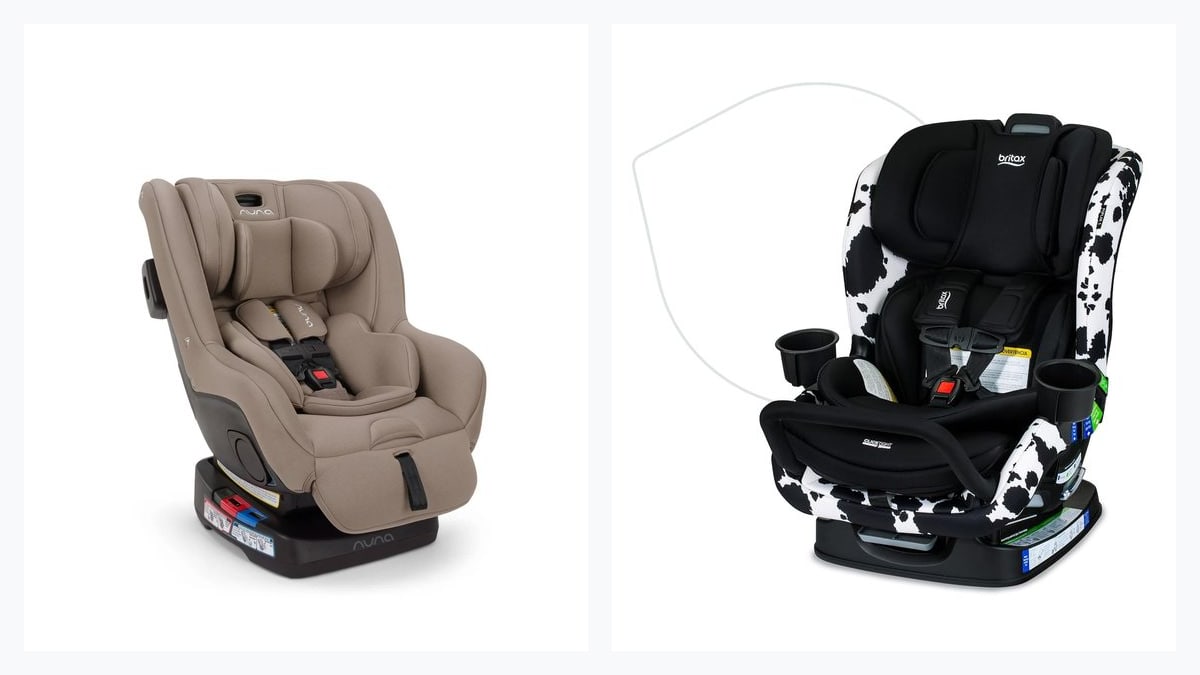
Nuna RAVA vs Britax Poplar S: Premium Convertible Compared
The Nuna RAVA and Britax Poplar S take the same child from 5 to 65 pounds on identical limits. The real differences are the installation system, a rebound bar, two inches of width, and recline range.