Affiliate Disclosure:Kid Sitting Safe is reader-supported. When you buy through links on our site, we may earn an affiliate commission at no additional cost to you. This does not influence our reviews or recommendations — we only recommend products we genuinely believe in.
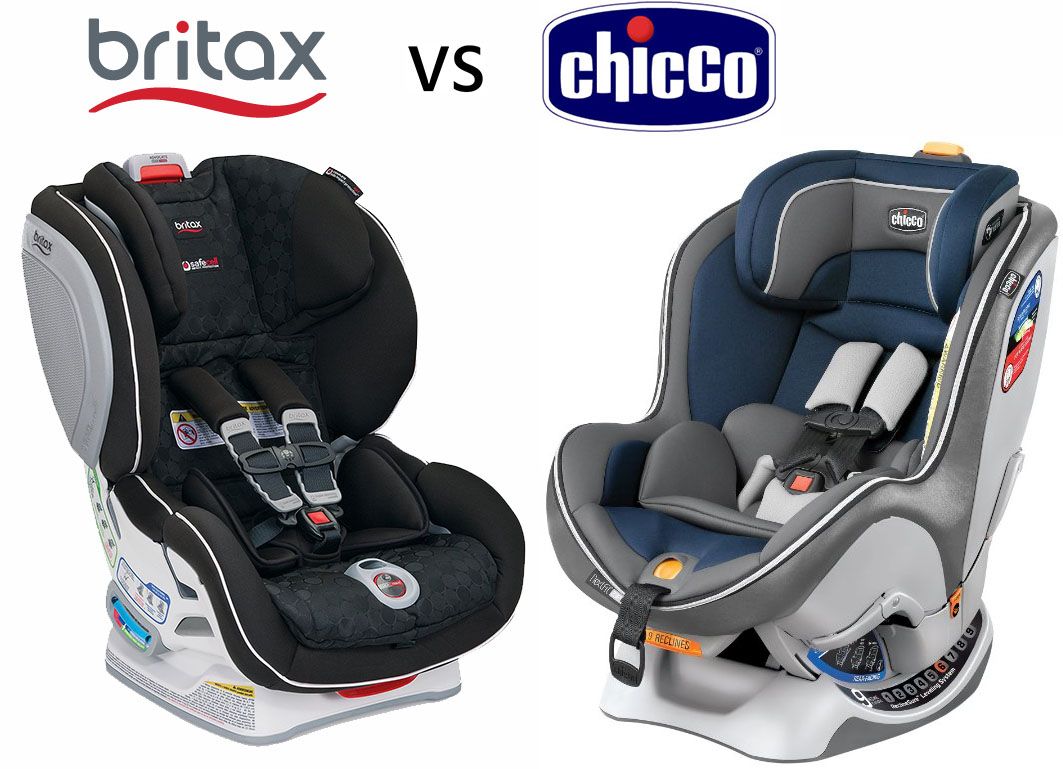
Britax and Chicco are two of the most respected names in child passenger safety. Both have decades of experience and loyal followings, but their design philosophies differ in meaningful ways.
This comparison covers safety features, installation systems, pricing, and real-world usability. We’ll compare flagship products head-to-head and help you figure out which brand makes more sense for your family.
Brand Overview
Britax: Engineering Excellence
Britax built its reputation on steel frame construction and innovative installation systems. Structural integrity and correct installation are the brand’s priorities.
Founded in the UK in 1933, Britax has been in child safety for nearly a century. They pioneered the first five-point harness system and early side-impact protection. After entering the North American market in 1996, they quickly positioned themselves as a premium brand willing to exceed minimum safety standards.
Key Technologies:
- ClickTight: Revolutionary seat belt tensioning system that achieves proper tension with minimal effort
- SafeCell: Impact-absorbing base technology that compresses in a crash to reduce forces
- Side Impact Cushion: Energy management system with multiple layers of protection
- HUGS: Harness Ultra Guard System that distributes crash forces across a wider area
- V-Shaped Tether: Provides two points of attachment for increased stability
The core philosophy: make correct installation nearly foolproof. NHTSA’s National Child Restraint Use Special Study put the combined misuse rate for car seats and boosters at 46%, counting installation and how the child is restrained. ClickTight, introduced in 2014, was Britax’s answer to that problem.
Britax seats run heavier because of steel frames and multiple safety layers. Less convenient for travel, but the rigid structure provides better protection during impacts. Higher price points reflect this premium construction approach.
Chicco: User-Friendly Innovation
Chicco focuses on ease of use and practical features that reduce installation and usage errors. They consistently rank at the top for parent satisfaction.
Founded in Italy in 1958, Chicco takes an integrated approach to baby products. Their car seats integrate with stroller systems and other gear. They entered the American market in the 1980s and changed infant car seats with the KeyFit in 2006, which quickly became the pediatrician-recommended standard.
Key Technologies:
- SuperCinch: LATCH tightener requiring minimal effort with clear feedback when tight
- ReclineSure: Self-leveling adjustment system that simplifies achieving proper angle
- RideRight: Bubble level indicators that provide visual confirmation of correct installation
- 9-Position Headrest: Tool-free adjustment that grows with your child
- LockSure: Belt-locking system that prevents loosening over time
Chicco’s design process emphasizes intuitive usability. They conduct extensive user testing with real parents, finding pain points and engineering solutions. Zip-off seat pads that make cleaning easy? That came from watching parents struggle with traditional covers during the toddler years.
The Italian heritage shows in fabric quality and aesthetic design. Premium textiles, thoughtful padding placement, color options that appeal to style-conscious parents. None of this comes at the expense of safety. All Chicco seats meet or exceed federal standards and perform well in crash testing.
Head-to-Head Comparison
Installation Systems
| Feature | Britax ClickTight | Chicco SuperCinch |
|---|---|---|
| Method | Seat belt auto-tension | LATCH tightener |
| Physical Effort | Minimal | Low |
| Learning Curve | Low | Low |
| Consistency | Excellent | Very Good |
| Visual Feedback | Click + audible | Tension indicator |
| Re-tightening | Not needed | Rarely needed |
Verdict: ClickTight edges ahead for absolute ease, but both systems significantly outperform standard installations.
How ClickTight works: open a compartment beneath the seat, thread the vehicle seat belt through, close the compartment, hear a click. The mechanism tensions the belt automatically. No pulling, no body weight needed. In NHTSA evaluations, ClickTight-equipped seats showed misuse rates below 10%, compared to industry averages above 40%.
SuperCinch uses a strap-and-ratchet system on the LATCH connectors. Pull the strap until the tension indicator shows green. It requires slightly more effort than ClickTight, but it’s still dramatically easier than traditional LATCH. That visual green indicator is especially valuable for first-time parents who aren’t sure what “tight enough” feels like.
One thing to know: ClickTight uses vehicle seat belts rather than LATCH. Seat belts have no weight limits (unlike LATCH’s 65-pound combined limit), so you can keep using ClickTight with larger children. SuperCinch requires LATCH, meaning you’ll need to switch to seat belt installation once child plus seat exceeds 65 pounds.
Safety Features
Britax Advantages:
- Steel frame construction (most models) providing superior structural rigidity
- 2-4 layer side impact protection depending on model tier
- Impact-absorbing bases with SafeCell technology that compress progressively
- Complete Side Impact Protection system with head-to-hip coverage
- Tether connectors designed for maximum energy absorption
- EPP (expanded polypropylene) foam that rebounds after impact
Chicco Advantages:
- EPS energy-absorbing foam throughout shell and headrest
- Reinforced head support with dual-density padding
- Steel-reinforced frame (select models, the NextFit among them)
- DuoGuard side-impact protection with dual-layer energy management
- Energy-absorbing tether system
- Premium LATCH connectors with reinforced attachment points
The reality: Both exceed FMVSS 213 standards. Britax offers more premium safety features at higher prices. Chicco provides excellent protection at more accessible prices.
According to the American Academy of Pediatrics, proper installation and appropriate use (especially extended rear-facing) matter far more than brand choice when both manufacturers meet federal standards. FMVSS 213 requires all seats to withstand a 30 mph frontal crash test. Both brands exceed that.
Note on the Britax ClickTight convertibles. Britax has retired the Boulevard, Marathon and Advocate. They are kept in this comparison because plenty of families own one and they still turn up secondhand, and every figure quoted for them is accurate. If you are buying new, the current Britax convertible with the same ClickTight installation is the Poplar S.
Where Britax separates itself is side-impact protection depth. Federal standards don’t mandate side-impact testing, so manufacturers self-certify. Britax conducts extensive testing and publishes results showing their multi-layer approach reduces head injury risk in T-bone collisions. The Boulevard ClickTight, for example, has four layers: outer shell, energy-absorbing foam, deep side wings, and head-restraint padding.
Chicco takes a different approach. DuoGuard places dual-density foam at the points where side impacts generate the most force: head and torso. Targeted engineering, excellent protection, less added weight.
Both brands use energy management principles (materials that compress during impact to extend deceleration time). Neither approach is inherently superior. Different engineering philosophies, same safety outcome.
Price Comparison
| Category | Britax | Chicco | Difference |
|---|---|---|---|
| Infant Seats | Premium | Mid-range | Britax 15-20% higher |
| Convertible | Premium | Mid-range | Britax 20% higher |
| All-in-One | Premium | Mid-range to premium | Britax 20-25% higher |
Britax positions itself as premium engineering. Chicco aims for accessible premium: high-end features at prices more families can afford.
Planning multiple children? Chicco’s value adds up fast. The savings across three seats (typical for families with 2-3 year spacing) are meaningful.
But Britax’s higher prices often come with longer-lasting harness systems and fabrics. The One4Life, for example, is built for 10 years of use. Infant through booster stage with one seat. On a cost-per-year basis, premium Britax seats can actually be competitive.
Sales change the math too. Both brands participate in major retailer events, and Amazon frequently discounts previous-year models. Patient shoppers can find Britax seats at near-Chicco pricing during Black Friday, Prime Day, and seasonal clearances.
Understanding Car Seat Types and Longevity
Before comparing specific models, understanding the different car seat categories helps clarify which products best match your needs and timeline.
Infant Car Seats
Rear-facing only seats designed for newborns through approximately 12-15 months. These seats feature carrying handles and click into compatible stroller frames - invaluable for preserving sleep when transitioning from car to stroller.
Advantages:
- Optimal newborn positioning and protection
- Convenience for infant transportation
- Better fit for smaller babies
- Easy to move between vehicles
Limitations:
- Shortest lifespan (typically 1-2 years of use)
- Requires subsequent seat purchase
- Takes up trunk/storage space when not installed
The AAP recommends keeping infants rear-facing for at least the first year and until they reach the seat’s height/weight maximums - a practice known as extended rear-facing. Infant seats excel at this stage but represent an additional purchase since children will outgrow them before transitioning to forward-facing.
Convertible Car Seats
These seats convert from rear-facing (for infants/toddlers) to forward-facing (for older children). They represent the most versatile and economical choice for many families.
Advantages:
- Supports extended rear-facing (AAP recommendation: minimum age 2, ideally longer)
- One seat from infancy through preschool
- Better value than infant + convertible separately
- Stays in one vehicle (no carrying in/out)
Limitations:
- Less ideal newborn positioning compared to dedicated infant seats
- Heavy and bulky for vehicle transfers
- No stroller integration
Convertible seats work well for families not relying on the car seat as transportation between car and home/store. If you’ll wake and carry baby anyway, or use a separate stroller system, convertibles eliminate the infant seat purchase entirely.
All-in-One Car Seats
These seats handle three stages: rear-facing, forward-facing harness, and belt-positioning booster. They’re designed to be the only seat you’ll ever need.
Advantages:
- Maximum longevity (infant through elementary school)
- Best cost-per-year value
- Single learning curve for installation
- Reduces waste
Limitations:
- Heaviest and largest footprint
- No infant portability
- Less ideal newborn fit than dedicated infant seats
- Significant upfront investment
All-in-one seats make excellent economic sense but require accepting trade-offs in the infant stage. They’re ideal for second cars, families with limited storage, or parents planning only one child.
Product Line Comparison
Infant Car Seats
Note that the Chicco KeyFit Max ClearTex has succeeded the KeyFit 35 as Chicco’s current infant flagship. The Max adds an integrated anti-rebound bar for additional crash protection and meets both FMVSS 213a (side impact) and 213b (frontal impact), in exchange for a slightly lower 30 lb rear-facing cap (vs 35 lbs on the KeyFit 35). The KeyFit 35 remains FMVSS 213 certified; the table below reflects the legacy KeyFit 35 specs and remains accurate for that seat.
Chicco KeyFit 35 vs Britax B-Safe Gen2
| Feature | KeyFit 35 | B-Safe Gen2 |
|---|---|---|
| Weight | 9.5 lbs | 10 lbs |
| Weight Limit | 4-35 lbs | 4-35 lbs |
| Height Limit | 32” | 32” |
| Installation | SuperCinch + leveling | Standard LATCH |
| Base Included | Yes | Yes |
| Stroller Compatibility | Extensive | Britax only |
| Verdict | Better installation | Similar safety |
Winner: Chicco KeyFit for superior installation system at a comparable price point. The KeyFit 35 earned its gold-standard reputation through relentless focus on usability. ReclineSure leveling foot with five-position adjustment compensates for different vehicle seat angles. RideRight bubble levels give instant visual confirmation of proper angle. Less anxiety, better installations.
Under 60 seconds once you know the system. Base attaches via SuperCinch LATCH with clear tensioning feedback, carrier clicks in with an audible confirmation. And the KeyFit works with dozens of stroller brands through adapters or direct compatibility, far more than any Britax infant seat.
The B-Safe Gen2 matches on safety but lacks Chicco’s installation innovations. Traditional LATCH requiring more physical effort. The SafeCell impact-absorbing base is excellent, but it doesn’t overcome the KeyFit’s usability advantages.
Britax does have a small edge on fabric quality. The B-Safe Gen2 resists pilling and wear better through multiple children. For most families using infant seats only 12-18 months, though, you won’t notice the difference.
Planning on a Britax travel system? The B-Safe Gen2 integrates perfectly with Britax strollers. But given the KeyFit’s broad compatibility, even Britax stroller owners might consider the Chicco seat with an adapter.
Convertible Car Seats
Chicco NextFit Zip vs Britax Boulevard ClickTight
| Feature | NextFit Zip | Boulevard |
|---|---|---|
| Rear-Facing Limit | 40 lbs | 40 lbs |
| Forward-Facing Limit | 65 lbs | 65 lbs |
| Height Limit (RF) | 49” | 49” |
| Installation | SuperCinch | ClickTight |
| Price Tier | Mid-Range | Premium |
| Side Impact Protection | DuoGuard 2-layer | 4-layer system |
| Fabric Removal | Zip-off | Traditional |
| Recline Positions | 9 positions | 2 positions |
| Verdict | Better value | Easier install |
Winner: Tie - choose the Britax route for easiest installation, NextFit for value and features. Buying new, that means the Poplar S rather than the retired Boulevard.
This is the core decision many parents face: pay premium for ClickTight simplicity, or save money with SuperCinch (which is still excellent)?
The Boulevard ClickTight eliminates installation anxiety. Open, thread, close, click. Done. Parents report first-time perfect installations, and tension holds indefinitely without loosening. If you’re nervous about car seat installation (NHTSA data suggests most parents are), ClickTight’s peace of mind justifies the premium.
Four-layer side-impact protection (shell, EPP foam, Side Impact Cushion, head restraint) and an impact-absorbing base that compresses during frontal crashes. Real engineering advantages, though both seats exceed federal standards.
The NextFit Zip fights back with everyday usability. Nine recline positions versus the Boulevard’s two. A zip-off seat pad that makes cleaning easy after the inevitable spills and ground-in snack debris. The 9-position no-rethread harness adjusts in seconds.
SuperCinch requires more effort than ClickTight but still ranks among the easiest systems out there. Tension indicator gives clear feedback. Most parents figure it out in 1-2 attempts.
Tighter budget? Value convenience features? The NextFit Zip. Want the easiest installation regardless of cost? Britax, which today means the Poplar S.
All-in-One Seats
Note on the Chicco Fit4. Chicco has retired it. Searching their site for the Fit4 now returns replacement parts and no seat, and their current all-in-one is the OneFit ClearTex. The Fit4 is kept in this comparison because plenty of families own one and every figure quoted for it is accurate. If you’re buying new, read the OneFit’s own limits rather than assuming they match the seat below.
Chicco Fit4 vs Britax One4Life
| Feature | Fit4 | One4Life |
|---|---|---|
| Rear-Facing | 4-40 lbs | 5-50 lbs |
| Forward-Facing | 22-65 lbs | 30-65 lbs |
| Booster Mode | 40-120 lbs | 40-120 lbs |
| Installation | SuperCinch | ClickTight |
| Price Tier | Mid-Range | Premium |
| Expiration | 8 years | 10 years |
| Cup Holders | 2 removable | 2 integrated |
| Headrest Positions | 10 | 10 |
| Verdict | Better value | Premium features |
Winner: Britax One4Life on features, and the Fit4’s retirement settles it for anyone shopping now.
Both options take children from roughly 4-5 pounds through 120 pounds. Birth through elementary school in one seat.
The One4Life’s 50-pound rear-facing limit matters. NHTSA puts the reduction in fatal injury at 71% for infants under 1, in passenger cars. Keeping a child rear-facing to age 4 (average weight 40 pounds) or beyond aligns with best practices.
ClickTight means the One4Life stays properly installed through its entire 10-year lifespan. No loosening. No re-tightening. The belt stays locked at correct tension regardless of vehicle movement, temperature, or routine use.
Steel frame, premium construction, harness systems that withstand thousands of clicks. Fabrics resist fading and pilling through multiple children.
The Fit4 counters with impressive value at a lower price. Its 40-pound rear-facing limit still supports extended rear-facing for most kids until age 3-4. SuperCinch doesn’t quite match ClickTight, but it’s still excellent. The 8-year vs. 10-year expiration mainly matters for families planning three or more children with wide spacing.
Where the Fit4 wins is everyday convenience. Removable cup holders you can put in the dishwasher. Zip-off fabrics. ReclineSure leveling for proper angles in various vehicles.
Confident you’ll use the seat for its full lifespan? The One4Life’s premium engineering and extended rear-facing justify the cost. Own a Fit4 already? Nothing above changes how it performs, and it stays a capable all-in-one for as long as it’s within its expiry date.
Real-World Usage Considerations
Installation in Different Vehicles
Vehicle seat geometry dramatically affects installation ease and fit. Both brands provide vehicle fit guides, but some general patterns hold:
Smaller Vehicles (Compact sedans, coupes): Chicco seats typically feature more compact footprints and work better in smaller back seats. The NextFit Zip has less front-to-back depth than comparable Britax models, leaving more legroom for front passengers. In vehicles like Honda Civics, Toyota Corollas, or Mazda3s, Chicco seats allow front passengers to maintain comfortable positions.
SUVs and Larger Vehicles: Britax seats’ larger dimensions become assets rather than liabilities. The additional size translates to more plush padding and deeper side wings. In vehicles with generous back seat space (Subaru Ascent, Honda Pilot, Toyota Highlander), Britax seats install without compromise.
Three-Across Installations: Installing three car seats across one bench seat challenges all manufacturers. Narrow seats like the Chicco KeyFit perform best for three-across infant seat configurations. For convertible three-across, the NextFit Zip’s narrower profile edges out comparable Britax models. However, vehicle-specific geometry matters more than seat dimensions - consulting vehicle fit guides and trying before buying (many retailers allow test installations) prevents disappointment.
Daily Use and Adjustments
Harness Adjustments: Chicco wins here. Squeeze a release lever, slide the headrest. Done. No disassembly. Britax requires threading through new slots, manageable but time-consuming when you’re adjusting every few months as your kid grows.
Cleaning and Maintenance: Chicco’s zip-off seat pads are brilliant. Pull the pad off in under 60 seconds, toss it in the wash, reinstall. Britax requires navigating harness slots and anchor points to remove fabric. Possible, but frustrating when your toddler just dumped yogurt everywhere.
Both brands’ fabrics machine wash well. Britax fabrics hold up longer though. After 2-3 years and multiple kids, Britax covers show less pilling and fading.
Recline Adjustments: Kids fall asleep in the car. That’s just reality. Chicco’s 9-position systems make it easy to find an angle that supports the sleeping head while staying safe. Britax’s limited recline options work for most families but offer less flexibility.
Moving Between Vehicles
Different situation than families with one seat permanently installed.
ClickTight Advantage: Fastest, most foolproof reinstallation available. Open, thread, close, click. Works identically in any vehicle. Grandparents, caregivers, rental cars: no expertise needed.
Weight Considerations: Chicco seats weigh 2-4 pounds less than comparable Britax models. Doesn’t matter much for permanently installed seats. Matters a lot when you’re moving one weekly.
SuperCinch Learning Curve: SuperCinch requires understanding the tension indicator. It’s intuitive, but it’s one more thing to teach grandparents or caregivers. In an unfamiliar rental car, that adds stress. ClickTight eliminates the variable entirely.
Extended Rear-Facing: Why It Matters
The AAP recommends keeping children rear-facing until they reach the maximum height or weight allowed by the seat, with a minimum age of 2. This comes down to crash dynamics and child anatomy.
The Science Behind Rear-Facing
In frontal crashes (the majority of serious collisions), rear-facing seats distribute crash forces across the entire seat shell and child’s back. The seat acts as a protective cocoon, spreading deceleration across a large surface area.
Forward-facing seats, even with five-point harnesses, allow the child’s head to fling forward. Young children have disproportionately large, heavy heads on weak necks. That combination creates extreme stress on cervical vertebrae during sudden deceleration.
NHTSA’s figure is a 71% reduction in fatal injury for infants under 1, in passenger cars. Sweden keeps children rear-facing until age 4 or beyond, far longer than US practice.
Extended Rear-Facing Comparison
Both Britax and Chicco support extended rear-facing, but limits vary:
Standard Convertibles:
- Britax Boulevard: 40 pounds
- Chicco NextFit Zip: 40 pounds
All-in-One Seats:
- Britax One4Life: 50 pounds
- Chicco Fit4 (retired): 40 pounds
The One4Life’s 50-pound rear-facing limit accommodates larger children or those whose parents want to rear-face until age 5. The Fit4’s 40-pound limit still supports most children until age 3-4, meeting AAP minimums and allowing extended rear-facing for average-sized children, which is worth knowing if you own one. Chicco’s current all-in-one, the OneFit ClearTex, publishes its own limits, so check those rather than carrying the Fit4’s across.
Rear-facing height limits also matter. Taller children may outgrow rear-facing by height before reaching weight limits. Both brands provide generous height allowances (typically 49”), accommodating 95th percentile children through age 3-4 when rear-facing.
Understanding Safety Ratings and Testing
FMVSS 213: The Federal Standard
All car seats sold in the United States must meet FMVSS 213 requirements. These standards mandate:
- 30 mph frontal crash test survival without exceeding injury thresholds
- Harness retention under load
- Seat belt path performance
- Flammability standards
- Instructional labeling clarity
Both Britax and Chicco exceed these minimums, but federal standards represent baseline safety, not optimal protection.
Side-Impact Testing
FMVSS 213 doesn’t require side-impact testing, leaving manufacturers to self-certify. Both brands conduct internal side-impact testing, though protocols vary.
Britax publishes detailed side-impact test results showing force reduction through their multi-layer systems. The Complete Side Impact Protection system demonstrates measurable head injury criterion (HIC) reductions in simulated T-bone collisions.
Chicco’s DuoGuard system achieves similar protection through different engineering. Their targeted energy-absorbing foam placement at critical zones (head and torso) manages impact forces effectively.
Without standardized third-party side-impact testing, comparing specific performance numbers between brands becomes impossible. Both approaches meet engineering principles recommended by safety experts: energy absorption, head containment, and structural integrity.
Ease-of-Use Ratings
NHTSA conducts ease-of-use evaluations for most car seats, rating:
- Instruction clarity
- Installation difficulty
- Harness adjustment ease
- Belt path clarity
- Securing child difficulty
Both Britax ClickTight and Chicco SuperCinch seats consistently earn high ease-of-use ratings (4-5 stars). Non-ClickTight Britax seats and Chicco seats without SuperCinch score lower, typically 3-4 stars.
These ratings correlate strongly with real-world proper installation rates. Easier installation systems reduce user error - the primary cause of car seat ineffectiveness.
Long-Term Value and Durability
Seat Longevity and Expiration
Car seats expire due to material degradation, design obsolescence, and manufacturer liability. Expiration dates vary:
Britax:
- Infant seats: 6 years
- Convertibles: 6-10 years (model dependent)
- All-in-one: 10 years (One4Life)
Chicco:
- Infant seats: 6 years
- Convertibles: 8 years
- All-in-one: 8 years
Britax’s longer expiration dates matter for large families with extended child spacing or those planning to use seats across multiple children.
Durability Through Multiple Children
Both brands build seats to withstand multiple children, but construction approaches differ:
Britax Durability Features:
- Steel frame prevents structural flex over time
- Premium harness mechanisms rated for 10,000+ adjustments
- Fabrics resist pilling and maintain appearance longer
- ClickTight mechanism has no moving parts to break
Chicco Durability Features:
- Reinforced steel frame (select models)
- SuperCinch strap system with metal components
- EPS foam maintains energy absorption over time
- Harness systems with metal adjusters
Consumer reports suggest both brands perform well through 2-3 children. Britax seats show less visible wear (fabric pilling, harness loosening), while Chicco seats maintain functionality despite more apparent cosmetic aging.
Resale Value
Britax seats command higher resale prices on secondary markets. The brand’s premium positioning and reputation for durability mean used Britax seats sell for 40-50% of original MSRP when in good condition with unexpired dates.
Chicco seats resell for 30-40% of MSRP. The lower original price point means absolute dollar recovery is similar despite lower percentage retention.
Important Safety Note: The AAP and NHTSA recommend against buying used car seats unless you know the complete history. Unknown crash involvement, manufacturing recalls, or missing parts compromise safety. If considering used seats, buy only from trusted sources who can confirm history.
Warranty and Customer Support
Warranty Coverage
Britax:
- 1-year limited warranty covering manufacturing defects
- Extended warranty registration available
- Replacement of defective parts at manufacturer discretion
- Crash replacement program (50% off new seat after crash)
Chicco:
- 1-year limited warranty covering manufacturing defects
- Online registration required for full coverage
- Replacement parts available for purchase
- Customer service support via phone and online chat
Both brands honor warranties for manufacturing defects but exclude damage from misuse, accidents, or normal wear. Warranty claims require proof of purchase and product registration.
Customer Service Experience
Consumer feedback consistently rates both brands’ customer service positively:
Britax:
- Phone support Monday-Friday with knowledgeable representatives
- Detailed online resources including video installation guides
- Active social media presence answering questions
- Replacement part ordering system
Chicco:
- Phone and chat support Monday-Saturday
- Extensive FAQ database covering common questions
- Video installation tutorials for each model
- Generally faster response times than Britax
Both brands provide certified installation technician locator tools, helping parents find local inspection stations for installation verification.
Special Considerations for Specific Situations
Travel and Air Travel
Both brands manufacture seats approved for aircraft use (indicated by labels stating “This restraint is certified for use in motor vehicles and aircraft”).
Britax: The Britax B-Safe Gen2 infant seat and select convertibles are FAA-approved. However, their weight and bulk make air travel cumbersome. Most Britax convertibles exceed comfortable carry-on dimensions.
Chicco: The KeyFit 35 is FAA-approved and lightweight enough for airport navigation. The smaller footprint fits better in aircraft seats. Chicco convertibles also meet FAA requirements but share similar portability challenges with Britax.
For frequent air travelers, both brands offer compromises. Many families use lightweight travel car seats (different brands entirely) for flights, reserving Britax/Chicco seats for primary vehicles.
Children with Special Needs
Children with medical conditions or special needs may require longer car seat use or specialized features:
Extended Rear-Facing: The Britax One4Life’s 50-pound rear-facing limit helps children with developmental delays who need extended rear-facing positioning beyond typical ages.
Larger Children: Both brands’ all-in-one seats accommodate children to 120 pounds in booster mode, supporting bigger kids or those using car seats longer than peers.
Harness Use: Forward-facing harness limits (65 pounds) support extended harness use beyond typical booster transition ages (4-5 years). For children with autism spectrum disorder, ADHD, or other conditions affecting safety awareness, extended harness use provides additional security.
Families with special needs should consult pediatricians and certified child passenger safety technicians for personalized recommendations.
Multiple Children and Age Spacing
Family composition influences optimal brand choice:
Close Age Spacing (Less than 2 years): You’ll likely have 2-3 car seats installed simultaneously. Chicco’s narrower profiles facilitate three-across installations. Consider Chicco for easier vehicle fit management.
Wide Age Spacing (More than 4 years): Seats will be used sequentially rather than simultaneously. Britax’s longer expiration dates and durability make extended use more practical. The One4Life’s 10-year expiration supports children born 8+ years apart.
Multiple Vehicles: Families needing dedicated seats per vehicle benefit from Chicco’s value pricing, allowing multiple seat purchases without financial strain. Alternatively, one ClickTight seat that moves between vehicles easily may be more practical than multiple installed seats.
Making Your Decision: A Practical Framework
Step 1: Identify Your Non-Negotiables
Safety Priorities:
- Extended rear-facing (minimum 40 lbs, ideally 50 lbs)
- Ease of correct installation to prevent user error
- Side-impact protection
- Compliance with AAP guidelines
Lifestyle Factors:
- Vehicle size and seat spacing
- Need for portability between vehicles
- Storage space for infant carriers
- Stroller system compatibility
- Budget constraints
Step 2: Determine Your Timeline
Single Child: All-in-one seats provide the best value and simplicity. That means the Britax One4Life, or Chicco’s current all-in-one, the OneFit ClearTex.
2-3 Children Planned: Consider infant seat (Chicco KeyFit 35) plus convertible (Britax Poplar S or Chicco NextFit) per child. Infant seats offer convenience for the newborn phase, and convertibles support extended rear-facing through preschool years.
Large Family (3+ Children): Value becomes paramount. Chicco’s pricing allows equipping multiple children without excessive investment. Alternatively, one premium all-in-one passed down through children maximizes use.
Step 3: Evaluate Your Budget
Premium Budget: Britax One4Life delivers maximum longevity, easiest installation, and premium safety features. Investment pays off through extended use and superior durability.
Mid-Range Budget: Britax Poplar S or Chicco NextFit Zip provide excellent performance. Choose Britax for installation ease, Chicco for features and value.
Value Budget: Chicco KeyFit 35 for the infant stage plus a Chicco NextFit Zip covers birth through the preschool years at an outstanding combined value without sacrificing safety, with a dedicated booster after that.
Step 4: Consider Your Confidence Level
First-Time Parents or Installation Anxiety: Choose Britax ClickTight. The foolproof installation removes anxiety entirely and ensures proper tension every time. The peace of mind alone justifies the premium for parents who worry about doing it right.
Experienced Parents Seeking Value: Choose Chicco. If you’re comfortable with car seat installation and want the best feature set per dollar, Chicco’s SuperCinch system is excellent, and you’ll benefit from superior cleaning convenience, more recline options, and lower cost.
Frequent Vehicle Switchers: Choose Britax ClickTight. The open-thread-close-click process works identically in every vehicle. Whether it’s your car, grandma’s SUV, or a rental, installation confidence stays the same.
Budget-Conscious Families with Multiple Children: Choose Chicco. The savings across multiple seats adds up, and the broad stroller ecosystem compatibility (especially with the KeyFit) provides genuine convenience without sacrificing safety.
Further Reading
- Britax vs Graco: Premium vs Value Car Seat Comparison
- Nuna vs UPPAbaby: Luxury Infant Car Seat Comparison
- Diono Radian vs Rainier: Slim Convertible Car Seat Comparison
The Bottom Line
Both brands make excellent car seats that exceed federal safety standards. Neither is inherently safer. The safest seat is the one that fits your child, fits your vehicle, and gets installed correctly every time.
Choose Britax if: Installation ease is your top priority. Steel-frame construction and long-term durability matter to you, and you plan to use seats across many years or multiple children. Frequent vehicle transfers are another reason, and ClickTight makes that painless.
Choose Chicco if: Balance of safety and value is what you’re after. Everyday convenience features like zip-off covers and 9-position recline make a real difference, and the broad stroller compatibility is hard to beat for infant travel systems.
For a broader look across all brands, see our top-rated car seats roundup. For many families, the best approach actually combines both brands: Chicco KeyFit 35 for the newborn phase (unmatched installation ease and stroller compatibility at a reasonable price), then a Britax Poplar S or One4Life for the convertible stage (installation confidence for years of daily use). Each brand’s strengths match the stage where they matter most.
Head-to-Head Comparison
Detailed Reviews
Britax Poplar S
Best Britax convertibleBest for parents prioritizing easiest installation and premium safety.
What We Like
- ClickTight installation removes most of the guesswork from a tight fit
- Slim 17-inch shell is designed to fit three across
- Extended rear-facing to 50 lbs, matching the premium tier
- ReboundReduce stability bar limits rear-facing rebound movement
- 14-position no-rethread headrest and harness adjust together
What We Don't
- Only 6 recline positions against 10 on the Nuna RAVA
- 1-year limited warranty is short for the price
- At 28 lbs it is no lighter than seats without the slim shell
- Cover is washable but lacks the natural-fibre options of premium rivals
Chicco NextFit Zip
Best Chicco convertibleBest for extended rear-facing with superior comfort features.
What We Like
- SuperCinch LATCH tightener for easy secure installation
- 9-position recline accommodates various vehicle seats
- Zip-off washable cover removes without uninstalling seat
- ReclineSure leveling system ensures proper angle
What We Don't
- Does not convert to booster mode
- Bulkier footprint than compact convertible options
- 40-pound rear-facing limit lower than some competitors
Britax One4Life ClickTight
Best Britax all-in-oneUltimate long-term solution with Britax's best safety features.
What We Like
- ClickTight installation system virtually eliminates user error
- Full steel frame with SafeCell crumple zone for superior crash protection
- 15-position no-rethread harness and headrest for easy adjustments
- 10-year lifespan covers child from infancy through booster stage
What We Don't
- Premium pricing, well above the mainstream all-in-one tier
- Heavy at 30.5 lbs, limiting portability between vehicles
- Bulky footprint may not fit well in smaller vehicles
Chicco KeyFit Max ClearTex Infant Car Seat
Best overall infant car seat for installation easeChicco's current infant flagship, adds an integrated anti-rebound bar over the KeyFit 35.
What We Like
- Integrated anti-rebound bar (the upgrade over the KeyFit 35 line) adds ~1.5 inches of legroom and reduces forward rotation in a frontal crash
- SuperCinch push-on lower LATCH connectors make a tight installation achievable with minimal force
- Integrated European belt routing for secure baseless installation in taxis, rideshares, or grandparent cars
- 5-position no-rethread harness with an extra inch of headroom vs the KeyFit 30
- Meets FMVSS 213b frontal impact standard and FMVSS 213a side impact standard; GREENGUARD Gold and Baby Safety Alliance verified; FAA approved
What We Don't
- Heavy carrier at 10 lbs, tiring for parents carrying it daily
- Canopy needs two hands to extend fully
- Belt threading under the guides is tedious for baseless installation
- No load leg (a feature Cybex, Nuna, and UPPAbaby offer at higher price points)
Sources & Research
- Britax Official Product Page
- Amazon Product Page
- Amazon listing for the current ASIN, read 2026-08-03. "Britax One4Life All in One Car Seat, Up to 10 Years of Use". IN_STOCK, with a colour selector and a One4Life / One4Life Slim style selector
- Britax site search, 2026-08-03. Confirms the current range. Britax sells this seat as BOTH "One4Life" and "One4Life ClickTight", plus a separate One4Life Slim and a ClickTight Anti-Rebound Bar version
- Chicco USA Official Product Page
- Chicco KeyFit Max Infant Car Seat Product Manual
- The Car Seat Pros Review
- Amazon Product Listing
Continue Reading
Explore more car seat comparisons content or browse our other categories.
Frequently Asked Questions
- Which is safer, Britax or Chicco?
- Both Britax and Chicco manufacture car seats that meet the same FMVSS 213 federal safety standards. Neither brand is inherently "safer" than the other. Britax emphasizes steel frame construction and ClickTight installation in their premium lines, which may reduce installation errors. Chicco focuses on ease-of-use features like the SuperCinch tightener and ReclineSure leveling, which also improve correct installation. The safest seat between the two brands is the one that fits your vehicle properly, fits your child correctly, and can be installed tight every time. Both brands have excellent safety reputations and recall histories. Your choice should prioritize proper fit and installation over brand loyalty.
- Is ClickTight worth the extra cost over Chicco's installation system?
- For many parents, yes. The ClickTight system eliminates the most common installation error - insufficient tightness - by automatically tensioning the seat belt to the correct tightness. Parents with limited hand strength, grandparents, or anyone who frequently moves seats between vehicles benefit most. However, Chicco's SuperCinch system is also excellent and easier to use than standard LATCH installations. If budget is tight, Chicco seats provide outstanding value and safety. If you can afford the premium, ClickTight offers unparalleled installation confidence. Both systems are significantly easier than standard seat belt installations found on budget seats.
- Which brand is better for extended rear-facing?
- Both brands offer excellent extended rear-facing options. The Chicco NextFit accommodates children rear-facing to 40 pounds, while the Britax Boulevard and Advocate go to 40 pounds as well. The Britax One4Life extends this to 50 pounds rear-facing, which is the longest of any seat in this comparison. On the Chicco side, the NextFit Zip is the one to look at, since Chicco has retired the Fit4. Both brands exceed AAP minimum recommendations. Your decision should be based on your child's growth pattern and your vehicle's space constraints rather than brand alone.
- Do Britax or Chicco seats fit better in small cars?
- Both brands offer options for compact vehicles, but Chicco generally has more compact footprints. The Chicco KeyFit infant seat has a relatively compact base. The Chicco NextFit, while substantial, fits well in many small cars due to its design. Britax seats tend to be bulkier, especially the ClickTight models with their integrated systems. However, the Britax Boulevard is more compact than the Advocate. For very small cars, the Diono Radian (slim fit) or Graco SlimFit might be better options than either Britax or Chicco. Always verify fit in your specific vehicle before purchasing.
- Which brand has better stroller compatibility?
- Chicco has broader stroller compatibility through their KeyFit system, which works with many Chicco strollers directly and numerous other brands with adapters. The KeyFit is one of the most widely compatible infant seats on the market. Britax infant seats (like the B-Safe) work with Britax strollers and some other brands with adapters, but the ecosystem is more limited. For travel systems and stroller compatibility, Chicco generally offers more options. However, if you're primarily using convertible seats (not infant carriers), stroller compatibility becomes irrelevant.
Written By
Kid Sitting Safe
Our team researches car seat safety standards, crash test data, and real-world usability to help parents make the safest choice.
Related Articles

Britax Boulevard vs Marathon vs Advocate: All Three Are Retired
Britax has retired all three ClickTight convertibles. What separated them, what to check if you own one or are buying secondhand, and which current Britax seat replaces them.
Convertible vs All-in-One Car Seats: Which Should You Buy?
Convertible or all-in-one car seat? A decision-stage comparison covering rear-facing limits, lifespan, value, and which seat fits your family across each stage.
Nuna RAVA vs Britax Poplar S: Premium Convertible Compared
The Nuna RAVA and Britax Poplar S take the same child from 5 to 65 pounds on identical limits. The real differences are the installation system, a rebound bar, two inches of width, and recline range.