Affiliate Disclosure:Kid Sitting Safe is reader-supported. When you buy through links on our site, we may earn an affiliate commission at no additional cost to you. This does not influence our reviews or recommendations — we only recommend products we genuinely believe in.
Teaching children about safety doesn’t have to be scary or boring. Through games and playful activities, kids can learn essential protection skills while having fun. From car seat safety to fire drills, this guide covers engaging ways to teach personal safety, traffic awareness, emergency preparedness, and more.
Why Games Work
Learning Through Play
Children learn best when they’re engaged and enjoying themselves:
- Retention: Play-based learning improves memory by creating positive associations with important information
- Emotional safety: Reduces fear and anxiety by presenting serious topics in manageable, age-appropriate ways
- Practice: Repetition through fun builds automatic responses that work under stress
- Empowerment: Skills build confidence and give children tools rather than just warnings
The reasoning behind play-based safety teaching is that repetition under low stress builds a response a child can reach for under high stress, and that a game a child enjoys gets repeated where a lecture doesn’t.
Play also provides a safe space to make mistakes and learn from them. Unlike real emergencies where there’s no room for error, games allow children to try different approaches, see consequences, and adjust their responses - all without real danger.
The Balance
Effective safety education:
- Takes threats seriously without exaggeration
- Doesn’t create excessive fear or anxiety
- Teaches practical skills children can actually use
- Empowers rather than frightens
- Acknowledges that most people are good
- Focuses on “what to do” rather than “what’s scary”
The goal is to create confident, aware children who can recognize potential dangers and respond appropriately - not anxious children who fear everyone and everything. Games naturally achieve this balance by making safety preparation feel like a normal, manageable part of life.
Building Safety Reflexes
Games create muscle memory and automatic responses. When a child practices “stop at the curb” hundreds of times through play, that action becomes reflexive. In a real situation where they might be excited or distracted, the practiced behavior kicks in automatically.
This is particularly important for actions like:
- Stopping before crossing streets
- Staying low in smoke
- Not opening doors to strangers
- Responding to their name being called
The more playful practice they get, the more likely these behaviors become automatic safety responses.
Personal Safety Games
The “Check First” Rule
Game: Safety Simon Says
Teach the rule: Always check with a grown-up before:
- Going anywhere with anyone
- Taking anything from someone
- Getting in a vehicle
- Opening the door
- Changing plans or locations
- Accepting invitations
How to Play:
- Present scenarios: “A neighbor says your mom asked them to pick you up”
- Child responds: “I need to check with my mom first”
- Praise correct responses
- Discuss what-ifs
- Add variations with each round
- Include tricky scenarios that seem safe
- Practice polite refusal phrases
Advanced Scenarios:
- “Your friend’s mom invites you for a surprise trip to the zoo”
- “A person in a uniform says there’s an emergency and you need to come”
- “Someone calls saying a package arrived and you need to open the door”
- “A person shows a picture of a lost pet and asks you to help look”
The key is teaching children that checking first isn’t rude - it’s the rule for everyone, even people they know and trust. This removes the social pressure that often prevents kids from following safety protocols.
Body Safety
Game: Body Owner
Teach children they own their bodies:
- Proper names for body parts
- Private areas concept
- “No” is okay to say
- Tell a trusted adult
- No one should ask them to keep secrets about touches
- Their feelings about touch matter
Activity:
- Draw a body outline together
- Color areas that are private
- Practice saying “No, I don’t like that”
- Name trusted adults
- Discuss good touches vs. concerning touches
- Role-play telling a trusted adult
Creating Trusted Adult Lists:
Help your child identify 3-5 trusted adults they can tell anything to:
- At least one family member
- At least one outside the home (teacher, counselor, friend’s parent)
- People who believe children
- People who will take action
Make this list concrete - write names and keep it visible. Practice scenarios where the first trusted adult isn’t available, so children know to keep telling until someone helps.
Personal Information
Game: Memory Song
Create a song with:
- Full name
- Parents’ names
- Address
- Phone number
- Emergency contact number
Tips:
- Use familiar tune (Twinkle Twinkle, ABC Song)
- Practice daily during routine activities
- Make it fun and silly
- Quiz occasionally in random moments
- Celebrate progress
- Update as information changes
When to Share, When Not to:
Teach the difference between:
- Safe sharing: With parents, trusted teachers, doctors with parents present
- Unsafe sharing: With strangers, on the internet, to win contests, when someone demands it
Create scenarios: “A person at the store asks where you live - what do you say?” (Correct: “I need to check with my parent” or “My mom is right over there”)
The “What If” Game
Build decision-making skills through hypothetical scenarios:
Starting Questions:
- “What if we got separated at the mall?”
- “What if someone grabbed your arm?”
- “What if you got lost at the park?”
- “What if someone made you feel uncomfortable?”
Teaching Points:
- Stay put or go to the last place you were together
- Yell “This is not my parent!” if grabbed
- Find a mom with kids or store employee
- Trust your feelings - uncomfortable means leave
- Make noise and run to safety
- Tell a trusted adult even if threatened not to
Practice these scenarios in low-stress moments so the plans are clear before any real situation occurs. Children who have practiced responses demonstrate significantly faster and more effective decision-making during actual events.
Traffic Safety Games
Red Light, Green Light
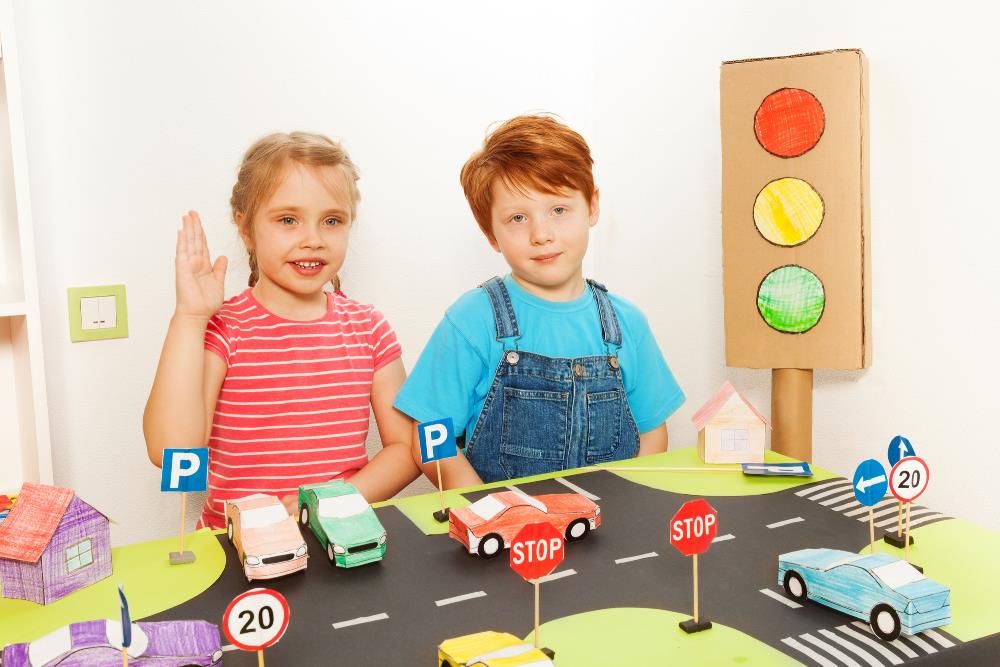
Classic Game with Safety Twist:
- Play traditional red light/green light
- Add yellow light = slow down carefully
- Add stop sign = freeze immediately
- Add crosswalk signal = walk, don’t run
- Discuss real-world connections after each game
Learning Points:
- Red means stop completely
- Green means go, but look first
- Yellow means caution and prepare to stop
- Signs must be obeyed every time
- Quick response saves lives
Variations:
- Play with vehicles (bikes, scooters, toy cars)
- Add pedestrian crossings where players must stop for “pedestrians”
- Include distraction scenarios (someone calls their name during green light)
- Practice looking left-right-left before moving on green
The Sign Game
Scavenger Hunt:
During walks:
- Spot stop signs
- Find crosswalks
- Identify traffic lights
- Name what each means
- Find school zone signs
- Locate bike lane markings
- Point out pedestrian signals
Make it Fun:
- Keep score with a simple tally system
- Take photos to create a safety sign book
- Create a bingo card with different signs
- Award points for explaining sign meanings
- Include signs from different locations
- Discuss why each sign is placed where it is
Extended Activity:
Create your own safety signs for home:
- “Stop before opening door”
- “Look both ways before entering kitchen”
- “No running zone”
- Practice following your home signs just like street signs
This helps children understand that signs are instructions we follow to stay safe, not just decorations we ignore.
Crosswalk Practice
Home Setup:
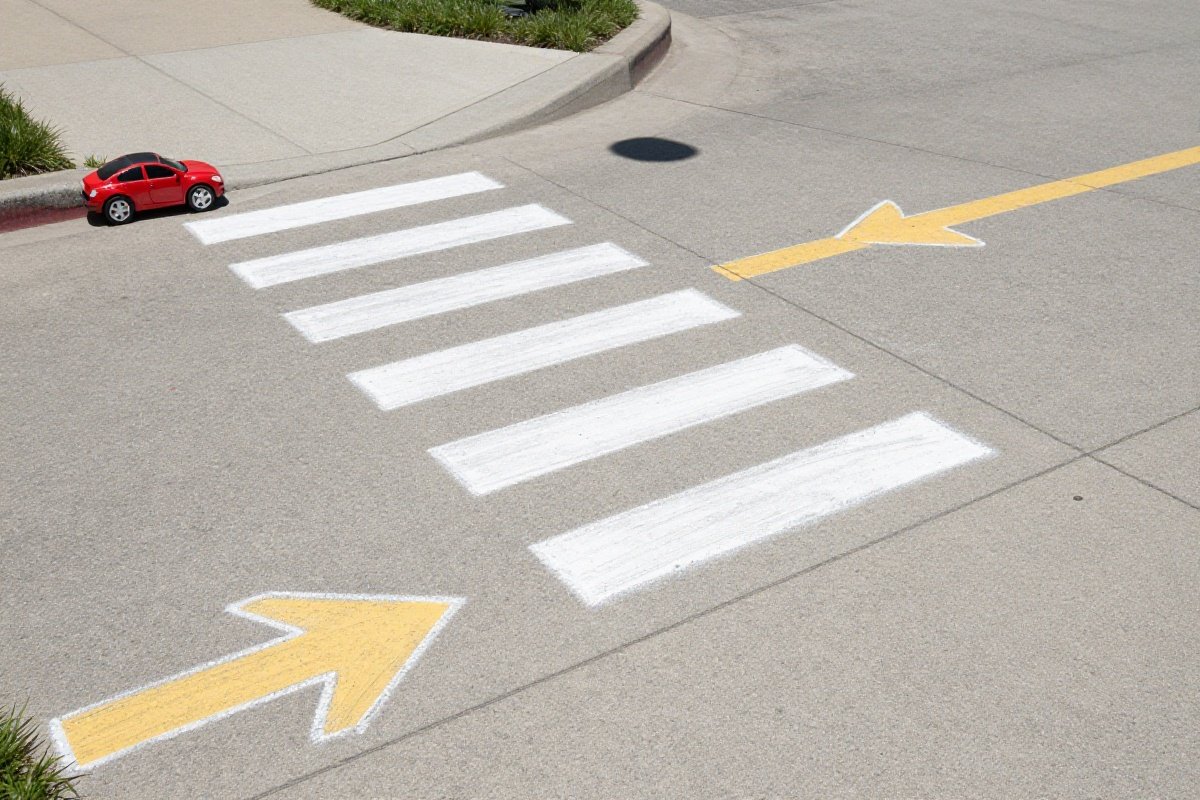
- Use tape to create crosswalk
- Practice the routine:
- Stop at edge with both feet
- Look left-right-left
- Listen for traffic
- Make eye contact with drivers
- Cross when clear, keep looking
- Don’t run, walk steadily
- Role-play scenarios with various vehicles
Common Mistakes to Practice:
- Starting to cross while still looking at phone (for older kids)
- Running across instead of walking
- Not continuing to look while crossing
- Assuming drivers see them
- Crossing between parked cars
- Following others without looking themselves
Parking Lot Safety:
Parking lots are particularly dangerous. Practice:
- Holding an adult’s hand always
- Walking behind parked cars, not in front
- Stopping at every row intersection
- Watching for reverse lights
- Never running in parking lots
Use a pretend parking lot at home with chairs as cars to practice these skills in a controlled environment.
Shadow Walking
Sidewalk Game:
Children must stay on the sidewalk like their shadow stays with them:
- Walk only on sidewalks, never in streets
- If no sidewalk, face traffic and walk far on the shoulder
- Practice stopping at driveways (cars exit)
- Learn to recognize when a path is too dangerous
Points to Emphasize:
- Driveways are mini-intersections - stop and look
- Don’t assume drivers see you
- Stay away from the curb edge
- Walk in groups when possible
- Pay attention - no phones or distractions
Fire Safety Activities
The Escape Plan Game
Family Activity:
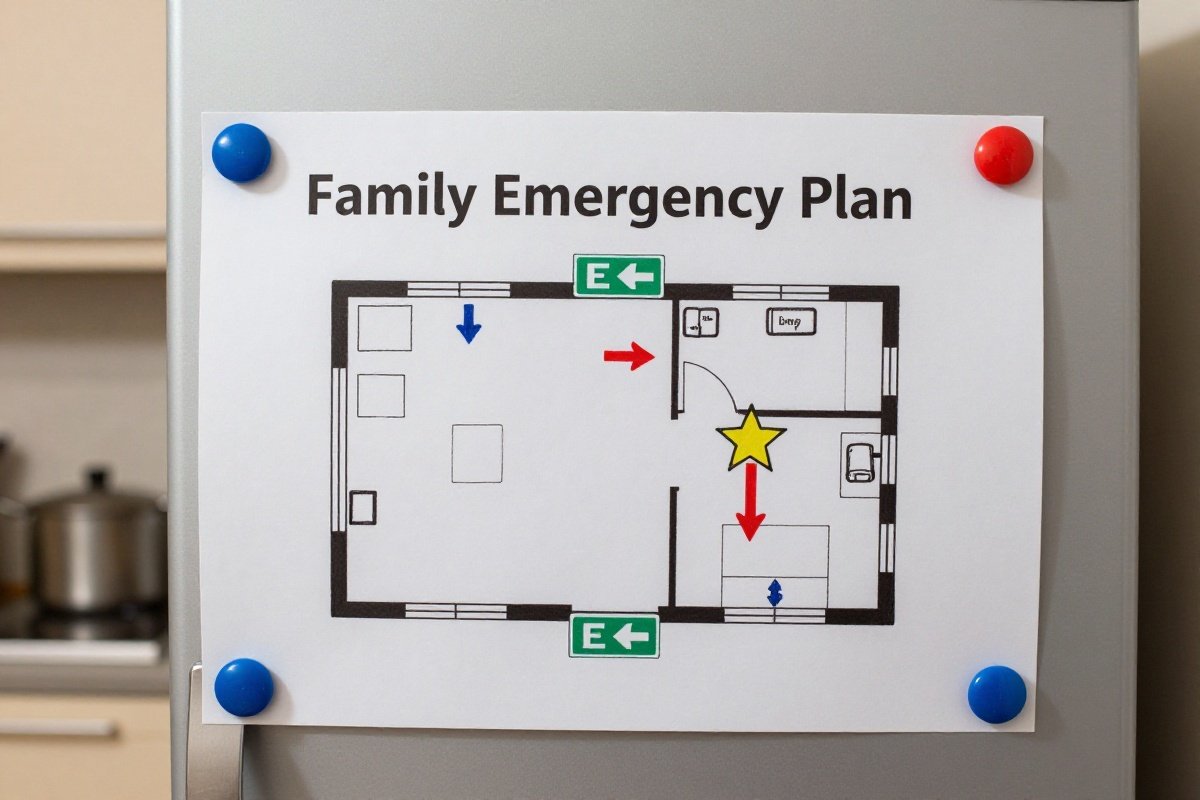
- Draw home floor plan together
- Mark two exits per room (door and window)
- Choose meeting spot outside that’s safe and visible
- Time your escape from different rooms
- Practice in different conditions (lights off for nighttime)
Make it a Game:
- Beat your best time each month
- Try different scenarios (different rooms “on fire”)
- Practice at night with lights off
- Reward participation with a special family activity
- Time each family member
- Create certificates for completed drills
Important Elements:
Teach children to:
- Feel doors before opening (back of hand)
- Stay low under smoke
- Close doors behind them to slow fire spread
- Never go back inside for anything
- Meet at the designated spot, not random places
- Never hide during fires
- Know how to open windows and screens
- Recognize the smoke alarm sound
Window Escape Practice:
For second-floor rooms:
- Practise mounting the escape ladder, but do not deploy it. The Kidde escape ladder instruction sheet says it is “strongly recommended that you practice mounting the ladder for deployment”, and then, in capitals, “During practices, DO NOT PULL THE RELEASE STRAP TO DEPLOY THE LADDER.” Read the instruction sheet for the ladder you own before you build it into a drill
- Practice opening windows quickly
- Teach how to push out screens
- Practice hanging from windowsill (safely, with adult supervision)
- Discuss when window escape is necessary
Stop, Drop, and Roll
Dance Game:
- Play music
- Call out “Fire on your clothes!”
- Practice: Stop moving immediately, Drop to ground, Roll back and forth covering face
- Make it a dance routine with silly songs
- Add it to regular playtime
Why it Works:
- Physical memory becomes automatic
- Fun repetition prevents boredom
- Automatic response reduces panic
- Muscle memory takes over in emergencies
Making It Memorable:
Create a silly song: “Stop what you’re doing! Drop to the ground! Roll back and forth until the fire’s out!” Sing it during practice until children can do the actions without thinking.
Practice variations:
- Different rooms
- While holding something (teach to drop it)
- Different starting positions (sitting, standing, walking)
- With winter clothes on (heavier, harder to move)
Firefighter Dress-Up
Pretend Play:
- Firefighter hat
- Small spray bottle “hose”
- Practice “rescues”
- Learn firefighter role
- Try on real firefighter gear if possible (many stations offer tours)
Learning Points:
- Firefighters help - they’re here to save you
- Don’t hide from them under beds or in closets
- They look scary in gear but they’re safe people
- Go to them for help, call out if you hear them
- The air tank makes them sound scary but they’re talking to you
- Firefighters might break windows or doors - that’s okay
Station Visits:
If you’re travelling with kids, look up fire stations at your destination for impromptu educational visits. If possible, visit your local fire station:
- See real equipment
- Try on gear
- Meet firefighters
- See how they look fully dressed in gear
- Hear the sound of the air tank
- Practice not being afraid
A firefighter in full gear, with a mask and breathing apparatus, does not look or sound like a person to a small child. If your local fire department runs an open day, it’s a chance to let your child see someone suit up before they ever have to meet one in an emergency.
Smoke Alarm Testing
Monthly Activity:
Make testing smoke alarms a family game:
- Let children press the test button
- Practice evacuating when it sounds
- Test each alarm in the house
- Replace batteries together
- Discuss what the sound means
Creating Positive Associations:
Instead of the alarm meaning fear, it means “practice time” or “safety check day.” Children learn to respond to the sound with appropriate action rather than panic.
Emergency Preparedness
The 911 Game
Role-Play Activity:
Materials:
- Toy phone or disconnected old phone
- Scenario cards
- Practice script
- Reward stickers
Scenarios:
- Someone is hurt and bleeding
- There’s a fire in the house
- Intruder in house
- Medical emergency (someone unconscious)
- Severe allergic reaction
- Someone having trouble breathing
- Lost child at public place
What to Teach:
- When to call (emergencies only - danger, medical, fire)
- How to call (any phone, even locked cells dial 911)
- What to say (address first, then problem)
- Stay on the line until told to hang up
- Answer all questions even if scary
- Don’t hang up until dispatcher says
- Know your full address
Practice Script:
“911, what’s your emergency?”
Child: “My address is [full address]. My mom fell and won’t wake up.”
“Is she breathing?”
Child: “Yes, I can see her chest moving.”
“Good job. Help is coming. Stay with me on the phone.”
Important: Never use real connected phones for practice. Use unplugged phones, toy phones, or phone apps designed for this purpose.
When NOT to Call 911:
Equally important - teach when not to call:
- Small injuries (minor cuts, bumps)
- Questions about homework
- To test if it works
- Because they’re bored or curious
- When they’re upset but safe
Practice scenarios where they need to get an adult who can call 911 rather than calling themselves.
Emergency Kit Building
Activity:
Build a family emergency kit together:
- Flashlights (one per person)
- Water (one gallon per person per day, three-day supply)
- Non-perishable snacks
- First aid kit
- Whistle (for signaling)
- Comfort items (small toy, book)
- Weather radio
- Extra batteries
- Emergency blanket
- Face masks
- Phone chargers
Game Element:
- Scavenger hunt for items around the house
- Check expiration dates - make it a detective game
- Practice using items (flashlights, whistle)
- Update seasonally - make it a quarterly activity
- Let children decorate the emergency bag
- Include their input on comfort items
Practice Using the Kit:
Once a season, “use” the emergency kit:
- Turn off main lights and use flashlights
- Practice whistle signals
- Read emergency contacts
- Check that everything works
- Eat one of the emergency snacks and replace it
- Practice opening difficult packaging
This familiarizes children with the contents and removes mystery that can cause panic during actual emergencies.
Family Communication Plan
Teaching Activity:
What if family members are separated during an emergency?
Create a plan:
- Out-of-state contact person (local lines may be down)
- Meeting locations (one near home, one outside neighborhood)
- School/daycare emergency procedures
- Where to leave messages
- Emergency contact cards for each child
Practice Game:
Role-play scenarios:
- “You’re at school when there’s an emergency - what do you do?”
- “We get separated at the mall - where do we meet?”
- “The power goes out and phones don’t work - what’s the plan?”
Print wallet-sized emergency cards with:
- Parents’ names and phone numbers
- Out-of-state contact
- Medical information
- Meeting locations
Products like the Emergency Contact Bracelet can make this information always accessible for younger children.
Stranger Awareness
The “Tricky Person” Concept
From Safely Ever After:
Instead of “stranger danger” (which is confusing since most abuse comes from known people), teach:
Tricky People Might:
- Ask kids for help (adults ask adults, not children)
- Ask kids to keep secrets from parents
- Try to get kids to go without asking parents first
- Make them feel uncomfortable
- Offer rewards for breaking rules
- Try to get them alone
- Make them feel special in ways that seem wrong
Game: Tricky or Safe?
Present scenarios:
- “A man asks you to help find his puppy” (Tricky - adults don’t need children’s help)
- “Your teacher asks you to line up” (Safe - teacher in their role)
- “A neighbor offers candy if you don’t tell your parents” (Tricky - secrets about gifts are wrong)
- “Your coach asks you to stay after practice alone” (Depends - if parents know and it’s normal, okay; if secret, tricky)
- “A person says they’re a friend of your parents and will drive you home” (Tricky - check first rule applies)
- “The crossing guard helps you cross the street” (Safe - they’re doing their job)
Teaching Nuance:
The tricky person concept works better than “stranger danger” because:
- Children can be friendly to strangers in safe contexts (with parents present)
- It focuses on behavior, not appearance
- It acknowledges that people they know can be unsafe
- It gives concrete rules rather than vague warnings
- It doesn’t contradict the reality that most people are kind
Safe Strangers
Teach the difference between tricky people and safe strangers:
Safe Strangers Are:
- Police in uniform
- Firefighters
- Store employees in their store
- Moms with children (if lost in public)
- Teachers at school
- Crossing guards on duty
When to Approach Safe Strangers:
- Lost in public place
- Separated from parents
- Someone is hurt
- Being followed or scared
- Need help urgently
Practice identifying safe strangers in various settings: mall, park, store, school events.
The Yelling Game
Breaking the “Be Nice” Rule:
Children are taught to be polite, which can prevent them from making noise during dangerous situations. This game teaches when to break that rule.
Practice Yelling:
- “This is not my parent!”
- “Help! I don’t know this person!”
- “Fire!”
- “Someone call 911!”
- “I need help!”
When to Yell:
- If someone tries to grab you
- If someone tries to make you go somewhere
- If you’re being followed
- If you feel unsafe
- If someone is hurt
Practice yelling LOUD in appropriate settings (outside, in basement, in car). Many children have never practiced yelling and can’t do it effectively when needed.
Stranger Resistance:
Practice breaking away:
- Drop to ground (harder to carry)
- Make noise
- Drop body weight
- Kick and scream
- Run toward groups of people
- Run to any lit building or business
Physical practice with a parent (gently) helps children understand they can fight back against adults in dangerous situations.
Water Safety Games
The Reach or Throw Game
Don’t Go Game:
Teach: Never go in after someone struggling in water - even if it’s a friend or sibling.
Practice:
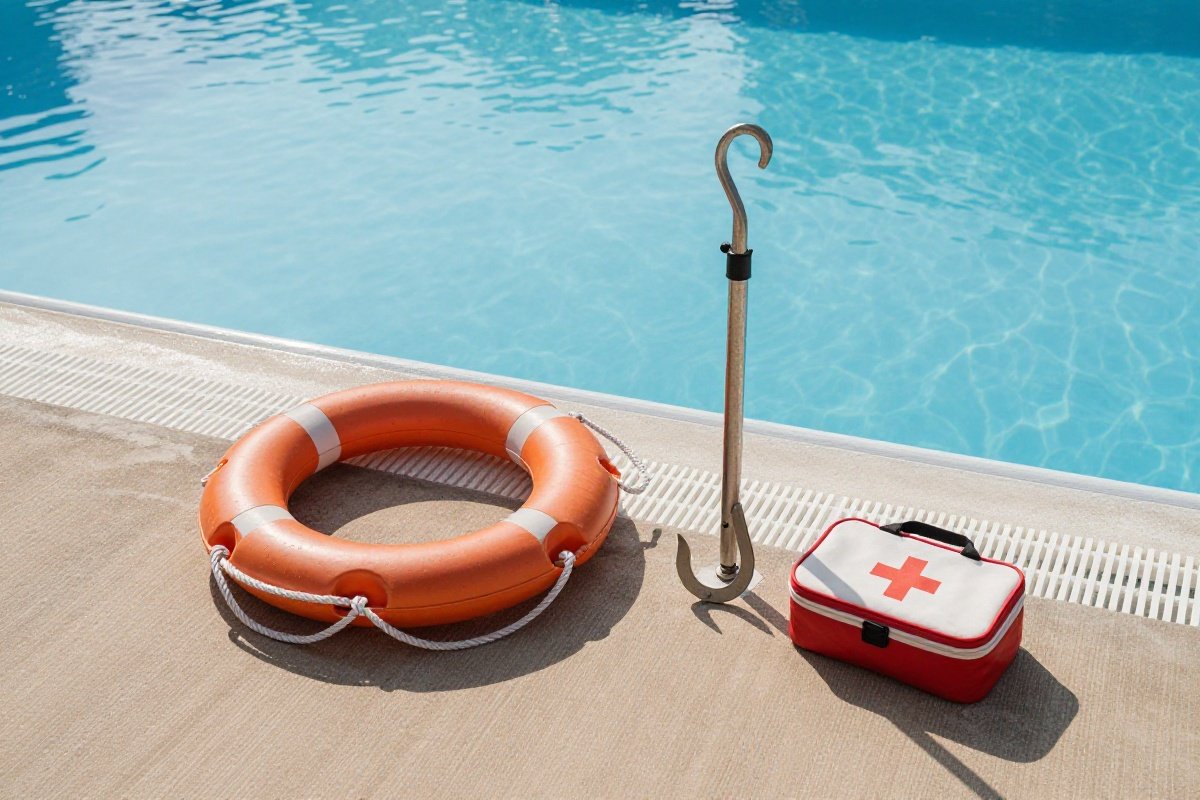
- Reach with pole/stick/towel
- Throw flotation device (rope, ball, cooler)
- Call for help immediately
- Stay on land always
- Get adult help
Why This Matters:
Most drowning victims who are kids were trying to save another kid. The instinct to help is strong, but entering water to save someone requires training. Children must learn that calling for adult help and using reaching/throwing methods saves both lives.
Practice Scenarios:
- Use a doll or toy in a bathtub or kiddie pool
- Practice “saving” it with various reaching tools
- Time how fast they can throw a flotation device
- Practice the yelling: “Someone’s in trouble! I need adult help!”
Pool Rules Bingo
Create Cards With:
- No running on pool deck
- Adult supervision required
- Life jacket for weak swimmers
- No diving in shallow water
- Enter feet first in unknown water
- Check depth before entering
- Listen to lifeguards
- No pushing others in
- No breath-holding contests
- Stay away from drains
Playing Bingo:
At the pool or beach:
- Mark off rules as you follow them
- Spot others following rules
- Discuss why each rule exists
- Practice being a “safety spotter”
Water Watcher System:
Teach the concept of designated water watchers:
- One adult watches water continuously
- They wear a water watcher badge or tag
- No phone, no book, no distractions
- They watch until another adult takes over
- Even at home pools or beaches
Children can understand and respect this system, and older kids can help remind adults when the watcher is distracted.
Life Jacket Lessons
Make Life Jackets Normal:
- Let children pick their own coast guard-approved life jackets
- Wear them during all water activities until they’re strong swimmers
- Practice swimming in life jackets
- Never use as a substitute for supervision
- Teach proper fit and wearing
Pool Game: Have races with and without life jackets to show how they work. This removes stigma and makes them feel like helpful tools rather than embarrassing safety equipment. Just as you wouldn’t skip a properly installed car seat for a short drive, life jackets should be non-negotiable near water.
Technology Safety
The Password Game
Secret Code Activity:
Teach:
- Passwords are private like underwear - not shared with friends
- Never share online with anyone
- Tell parents if someone asks for passwords
- Strong password creation using methods they can remember
- Different passwords for different accounts
Creating Strong Passwords:
Make it a game:
- Think of a sentence: “I have 2 cats named Fluffy”
- Use first letters and numbers: “Ih2cnF”
- Add a symbol: “Ih2cnF!”
- Make it memorable through the sentence
Practice:
- Create fun passwords for pretend accounts
- Memorize them without writing down
- Practice not telling even when asked
- Change passwords regularly
Screen Time Safety Games
The “Public” Game:
Teach that the internet is public, not private:
Activity:
- Show how messages can be saved and shared
- Demonstrate that “deleted” isn’t really gone
- Practice the rule: Don’t post anything you wouldn’t say in front of grandma
- Discuss digital footprints
Online Stranger Game:
Same as real-life strangers:
- Never share personal information
- Don’t meet online people in real life
- Tell parents about uncomfortable conversations
- Report bullying and threats
- Understand that people online may lie about who they are
Scenario Practice:
- Someone asks your age and school - what do you do?
- Someone wants to video chat - who decides if it’s okay?
- Someone sends you something inappropriate - what’s your response?
- A game asks for your location - should you allow it?
Social Media Preparedness
For older children approaching social media age:
Before They Get Accounts:
- Discuss the responsibility
- Practice with parent-supervised accounts
- Learn privacy settings together
- Establish family rules and consequences
- Discuss how to handle drama, bullying, and pressure
The Screenshot Reality:
Teach that everything posted can be screenshot and shared:
- Practice thinking before posting
- Discuss permanent nature of online content
- Learn to recognize regret before posting
- Understand that “private” accounts aren’t really private
Age-Appropriate Activities
Ages 3-5
Focus:
- Supervision concepts - stay where grown-ups can see you
- Basic traffic safety - hold hands, stop at curbs
- Fire drills - exit home quickly
- Personal info songs - memorize name and address
- Trusted adults - who they can tell anything
Games:
- Red light, green light with traffic meanings
- Safety songs sung daily
- Simple role-play with dolls
- Picture books about safety
- Fire drill races
- Stop sign freeze game
Key Messages:
- Stay with grown-ups
- Check first before going anywhere
- Stop at curbs always
- Don’t touch hot things
- Tell a grown-up if something’s wrong
Safety Concepts They Can Grasp:
- Hot things hurt
- Streets are dangerous
- Tell grown-ups if you’re hurt
- Stay where grown-ups can see you
- Some things are just for grown-ups
Keep concepts simple and concrete. Abstract danger is too complex, but specific rules work well.
Ages 6-8
Focus:
- 911 practice with role-play
- Stranger awareness using tricky person concept
- Bike safety with helmets and hand signals
- Emergency plans they can follow independently
- Beginning online safety concepts
Games:
- More complex scenarios with multiple steps
- Scavenger hunts for safety items and signs
- Board games that cover several safety concepts in one sitting
- Real-world practice with increasing independence
- First aid basics
Key Messages:
- Trust your feelings - uncomfortable means tell someone
- Check first applies to everyone, even people you know
- You can say no to adults if something feels wrong
- Practice makes you ready
- Asking for help is smart, not weak
Skills They Can Master:
- Memorize full address and phone number
- Basic 911 usage
- Navigate familiar routes safely
- Recognize tricky situations
- Follow multi-step emergency plans
- Use reasoning to solve new safety scenarios
Ages 9-12
Focus:
- Internet safety and digital citizenship
- Independence skills for walking to friends’ houses, staying home alone
- First aid basics like bandaging and CPR awareness
- Emergency decision-making when adults aren’t immediately available
- Personal safety in increasingly independent situations
Games:
- Scenario discussions with moral complexity
- Safety courses like babysitting or first aid
- Leadership roles in teaching younger siblings
- Family planning and preparedness
- Advanced stranger awareness
Key Messages:
- You’re capable of making good decisions
- Think through consequences before acting
- Be a leader and help others stay safe
- Some situations require you to get adult help
- Your judgment is developing - use it
Skills They Can Master:
- Navigate public places independently
- Make emergency decisions
- Use technology safely
- Basic first aid
- Help in emergencies rather than panic
- Advocate for themselves
- Stay home alone safely
- Recognize and avoid risky situations
Increasing Independence:
This age requires balance between autonomy and safety:
- Give opportunities to practice independence
- Debrief after each independent experience
- Build on successes gradually
- Maintain open communication
- Trust but verify
Making It Stick
Repetition Without Boredom
Rotate Activities:
- Different games weekly to maintain interest
- Seasonal themes (water safety in summer, fire safety when clocks change)
- Real-world practice during daily activities
- Review regularly but vary the method
- Use current events as teaching moments (age-appropriately)
Integration Into Daily Life:
Safety learning doesn’t have to be scheduled:
- Practice crosswalk safety during every walk
- Discuss tricky person scenarios when they come up on shows
- Test smoke alarms together monthly
- Point out emergency exits everywhere you go
- Play “I spy” with safety equipment
Progressive Complexity:
Each time you practice:
- Add one new element
- Increase difficulty slightly
- Introduce unexpected variables
- Build on previous lessons
- Challenge their problem-solving
This keeps even familiar games interesting while deepening understanding.
Positive Reinforcement
Praise:
- Correct responses even in practice
- Good questions that show thinking
- Safety awareness they demonstrate unprompted
- Helping others stay safe
- Remembering past lessons
- Applying lessons in new situations
Avoid:
- Punishment for safety mistakes
- Shaming for forgetting
- Excessive fear-based motivation
- Testing in ways that embarrass
- Comparing siblings
Celebration:
Create positive associations:
- Certificates for completing safety practices
- Special family activities after emergency drills
- Stickers or small rewards for unprompted safety awareness
- Family recognition during meals
- Progress charts they can see
Family Involvement
Everyone Participates:
- Siblings learn together regardless of age
- Parents model behavior consistently
- Extended family knows and supports the lessons
- Community connections reinforce messages
- Schools and parents align on safety teaching
Modeling Matters:
Children learn more from what you do than what you say:
- Always buckle up
- Follow traffic rules
- Model checking first
- Demonstrate emergency preparedness
- Show respect for safety rules
- Admit when you make safety mistakes
Consistency Across Caregivers:
Ensure everyone who watches your children knows:
- Your family safety rules
- Emergency procedures
- What you’ve taught your children
- How to reinforce lessons
- Where safety equipment is located
Overcoming Common Challenges
”My Child Won’t Take It Seriously”
Strategies:
- Make it fun first, serious second
- Use natural consequences in games
- Connect to things they care about
- Give them leadership roles
- Use their interests (favorite characters, themes)
- Keep sessions short and engaging
”My Child Is Now Anxious”
Signs You’ve Gone Too Far:
- Nightmares about dangers
- Refusing to do normal activities
- Excessive worry about unlikely events
- Checking behaviors
- Asking repeated questions seeking reassurance
Course Correction:
- Focus on empowerment not fear
- Emphasize how prepared they are
- Scale back temporarily
- Consult with a child psychologist if anxiety persists
- Balance safety talk with discussions of all the good people and safe places
”Different Messages From Different Sources”
Coordination:
- Communicate with school about their safety curriculum
- Talk to other parents about language and concepts
- Be consistent across all caregivers
- Clarify when children report conflicting information
- Create unified family rules
Further Reading
- Food Safety for Kids: Essential Guidelines for Parents
- Child Safety at Home: Complete Babyproofing Guide 2026
- How to Put a Car Seat in a Shopping Cart: Safety Guide
Beyond Games: Creating a Safety Culture
Everyday Habits
Safety isn’t just games - it’s culture:
- Always buckle up, every trip - and make sure you understand how tight car seat straps should be
- Helmet on before any wheeled toy moves
- Stop at every curb
- Check in routines
- Emergency contact information visible
- Safety equipment maintained and accessible
Open Communication
Creating Safe Conversations:
- “No question is off limits”
- Believe children when they report concerns
- Thank them for telling you
- Take action on safety concerns
- Follow up after incidents
- Regular check-ins about how they’re feeling
Empowerment vs. Fear
The goal is confident, capable children:
- They know what to do
- They trust their judgment
- They speak up when something’s wrong
- They help others stay safe
- They feel prepared, not scared
The Ultimate Goal:
Children who:
- Pause and think before acting
- Trust their instincts
- Know how to get help
- Can execute safety plans
- Balance independence with caution
- Grow into safety-conscious teens and adults
Recommended Products
Kidde Fire Escape Ladder
Second-floor escape routeA second-floor escape route worth having in place before you need it.
What We Like
- Quick deployment from second or third story windows
- Holds up to 1000 pounds capacity
- 25-foot length reaches ground from most homes
- Anti-slip rungs for secure footing
What We Don't
- Do not deploy it during drills. Kidde says to practise mounting only
- Requires proper window mounting and regular inspection
Melissa & Doug Safety Signs Puzzle
Best sign recognitionGreat introduction to safety signage.
What We Like
- Teaches sign recognition
- Durable wooden pieces
- Ages 3+ appropriate
- Educational and fun
What We Don't
- Limited to traffic signs
- Pieces can be lost
Sources & Research
Continue Reading
Explore more child safety content or browse our other categories.
Frequently Asked Questions
- What safety skills should I teach my child through games?
- The most important safety skills to teach children through play include: Personal information - full name, parents' names, home address, and phone number. This can be taught through songs, rhymes, and memory games. Make it fun but ensure they truly memorize it. Stranger awareness - not the scary "stranger danger" approach, but teaching that they should check with you before going with anyone, even people they know. Role-play scenarios. Traffic safety - looking both ways, crosswalks, traffic light meanings. Practice during walks with games like "I Spy" for signs and signals. Fire safety - stop, drop, and roll; crawling under smoke; touching doors before opening; having escape plans. Practice as a family drill but keep it from being scary. Body safety - proper names for body parts, understanding private areas, knowing they can say no to unwanted touch. Use appropriate books and conversations. Emergency numbers - 911 and when to call. Use toy phones to practice. Water safety - never swimming alone, basic floating. Take formal lessons but reinforce with pool games. Playground safety - taking turns, proper equipment use. These skills are best learned through repetition, role-play, and positive reinforcement rather than fear-based teaching.
- How do I teach stranger danger without scaring my child?
- Teaching stranger awareness without creating fear requires a balanced approach focused on empowerment rather than scare tactics. Start by explaining that most people are kind and helpful, but that children should always check with their grown-up before going anywhere with anyone. Use the "check first" rule - always ask mom or dad before going with someone, even someone you know. Role-play scenarios: "What would you do if a nice lady said she has puppies and wants to show you?" Praise the correct response: "I need to ask my mom first." Avoid scary language like "strangers will hurt you" - this creates anxiety and isn't statistically accurate. Most child abductions are by family members or acquaintances, not strangers. Teach body autonomy - your child owns their body and can say no to unwanted touch from anyone, including relatives. This is more practically useful than stranger-focused teaching. Use the "tricky people" concept from the Safely Ever After program - tricky people might ask kids for help (adults ask adults for help, not kids), ask kids to keep secrets from parents, or try to get kids to go somewhere without asking parents first. Practice scenarios regularly but keep the tone matter-of-fact, not frightening. Reassure your child that they can always come to you with concerns, and you'll never be mad at them for asking questions about safety.
- What are fun ways to practice fire drills at home?
- Practicing fire drills can be engaging and non-scary with the right approach. Make it a game with these strategies: The Race to Safety - time your family to see how fast everyone can get to your meeting spot. Keep a chart and try to beat your best time. Make it exciting, not scary. The Sense Test - practice crawling low under pretend smoke (use a sheet) because smoke rises. Explain we're playing "invisible limbo." The Touch Test - teach kids to touch doors with the back of their hand to check for heat. Practice this during drills. The Stop, Drop, and Roll Dance - turn learning this skill into a movement game with music. Practice until it's automatic. Draw Your Escape - have kids draw maps of your home showing two ways out of every room. They can decorate them and you can post them. The Safe Spot Challenge - establish a family meeting spot outside and practice going there from different rooms. Make it a treasure hunt: "Can you get to the mailbox the fastest way?" Use a pretend smoke alarm sound (not the real one which may frighten young children) to start the drill. Reward participation with praise, not treats - safety shouldn't be bribery-based. Keep drills short and positive. Review what to do if they can't get out (seal room, signal from window). Practice at different times - day and night - to prepare for various scenarios.
- How can I teach my child to call 911?
- Teaching children to call 911 requires age-appropriate instruction and practice. For preschoolers (ages 3-4), start by teaching them that 911 is for emergencies only - "when someone is very hurt or very sick." Use simple scenarios: "If mommy falls and can't wake up, what number do we call?" Role-play with a toy phone, having them press 9-1-1. For school-age children (5+), teach them: when to call (fire, serious injury, someone not waking up, intruder), how to call (press 9-1-1 on any phone, including locked cell phones), and what to say ("My mommy fell down. She's not waking up. I'm at 123 Oak Street."). Practice with a disconnected phone or play phone. Never use a real connected phone for practice - accidental 911 calls waste emergency resources. Teach them to stay on the line until help arrives and to answer all questions from the dispatcher. Explain that 911 is for emergencies only - not for when they're bored, when the WiFi is out, or when they can't find a toy. Share real examples appropriate to their age: "If the house was on fire, that's a 911 call. If you scraped your knee, that's not." Review regularly but not obsessively - monthly is sufficient. Make sure they know their address and can describe their location. For cell phones, teach them that 911 works even if the phone is locked or has no service plan.
- What games teach pedestrian and traffic safety?
- Several engaging games can teach pedestrian and traffic safety: Red Light, Green Light - this classic game reinforces stopping on red and going on green. Add a yellow light for practice slowing down. Stop and Go Dance - play music and have kids freeze when it stops, practicing stopping quickly when needed. The Sign Game - point out traffic signs during walks and have kids identify them. Award points for correct identification. Make it a scavenger hunt for specific signs. Crosswalk Practice - set up a pretend crosswalk at home with tape. Practice stopping at the edge, looking left-right-left, listening, and crossing when clear. Simon Says Traffic Edition - include commands like "Simon says touch the crosswalk button," "Simon says look left," "Simon says wait for the walk signal." Traffic Light Craft - make a traffic light with paper plates and practice what each color means through role-play. The Looking Game - when approaching intersections, make it a competition to see who can spot the most potential dangers (cars backing up, bikes, etc.). Shadow Walking - during walks, practice staying on the sidewalk and away from the street. Have kids stay on your shadow or a line. Don't Walk/Walk Freeze - when you say "don't walk," kids freeze in place. When you say "walk," they can move. Practice quick stopping. These games make safety skills automatic through repetition and fun. Practice in real environments once concepts are understood through play.
Written By
Kid Sitting Safe
Our team researches car seat safety standards, crash test data, and real-world usability to help parents make the safest choice.
Related Articles
Bike Safety for Kids: Helmets, Gear & Rules Guide
Essential bike safety guide for kids. Learn proper helmet fit, safety gear recommendations, road rules, and how to prevent common cycling injuries.

Child Safety at Home: Complete Babyproofing Guide 2026
Comprehensive guide to child safety at home. Learn essential babyproofing tips for every room, accident prevention, and creating a safe environment for your family.
Food Safety for Kids: Essential Guidelines for Parents
Learn essential food safety for kids. Guidelines for choking prevention, safe food temperatures, allergy management, and age-appropriate food preparation.