Affiliate Disclosure:Kid Sitting Safe is reader-supported. When you buy through links on our site, we may earn an affiliate commission at no additional cost to you. This does not influence our reviews or recommendations — we only recommend products we genuinely believe in.
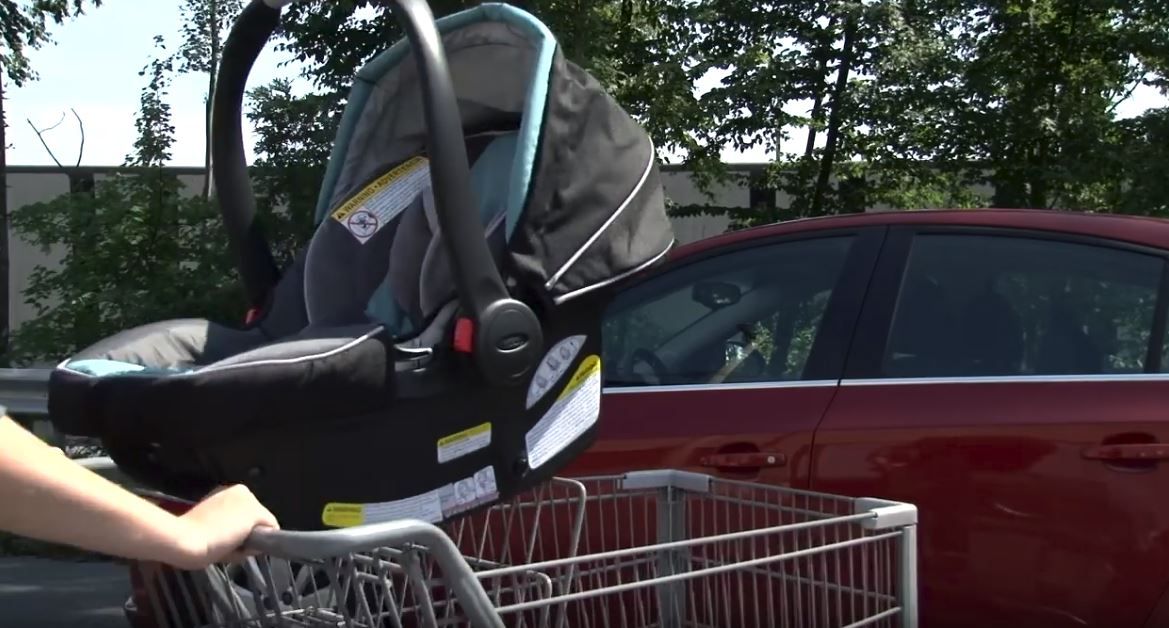
Shopping with a newborn presents unique challenges, and many parents wonder about the safest way to navigate stores with an infant car seat. While placing a car seat on a shopping cart might seem convenient, this practice carries significant safety risks. Understanding proper car seat installation is essential, but knowing how your seat should and should not be used outside the vehicle matters just as much. This guide explains why this common habit is dangerous and provides safer alternatives for shopping with your baby.
The Risks of Cart-Top Car Seats
Why It’s Dangerous

Placing an infant car seat on top of a shopping cart creates multiple hazards:
Tip-Over Risk:
- Changes cart’s center of gravity
- Makes cart unstable during turns
- Can tip from minor bumps or jostles
- Car seat adds weight high on cart
- Uneven flooring exacerbates instability
- Other shoppers’ carts can cause collisions
- Parking lot inclines increase tip risk
Fall Risk:
- Car seats not secured to cart
- Can slide or tip with sudden movements
- Plastic cart seats not designed for car seats
- No locking mechanism between the two
- Smooth plastic-on-plastic surfaces slip easily
- Vibration from cart wheels can shift position
- Emergency stops create forward momentum
Impact Risk:
- Car seat handle can interfere with steering
- Reduced visibility around the carrier
- Risk of hitting doorframes or displays
- Other shoppers may bump into elevated seat
- Height increases severity of potential falls
Real-World Consequences: The Consumer Product Safety Commission (CPSC) documents shopping cart tip-over injuries annually, including head trauma, fractures, and fatalities involving car seats. Emergency room data shows thousands of children are injured in shopping cart accidents each year, with infants in car seats particularly vulnerable due to the increased height and instability.
The Physics of Cart Instability
Understanding why this setup is dangerous helps reinforce the importance of alternatives:
Center of Gravity: Shopping carts are designed with the weight concentrated in the basket near the wheels. When you elevate 15-25 pounds of car seat and baby above the cart’s seat area, you shift the center of gravity upward and backward. This makes the entire assembly top-heavy and prone to tipping with minimal force.
Leverage and Momentum: The higher the weight, the greater the leverage. A small bump that wouldn’t affect an empty cart can create enough momentum to tip a cart with an elevated car seat. The physics work against you - especially when turning corners, navigating ramps, or stopping quickly.
Surface Contact: The base of an infant car seat is curved for car installation, not flat cart placement. This curved surface rocks on the flat cart seat, creating an unstable foundation. Even if the car seat feels initially secure, movement and vibration can shift it over time.
Expert Warnings
American Academy of Pediatrics: The AAP warns against placing infant car seats on shopping carts due to instability and tip-over risks. Their Injury Prevention Program specifically addresses this practice in public safety guidelines, noting that the convenience doesn’t justify the substantial risk of head injuries and other trauma.
Car Seat Manufacturers: Most manufacturers explicitly state in their manuals that car seats should not be placed on shopping carts. If you’re unsure which type of seat you have, our car seat types explained guide covers the differences. Brands like Graco, Chicco, Britax, and Evenflo include warnings that the seat should only be used in vehicles, on compatible stroller frames, or carried by hand. Using the car seat in non-approved ways can void warranties and, more importantly, compromise your baby’s safety.
Retailers and Safety Organizations: Major retailers and organizations like Safe Kids Worldwide actively campaign against cart-top car seat placement. Some stores have posted signage reminding parents of safer alternatives, though enforcement remains challenging.
What the Car Seat Design Allows
Intended Uses
Infant car seats are designed for:
- Car installation: Secured with base or seat belt
- Stroller compatibility: Clicking into matching stroller frames
- Carrying: Transporting baby short distances
What They’re NOT Designed For
- Shopping cart placement
- Sleeping outside the car (risk of positional asphyxia)
- Unsupervised use
- Surface placement on elevated or unstable platforms
- Prolonged use as a baby seat at home
- Use on restaurant high chairs or tables
- Placement on soft surfaces like beds or couches
The Engineering Behind Car Seats
Car seats undergo rigorous crash testing and safety certification specifically for vehicle use. The bases lock securely into car seat anchors or use seat belt tension to create a stable, immovable installation. Stroller frames designed to accept car seats have proprietary locking mechanisms that click the seat into place with audible confirmation and secure retention.
Shopping carts have none of these features. The seat area of a shopping cart is simply a plastic or metal frame designed to support a child sitting directly in it - not to secure an additional piece of equipment weighing 20+ pounds.
Time Limits for Car Seat Use
Pediatricians and car seat safety experts recommend limiting the time babies spend in car seats, even when properly installed. Prolonged time in the semi-reclined position can contribute to:
- Flat spots on baby’s head (plagiocephaly)
- Breathing difficulties in young infants
- Decreased oxygen saturation
- Developmental concerns with excessive container time
Using a car seat for shopping extends this time beyond necessary vehicle travel. Be aware that car seats do expire, so always verify your seat is within its usable lifespan. Babywearing or allowing baby to lie flat in a safe space between errands is healthier for development.
Safer Alternatives
Option 1: Babywearing
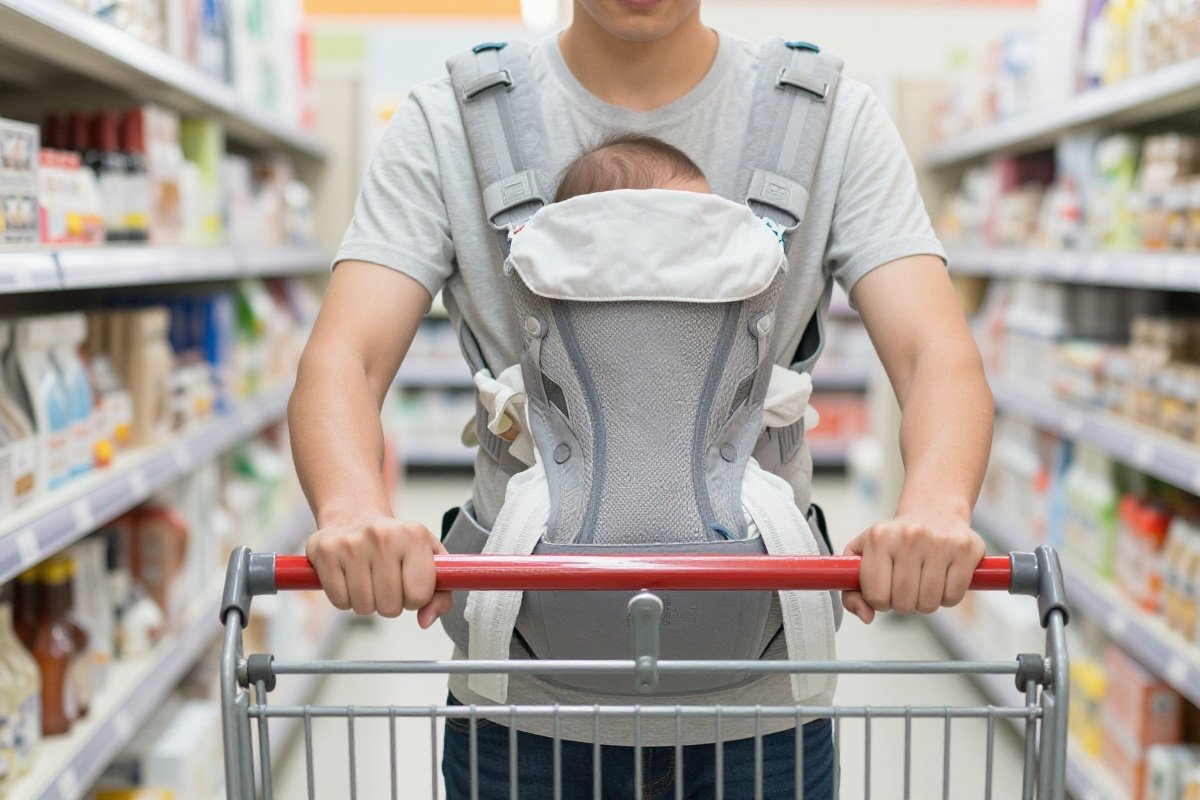
Benefits:
- Baby stays close and secure
- Hands free for shopping
- No extra equipment to manage
- Baby often sleeps better
- Easier to navigate crowded stores
- Promotes bonding and attachment
- Regulates baby’s temperature and heart rate
- Reduces crying and fussiness
- Allows breastfeeding while shopping (with practice)
Carrier Types:
- Ring slings: Quick to put on, adjustable, great for quick trips, learning curve for proper positioning
- Soft-structured carriers: Ergonomic support, distribute weight on hips and shoulders, padded straps, excellent for longer shopping trips
- Wraps: Customizable fit, multiple carrying positions, most versatile but require practice, extremely comfortable once mastered
- Mei tais: Blend of wrap and structured carrier, easier than wraps but more customizable than structured
- Onbuhimos: No waist belt, good for pregnancy or postpartum, distributes all weight on shoulders
Shopping Tips:
- Practice at home first
- Ensure carrier is tight enough
- Check baby frequently
- Bring a nursing cover if needed
- Wear comfortable shoes for weight distribution
- Adjust carrier before entering store
- Keep baby’s airway clear and visible
- Dress baby in one less layer than you (they’ll warm from your body heat)
- Consider a hands-free phone holder for checking shopping lists
- Bring a small mirror to check on baby if wearing on back
Choosing the Right Carrier: Consider your body type, baby’s age and weight, and shopping frequency. Models like the Ergobaby Omni 360 offer multiple positions and grow with your child, while simpler options like the Baby K’tan work well for quick grocery runs. Test carriers before buying if possible - many baby boutiques and stores offer try-before-you-buy programs.
Option 2: Stroller + Cart
Approach:
- Attach car seat to stroller frame
- Push stroller, pull cart, or
- Use stroller basket for small trips
- Shop during less busy times
- Choose stores with wide aisles
Stroller Frame Options: Frames like the Chicco KeyFit Caddy are designed specifically to accept infant car seats without a full stroller. These lightweight frames fold compactly and cost significantly less than full stroller systems. They transform your car seat into a safe, stable transport system for shopping and errands. Challenges:
- Managing two items
- Narrow aisles
- May need help at checkout
- Requires coordination and practice
- Can’t navigate tight spaces
- Parking stroller while loading cart at car
Making It Work:
- Use stroller basket for smaller items
- Push stroller with one hand, pull small cart with other
- Shop during off-peak hours when aisles are clear
- Make multiple shorter trips rather than one large shopping expedition
- Ask for help at checkout - most cashiers are happy to assist
- Consider stores with wider aisles like warehouse clubs
- Park near cart returns for easier management
Strategic Shopping: Plan your route through the store to minimize backtracking. Group items by store section on your list. Some parents find success leaving the cart at the end of aisles and carrying items back rather than maneuvering both stroller and cart through tight spaces.
Option 3: Car Seat in Cart Basket
If You Must Bring the Seat:
- Place in main basket area (not on top)
- More stable than cart top
- Takes up shopping space
- Less convenient but significantly safer
- Cushion with reusable shopping bags if needed
- Face seat so you can see baby
Limitations:
- Significantly reduces cart capacity
- May block view of items
- Still not ideal stability
- Difficult to unload at checkout
- Can’t stack groceries around baby
- Best for very short trips with few items
Best Practices: If you must use this method, position the car seat lengthwise in the basket with the base toward the front of the cart. This provides better weight distribution. Never stack items around or on top of the car seat. Keep groceries to light, non-fragile items that can fit in remaining basket space or on the upper child seat area.
Consider this a last-resort option - significantly better than cart-top placement but still not optimal for safety or convenience.
Option 4: Curbside Pickup
The Modern Solution:
- Order groceries online
- Drive to pickup location
- Store loads items into car
- Never leave vehicle
- Baby stays safely in car seat properly installed
- No weather exposure
- No navigating stores with baby
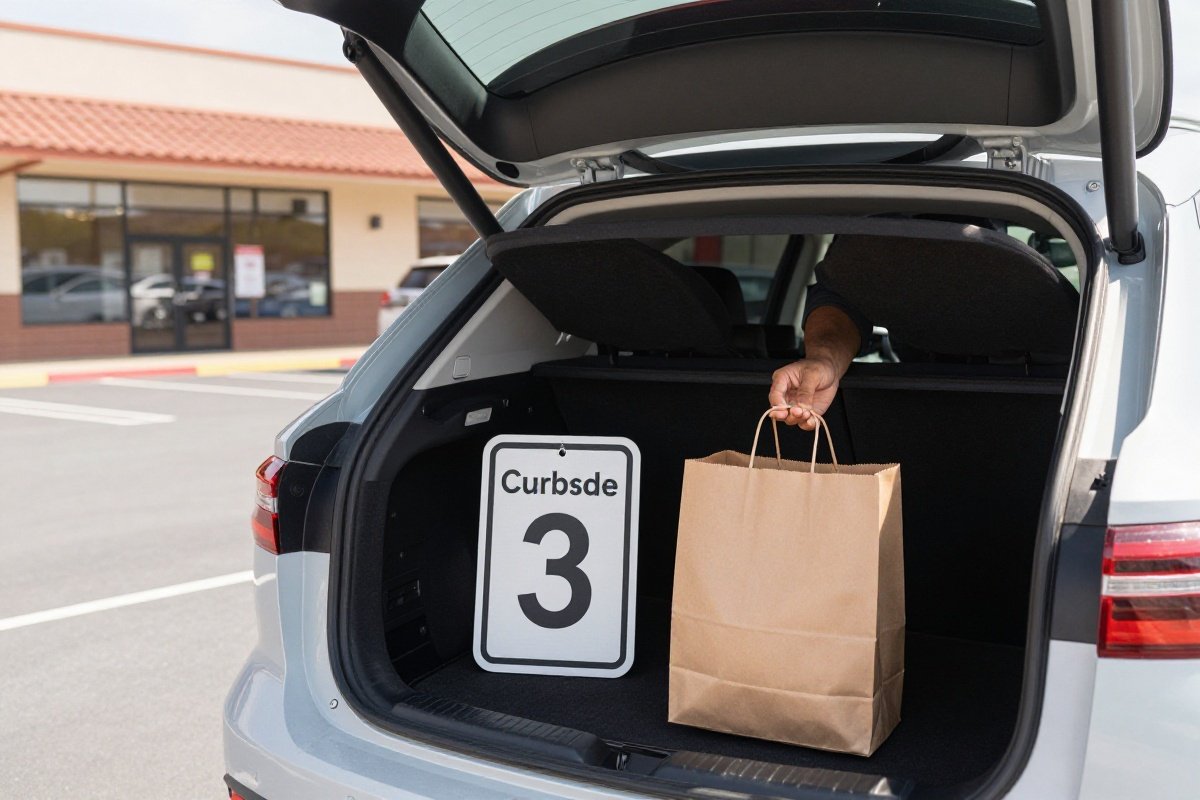
Benefits:
- Safest option for baby
- Saves time overall
- No impulse purchases
- No weather exposure
- Avoid germs in high-traffic stores
- Often free or low-cost
- Can shop during nap time at home
- Reduces stress and hassle
Getting Started: Most major grocery chains now offer curbside pickup: Walmart, Target, Kroger, Safeway, Whole Foods, and more. Many offer free pickup with a minimum order amount. Apps and websites save your preferences and frequent purchases, making future orders even faster.
Maximizing Efficiency:
- Keep a running list on your phone throughout the week
- Set up recurring orders for staples
- Use store apps for digital coupons
- Order early in the day for same-day pickup
- Check for substitution preferences in case items are out of stock
- Build relationship with regular pickup staff
- Tip when service is exceptional (though not always expected)
Cost Considerations: While some services charge a small fee for pickup, factor in the value of your time, reduced impulse buying, and eliminated gas from multiple shopping trips. Many parents find curbside pickup actually saves money despite service fees.
Option 5: Shop Without Baby
When Possible:
- Shop when partner can watch baby
- Use delivery services
- Coordinate with nap times
- Accept help from family/friends
- Trade babysitting with other parents
- Shop after bedtime
- Use daycare days for errands
Building Your Support Network: Don’t hesitate to accept offers of help. If you need to find a babysitter for regular shopping trips, the investment in childcare can be well worth the safety benefits. Many grandparents, friends, and relatives are delighted to spend time with baby while you handle necessary errands. Consider forming a parent co-op where you trade childcare hours with other families.
Delivery Services: Services like Instacart, Amazon Fresh, and local grocery delivery bring shopping to your door. While costs are higher than pickup, the convenience during the newborn phase can be invaluable. Many new parents use delivery for the first few months, then transition to pickup or in-person shopping as baby’s schedule becomes more predictable.
Timing Strategies:
- Shop very early morning (6-7 AM at 24-hour stores)
- Late evening after baby’s bedtime
- During long naps (have backup plan if baby wakes early)
- When older children are at school
- During weekend mornings when partner is home
Shopping Cart Accessories
Cart Hammocks
Products like the Binxy Baby attach to cart sides:
- Holds baby below handle level
- Clips securely to cart frame
- Leaves basket space below
- For younger babies only
- Provides better weight distribution than cart-top placement
- Baby lies flat or semi-reclined
- Soft, washable fabric
Considerations:
- Weight limits apply (typically 15-20 pounds)
- Must remove for checkout
- Not suitable for all carts (test before relying on it)
- Baby must be supervised constantly
- May not fit carts with large logos or advertising on sides
- Some stores prohibit third-party attachments
- Still not as safe as babywearing
Proper Use: Follow manufacturer instructions precisely. Ensure all clips are secure before placing baby. Check frequently during shopping that clips remain attached and baby’s position is safe. Never leave baby unattended in a cart hammock.
Age and Development: Cart hammocks work best for younger infants who cannot sit up independently. Once babies begin rolling or sitting, they can shift position and potentially compromise the hammock’s security. Always transition to safer methods before baby outgrows the weight limit or developmental stage.
Cart Covers
For older babies sitting directly in carts:
- Germ barrier
- Cushioning
- Toy attachments
- Machine washable
- Padding for comfort
- Entertaining patterns and textures
- Adjustable straps for security
Note: Cart covers don’t address car seat placement - they’re for babies old enough to sit unsupported (typically 6+ months). These covers protect babies sitting in the cart’s designated child seat, not for use with car seats.
Choosing a Cart Cover: Look for covers with:
- Machine-washable fabric
- Secure attachment straps
- Adequate padding
- Toy loops or teething attachments
- Compact fold for diaper bag storage
- Universal fit for different cart styles
Models like the Skip Hop Shopping Cart Cover offer good protection and entertainment for babies who can sit independently in the cart’s child seat.
Other Accessories
Diaper Bag Hooks: Clip to cart to free up basket space and keep bag accessible. Ensure weight doesn’t tip cart backward - keep bag weight under 10 pounds when using hooks.
Shopping List Holders: Magnetic or clip-on holders keep your list visible and accessible, reducing shopping time.
Reusable Shopping Bags: Bags with rigid bottoms can help organize purchases and make unloading easier at home.
Making Shopping Work
Planning Strategies
Short, Focused Trips:
- Make specific lists organized by store section
- Shop during calm times (weekday mornings, early afternoons)
- Know store layout to minimize wandering
- Get in and out quickly
- Limit trips to 30-45 minutes maximum
- Bring only what you need (wallet, list, keys)
- Choose smaller stores for quick trips
- Save major stock-up shopping for when you have help
Strategic Scheduling:
- After feeding when baby is content
- During awake/alert times (not overtired)
- Not during typical fussy periods
- When you have energy and patience
- Avoid baby’s sleep windows
- Consider baby’s temperament and patterns
- Build in buffer time for unexpected needs
- Don’t overschedule your day
List Organization: Group items by store section (produce, dairy, frozen, etc.) to minimize backtracking. Many grocery apps allow you to organize lists by aisle. Note item locations for stores you frequent. Keep a running list throughout the week so you’re not trying to remember everything at once.
Contingency Planning: Always have a backup plan:
- Baby fusses: Have pacifier, bottle, or be ready to nurse
- Diaper emergency: Keep portable changing pad and supplies in car
- Extended trip: Pack extra supplies in case shopping takes longer than planned
- Weather changes: Bring appropriate covering for baby
- Cart unavailable: Know your backup strategy (carrier, curbside switch, etc.)
Enlist Help
Options:
- Bring a helper (partner, friend, relative, older child)
- Accept store employee assistance
- Ask for help loading car
- Use store pickup services
- Request help at customer service desk
- Let cashier know you need extra time or assistance
Overcoming Hesitation: Many parents feel uncomfortable asking for help, but most people are happy to assist. Store employees are trained to help customers, and fellow shoppers often offer assistance when they see a parent managing a baby. Practice asking for help in low-stakes situations to build confidence.
Trading Duties: If shopping with a partner or helper, divide responsibilities: one person shops while the other manages baby, or one person handles checkout and loading while the other keeps baby comfortable.
Understanding Cart Safety for All Ages
When Baby Can Sit in the Cart Directly
Babies can typically sit in shopping cart seats when they:
- Can sit unsupervised without support (usually 6-8 months)
- Have good head and neck control
- Can maintain sitting position without toppling
- Meet weight requirements for cart seat (check cart labels)
Safety Measures:
- Always use the cart’s safety strap
- Never leave baby unattended
- Keep baby’s hands inside cart
- Don’t let older siblings push cart with baby
- Stay within arm’s reach
- Remove baby before unloading heavy items
Toddler Cart Safety
As babies become toddlers, new risks emerge:
- Standing in cart: Never allow standing - fall risk is severe
- Climbing out: Watch for escape attempts
- Grabbing items: Keep dangerous items out of reach
- Pushing cart: Wait until child is old enough to control speed and direction
- Riding in basket: Strongly discouraged due to tip-over risk
Sibling Dynamics
Shopping with multiple children presents additional challenges:
- Older siblings may want to help but lack judgment
- Babies may be overstimulated by energetic siblings
- Dividing attention increases accident risk
- Consider shopping when one child is at school or during separate outings
- Give older children specific jobs (finding items, checking list)
- Set clear expectations before entering store
The Social Aspect
Seeing Others Do It Differently
You will see other parents placing car seats on carts. Remember:
- Popularity ≠ Safety
- They may be unaware of risks
- Previous luck doesn’t guarantee future safety
- You’re making informed choices
- Every parent is doing their best with available information
- Your choices don’t judge theirs
- Focus on your family’s safety decisions
Managing Judgment: Some parents may comment on your choices, especially if you’re using a less common method like babywearing. Stand firm in your informed decision. You don’t owe anyone an explanation, but if you choose to share, focus on the safety reasons behind your choice.
Sharing Information
If appropriate, gently share safety information:
- Mention you recently learned about risks
- Share safer alternatives
- Don’t judge - educate with compassion
- Focus on keeping all babies safe
- Offer to share resources or articles
- Acknowledge that you might have done the same without this information
- Respect that they may not be ready to hear it
Effective Conversation Starters:
- “My pediatrician mentioned something interesting about cart safety…”
- “I just learned about an alternative that’s been working well…”
- “Have you heard about [specific product/method]? It’s made a real difference for us…”
- “I used to do that too, until I found out about the tip-over risk…”
Community Education
Consider sharing information on local parent groups, social media, or with your pediatrician’s office. Many parents are simply unaware of the risks and appreciate learning safer alternatives. However, be mindful of tone - shaming or judging is counterproductive. Focus on empowering parents with information and options.
Special Situations
Shopping with Twins or Multiples
Parents of multiples face unique challenges:
- Double strollers may not fit through store aisles
- Wearing two babies requires specific carrier types
- Shopping trips need even more careful planning
- Consider tandem shopping trips with partner
- Use delivery/pickup services more extensively during infancy
- Join multiples parent groups for specific product recommendations
- Some stores have carts designed for multiples (though not for car seats)
Practical Solutions: Many twin parents use a combination approach: wear one baby, push one in stroller, or arrange shopping for times when both babies are with another caregiver. The newborn phase is temporary - accept that shopping will be more complicated for a few months.
Shopping in Bad Weather
Harsh weather adds complexity:
- Babywearing keeps baby warm and dry under your coat
- Strollers require weather shields and careful navigation
- Limit time outside
- Park as close as possible to store entrance
- Consider this an ideal time for curbside pickup or delivery
- Dress in layers for quick adjustments between outdoor and indoor temperatures
Shopping with Medical Equipment
Babies with special needs may require oxygen, monitors, or other equipment:
- Babywearing may still be possible with medical consultation
- Specialized strollers can accommodate equipment
- Notify store customer service that you may need assistance
- Plan for extra time and space
- Know where to access power outlets if needed
- Keep medical information accessible
- Consider asking for disability assistance if available at your store
Emergency Shopping Trips
Sometimes you must shop unexpectedly:
- Keep a basic carrier in your car always
- Stock car with emergency supplies (diapers, wipes, change of clothes)
- Know which nearby stores offer curbside pickup
- Keep a running shopping list app on your phone
- Build relationships with neighbors who might help in a pinch
- Remember that truly urgent needs are rare - most items can wait
Further Reading
- Bike Safety for Kids: Helmets, Gear & Rules Guide
- Food Safety for Kids: Essential Guidelines for Parents
- Safety Games for Kids: Teaching Protection Through Play
Long-Term Perspective
The Newborn Phase is Temporary
The intense challenge of shopping with an infant lasts only a few months:
- By 6-8 months, most babies can sit in cart seats directly
- By 12 months, shopping becomes significantly easier
- Toddlers present different challenges but more options
- This difficult phase will pass
Maintaining Perspective: When shopping feels overwhelming, remember that thousands of parents before you have navigated this phase. The strategies that feel cumbersome now will soon become unnecessary as your baby grows. It’s okay to simplify your life during this season - fewer shopping trips, smaller trips, more help, and more pickup/delivery services are all reasonable adaptations to new parenthood.
Building Sustainable Habits
The safety awareness you develop during the infant stage creates lasting habits:
- Always assessing equipment safety
- Reading manufacturer guidelines
- Questioning common but risky practices
- Prioritizing child safety over convenience
- Teaching children safe behaviors as they grow
These habits protect your child throughout childhood and model good decision-making that children will eventually internalize.
Recommended Products
Ergobaby Omni 360
Best baby carrier for shoppingSafest alternative to cart placement.
What We Like
- Four carrying positions
- Lumbar support waistband
- From newborn without insert
- Crossable shoulder straps
What We Don't
- Higher price point
- Can be warm in hot weather
Binxy Baby Shopping Cart Hammock
Best cart hammockConvenient cart accessory for infants.
What We Like
- Clips securely to cart sides
- Keeps baby elevated and contained
- Leaves cart space below for shopping
- Machine washable for easy cleaning
What We Don't
- Only suitable for younger babies (3-9 months)
- Must remove baby to complete checkout
- Not compatible with all cart styles
Skip Hop Shopping Cart Cover
Best cart coverGood for older babies sitting in cart directly.
What We Like
- Provides germ protection in public spaces
- Fits both shopping carts and restaurant high chairs
- Machine washable for easy cleaning
- Built-in toy loops for entertainment
What We Don't
- Bulky to carry when not in use
- Not designed for car seat safety
Chicco KeyFit Caddy
Best stroller frameBetter alternative to placing seat in cart.
What We Like
- Accepts KeyFit carrier directly
- Lightweight stroller alternative
- Folds compact for car
- Better than cart placement
What We Don't
- Only for Chicco seats
- Another item to carry
Baby K'tan Original Wrap
Best budget carrierSimple, affordable hands-free option.
What We Like
- No wrapping required - pre-wrapped design
- Compact and fits in diaper bag
- Multiple carrying positions
- Affordable price point
What We Don't
- Must purchase specific size for wearer
- Weight limit of 35 lbs limits long-term use
- Sizing can be tricky between sizes
Sources & Research
Continue Reading
Explore more child safety content or browse our other categories.
Frequently Asked Questions
- Is it safe to put a car seat on top of a shopping cart?
- No, placing a car seat on top of a shopping cart is not recommended and can be dangerous. Shopping carts are not designed to safely hold infant car seats, even those with built-in carriers. The primary risks include: the cart becoming top-heavy and tipping over, especially if you turn corners or the cart hits something; the car seat not being properly secured and potentially falling; the cart's child seat area not being designed to support the weight and shape of a car seat; and the combination creating an unstable center of gravity. The American Academy of Pediatrics warns against this practice, and many car seat manufacturers explicitly state that their seats should not be placed on shopping carts. Additionally, the Consumer Product Safety Commission has documented injuries from cart tip-overs involving car seats. While it may seem convenient, the risks far outweigh any benefits. Safer alternatives include wearing your baby in a carrier, using a stroller, placing the car seat in the main basket area (taking up shopping space but more stable), using curbside pickup, or shopping when someone else can watch the baby.
- Where should I put my baby's car seat while shopping?
- The safest options for shopping with a baby in an infant car seat are: 1) Wear your baby in a carrier (ring sling, soft-structured carrier, or wrap) and leave the car seat in the vehicle - this keeps baby close, leaves your hands free, and is the safest option; 2) Use a stroller and shop with the car seat attached to the stroller frame - many infant seats click into stroller frames or travel systems; 3) If you must bring the car seat into the store, place it in the main basket area of the cart (this takes up shopping space but is more stable than the top); 4) Use curbside pickup or delivery services to avoid bringing baby into the store; 5) Shop when someone else can stay with the baby or watch the baby at home. Never place the car seat on top of the cart in the child seating area. This is unstable and dangerous. If you see other parents doing this, understand that popularity doesn't equal safety. The convenience of having the cart basket fully available isn't worth the risk of a tip-over injury.
- Can I click my infant car seat into a shopping cart?
- No, infant car seats are not designed to click into shopping carts. The clicking mechanism on infant car seats is specifically designed for their bases (in the car) and compatible stroller frames. Shopping carts do not have the proper receivers or safety mechanisms to securely hold a car seat. Even if a car seat appears to fit or balance on a cart, it is not securely attached and can easily be dislodged. Some parents mistakenly believe that if the car seat seems stable, it must be safe - but shopping carts are not crash-tested or designed for this use. The plastic cart seat and the car seat were never engineered to work together. Additionally, placing weight high on a shopping cart changes its center of gravity dramatically, making it prone to tipping during normal shopping maneuvers like turning corners or going over bumps. Always use proper equipment designed for your car seat: the car base for vehicles and compatible stroller frames for transport outside the vehicle.
- What are the best alternatives to putting a car seat in a shopping cart?
- The safest and most practical alternatives to placing a car seat in a shopping cart include: Babywearing using a soft-structured carrier like the Ergobaby Omni 360, a ring sling, or a wrap - this keeps baby close and secure while leaving your hands free for shopping. Using a stroller with your infant seat attached - many infant seats click into stroller frames or travel systems; you can push the stroller and pull a shopping cart or use a stroller with storage. Using curbside pickup or delivery services - order groceries online and pick them up without leaving your car, or have them delivered to your home. Shopping with a partner - one person can push the stroller while the other shops. Placing the car seat in the main basket of the cart - while this takes up shopping space, it's more stable than the top (though still not ideal). Using a shopping cart hammock like the Binxy Baby for younger infants - these clip to the cart sides and hold baby below the cart handle level. Shopping during baby's sleep times and leaving them home with a trusted caregiver. Each of these options is significantly safer than placing a car seat on top of a shopping cart.
- Why do I see other parents putting car seats on shopping carts?
- You may see other parents placing car seats on shopping carts because it's a common practice that has been passed down through generations and seems convenient. However, just because something is common doesn't mean it's safe. Many parents are simply unaware of the risks, as the dangers of this practice aren't widely publicized. Some may have done it with previous children without incident and assume it's safe. Others may feel they have no alternative or may be prioritizing convenience over safety. It's important to understand that the absence of accidents in the past doesn't guarantee safety in the future - it simply means those parents have been lucky so far. Shopping cart tip-overs with car seats do happen and can result in serious injuries including head trauma, fractures, and even death. The Consumer Product Safety Commission receives reports of these incidents annually. As a parent who is now informed about the risks, you can make safer choices for your child regardless of what others are doing. Set a good example by babywearing or using proper stroller equipment, and gently share safety information with other parents when appropriate.
Written By
Kid Sitting Safe
Our team researches car seat safety standards, crash test data, and real-world usability to help parents make the safest choice.
Related Articles
Safety Games for Kids: Teaching Protection Through Play
Engaging safety games and activities that teach children personal protection. Learn through play about stranger danger, fire safety, traffic rules, and emergency preparedness.

Bike Safety for Kids: Helmets, Gear & Rules Guide
Essential bike safety guide for kids. Learn proper helmet fit, safety gear recommendations, road rules, and how to prevent common cycling injuries.

Child Safety at Home: Complete Babyproofing Guide 2026
Comprehensive guide to child safety at home. Learn essential babyproofing tips for every room, accident prevention, and creating a safe environment for your family.