
Affiliate Disclosure:Kid Sitting Safe is reader-supported. When you buy through links on our site, we may earn an affiliate commission at no additional cost to you. This does not influence our reviews or recommendations — we only recommend products we genuinely believe in.
Creating a safe home environment for children requires a systematic approach to identifying hazards and implementing protective measures. This comprehensive guide covers essential babyproofing strategies for every area of your home, with actionable steps you can implement today to protect your children from common household dangers.
According to the CDC, unintentional injuries are the leading cause of death for children ages 1-4, with most accidents occurring at home. While parents often focus on car seat safety, the home environment presents an equally important set of hazards to address. The good news: most of these injuries are preventable through proper babyproofing and supervision. This guide walks you through a proven, priority-based approach to home safety that adapts as your child grows.
Understanding Your Child’s Developmental Stages
Before diving into specific safety measures, it’s crucial to understand how children explore and interact with their environment at different ages. Babies don’t suddenly become mobile - they progress through stages, each bringing new risks and requiring adjusted safety measures.
Newborn to 3 Months: While seemingly immobile, newborns can roll unexpectedly during diaper changes or while sleeping. Even at this stage, safe sleep practices and secure changing tables are essential.
3 to 6 Months: Babies begin reaching, grasping, and rolling purposefully. They’ll pull objects toward their mouths and can roll off elevated surfaces. This is when you should complete your initial babyproofing before mobility begins.
6 to 9 Months: Most babies start crawling, though some skip this phase entirely and move straight to pulling up. Once mobile, they can access lower cabinets, outlets, and floor-level hazards within seconds. Speed is astonishing - a crawler can cross a room faster than you might expect.
9 to 12 Months: Pulling up, cruising along furniture, and possibly walking. At this stage, children can reach countertops, tables, and higher surfaces. They develop pincer grasp, making small objects particularly dangerous.
12 to 24 Months: Walking, climbing, opening doors, and developing problem-solving skills. Toddlers at this age are determined explorers who can push chairs to reach high places, figure out simple locks, and test boundaries constantly.
2 to 4 Years: Advanced climbing, door opening, and the ability to mimic adult behaviors. They may attempt to cook, use tools, or operate electronics. However, their judgment lags far behind their physical capabilities. Different parenting styles may approach boundary-setting differently, but all require consistent safety enforcement at this stage.
Priority 1: Immediate Dangers
Stairs and Elevation Changes
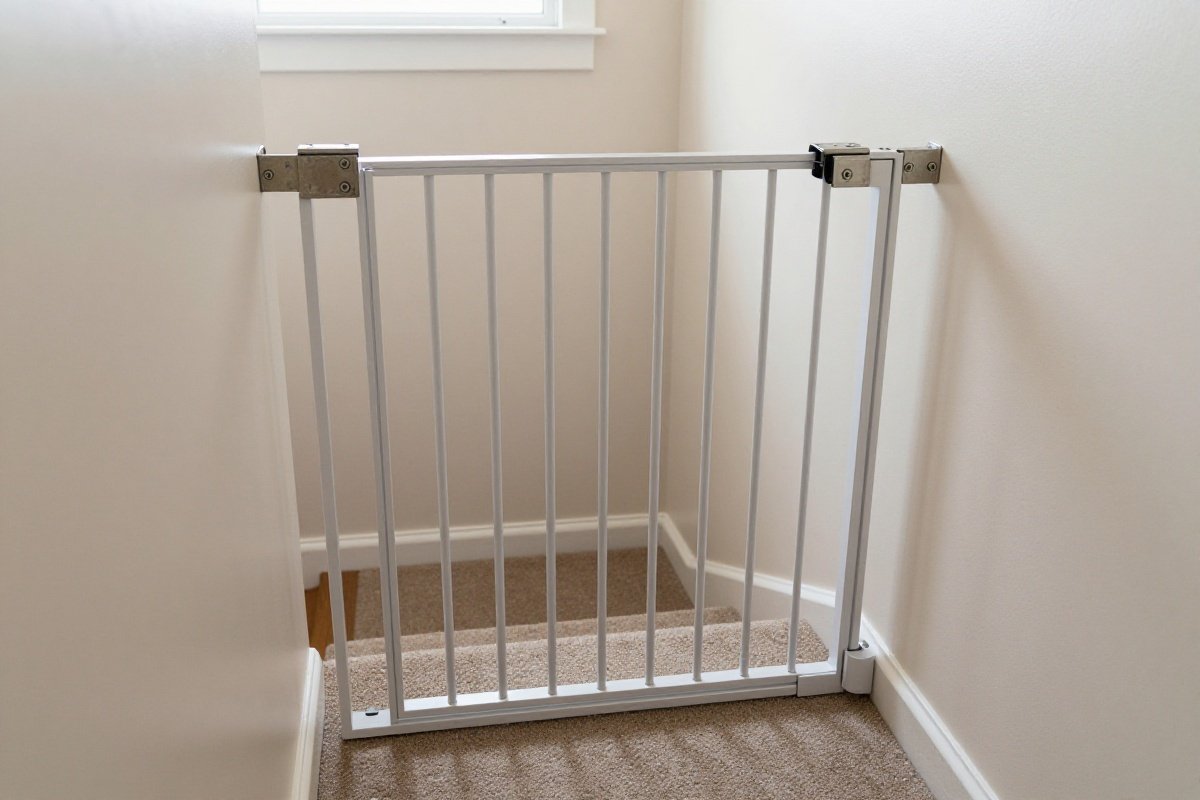
Falls from stairs cause approximately 100,000 emergency room visits annually for children under five. Stair safety isn’t optional - it’s critical from the moment your baby begins rolling.
Install hardware-mounted safety gates at:
- Top of all staircases (mandatory)
- Bottom of staircases (recommended)
- Any room with dangerous equipment (workshop, utility room)
- Thresholds with significant elevation changes
Why hardware-mounted: Pressure gates can fail under force; hardware-mounted gates attach to wall studs for security. Models like the Regalo Easy Step Walk Thru Gate provide reliable protection when properly installed.
At stair tops, a dislodged pressure gate means a catastrophic fall - hardware mounting eliminates this risk.
Installation Best Practices:
- Locate wall studs with a stud finder (not just drywall)
- Mount gates 2-3 inches above stair surface (prevents tripping)
- Ensure gates open away from stairs, not over them
- Check that gate bars are no more than 2-3/8 inches apart
- Avoid accordion-style gates with large V-shaped openings (head entrapment risk)
Extended Stairway Considerations: If you have open stair railings with vertical posts, measure the spacing. Gaps wider than 4 inches pose a head entrapment or falling risk. Install clear plexiglass panels, mesh guards, or banister guards to block these openings. Some children attempt to climb railings or toss toys through gaps, so addressing this early prevents both falls and property damage below.
For homes with multiple stairs or half-landings, install gates at each level transition. Don’t assume your child will “learn” stairs safely through exposure - formal stair training with supervision is different from unsupervised access.
Poison Prevention
Poisoning is a leading cause of emergency room visits for children under six. The American Association of Poison Control Centers reports over 40,000 calls annually about children exposed to household cleaners, medications, or toxic substances.
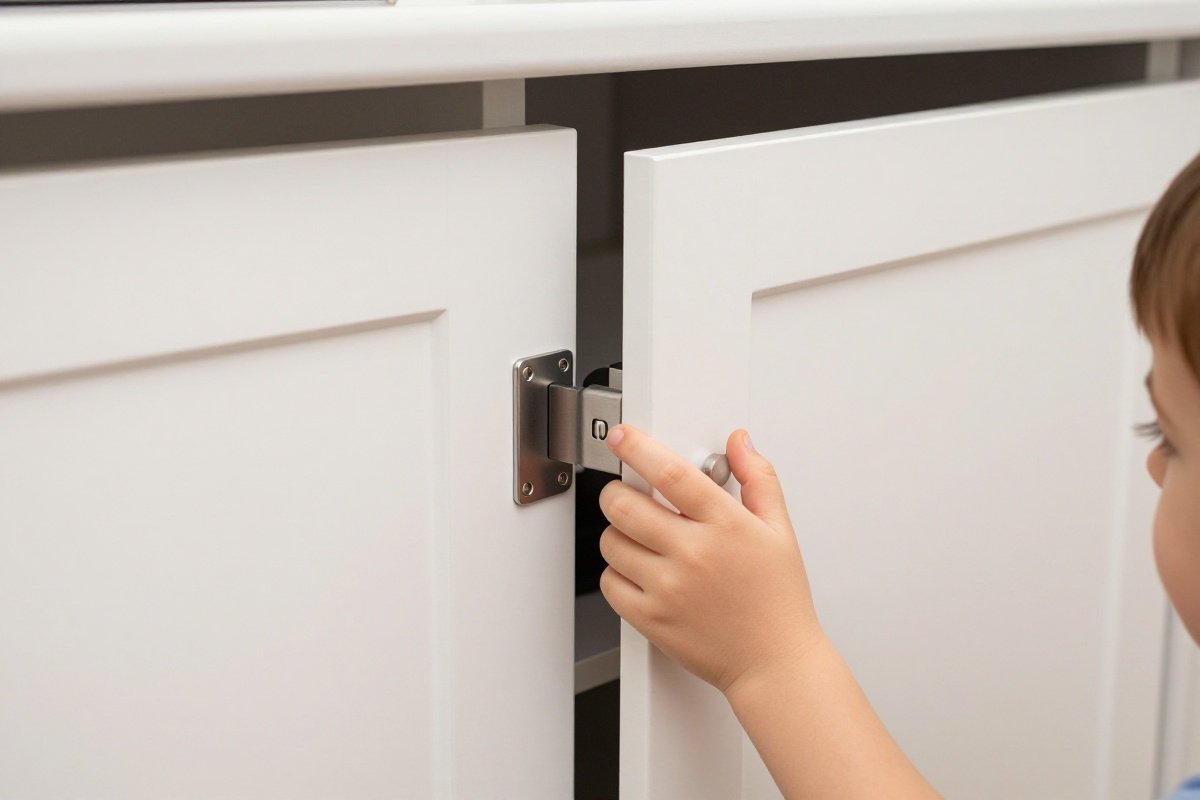
Lock away:
- Cleaning chemicals and detergents (including laundry pods, which resemble candy)
- Medications and vitamins (acetaminophen poisoning is particularly dangerous)
- Personal care products (mouthwash contains alcohol; lotion can cause vomiting)
- Batteries (especially coin/button batteries, which cause chemical burns)
- Essential oils (many are toxic when ingested)
- Alcoholic beverages
- Plants (some common houseplants are poisonous)
Use high cabinets or childproof locks on lower cabinets. Magnetic cabinet locks provide invisible, reliable protection that doesn’t frustrate adults but effectively blocks children.
Unlike external locks that little ones can watch and learn to manipulate, magnetic locks require a hidden key.
Creating a Safe Storage System:
Tiered Approach: Store the most dangerous items (drain cleaner, medications, pesticides) in a locked cabinet in the garage or basement - away from daily living areas. Keep less hazardous but still concerning items (dish soap, shampoo) in child-locked lower cabinets. Reserve easily accessible storage for truly safe items like wooden spoons and plastic containers.
Medication Safety: Never tell children medicine is “candy” - this dangerous shortcut makes medication seem appealing. Store medications in their original containers with child-resistant caps (not pill organizers). Place them in a locked box or cabinet, not just out of reach. Children climb, and grandparents often keep medications in purses or on nightstands.
The “Purse Problem”: Guest purses are a major poisoning risk. Grandparents, aunts, uncles, and friends may carry medications, sugar-free gum with xylitol (toxic to both children and pets), or other hazards. Establish a “purse hook” policy - hang bags high on designated hooks immediately upon entry.
After Each Use: The most dangerous moment is immediately after using a product. Adults set down cleaners “just for a second” to answer the phone or grab a towel. Train yourself to replace the product in secure storage before moving on to the next task.
Fire and Burn Hazards
Burn injuries happen faster than most parents realize - serious burns can occur in under three seconds. Scalding from tap water is particularly common because children can easily reach faucets once they’re tall enough to stand at a sink.
Temperature Control:
- Set water heater to 120°F maximum (test with thermometer at furthest faucet)
- Install stove knob covers (children as young as 18 months can turn knobs)
- Keep matches and lighters out of reach (stored high and in locked containers)
- Use cordless window coverings (cord strangulation risk)
- Place space heaters behind barriers or mount them wall-level
- Keep hair styling tools unplugged and cooling in secured cabinets
Scald Prevention Beyond the Water Heater:
Even with a 120°F water heater, test bath water with your elbow or a thermometer before placing children in the tub. Never add hot water while a child is in the bath. If you need to adjust temperature, remove the child first.
Teach children never to touch faucets. This is challenging because they watch adults do it constantly, but reinforcing the “adult only” rule consistently helps. For independent toddlers, consider installing anti-scald devices on tub faucets - these automatically shut off water if it exceeds a safe temperature.
Kitchen Burn Risks:
Beyond stove knob covers, adopt the “back burner” rule: always use rear burners when possible, and turn pot handles inward. A curious toddler can pull a pot of boiling water onto themselves by grabbing a handle.
Keep highchairs and play areas away from the stove. Children shouldn’t be underfoot while you’re cooking, but if your kitchen layout requires their presence, position them where they can’t reach cooking surfaces or grab tablecloths that might pull hot items down.
Consider an oven lock for the oven door. Toddlers lean on doors, which can tip them over or allow them to touch hot glass. Some ovens have built-in locks; for others, appliance locks provide the same protection.
Strangulation Hazards:
Window blind cords cause an average of one child death per month in the United States. These deaths are silent and occur within minutes. Cordless blinds eliminate the risk entirely. If replacing all blinds isn’t feasible immediately, install cord wraps or cord stops on all corded window coverings, placing cleats high on the wall to secure cords completely out of reach. Better yet, cut looped cords and install separate tassels.
For a hands-on way to teach children about these hazards, safety games and activities can help kids learn to recognize dangers without creating fear. The danger isn’t limited to blinds. Check for:
- Appliance cords hanging from counters (coffee makers, toasters, slow cookers)
- Decorative ribbons or strings on toys or décor
- Drawstring bags or clothing
- Corded electronics positioned where children play
Priority 2: Physical Injury Prevention
Furniture Anchoring
Furniture tip-overs kill a child every two weeks in the United States, and injure one every 24 minutes. These aren’t freak accidents - they’re predictable events that happen when children climb on or pull themselves up on unstable furniture.
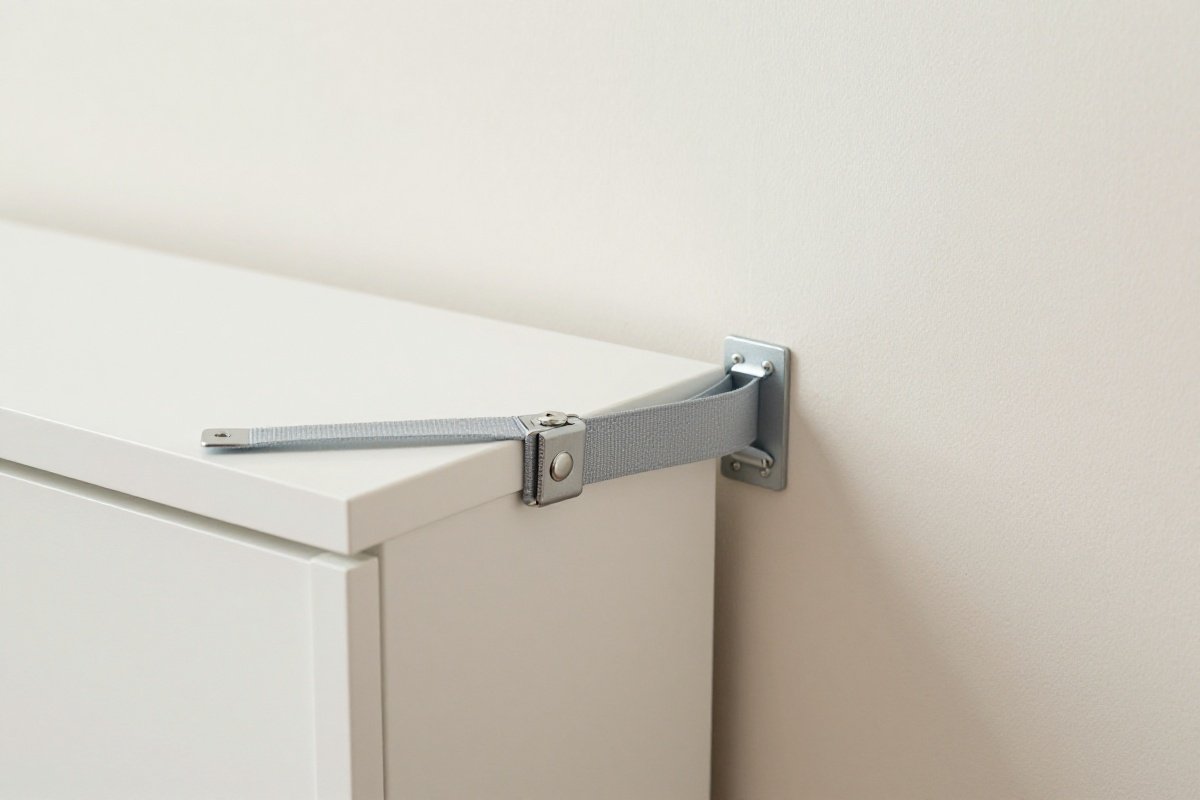
Anchor to wall studs:
- Dressers and chests (especially tall, narrow pieces)
- Bookshelves (even short ones can tip if climbed)
- Armoires and wardrobes
- Televisions (wall mount preferred, or use anti-tip straps)
- Nightstands and side tables in children’s rooms
- Desks and filing cabinets
- Pianos and keyboards
Installation: Furniture straps or L-brackets from hardware stores; attach to stud, not drywall. Most furniture tip-over accidents involve dressers - children pull out multiple drawers like stair steps, shifting the center of gravity forward until the piece topples.
Step-by-Step Anchoring Process:
-
Empty drawers and shelves before beginning. You’ll need to move furniture slightly to install anchors, and weight makes this difficult.
-
Locate studs behind where you’ll place furniture. Studs are typically 16 or 24 inches apart. Mark stud locations before positioning furniture.
-
Choose appropriate hardware: Anti-tip straps work for most furniture. For extremely heavy pieces (large armoires, grandfather clocks), L-brackets provide more security. Ensure straps are rated for your furniture’s weight.
-
Install at proper height: Attach straps to the furniture’s top back (not middle) for maximum leverage against tipping. Secure to studs at an angle that prevents forward motion.
-
Test the installation: Pull firmly on the furniture top. It shouldn’t budge forward. If it does, your anchor isn’t secure - either you’ve missed the stud or need stronger hardware.
-
Address hidden risks: Don’t assume heavy furniture is safe. Weight can actually increase injury severity when it tips. Even wide, squat dressers can tip if a child pulls out multiple drawers or climbs on an open drawer.
Special Consideration: TVs
Flat-screen TVs are top-heavy and tip easily. Wall mounting is the safest option, but if that’s not possible, use TV straps to secure the television to both the stand and the wall. Never place a TV on a dresser - this creates a “double tip” risk where children pull the dresser drawers open, tipping both pieces.
Position TVs completely out of reach. Children shouldn’t be able to touch the screen, pull on it, or manipulate it. The days of “entertainment centers” with TVs at toddler level are thankfully past - for safety reasons, not just aesthetics.
Sharp Corners and Edges
Head injuries from furniture corners are among the most common home accidents for newly walking toddlers. They’re learning balance and spatial awareness while moving quickly - a recipe for collisions.
Apply corner guards to:
- Coffee tables (the most common culprit)
- Fireplace hearths (brick and stone cause severe injuries)
- Countertop corners (kitchen and bathroom)
- Low furniture edges (TV stands, toy chests, bench edges)
- Windowsills at child height
- Stair posts or newels
Choosing Corner Guards:
Foam vs. Rubber: Foam corner guards compress more, offering better impact absorption. Rubber is more durable but harder. For very active toddlers or children with developmental delays affecting coordination, choose foam.
Clear vs. Colored: Clear guards are less visually intrusive but may not adhere as well and are harder to spot for replacement. Colored guards are obvious but remind adults of hazards too.
Individual vs. Edge Guards: Individual corner bumpers protect corners specifically. Edge guards protect entire lengths and are better for long coffee tables or fireplace hearths where a child might strike anywhere along the edge.
Installation Tips: Clean surfaces thoroughly with rubbing alcohol before applying adhesive. Most corner guards fail because of dust or oils on the furniture. Press firmly for 30 seconds and allow adhesive to cure for 24 hours before allowing children near the area.
Beyond Corners: Don’t overlook exposed brick, stone, or tile edges. Fireplace hearths are particularly dangerous - the height is often perfect for a falling toddler’s head to strike. For large hearths, consider a hearth guard that creates a padded barrier around the entire area.
Door and Drawer Safety
Fingers are curious tools for toddlers, and they fit into many dangerous places. Door hinge injuries can sever fingertips, while drawer-slam injuries cause breaks and severe bruising.
- Install cabinet locks on under-sink cabinets (cleaning supplies, garbage disposal switches)
- Use appliance locks on ovens, refrigerators (especially for food restrictions or medication storage)
- Add doorstops to prevent finger pinching (both the closing side and hinge side)
- Consider door locks for dangerous areas (garage, basement, utility rooms)
- Install drawer stops to prevent drawers from being pulled completely out
- Use toilet locks (drowning risk for infants, curiosity risk for toddlers)
Cabinet Lock Selection:
Magnetic Locks: Best for cabinets you access frequently. They’re invisible and won’t frustrate adults, but they require drilling. Installation takes longer initially but pays off in convenience.
Adhesive Strap Locks: Quick installation, no drilling, but visible and somewhat frustrating to use. Children eventually learn to manipulate them. Best for temporary situations (vacation homes, rentals) or cabinets accessed rarely.
Sliding Locks: Effective for drawers and some cabinet styles. Easy for adults but very difficult for children. However, they’re visible and can break if forced.
The “Decoy Cabinet” Strategy: Consider leaving one unlocked lower cabinet filled with safe items (plastic containers, wooden spoons, soft toys). This gives curious toddlers a “yes” space while protecting dangerous areas. They’re less likely to persist at locked cabinets if they have their own accessible option.
Door Safety Details:
Install door stops or door holders on both sides - the hinge side and the closing side. Most parents install only strike-side stops, forgetting that hinge-side injuries are often more severe.
For rooms that must remain completely off-limits (basement stairs, garage, utility rooms), install hook-and-eye latches high on the exterior or use keyed locks. For rooms where you want to limit access but need to hear children (bathroom during toilet training), use door knob covers that prevent turning but allow you to open quickly.
Sliding Door Safety: Patio sliding doors pose unique risks. Install sliding door locks to prevent opening, but also add decals at child eye level so children don’t walk into closed glass doors. Glass break injuries from running into closed doors are surprisingly common.
Further Reading
- Bike Safety for Kids: Helmets, Gear & Rules Guide
- Food Safety for Kids: Essential Guidelines for Parents
- How to Put a Car Seat in a Shopping Cart: Safety Guide
Priority 3: Room-by-Room Guide
Living Room
The living room is where families spend the most time, making it a priority for comprehensive babyproofing. It’s also where many tip-over accidents occur due to bookshelves, entertainment centers, and unstable furniture.
Comprehensive Living Room Checklist:
- Anchor furniture and TV (as detailed in Priority 2)
- Cover electrical outlets (Safety 1st Outlet Covers provide reliable, affordable protection)
- Secure window blind cords (cut loops, install cordless blinds, or use cord wraps)
- Remove small objects from reach (choking hazards include coins, buttons, remote batteries)
- Secure bookshelf contents (children pull books down, creating avalanche risks)
- Install fireplace barriers (screens aren’t enough - children can pull screens down)
- Check houseplants (many common plants are toxic: pothos, philodendron, dieffenbachia)
- Pad sharp coffee table corners (the most common collision point for new walkers)
- Secure area rugs (bunching creates trip hazards; use rug pads or tape)
Electronics and Cords: The living room typically contains the most electronics: TV, gaming systems, sound equipment, lamps, and phone chargers. Each poses multiple risks:
Cord Management: Bundle and secure cords behind furniture. Use cord shorteners or cord management boxes to hide excess length. Never let power cords dangle where children can pull them - a toppling lamp or gaming console can cause serious injury.
Remote Batteries: Button batteries are life-threatening if swallowed. They lodge in the esophagus and create electrical current, causing severe tissue damage in under two hours. Secure all remote battery compartments with screws (not just snap-on covers). Discard old batteries immediately in child-proof containers.
Charging Cables: Phone and tablet charging cables are everywhere. Children chew on cable ends and can receive burns or shocks from damaged cables. Establish charging stations completely out of reach.
Window Safety Beyond Cords:
Windows pose multiple hazards. Install window guards (bars with quick-release mechanisms for fire escape) on all windows above the first floor. Alternatively, install window stops that prevent windows from opening more than 4 inches.
Never position furniture under windows - it creates an easy climbing route. This means rethinking the classic couch-under-window layout in many living rooms. If you must place furniture near windows, anchor it extremely securely and install window guards.
Coffee Table Alternatives: If you’re furnishing a new home with young children, consider ottoman-style coffee tables with soft edges instead of traditional wood or glass tables. Many storage ottomans serve the same function without sharp corners.
Kitchen
The kitchen contains the highest concentration of hazards in any home: heat, sharp objects, heavy appliances, toxic substances, and electrical risks all concentrated in one high-traffic area.
Stove and Cooking Safety:
- Install stove guard (prevents pot grabbing; shields from heat)
- Use appliance locks (oven, dishwasher when running)
- Keep knives in high drawers or in a knife block placed far back on counters
- Secure trash cans (cabinet locks or move to garage)
- Lock refrigerator if it contains medications or you’re managing food restrictions
- Unplug small appliances when not in use (coffee makers, toasters, mixers)
- Store step stools out of reach (or children will create their own access)
The “Four-Foot Safety Zone”: Create an imaginary four-foot radius around your stove where children never enter while cooking. Use baby gates to block kitchen entry during meal prep, or establish a safe play zone at the opposite side of the kitchen where children can “help” without access to cooking hazards.
Teach “hot” early: Around 12-18 months, begin teaching the concept of “hot.” Let children feel warm (not hot) objects with supervision so they understand the word. This is a foundation for safety education that continues throughout childhood.
Dishwasher Safety: Dishwashers contain sharp knives, broken glass, and detergent residue. Install dishwasher locks that prevent opening, especially while running. The detergent pods (which resemble candy) are particularly dangerous - always store these in a locked cabinet, never under the sink.
Refrigerator and Freezer Risks:
Beyond locking (if needed), consider what’s inside. Place alcoholic beverages, medications, and small round foods (grapes, cherry tomatoes) on high shelves. Some parents lock refrigerators, but this isn’t always necessary - teaching boundaries can be effective for many families. However, for children with developmental delays, sensory processing challenges, or food allergies, locking may be essential.
Drawers and Cabinets: Use the tiered system mentioned earlier. The most dangerous items (cleaners, sharp objects) go in locked or high storage. Medium-risk items (plastic bags, aluminum foil) in locked lower cabinets. Safe items (plastic containers, wooden spoons) in unlocked accessible storage.
The “Working Triangle” Trap: Kitchen designers focus on the “working triangle” between stove, sink, and refrigerator. For child safety, this creates a dangerous zone where adults move quickly carrying hot pots, sharp knives, and heavy items. Never allow children in this triangle during meal preparation.
Bathroom
Drowning can occur in less than 2 inches of water in under two minutes, often silently. The bathroom combines drowning risks with scalding risks, making it among the most dangerous rooms for young children.
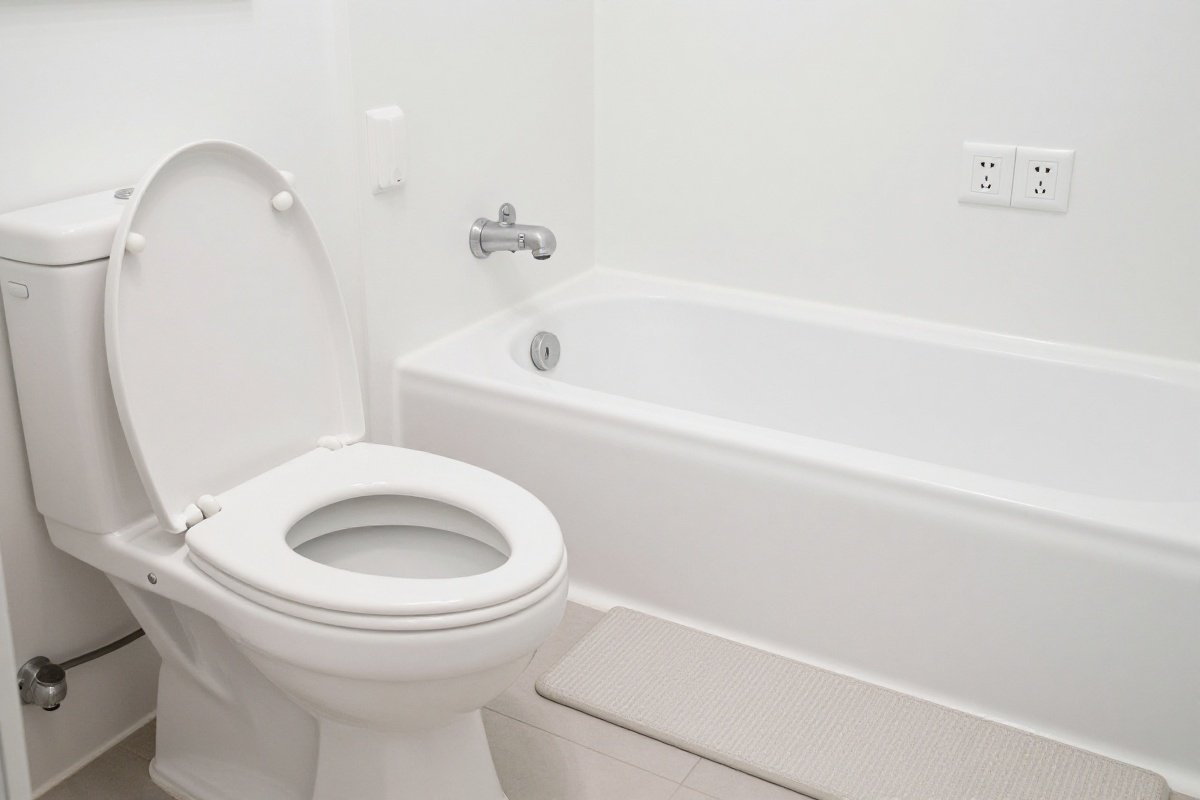
Water Safety:
- Install toilet locks (infants can drown in toilets; toddlers drop toys and try to retrieve them)
- Set water heater to 120°F (as mentioned in Priority 1)
- Use non-slip bath mats (inside tub and on floor)
- Lock medicine cabinets (or remove medications to high locked storage elsewhere)
- Install spout covers (soft covers prevent head injuries if children slip in tub)
- Never leave standing water in tubs or buckets
- Keep bathroom door closed with hook latch or knob cover when not supervised
Supervision Rule: Never leave a child under five alone in the bathroom, even for “just a second.” It takes less than 30 seconds to drown in a bathtub. If you must leave (doorbell, phone, emergency), take the child with you, wrapped in a towel.
The “Within Arm’s Reach” Rule: During bath time, stay within arm’s reach at all times. Don’t reach for a towel in the cabinet, answer your phone, or multitask. Bath time is supervision time, period.
Toilet Safety Beyond Locks:
Keep toilet lids down and locked. Toddlers are top-heavy - they lean over to see inside and can topple in headfirst, unable to push themselves back out. They also drop toys, phones, and other items into toilets, then attempt retrieval.
Electrical Hazards: Bathrooms contain multiple electrical outlets near water sources. Install GFCI (Ground Fault Circuit Interrupter) outlets in bathrooms - these shut off instantly if they detect electrical current entering water. Keep hairdryers, curling irons, electric razors, and other electrical items unplugged and stored high when not in use.
The “hair dryer in tub” scenario isn’t just movie drama - it’s a real electrocution risk. Store all electrical items where they can’t possibly fall or be pulled into water.
Choking Hazards: Bathrooms contain surprising choking hazards: dental floss picks, bobby pins, hair ties, cotton swabs, razors (which children try to handle like they see adults do), and small shampoo bottle caps. Keep counters completely clear of small items.
Bedrooms
Adult bedrooms and children’s bedrooms require different approaches, but both need attention to furniture stability, window safety, and storage of dangerous items.
Universal Bedroom Safety:
- Secure furniture to walls (dressers are the primary tip-over risk)
- Use cordless blinds (strangulation risk from cords)
- Keep crib away from windows (both for cord access and window falling risks)
- Remove hanging mobiles when baby can reach (typically around 5 months or when able to push up)
- Install outlet covers on all outlets
- Ensure proper nightlight placement (not covered by blankets or curtains; fire risk)
Adult Bedroom Considerations:
Your bedroom likely contains items you don’t want children accessing: medications, jewelry (choking hazard), small objects, and personal items. Consider:
Master Bedroom Locks: Some families install hook-and-eye latches high on the outside of the master bedroom door. This allows you to keep the door accessible to adults but blocks unsupervised entry by children.
Nightstand Safety: Nightstands are where many adults keep medications, glasses (breakable), phones (small parts, cords), and other items. Install drawer locks or move hazardous items to a locked master bathroom cabinet.
Bed Safety: Young toddlers can fall from adult beds. If co-sleeping or allowing children in your bed, install bed rails or push the bed against a wall. Never leave infants or young toddlers on adult beds unattended - they can roll off even if they’ve never rolled before.
Children’s Bedroom Safety:
Beyond the universal safety measures, children’s rooms need specific attention:
Toy Storage: Open toy boxes pose suffocation risks if children climb inside and the lid closes. Use toy boxes without lids, or with spring-loaded hinges that hold lids open and prevent slamming. Better yet, use open shelving or bins that can’t trap children.
Furniture Layout: Keep beds, dressers, and shelves away from windows. Don’t create climbing temptations leading to windows. Position dressers where drawers can’t be used as climbing steps to reach dangerous items (windows, curtains, ceiling fans).
Closet Safety: Closets contain hazards many parents overlook: hanging rods children can pull down, wire hangers (sharp edges), and items stored on high shelves that can fall. Install closet locks if your child’s closet contains anything dangerous. Otherwise, use the tiered system: safe items low, dangerous items out of reach.
Nursery
The nursery deserves special attention because infants spend significant unsupervised time here during sleep. Safe sleep practices prevent SIDS (Sudden Infant Death Syndrome) and suffocation deaths.
Safe Sleep Environment:
- Follow safe sleep guidelines (back to sleep, firm mattress, no loose bedding)
- Secure changing table (straps and 2-inch side rails)
- Keep diaper supplies within your reach only (but out of baby’s reach from table)
- Monitor temperature (68-72°F ideal; overheating increases SIDS risk)
- Use wearable blankets instead of loose blankets
- Never place crib near windows, heaters, or cords
- Remove bumper pads, stuffed animals, and pillows from crib
- Ensure mattress fits snugly with no gaps (two-finger width maximum)
Crib Safety Standards:
Only use cribs manufactured after June 28, 2011, when current safety standards took effect. Older cribs, including heirlooms, may have:
- Drop sides (banned due to entrapment and suffocation deaths)
- Slat spacing wider than 2-3/8 inches (head entrapment)
- Lead paint
- Decorative cutouts (head or limb entrapment)
- Corner posts that extend above the end panels (clothing strangulation)
Mattress Position: Start with the mattress at the highest position for newborns (easier on parents’ backs). Lower it when your baby can sit up (typically around 6 months). Lower it to the lowest position when baby can pull to standing (around 8-10 months). Once your child can climb out or when they reach 35 inches tall, transition to a toddler bed.
Changing Table Safety:
Always use the safety strap on changing tables. Never leave a baby unattended on a changing table - not even for a second. Keep diapers, wipes, and creams within your arm’s reach from the table, but positioned so babies can’t grab them.
If you use a dresser-top changing pad, ensure the pad is secured (not just placed on top) and the dresser is firmly anchored to the wall. Many parents forego changing tables entirely, instead changing babies on a pad placed on the floor - the safest option.
Monitor Safety: If using a video monitor, position the camera unit completely out of reach. The cords pose strangulation risks. Use cord management systems to secure any cords at least 3 feet from the crib. Modern wireless monitors eliminate many cord-related risks.
Laundry Room
Often overlooked in babyproofing plans, laundry rooms contain detergents, bleach, small objects (lint, coins, buttons found in pockets), and heavy machinery.
Laundry Room Safety Measures:
- Store all detergents high or in locked cabinets (laundry pods are particularly attractive to children)
- Keep washer and dryer doors closed when not in use (climbing risk, entrapment risk)
- Remove lint immediately (choking hazard)
- Install utility sink locks if applicable
- Keep iron and ironing board locked away
- Store small items (buttons, coins) in sealed containers out of reach
- Consider a door lock for the laundry room if you can’t supervise access
Understanding food safety for kids is equally important in this room, as laundry products can easily be mistaken for food items. The Pod Problem: Laundry detergent pods are responsible for thousands of poisoning cases annually. They’re brightly colored, squishy, and resemble toys or candy. Children bite into them, and the concentrated detergent causes severe burns to mouth, throat, and esophagus. Some children experience respiratory distress or coma. Store pods in their original containers with child-resistant closures, in locked cabinets. Consider switching to traditional liquid detergent stored in locked cabinets as an extra safety layer.
Recommended Products
Regalo Easy Step Walk Thru Gate
Best doorway gateBest budget-friendly gate for doorways and room dividers.
What We Like
- Easy walk-through design with one-hand operation
- Pressure mount installation requires no drilling
- Adjustable to fit openings 29-39 inches wide
- Auto-close feature for safety
What We Don't
- Not suitable for top of stairs (pressure mount)
- Pressure mount can loosen over time requiring retightening
Safety 1st Outlet Covers
Best outlet coversEssential first line of defense for electrical safety.
What We Like
- Inexpensive safety essential
- Difficult for children to remove
- 36 covers per pack for whole-home coverage
- Fits standard outlets
What We Don't
- Adults must remove and replace each time outlet is used
- Small pieces can be easily misplaced
Magnetic Cabinet Locks
Best cabinet locksBest invisible solution for cabinet safety.
What We Like
- Invisible installation maintains cabinet aesthetics
- No drilling required with 3M adhesive
- Magnetic key provides secure adult-only access
- Works on both cabinets and drawers
What We Don't
- Must keep magnetic key accessible but away from children
- Installation requires precise alignment for proper function
- May not work on metal cabinets
Sources & Research
Continue Reading
Explore more child safety content or browse our other categories.
Frequently Asked Questions
- When should I start babyproofing my home?
- Start babyproofing before your baby becomes mobile - typically around 3-4 months. Crawling can begin as early as 6 months, and some babies transition quickly from crawling to pulling up and walking. Early preparation gives you time to install safety equipment without pressure. Prioritize by risk level: start with stairs (install gates), cleaning chemicals (lock cabinets), and small objects (choking hazards). As your baby develops new skills (standing, climbing, opening doors), reassess and add protections. Babyproofing is an ongoing process that evolves with your child's abilities. The Consumer Product Safety Commission reports that most childhood injuries in the home are preventable with proper safety measures.
- What are the most important areas to babyproof?
- Focus on these high-priority areas: 1) Stairs - install hardware-mounted gates at top and bottom; 2) Cleaning supplies and medications - lock in high cabinets or use childproof locks; 3) Electrical outlets - use outlet covers or plates; 4) Heavy furniture - anchor dressers, bookshelves, and TVs to walls; 5) Sharp corners - use corner guards on furniture; 6) Windows - install guards or stops to prevent falls; 7) Bathroom - never leave water in tubs, lock toilet lids, set water heater to 120°F; 8) Kitchen - use stove knob covers, keep knives out of reach, lock appliance doors; 9) Choking hazards - regularly scan floors for small objects; 10) Doors - use door locks or covers to prevent access to dangerous areas.
- How do I keep my toddler safe from furniture tipping?
- Furniture tip-overs are a leading cause of serious injury and death in children under 6. To prevent them: Anchor all dressers, bookshelves, armoires, and TVs to wall studs using furniture straps or L-brackets (available at hardware stores). Place heavy items on bottom shelves to lower center of gravity. Keep tempting items (toys, remotes) off furniture tops so children aren't tempted to climb. Avoid placing TVs on furniture not designed for them - use wall mounts instead. Check IKEA's recall history for examples of why anchoring matters. The process takes minutes per piece of furniture but prevents tragedies. Even lightweight furniture can crush a small child.
- Are pressure-mounted baby gates safe?
- Pressure-mounted gates are safe for doorways and room dividers but should never be used at the top of stairs. They work by wedging between walls/door frames and can loosen over time or fail to withstand the force of a child leaning or pushing. For stair tops, always use hardware-mounted gates screwed into wall studs or door frames. Pressure gates are convenient for temporary installations and rentals where you can't drill holes. Check tightness regularly and reinstall if they become loose. When in doubt, hardware-mounted gates provide the most security, especially for stairs and high-traffic areas.
- How can I make my bathroom safer for children?
- Bathroom safety is critical - children can drown in just inches of water and suffer severe burns from hot water. Essential steps: Set your water heater to 120°F maximum to prevent scalding (takes 5 minutes at 140°F to cause third-degree burns). Never leave standing water in tubs or buckets. Install toilet locks to prevent drowning and toy-clogging. Use non-slip mats in tubs. Keep all medications, cleaning products, and cosmetics in locked cabinets or high out of reach. Install a doorknob cover or lock to prevent unsupervised access. Consider a spout cover to prevent head injuries. Supervise all bath time - never leave a child unattended in or near water, even for "just a minute."
Written By
Kid Sitting Safe
Our team researches car seat safety standards, crash test data, and real-world usability to help parents make the safest choice.
Related Articles
Safety Games for Kids: Teaching Protection Through Play
Engaging safety games and activities that teach children personal protection. Learn through play about stranger danger, fire safety, traffic rules, and emergency preparedness.

Bike Safety for Kids: Helmets, Gear & Rules Guide
Essential bike safety guide for kids. Learn proper helmet fit, safety gear recommendations, road rules, and how to prevent common cycling injuries.

Food Safety for Kids: Essential Guidelines for Parents
Learn essential food safety for kids. Guidelines for choking prevention, safe food temperatures, allergy management, and age-appropriate food preparation.