Affiliate Disclosure:Kid Sitting Safe is reader-supported. When you buy through links on our site, we may earn an affiliate commission at no additional cost to you. This does not influence our reviews or recommendations — we only recommend products we genuinely believe in.
Quick Picks
Your baby’s first car seat is perhaps the most important piece of safety equipment you’ll purchase. Unlike convertible seats that serve for years, infant car seats are purpose-built for newborns - providing the proper recline angle, head support, and portability that new parents need during those critical first months. If you are new to car seats, our car seat types explained guide breaks down the differences between infant, convertible, and all-in-one seats.
Every seat featured here meets Federal Motor Vehicle Safety Standard (FMVSS) 213 and has been evaluated by NHTSA for ease-of-use. More importantly, these are the seats consistently recommended by Child Passenger Safety Technicians (CPSTs) - the professionals who help parents install seats correctly every day.
Quick Comparison: Top Infant Car Seats
| Model | Rating | Best For | Value | Weight Limit | Carrier Weight |
|---|---|---|---|---|---|
| Chicco KeyFit Max ClearTex | 4.5/5 | Overall | Mid-Range | 30 lbs | 10 lbs |
| Nuna Pipa RX | 4.7/5 | Premium | Premium | 32 lbs | 7.6 lbs |
| UPPAbaby Mesa V2 / V3 | 4.6/5 | Stroller Integration | Premium | V2: 35 lbs / V3: 30 lbs | V2: 9.9 lbs / V3: 9.9 lbs |
| Graco SnugRide SnugLock 35 Elite (discontinued) | 4.4/5 | Budget | Budget | 35 lbs | ~9 lbs (measured; Graco published none) |
| Cybex Aton 2 | 4.3/5 | Safety Tech | Mid-Range | 35 lbs | 7.1 lbs |
| Evenflo LiteMax DLX | 4.1/5 | Value | Budget | 35 lbs | 8.7 lbs |
Ratings are our editorial assessment, weighing published specs, manufacturer documentation and independent reviewer consensus. We don’t test products ourselves.
Safety Reminder: Always register your car seat with the manufacturer immediately after purchase to receive recall notifications. Verify your seat is not affected by active recalls at NHTSA.gov/recalls.
Understanding NHTSA Ease-of-Use Ratings
NHTSA ease-of-use ratings indicate installation difficulty significantly impacts real-world safety. When parents struggle with confusing instructions or poorly designed belt paths, they are more likely to make errors that compromise protection in a crash. NHTSA evaluates every car seat on four distinct criteria, assigning 1-5 stars for each category.
The evaluation examines instruction clarity, vehicle installation features, labeling visibility, and ease of securing the child. According to NHTSA, all car seats must meet FMVSS 213 standards before sale, but ease-of-use ratings help consumers identify which models minimize common installation errors. Seats earning 4-5 stars across categories typically feature color-coded belt paths, clear recline indicators, and intuitive harness adjustment systems.
The Chicco KeyFit Max ClearTex carries forward the SuperCinch LATCH system and dual bubble level indicators that earned the KeyFit line its top NHTSA marks. Similarly, the Nuna Pipa RX receives high ratings for its rigid LATCH connectors and visual installation confirmations. Parents should prioritize these ratings alongside crash test performance, as proper installation remains the single most important factor in car seat effectiveness.
FMVSS 213 Certification Requirements
FMVSS 213 requires all infant seats to pass 30-mph frontal sled testing before manufacturers can legally sell them in the United States. This federal standard establishes minimum performance criteria for child restraint systems, ensuring every seat provides adequate protection in frontal collisions. The testing protocol simulates crash forces using a sled accelerated to 30 mph with a 3-year-old dummy secured in the seat.
According to NHTSA, all car seats must meet FMVSS 213 standards before sale, regardless of price point or brand reputation. The standard requires seats to limit head excursion, prevent structural failure, and maintain harness integrity during impact. Additionally, FMVSS 213 mandates flame resistance testing for all fabrics and proper labeling with weight limits, installation instructions, and expiration dates.
Manufacturers must conduct internal testing and submit results to NHTSA for verification. Random compliance testing occurs regularly, with non-compliant seats subject to mandatory recalls. While FMVSS 213 provides baseline safety assurance, many manufacturers exceed these minimums through additional side-impact testing and extended rear-facing weight limits beyond regulatory requirements.
Best Overall: Chicco KeyFit Max ClearTex
The Chicco KeyFit line has been the darling of child passenger safety technicians for nearly two decades, and the KeyFit Max ClearTex carries that legacy forward with the headline upgrade most parents asked for: an integrated anti-rebound bar. The KeyFit Max is the current Chicco infant flagship, succeeding the KeyFit 35.
Why CPSTs Recommend the KeyFit Max ClearTex
The KeyFit’s reputation rests on installation confidence. The SuperCinch LATCH tightener uses a force-multiplying mechanism that achieves tight installation with minimal effort. Parents with limited hand strength or arthritis consistently report success where other seats frustrated them.
The Max adds three things over the KeyFit 35: an integrated anti-rebound bar (extends legroom roughly 1.5 inches and reduces forward rotation in a frontal crash), 5-position no-rethread harness with +1 inch of headroom over the KeyFit 30, and integrated European belt routing for baseless install in rideshares or grandparent cars.
Key specifications:
- Weight range: 4-30 pounds
- Height limit: Up to 32 inches (head at least 1 inch below headrest top)
- Carrier weight: 10 pounds
- Base features: Integrated anti-rebound bar, 6-position adjustable base with bubble level
- Certification: Meets FMVSS 213a (side impact) and FMVSS 213b (frontal impact); GREENGUARD Gold; FAA approved
Travel System Versatility
Chicco’s Click-in attachment system works with over 20 stroller models, from budget-friendly Bravo strollers to premium jogging models. This compatibility means you’re not locked into one brand ecosystem.
Installation Tip: The KeyFit base features bubble level indicators. Both bubbles must be completely within the blue zone for proper installation. If only one side is level, your vehicle seat may be uneven; try another seating position.
Variant note: The KeyFit Max Zip ClearTex (item 87113) is a separate SKU that adds a zip-out privacy shield with magnetic closures. Specs and price are otherwise the same.
Best Premium Pick: Nuna Pipa RX
For parents seeking the intersection of safety engineering and Scandinavian design, the Nuna Pipa RX delivers - at a premium price point.
Dream Drape Innovation
The Pipa RX’s signature feature is the Dream Drape canopy extension. Unlike detachable covers that get lost or forgotten, the Dream Drape zips into the canopy and extends to provide complete coverage from sun, wind, and unwanted touching. When not needed, it tucks away neatly.
RELX Base Technology
The RELX base represents Nuna’s latest advancement in installation technology:
- Rigid LATCH connectors eliminate strap slack
- Anti-rebound panel reduces rotation in a crash
- 4-position adjustable load leg transfers energy to the vehicle floor
- Visual installation indicators confirm proper attachment
Specifications:
- Weight range: 4-30 pounds
- Height limit: 16-30 inches
- Carrier weight: 7.6 pounds, before the canopy and inserts
- Materials: Flame resistant with no added fire retardant chemicals, GREENGUARD Gold certified
Budget Benchmark: Graco SnugRide SnugLock 35 Elite
Graco has sold more infant car seats than any other brand in America, and the SnugRide SnugLock 35 Elite showed why: a 35-pound rear-facing cap and a no-rethread harness at a price nothing else matched.
Discontinued. Graco no longer makes the SnugLock 35 Elite, and it doesn’t appear on gracobaby.com. Graco’s current infant range is the SnugFit line, which adds an anti-rebound bar the SnugLock 35 Elite never had. If you already own an Elite it remains a sound seat inside its limits, but it was certified before FMVSS 213a, the federal side-impact standard, so a current seat is the better buy.
SnugLock Technology
The SnugLock system brings a belt install down to three steps:
- Route the vehicle seat belt or LATCH strap through the base and pull the slack out
- Close the SnugLock arm over the belt until it clicks
- Check that the base moves less than an inch at the belt path
The arm’s job is to hold the tension you’ve created, not to create it for you. That still removes the step most people get wrong, which is keeping a belt tight while you buckle it. Use the seat belt or LATCH, never both together.
Practical Considerations
Carrier weight is the one spec Graco never published for this seat, and the 7.5-pound figure that circulates belongs to other SnugRide models, not this one. Consumer Reports weighed the Elite at 9 pounds, and Amazon’s 18.8-pound packaged weight is consistent with that. It’s a mid-weight carrier. If light is the priority, Graco does publish 7.5 pounds for the SnugRide Lite LX, at the cost of a 30-pound cap instead of 35.
Best for UPPAbaby Strollers: UPPAbaby Mesa V2 (or V3)
UPPAbaby refreshed the Mesa lineup in mid-2025: the Mesa V3 took over the flagship slot (25-position no-rethread headrest vs 4 on V2, magnetic buckle holders) and the Mesa V2 dropped to a sale price. Both still attach directly to UPPAbaby strollers. The Mesa V3 weight cap dropped to 30 lbs from V2’s 35 lbs, so larger newborns may get more usable months out of the V2. For the full breakdown including which version to buy, see our UPPAbaby Mesa V2 vs V3 review.
If you’ve invested in a UPPAbaby Vista or Cruz stroller, either Mesa attaches directly without adapters; the V2 is the better value pick at sale prices, the V3 is the better-equipped pick if you want the newer ergonomics.
SmartSecure System
The Mesa’s SmartSecure system features:
- Self-retracting LATCH connectors that tighten as you push the base into the vehicle seat
- Red-to-green tension indicator that confirms proper tightness
- Bubble level indicator for correct recline angle
This system eliminates the most common installation errors: loose LATCH straps and improper recline angles.
Premium Materials
The V2 update brings wool-blend fabric options that pass federal flammability standards without chemical flame retardants. The fabric is removable and machine washable - a necessity for a seat used daily.
Best Safety Technology: Cybex Aton 2
German engineering meets child safety in the Cybex Aton 2, featuring technologies rarely found in infant seats at this price point.
Current Cybex lineup note: Cybex now sells the Aton G2 and Aton G2 Swivel as the current US infant carriers, with explicit compliance for the new FMVSS 213 side-impact and frontal-impact standards and the same Load Leg base philosophy. The G2 swaps the 35 lb cap for a 30 lb cap. The Aton 2 listed here is still widely stocked and remains a valid pick; we’ll move the G2 into the recommendation once US Amazon availability stabilises.
Linear Side-Impact Protection (L.S.P.)
The Aton 2’s L.S.P. system consists of extendable wings on the carrier sides. When extended against the vehicle door, they take the first contact and move energy away from the child.
Load Leg Stability
The adjustable load leg extends from the base to the vehicle floor, reducing forward rotation in a frontal crash by up to 50%. This technology is standard in European seats but rare in American infant carriers.
SensorSafe Technology
Available on select models, SensorSafe provides:
- Alerts if the chest clip is unbuckled while driving
- Notifications if the child is left in the seat after the car is turned off
- Temperature monitoring to prevent heat-related incidents
Best Value Option: Evenflo LiteMax DLX
For parents prioritizing budget without compromising safety, the LiteMax DLX proves that FMVSS 213 compliance doesn’t require premium pricing.
Essential Safety Features
The DLX includes:
- SafeZone base with belt lock-off for seat belt installations
- Buckle pockets that keep straps out of the way when loading baby
- Full-coverage canopy with zip-out extension
- Ergonomic handle for comfortable carrying
While lacking the installation innovations of premium seats, the DLX achieves the same fundamental protection when installed correctly.
Brand Comparison by Key Features
When evaluating infant car seat brands, understanding key feature differentiators helps parents prioritize what matters most for their specific needs. Each manufacturer approaches safety and convenience with distinct engineering philosophies.
Chicco dominates installation ease with its SuperCinch LATCH system and clear visual indicators. According to NHTSA, seats with intuitive installation features see significantly lower misuse rates. Chicco’s widespread stroller compatibility also provides ecosystem flexibility that budget-conscious families appreciate.
Nuna and UPPAbaby focus on premium materials and streamlined aesthetics, using wool blends and eliminating chemical flame retardants. These brands emphasize load leg technology and rigid LATCH connectors for enhanced stability during crashes.
Graco and Evenflo deliver FMVSS 213-compliant protection at accessible price points. While lacking premium convenience features, these seats meet identical federal testing standards. The AAP recommends focusing budget on proper installation training rather than premium seat features when finances are constrained.
Cybex distinguishes itself with European-inspired safety technology including linear side-impact protection and SensorSafe integration. These features appeal to tech-focused parents seeking advanced monitoring capabilities alongside crash protection. For a deeper head-to-head analysis of two of the most popular brands, read our Britax vs Chicco comparison or our Nuna vs UPPAbaby breakdown.
Infant Car Seat Safety Standards
FMVSS 213 Compliance
All seats in this guide meet Federal Motor Vehicle Safety Standard 213, which requires:
- Dynamic testing simulating 30 mph frontal crashes
- Flammability resistance for fabrics
- Labeling and instruction requirements
- Structural integrity standards
NHTSA Ease-of-Use Ratings
NHTSA evaluates seats on four criteria, each receiving 1-5 stars:
- Evaluation of Instructions: Clarity of manuals and labels
- Vehicle Installation Features: Compatibility with vehicle belt systems
- Evaluation of Labels: Visibility and clarity of warnings
- Securing the Child: Ease of harness adjustment and use
The Chicco KeyFit Max ClearTex and Nuna Pipa RX consistently earn 4-5 star ratings across all categories.
Budget Considerations and Long-Term Value
Selecting an infant car seat involves balancing immediate budget constraints against long-term value and versatility. NHTSA estimates car seats cut the risk of fatal injury by 71% for infants under 1, in passenger cars, which makes seat selection matter regardless of price point.
According to NHTSA, all car seats must meet FMVSS 213 standards before sale, meaning a budget Evenflo LiteMax provides identical crash protection to a premium Nuna Pipa. The AAP recommends prioritizing proper installation and fit over premium features when budget is limited. Parents should allocate funds for professional installation checks, which CPSTs provide at low or no cost.
Premium seats justify higher costs through extended weight limits, superior stroller compatibility, and installation convenience. The KeyFit Max ClearTex’s 30-pound cap typically accommodates children to 12 months by weight, but most parents outgrow it by the 32-inch height limit first. Calculate cost-per-month of use when comparing options.
Consider total system costs when budgeting. Travel system bundles often provide savings over purchasing seat and stroller separately. Factor replacement costs if planning multiple children - premium seats with machine-washable covers and durable bases retain value for hand-me-down use.
Installation Best Practices
Rear-Facing Installation Steps
-
Choose seating position: Center rear is statistically safest when compatible. Never install in front of an active airbag.
-
Set recline angle: Infants under 6 months need the most reclined position (30-45 degrees) to keep airways open. Use built-in level indicators.
-
Route LATCH or seat belt: Thread through the designated belt path. Never use both simultaneously.
-
Tighten and test: The base should not move more than 1 inch at the belt path when pulled firmly.
-
Check carrier attachment: Listen for an audible click when placing the carrier on the base. Perform a gentle lift test.
Common Installation Errors
- Loose installation: The 1-inch rule is often violated. If you can move the base significantly, it’s too loose.
- Improper recline: Too upright can cause breathing difficulties; too reclined risks injury in a crash.
- Retractor not locked: Vehicle seat belts must be locked using the switchable retractor or a locking clip.
- Twisted straps: LATCH straps and seat belts must lay flat without twists.
When to Transition from Infant Seat
The AAP recommends infants remain rear-facing until at least age 2 or until height/weight limits, but specific timing for transitioning from infant carriers requires careful evaluation of growth milestones and seat limitations.
According to NHTSA, most children outgrow infant seats when their head reaches within 1 inch of the carrier top or when they exceed the weight limit, typically 30-35 pounds. This commonly occurs between 9-15 months depending on the child’s growth trajectory. However, many parents transition earlier when the carrier becomes physically cumbersome to carry.
NHTSA estimates car seats cut the risk of fatal injury by 71% for infants under 1, in passenger cars. The AAP’s separate advice is to keep rear-facing until the child reaches the seat’s own height or weight limit. FMVSS 213 requires all infant seats to pass 30-mph frontal sled testing, but convertible seats accommodate larger rear-facing children with higher weight and height limits.
Signs your child has outgrown the infant seat include: head less than 1 inch below carrier top, weight exceeding the stated limit (check both carrier and base limits), shoulders above top harness slots, or chest clip positioned below armpit level when properly adjusted. Transition to a convertible seat when any limit is reached, never before. Our all-in-one car seat reviews cover the best options for this next stage.
When to Transition to a Convertible Seat
Per AAP guidelines, children should remain in infant car seats until they reach either:
- The maximum weight limit (typically 30-35 pounds)
- The height limit (when head is within 1 inch of carrier top)
For most children, this occurs between 9-15 months. However, many parents transition earlier for convenience - especially if their child seems cramped or the carrier becomes heavy to carry.
Important: Transition to a convertible seat when your child outgrows the infant seat, not by age alone. Premature transition to forward-facing is dangerous and violates AAP recommendations for rear-facing until at least age 2.
Further Reading
- Best Car Seats for Baby Girls: Pink & Stylish Options for 2026
- Best Convertible Car Seats of 2026
- Top Rated Car Seats for 2026: Expert Reviews & Buying Guide
Buying Guide: Who Is Each Seat For?
| Parent Profile | Recommended Seat | Why |
|---|---|---|
| First-time parents seeking ease | Chicco KeyFit Max ClearTex | Highest CPST recommendation, now with anti-rebound bar |
| Style-conscious urban parents | Nuna Pipa RX | Premium design, lightweight |
| Budget-focused families | Graco SnugRide Lite LX | Lightest carrier in the group and the lowest price, if a 30 lb cap suits |
| UPPAbaby stroller owners | UPPAbaby Mesa V2 or V3 | Direct attachment, no adapters. V2 has the 35 lb cap; V3 is the current flagship (25-position headrest, 30 lb cap). |
| Safety technology enthusiasts | Cybex Aton 2 | L.S.P., load leg, SensorSafe |
| Grandparents/secondary seat | Evenflo LiteMax DLX | Affordable backup option |
Our Top Picks
Chicco KeyFit Max ClearTex Infant Car Seat
Best overallThe current Chicco flagship with integrated anti-rebound bar; carries the KeyFit line's CPST-favourite installation story forward.
What We Like
- Integrated anti-rebound bar (the upgrade over the KeyFit 35 line) adds ~1.5 inches of legroom and reduces forward rotation in a frontal crash
- SuperCinch push-on lower LATCH connectors make a tight installation achievable with minimal force
- Integrated European belt routing for secure baseless installation in taxis, rideshares, or grandparent cars
- 5-position no-rethread harness with an extra inch of headroom vs the KeyFit 30
- Meets FMVSS 213b frontal impact standard and FMVSS 213a side impact standard; GREENGUARD Gold and Baby Safety Alliance verified; FAA approved
What We Don't
- Heavy carrier at 10 lbs, tiring for parents carrying it daily
- Canopy needs two hands to extend fully
- Belt threading under the guides is tedious for baseless installation
- No load leg (a feature Cybex, Nuna, and UPPAbaby offer at higher price points)
Nuna Pipa RX
Best premium pickLuxury design meets uncompromising safety for style-conscious parents.
What We Like
- Rigid LATCH with integrated load leg for enhanced stability
- Exceptionally lightweight at 7.6 pounds for easy carrying
- Dream drape canopy provides full coverage and sun protection
- Installs with a vehicle belt and no base, which suits taxis and rideshares
- Flame resistant with no added fire retardant chemicals, GREENGUARD Gold certified
What We Don't
- High price point compared to competitors
- Weight limit of 30 pounds is lower than most infant seats, which now reach 32-35 lbs
- Rear-facing only, so it is outgrown sooner than a convertible
Graco SnugRide SnugLock 35 Elite
Reference for existing owners; no longer soldA capable rear-facing-only seat whose limits are all confirmed in Graco's own manual: 4-35 lb, 32 inches, seven-year life. It's no longer made, and Graco's current infant range is the SnugFit line, so treat this as a reference for owners rather than a buying recommendation.
What We Like
- Rear-facing to 35 lb, at the top of the infant-seat range
- SnugLock lock-off arm clamps the belt or LATCH strap down, so you aren't fighting the seat for tension
- No-rethread harness: the head support and harness height move together on one set of buttons
- Carrier is certified for use in aircraft when used without the base
- Click Connect attachment to Graco strollers carrying the Click Connect logo
What We Don't
- Discontinued. Graco no longer lists it and the ASIN in this record is gone from Amazon's catalogue
- No anti-rebound bar. Graco's later SnugFit seats added one
- Graco never published a carrier weight for this trim, and independent measurements disagree
- The base is not certified for aircraft, so flying means carrying the carrier on its own
- Body pillow is only for infants of 12 lb or less, and it isn't fitted to every model
UPPAbaby Mesa V2
Best for UPPAbaby strollersSeamless integration with UPPAbaby stroller ecosystem and innovative installation design.
What We Like
- Self-retracting LATCH connectors for instant tightening
- Direct attachment to Vista and Cruz strollers - no adapters needed
- Premium fabrics with removable washable covers
- SmartSecure system with visual level indicator
What We Don't
- Higher price than equivalent competitors
- 35-pound weight limit may be reached sooner than some competitors
Cybex Aton 2
Best safety technologyGerman engineering excellence with innovative safety features for tech-focused parents.
What We Like
- Load leg included for enhanced stability
- Linear Side-Impact Protection (LSP) system
- Lightweight carrier at 9.9 lbs without base
- Meets European safety standards
What We Don't
- Premium pricing compared to basic infant seats
- Base with load leg takes up more vehicle space
Evenflo LiteMax DLX
Best value optionBest entry-level option for parents seeking safety on a budget.
What We Like
- Affordable without sacrificing FMVSS 213 compliance
- Ergonomic handle for comfortable carrying
- Machine washable seat pad
- 4-35 pound range accommodates most infants
- Lightweight design at under 8 pounds
What We Don't
- Basic installation features compared to premium seats
- Canopy coverage limited
- Canopy doesn't fully block sun at all angles
Sources & Research
- Chicco USA Official Product Page
- Chicco KeyFit Max Infant Car Seat Product Manual
- The Car Seat Pros Review
- Amazon Product Listing
- Nuna USA Official Product Page
- Nuna PIPA rx User Manual (US)
- Graco SnugRide SnugLock 35 Elite instruction manual PD349483C (8/16), models 8AX125 / 8AX25. Primary source for every limit above
- Consumer Reports, Graco SnugRide SnugLock 35 Elite. Independent cross-check of the 4-35 lb / 32 in limits, and the only Elite-specific carrier weight measurement
- Amazon Product Page
- UPPAbaby Mesa V2 Product Manual (archival)
- Amazon Product Page
Continue Reading
Explore more infant car seats content or browse our other categories.
Frequently Asked Questions
- How long can my baby use an infant car seat?
- Per AAP guidelines and FMVSS 213 standards, babies should use infant car seats rear-facing until they reach either the maximum weight limit (typically 30-35 pounds) or when their head is less than 1 inch from the top of the carrier shell. For most children, this occurs between 9-15 months of age. However, many parents transition to a convertible seat before these limits for convenience.
- Are expensive infant car seats safer than budget options?
- No. All car seats sold in the United States must meet the same Federal Motor Vehicle Safety Standard 213 requirements regardless of price. A budget-priced Evenflo LiteMax provides the same baseline crash protection as a premium Nuna Pipa. Premium pricing typically reflects convenience features (lighter weight, easier installation, premium fabrics) rather than superior safety. The most important factor is proper installation and use.
- Do I need an infant car seat or can I start with a convertible seat?
- While many convertible seats accommodate newborns from 4-5 pounds, infant car seats offer distinct advantages for the first 9-12 months. The portable carrier function allows you to move a sleeping baby undisturbed, and the ability to create a travel system with a stroller adds convenience. However, if budget is tight, starting with a convertible seat is a safe and valid option per NHTSA guidance.
- What is the safest position to install an infant car seat?
- NHTSA and the AAP recommend the center rear seating position as statistically safest when the seat can be installed correctly there. However, the outboard positions are acceptable if they provide a better installation (less than 1 inch of movement at the belt path). Never install a rear-facing seat in front of an active airbag. Side airbags do not pose a risk to properly installed rear-facing seats.
- How do I know if my infant car seat base is installed correctly?
- After installation, grasp the base at the belt path (where the LATCH strap or seat belt passes through) and attempt to move it side-to-side and front-to-back. The base should not move more than 1 inch in any direction. If using LATCH, ensure you hear a click when attaching connectors and that the strap is tight with no visible slack. For seat belt installations, lock the belt using your vehicle's locking mechanism (switchable retractor or locking clip) before tightening.
Written By
Kid Sitting Safe
Our team researches car seat safety standards, crash test data, and real-world usability to help parents make the safest choice.
Related Articles
Chicco KeyFit 35 Review: Best Infant Car Seat for New Parents?
Comprehensive Chicco KeyFit 35 review. We break down the infant car seat's installation, safety features, and published limits. Is it the best choice for your newborn?
How to Choose an Infant Car Seat: Complete Safety Guide
Complete guide to choosing an infant car seat. Safety standards, weight limits, installation types, and key features explained. Expert advice for new parents from Kid Sitting Safe.
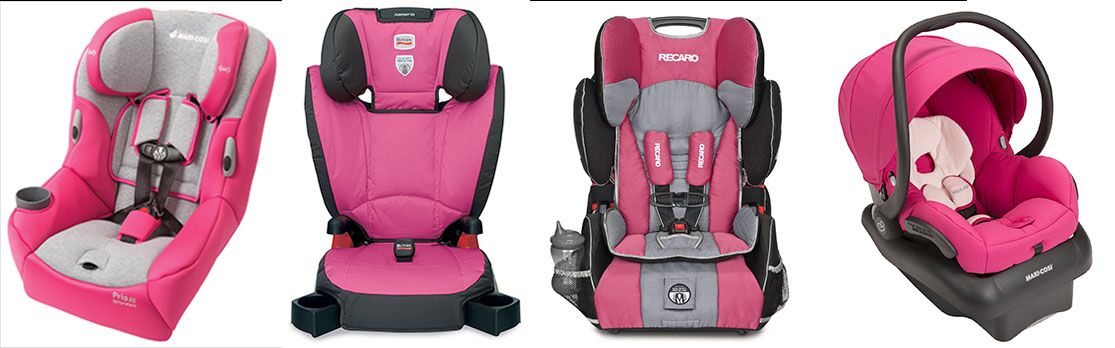
Best Car Seats for Baby Girls: Pink & Stylish Options for 2026
Find the best pink car seats for baby girls in 2026. We compare 5 genuinely pink and purple infant seats from Baby Trend, Graco, Safety 1st, and Diono - all with FMVSS 213 safety.