Affiliate Disclosure:Kid Sitting Safe is reader-supported. When you buy through links on our site, we may earn an affiliate commission at no additional cost to you. This does not influence our reviews or recommendations — we only recommend products we genuinely believe in.
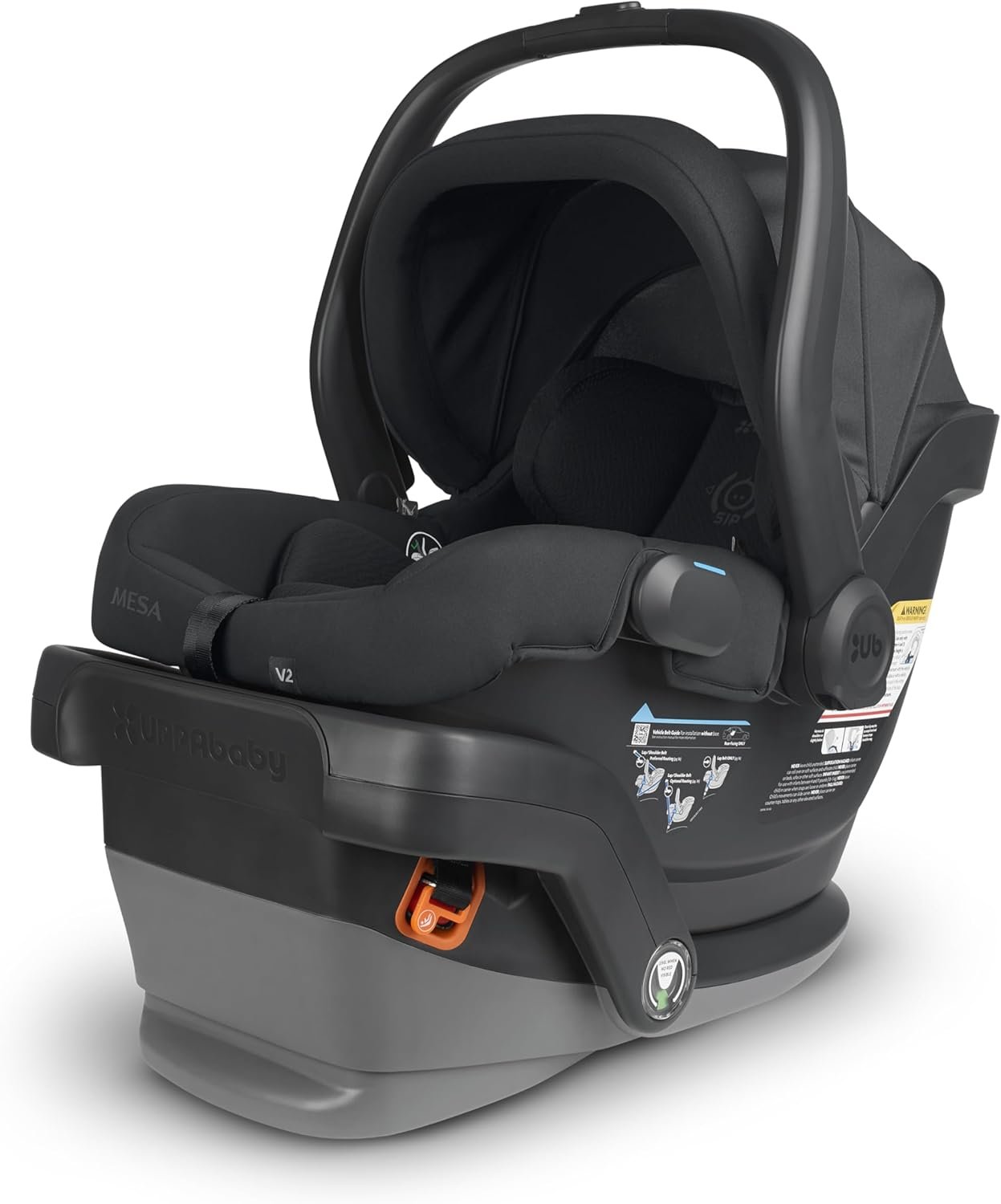
UPPAbaby Mesa V2
Best UppaBaby Mesa for valueThe outgoing generation, now that the V3 has taken over the flagship slot. Same lineage, fewer headrest positions, and a slightly higher 35 lb weight ceiling. Check availability before planning around it.
What We Like
- Self-retracting LATCH connectors for instant tightening
- Direct attachment to Vista and Cruz strollers - no adapters needed
- Premium fabrics with removable washable covers
- SmartSecure system with visual level indicator
What We Don't
- Higher price than equivalent competitors
- 35-pound weight limit may be reached sooner than some competitors
UppaBaby quietly rearranged its infant car seat lineup in mid-2025. The Mesa Max is gone, the original Mesa is gone, and what’s left is a two-tier setup: the Mesa V2 getting phased toward the back of the catalogue, and the Mesa V3 taking over as the flagship. Expect a price gap between them, depending on where you shop and which fabric you pick.
Most parents researching this seat don’t actually care which version Google sends them to. They want to know whether the UppaBaby Mesa is the right call for their family, full stop. So that’s the framing for this review. We’ll cover both versions, flag where they differ, and put the whole package in context against the Nuna Pipa RX, Clek Liing, and Chicco KeyFit 35. Note that the Chicco KeyFit Max ClearTex has succeeded the KeyFit 35 as Chicco’s current infant flagship (adds an integrated anti-rebound bar, drops the rear-facing cap from 35 to 30 lbs, and meets FMVSS 213a plus 213b); the comparison data below remains accurate for the KeyFit 35 itself.
A note on what this review is and isn’t. We haven’t tested either Mesa hands-on. What follows is a synthesis of UppaBaby’s published specifications, BabyGearLab’s independent crash testing of both the V2 and V3, Lucie’s List 2026 review, Strolleria’s V3 product breakdown, and the regulatory framework set by FMVSS 213 and AAP rear-facing guidance. Credit and links are inline throughout.
At a Glance: V2 vs V3 vs Alternatives
| UppaBaby Mesa V2 | UppaBaby Mesa V3 | |
|---|---|---|
| Position in lineup | Outgoing generation | Current flagship (released July 2025) |
| Carrier weight (UppaBaby stated) | 9.9 lbs | 9.9 lbs |
| Carrier weight (BabyGearLab measured) | 10.5 lbs | 10.9 lbs |
| Weight range | 4 to 35 lbs | 4 to 30 lbs |
| Height limit | 32 inches | 32 inches |
| Headrest positions | 4 | 25 |
| No-rethread harness | Yes | Yes |
| Load leg | No | No |
| Anti-rebound bar | No | No |
| Self-retracting LATCH (SmartSecure) | Yes | Yes (rebranded SMARTSecure) |
| Canopy | UPF 50+ | UPF 50+ with extendable sunshade and magnetic peek-a-boo window |
| Direct stroller fit | Vista, Cruz | Vista, Cruz, Minu (with adapter), Ridge (with adapter) |
| FAA-approved | Yes | Yes |
The V3 isn’t a redesign. It’s an iteration. Same chassis, same harness mechanism, same base style, with a more granular headrest, a longer canopy, and a few quality-of-life upgrades like magnetic buckle holders and a magnetic peek-a-boo window cover. If you’ve used a V2, you’ll find the V3 immediately familiar.
Where the Mesa Wins
Installation is genuinely easy
This is the part where every reviewer agrees. The Mesa’s SmartSecure (V2) / SMARTSecure (V3) base uses self-retracting LATCH connectors that ratchet themselves tight when you push down on the base with your body weight. There is a green level indicator window on the side that turns green when the recline angle is correct, and a separate green tightness indicator that confirms the LATCH is tensioned to spec.
NHTSA, the federal agency that publishes Ease-of-Use ratings, has historically given the UppaBaby Mesa lineup top marks for labels, instructions, securing the child, and installation features. NHTSA’s ratings measure how easy a seat is to use correctly, not how it performs in a crash. Those are two different questions, and the Mesa is exceptionally good at the first.
Lucie’s List puts it like this: “push the base down with your body weight and BAM! He’s done.” That maps to what BabyGearLab found in formal testing too, where the LATCH installation scored 7.5 out of 10 on the V3, well above average for the price tier.
Stroller integration on UppaBaby Vista and Cruz
If you already own (or intend to buy) an UppaBaby Vista or Cruz stroller, the Mesa is the only infant car seat on the market that clicks directly into those frames without an adapter. No third-party clip, no extra hardware, no adapter that you have to remember to bring with you. The carrier just drops in.
That matters more than the spec sheet implies. Adapters get lost. They rattle. They add a few seconds of fumbling to every trip in or out of the car. With the Mesa on a Vista, you lift the carrier, click it onto the frame, and walk. The V3 extends this compatibility to the UppaBaby Minu travel stroller and the Ridge jogger with adapters, which the V2 doesn’t support natively.
If you don’t own an UppaBaby stroller and don’t plan to, this advantage evaporates. Most other premium infant seats fit a similar number of stroller frames via adapters anyway.
Build quality and fabric options
UppaBaby’s MerinoWool and CleanTech fabric collections sit above what most competitors offer at this price point. The fabrics are flame-retardant-free (UppaBaby uses naturally fire-resistant materials and a fabric structure that meets the federal flammability standard without chemical additives), removable, and machine washable. For families with skin sensitivities or chemical concerns, this is a meaningful difference from seats that rely on standard treated polyester. Lucie’s List flags this as one of the Mesa’s strongest selling points.
Where the Mesa Falls Short
This is where the review has to be honest, because we’re talking about child safety and “everyone says it’s a great seat” isn’t enough.
Independent crash testing puts it below average
BabyGearLab runs its own crash testing on top of the federal FMVSS 213 standard, using a sled rig that simulates a 35 mph frontal collision, and measures Head Injury Criterion (HIC) and chest acceleration. The federal standard sets minimum thresholds. BabyGearLab’s protocol applies tougher thresholds and ranks seats relative to each other.
In that testing, the Mesa V3 scored 5.1 out of 10 on the crash test metric, ranking 11th out of 15 seats. BabyGearLab notes the V3 “doesn’t do much to improve on the UPPAbaby Mesa v2, which wasn’t all that impressive either”, and that “the v3 doesn’t improve on the crash test results”. Of the V2, BabyGearLab’s reviewers wrote that “the HIC or head sensor result was one of the highest in the group (lower is better)” and that “the chest clip sensor results were also higher than the average.”
To be clear about what this does and doesn’t mean:
- It does not mean the seat is unsafe or that it fails federal regulation. It passes FMVSS 213, the binding US standard.
- It does mean that, in independent testing designed to differentiate between federally-compliant seats, the Mesa transferred more force to the head and chest sensors than competitors at similar or lower price points.
- Seats that scored higher in the same BabyGearLab testing include the Nuna Pipa RX, Britax Willow S, and the Chicco KeyFit 30.
If you’re buying primarily on independent crash test performance, the Mesa is not the strongest pick at its price. If you’re weighing crash test results against installation ease (where the Mesa is at the top of the league) and stroller integration (where it’s category-leading on UppaBaby frames), the calculation gets more nuanced.
No load leg, no anti-rebound bar
Both the V2 and V3 omit two structural safety features that competing premium seats include. A load leg is a metal extension that runs from the base to the vehicle floor, transferring crash forces away from the child. An anti-rebound bar is a foam-padded bar that sits behind the base and prevents the seat from rotating up and back during the rebound phase of a crash.
Neither feature is federally required. Plenty of seats do well in crash testing without them. But at the Mesa’s price tier, they’re table stakes among true premium competitors: Nuna Pipa RX, Clek Liing with ARB base, and Cybex Aton 2 all include both. UppaBaby’s discontinued Mesa Max actually had a load leg base, which is one reason older review articles still recommend it. That model is a previous generation, and its load leg base is not compatible with the V2 or V3.
Belt installation is awkward
If you’re installing the Mesa using the vehicle seat belt instead of LATCH (necessary in the centre rear seat of many cars, and required for some baseless installs), the experience is significantly harder than using LATCH. BabyGearLab scored the V3’s belt installation 4.0 out of 10, calling out a small belt lock-off that requires significant force to engage.
For most families this is a non-issue because you’ll install via LATCH and leave the base in the car. But if you take Ubers, share the seat across two cars without buying a second base, or use the centre rear position, factor this in.
Carrier is on the heavier end
UppaBaby states 9.9 lbs for both V2 and V3 carriers. BabyGearLab measured 10.5 lbs for the V2 and 10.9 lbs for the V3. We’ve cited the discrepancy because, with a baby in the seat, you’re carrying around 18 to 20 lbs total. A pound’s difference between brands gets noticed by month four. The Nuna Pipa RX comes in lighter, as does the Clek Liing. If wrist or back issues are part of your calculation, factor that in.
Specifications and What’s in the Box
Both Mesa V2 and V3 ship with the carrier, the SmartSecure / SMARTSecure base, an infant insert designed for newborns, and the canopy. UppaBaby specifies:
- Weight range: 4 to 35 lbs (V2) or 4 to 30 lbs (V3)
- Height limit: 32 inches (both)
- Carrier dimensions (V3, per UppaBaby): 25.8” L × 17” W × 23” H
- Base dimensions (V3, per UppaBaby): 20.8” L × 14.5” W × 9.8 to 12.8” H (adjustable)
- Harness: 5-point, no-rethread
- Recline positions: 4 (both)
- Headrest positions: 4 (V2), 25 (V3)
- European belt routing for baseless installation in the carrier itself
- FAA-approved for use on aircraft
Per the American Academy of Pediatrics’ 2018 guidance, children should remain rear-facing until they reach the maximum height or weight rating of their car seat, with no age-based cutoff. For the Mesa V3, that means most babies will outgrow this seat in height before they hit 30 lbs, and parents should plan to transition to a convertible seat somewhere between 9 and 18 months depending on the child’s growth pattern.
How the Mesa Compares to Alternatives
If you’re cross-shopping, these are the seats that come up most often in the same searches. Spec figures sourced from each manufacturer’s product pages.
| Mesa V3 | Nuna Pipa RX | Chicco KeyFit 35 | Clek Liing | |
|---|---|---|---|---|
| Carrier weight (stated) | 9.9 lbs | 8.0 lbs | 9.6 lbs | 9.0 lbs |
| Weight range | 4 to 30 lbs | 4 to 32 lbs | 4 to 35 lbs | 4 to 35 lbs |
| Load leg | No | Yes | No | Yes (with ARB base) |
| Anti-rebound bar | No | Optional | Yes | Yes |
| Self-tightening LATCH | Yes | Yes (rigid) | No | Yes (rigid) |
| Direct UppaBaby fit | Yes | No (adapter) | No (adapter) | No (adapter) |
| BabyGearLab crash score | 5.1/10 | Above average | Above average | Above average |
If your priority is the easiest installation in any car and tight integration with an UppaBaby stroller, the Mesa wins. If your priority is crash test performance backed by independent testing plus structural safety extras like load legs, the Nuna Pipa RX and Clek Liing are stronger choices. The Chicco KeyFit 35 sits below the Mesa on price and matches or beats it on independent crash testing, with a less premium fabric package.
Who Should Buy the Mesa V3
- You’re buying an UppaBaby Vista or Cruz stroller anyway. The direct-fit advantage isn’t theoretical. Adapters get lost; integrated systems don’t.
- You want the easiest install of any seat at this price. NHTSA Ease-of-Use ratings exist for a reason, and the Mesa earns them.
- Fabric matters to you. Flame-retardant-free, machine washable, and Merino options put this above most competitors.
- Independent crash test scores are not your top filter. All seats sold in the US pass FMVSS 213, but if you want the higher independent scores too, you’re looking elsewhere.
Who Should Buy the Mesa V2 Instead
- You don’t need the V3’s larger canopy or 25-position headrest. The four-position headrest on the V2 is sufficient for most families.
- You want the higher 35 lb weight limit. Slightly more headroom before transitioning to a convertible.
- You want to save money. The V2 is the previous generation, so it’s the one that gets discounted. Check availability before you plan around it, because UPPAbaby’s own lineup has moved on to the V3.
Who Should Look Elsewhere
- You want a load leg or anti-rebound bar. Look at the Nuna Pipa RX, Clek Liing with ARB, or Cybex Aton 2.
- You want the lightest carrier. The Nuna Pipa RX and the Doona (a different category, but worth knowing about) are lighter.
- Independent crash test data is your primary filter. The BabyGearLab top tier is currently the Britax Willow S and the Nuna Pipa RX.
- You don’t own an UppaBaby stroller. The Mesa’s biggest functional advantage doesn’t apply to you.
Final Verdict
The UppaBaby Mesa V3 is a competent, well-built, beautifully finished infant car seat. It’s the easiest to install of any premium option, it integrates seamlessly with the UppaBaby ecosystem, and the fabric package is genuinely class-leading. Most families who buy it will be happy with it.
It is not, however, the best in class on independent crash test performance, and it lacks structural safety features that competitors at this price include. That’s a fair trade-off for some buyers and a deal-breaker for others. The decision comes down to which axis you weight more heavily.
Whichever way you go on V2 vs V3, the comparison that actually matters is Mesa vs Nuna Pipa RX vs Clek Liing vs Chicco KeyFit. If you’ve narrowed it down to “an UppaBaby” and you’re choosing between V2 and V3, pick the V3 unless the price gap is a problem, in which case the V2 is a perfectly good seat that gets you most of the way there.
For more on UppaBaby’s design philosophy, see How UppaBaby Car Seats Meet the Highest Standards and Inside UppaBaby’s CleanTech Fabric Collection. If you’d like to weigh the brand against its closest competitor, Nuna vs UppaBaby covers the head-to-head.
Also Consider
Nuna Pipa RX
Best alternative if crash test data mattersPremium alternative with a true load leg and stronger independent crash test scores.
What We Like
- Rigid LATCH with integrated load leg for enhanced stability
- Exceptionally lightweight at 7.6 pounds for easy carrying
- Dream drape canopy provides full coverage and sun protection
- Installs with a vehicle belt and no base, which suits taxis and rideshares
- Flame resistant with no added fire retardant chemicals, GREENGUARD Gold certified
What We Don't
- High price point compared to competitors
- Weight limit of 30 pounds is lower than most infant seats, which now reach 32-35 lbs
- Rear-facing only, so it is outgrown sooner than a convertible
Chicco KeyFit Max ClearTex Infant Car Seat
Best alternative on a budgetChicco's current infant flagship, succeeding the KeyFit 35. Adds an integrated anti-rebound bar (which the Mesa lacks) and meets both FMVSS 213a and 213b.
What We Like
- Integrated anti-rebound bar (the upgrade over the KeyFit 35 line) adds ~1.5 inches of legroom and reduces forward rotation in a frontal crash
- SuperCinch push-on lower LATCH connectors make a tight installation achievable with minimal force
- Integrated European belt routing for secure baseless installation in taxis, rideshares, or grandparent cars
- 5-position no-rethread harness with an extra inch of headroom vs the KeyFit 30
- Meets FMVSS 213b frontal impact standard and FMVSS 213a side impact standard; GREENGUARD Gold and Baby Safety Alliance verified; FAA approved
What We Don't
- Heavy carrier at 10 lbs, tiring for parents carrying it daily
- Canopy needs two hands to extend fully
- Belt threading under the guides is tedious for baseless installation
- No load leg (a feature Cybex, Nuna, and UPPAbaby offer at higher price points)
Clek Liing
Best alternative for the easiest installRigid LATCH and a load leg make installation almost foolproof, in a different price tier from the Mesa.
What We Like
- Metal load leg construction provides superior stability
- Rigid LATCH connectors for secure installation
- 9-year expiry, longer than most infant seats
- Compact footprint fits well in smaller vehicles
What We Don't
- Premium pricing compared to competitors
- Limited color and fabric options available
Sources & Research
Continue Reading
Explore more car seat reviews content or browse our other categories.
Frequently Asked Questions
- Should I buy the UppaBaby Mesa V2 or V3?
- Buy the V3 if you want the newer canopy, magnetic peek-a-boo window, and 25-position headrest, and you can stomach the higher price. Buy the V2 if you can still find one, want the same brand and ecosystem benefits for less, and would prefer the higher 35 lb weight limit over the V3's 30 lb. It is the outgoing generation, so check availability first. Both attach directly to UppaBaby Vista and Cruz strollers without adapters.
- Is the UppaBaby Mesa Max still being sold?
- No. UppaBaby has retired the Mesa Max from the current lineup. The lineup is now the Mesa V2, the outgoing generation, and the Mesa V3, the current flagship, released July 2025. If you see a Mesa Max listed, it is either old stock or a relisting. The Mesa Max's load leg base is not compatible with the V2 or V3.
- Does the UppaBaby Mesa pass FMVSS 213?
- Yes. Every infant car seat sold in the United States must comply with Federal Motor Vehicle Safety Standard 213, the federal regulation that sets minimum performance requirements for child restraints. The UppaBaby Mesa V2 and V3 both meet FMVSS 213. Independent testers like BabyGearLab apply additional, harder tests on top of the federal minimum, and the Mesa scores below average in those tests despite passing the federal standard.
- Why does the Mesa V3 have a lower weight limit than the V2?
- The Mesa V3 is rated to 30 lbs versus the V2's 35 lbs. UppaBaby has not publicly explained the change, but in practice it rarely matters because most babies hit the 32 inch height limit before reaching either weight ceiling. Both seats expect you to transition to a convertible car seat at the height or weight limit, whichever comes first.
- Does the UppaBaby Mesa have a load leg or anti-rebound bar?
- No. Neither the Mesa V2 nor the Mesa V3 has a load leg or anti-rebound bar. Both rely on the seat shell, harness, and base alone. The discontinued Mesa Max did have a load leg base, which is one reason it is sometimes still recommended on older blog posts. If a load leg is important to you, the Nuna Pipa RX, Clek Liing with ARB, or Cybex Aton 2 are alternatives.
Written By
Kid Sitting Safe
Our team researches car seat safety standards, crash test data, and real-world usability to help parents make the safest choice.
Related Articles
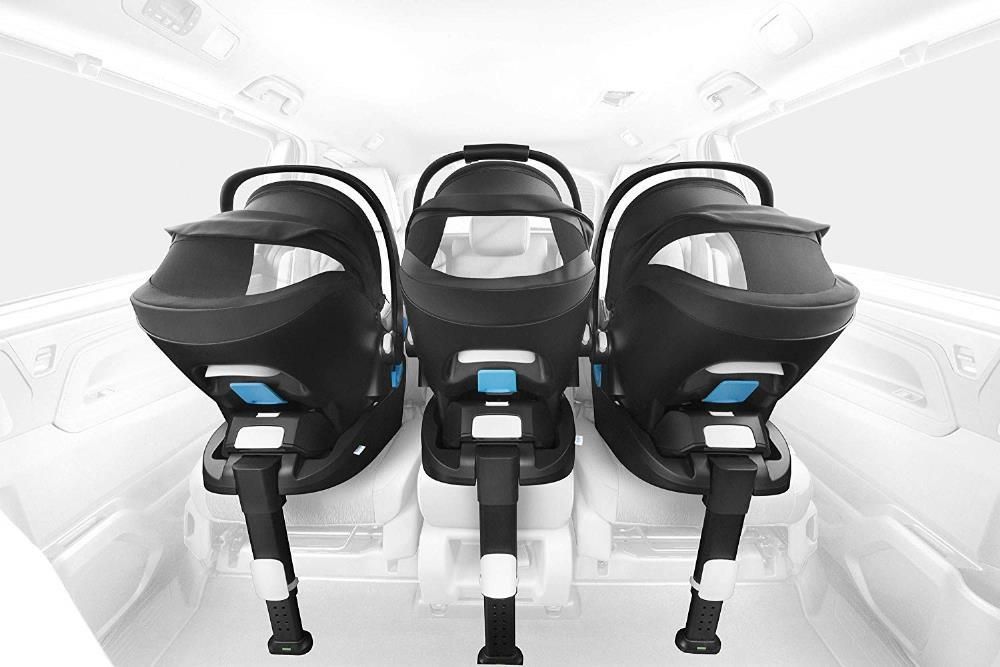
Clek Liing Review: Is This Premium Infant Seat Worth It?
In-depth Clek Liing infant car seat review. We analyze the rigid LATCH, European safety features, and premium construction to see if it's worth the investment.
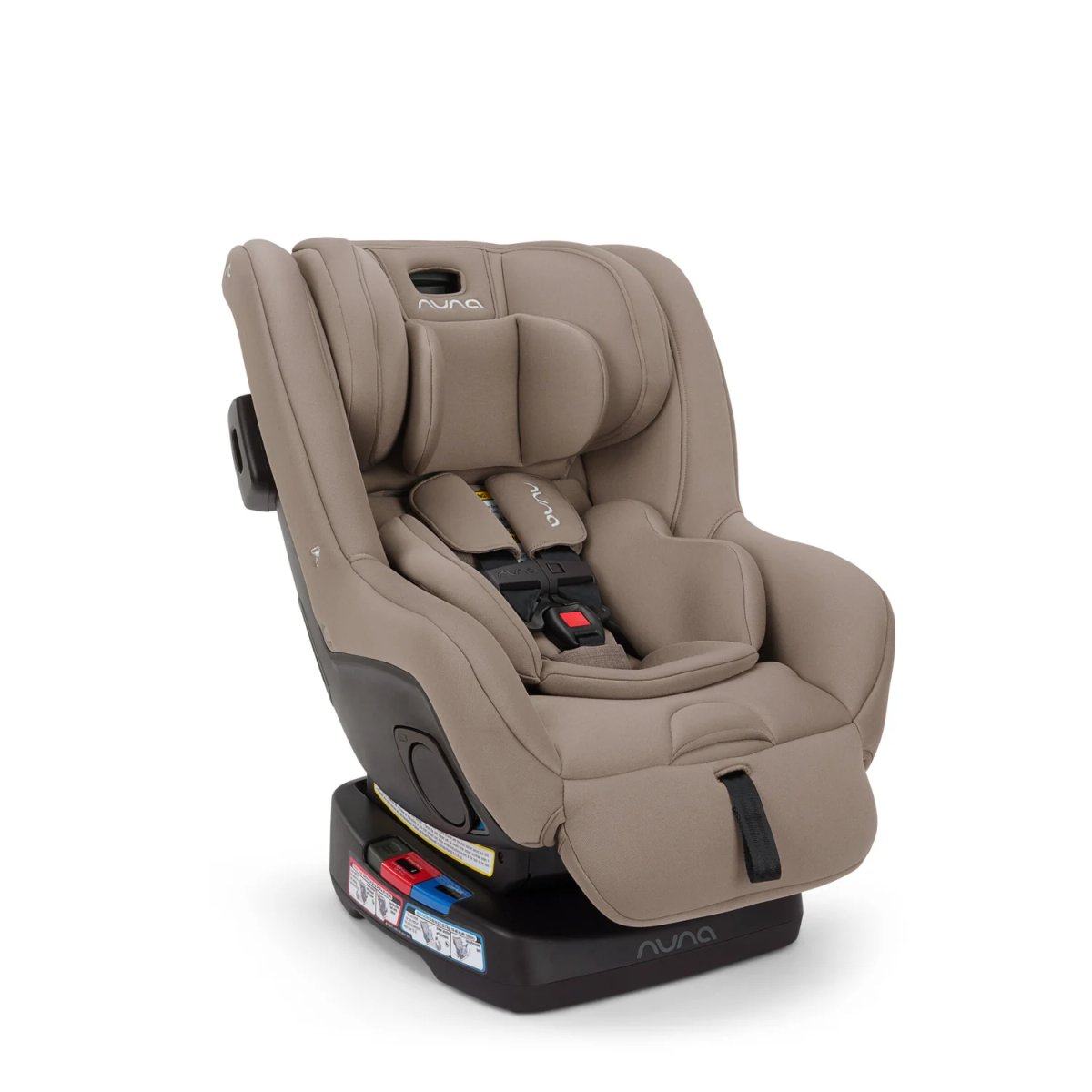
Nuna RAVA Review: Is This Luxury Convertible Seat Worth It?
Our Nuna RAVA review examines the premium convertible car seat's flame-retardant-free fabrics, extended rear-facing capability, and safety features. Is it worth the investment?
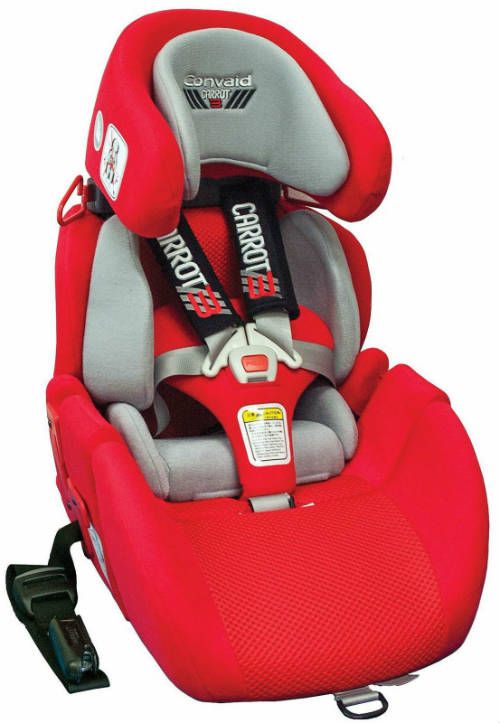
Best Car Seats for Special Needs Children: Roosevelt, Carrot & More
Specialized car seats for children with special needs. Compare Roosevelt, Carrot, and other adaptive car seats designed for medical needs, positioning support, and higher weight limits.