Affiliate Disclosure:Kid Sitting Safe is reader-supported. When you buy through links on our site, we may earn an affiliate commission at no additional cost to you. This does not influence our reviews or recommendations — we only recommend products we genuinely believe in.
Car seat covers serve multiple purposes: protecting your baby from harsh weather, providing privacy for naps, blocking harmful UV rays, and adding a personal touch to your gear. But not all covers are created equal - and some can even compromise safety if used incorrectly. Understanding the different types of car seats helps you choose a cover that fits your specific seat properly.
This guide covers how to choose a car seat cover, from winter insulation to summer sun protection. Every product here was checked against a live listing, and where a manufacturer’s “universal fit” claim turns out to be narrower than it sounds, that’s called out rather than repeated.
Quick Comparison: Top Car Seat Covers
| Cover | Rating | Best For | Price Tier | Weather | Material |
|---|---|---|---|---|---|
| Cozy Cover Premium | 4.5/5 | Winter | Budget | Cold/Snow | Polar fleece |
| Evenflo Weather Shield | 4/5 | Rain/Wind | Budget | Rain/Wind | Mesh and clear panel |
| Copper Pearl Canopy | 4.6/5 | Style | Budget | Sun/Moderate | Rayon blend |
| Skip Hop Stroll & Go | 4.4/5 | All-Season | Mid-Range | All weather | Nylon/Fleece |
| Jolly Jumper Arctic | 4.2/5 | Budget Winter | Budget | Cold | Fleece-lined |
Ratings are our editorial assessment, weighing published specs, manufacturer documentation and independent reviewer consensus. We don’t test products ourselves.
Safety First: Never use a cover that requires threading harness straps through non-standard openings. According to the AAP, no material should ever be placed between your child and the car seat harness. Always ensure covers fit loosely enough that they don’t compress in a crash.
Types of Car Seat Covers
Winter/Weather Covers
Designed for cold climates, these covers provide insulation while allowing the car seat to function normally. Key features include:
- Water-resistant outer shell to repel snow and rain
- Fleece or quilted lining for warmth
- Zipper or flap openings for easy access
- Elastic edges for secure fit around the car seat
Canopy Covers
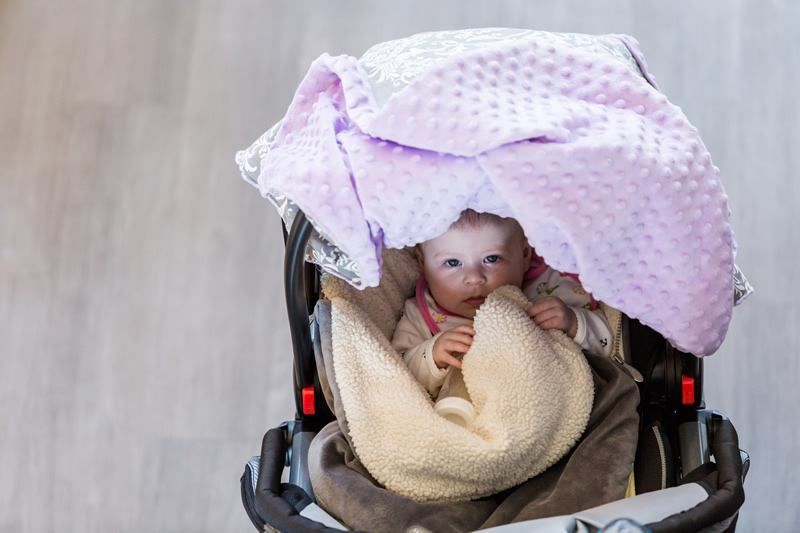
Stretchy fabric covers that attach to the car seat handle, primarily serving as:
- Sun protection (look for UPF 50+ rating)
- Privacy shields for napping babies
- Nursing covers that double as car seat covers
- Style accessories with trendy patterns
Rain and Weather Shields
Clear or tinted plastic covers that protect from rain, wind, and snow while maintaining visibility:
- Ventilation holes to prevent fogging and overheating
- Clear viewing windows to check on baby
- Waterproof seams to keep moisture out
Best Winter Cover: Cozy Cover Premium
The Cozy Cover has been a bestseller for over a decade, and for good reason. Its universal design fits virtually every infant car seat on the market while providing serious cold-weather protection. The Premium is the trim currently sold; it’s the same cover with a polar fleece lining.
Key Features
- Dual-zipper design allows you to open just the top for peeking at baby
- Weather-resistant nylon exterior repels snow and light rain
- Polar fleece interior for genuine cold-weather use
- Universal fit works with Chicco, Graco, Britax, UPPAbaby, and more - see our best convertible car seat picks for compatibility
Temperature Guidelines
Per AAP guidelines, babies should not wear bulky clothing in car seats as it can compress in a crash, leaving harness straps too loose. The Cozy Cover solves this by providing warmth outside the harness system - allowing babies to wear thin layers underneath while staying toasty.
Best Rain/Wind Protection: Evenflo Infant Car Seat Weather Shield
Rain covers are the accessory most likely to cook a baby, so the ones worth having vent rather than seal. Evenflo’s shield does that, and it comes from a car seat manufacturer rather than an anonymous seller, which counts for something on a product that wraps a carrier.
Design Benefits
- Clear front window with a zippered opening, so you can reach your baby without stripping the whole cover off
- Mesh side panels vent continuously instead of relying on a few punched holes
- Velcro top flap opens around the carrier handle
- Elastic edge stretches over the base of the seat, and comes off just as quickly
What “universal” means here
Evenflo describes the size as universal across its own infant car seats. That isn’t the same as universal across brands, so check it against your seat before you count on it in bad weather. It’s also a rain and wind cover, not an insulated one, so it won’t stand in for a winter cover.
Installation Tip: Always ensure weather shields don’t interfere with the car seat handle mechanism. Test raising and lowering the handle with the shield attached before relying on it in bad weather.
Best Style/Fashion: Copper Pearl Car Seat Canopy
For style-conscious parents, the Copper Pearl canopy offers fashion without compromising function.
Why Parents Love It
- Multi-use design works as car seat cover, nursing cover, and shopping cart cover - ideal for travelling with kids
- Stretchy fabric fits snugly without fasteners
- Breathable rayon blend keeps air moving, though Copper Pearl publishes no UPF rating for it
- Trendy patterns coordinate with diaper bags and nursery decor
Safety Considerations
Unlike structured weather covers, canopy covers don’t provide crash protection - they’re purely for shade, privacy, and style. Never rely on a canopy cover for warmth in cold weather, and don’t treat an unrated stretch fabric as sun protection. See the UPF section below.
Best All-Season Cover: Skip Hop Stroll & Go
If you want one cover that handles varied weather, the Skip Hop Stroll & Go adapts to conditions.
Versatility Features
- Zip-away front panel converts from winter to spring mode
- Water-resistant shell handles unexpected rain
- Fleece lining provides warmth when needed
- Mesh ventilation panels prevent summer overheating
Best Budget Winter Cover: Jolly Jumper Arctic Sneak-a-Peek
You don’t need to spend a lot for effective cold-weather protection. The Jolly Jumper Arctic delivers essential features at a budget price.
Value Features
- Peek-a-boo window to check on baby without unzipping
- Universal elastic fit works with most infant seats
- Machine washable for easy maintenance
- Wind and water resistant outer shell
Safety Guidelines for Car Seat Covers
AAP Recommendations
The American Academy of Pediatrics provides specific guidance on car seat covers:
-
Never use between baby and harness: According to the AAP, no material should ever be placed between your child and the car seat harness.
-
Avoid bulky clothing: Thick coats, snowsuits, and bunting can compress in a crash, leaving harnesses too loose. Use thin layers with an external cover instead.
-
Monitor temperature: The AAP warns that overheating is a risk factor for SIDS. Ensure adequate ventilation, especially with covers that enclose the seat.
-
Check harness fit: With any cover installed, verify that you can still pinch no excess webbing at the collarbone and that the chest clip is at armpit level. Review our 8 essential car seat safety tips for a comprehensive safety checklist.
Installation Best Practices
-
Test fit before first use: Install the cover and verify it doesn’t interfere with handle operation, base attachment, or canopy movement.
-
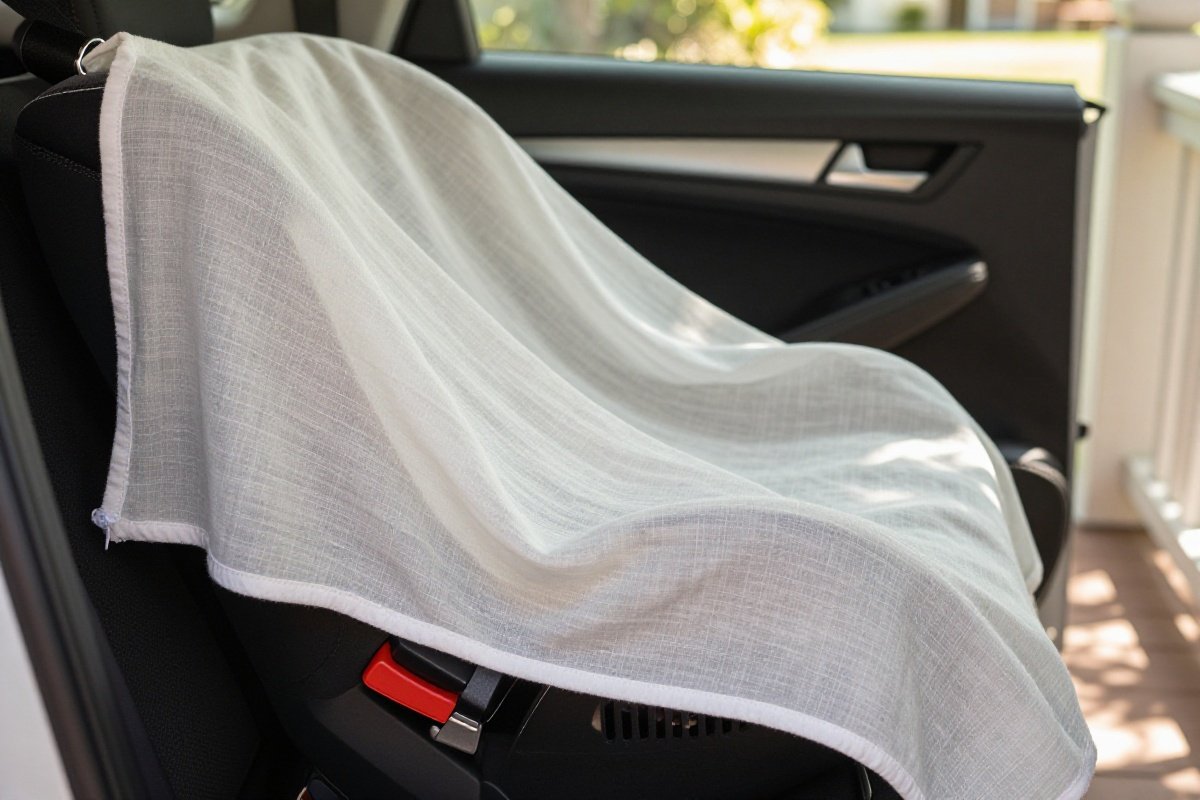
Secure loose fabric: Ensure no part of the cover can come loose and cover your baby’s face.
-
Verify airflow: With weather covers fully zipped, check that your baby can breathe normally and the interior doesn’t become humid.
-
Remove for crash protection: While covers are generally safe, the car seat was crash-tested without aftermarket accessories. In a collision, any added material has unknown effects.
Aftermarket Accessories and FMVSS 213 Compliance
Understanding federal safety standards is essential when evaluating car seat covers. According to NHTSA, car seats are only tested with manufacturer-approved accessories, which means aftermarket covers have not undergone the same rigorous testing as the seats themselves.
FMVSS 213 establishes crash-test requirements for all child restraint systems sold in the United States. These tests involve a 30-mph frontal sled test - but testing is performed with the car seat alone, not with additional covers attached.
When you add an aftermarket cover, you introduce untested variables. The cover material may compress differently than expected, potentially altering how the harness restrains your child. The added bulk could create air pockets that collapse during impact.
Key compliance considerations:
- Manufacturer approval: Some manufacturers list approved covers that won’t void warranties
- Warranty implications: Using unapproved accessories may void your car seat’s warranty - check car seat expiration dates too
- Testing gap: No federal agency crash-tests aftermarket covers with every car seat model
Critical safety note: NHTSA’s National Child Restraint Use Special Study put the combined misuse rate for car seats and boosters at 46%, counting installation and how the child is restrained. Adding accessories without knowing how they affect the fit only adds to that.
Crash Physics: How Covers Affect Protection
In a collision, your vehicle decelerates rapidly while your child’s body continues moving forward. The car seat’s job is to absorb and distribute these forces safely - but aftermarket covers can interfere with this protective mechanism.
Car seats are engineered with specific “ride-down” characteristics. The seat shell flexes and energy-absorbing materials compress to gradually slow your child’s body. When you add a thick, compressible cover between the seat and your child, you introduce an uncontrolled variable into this system.
Potential crash safety concerns include:
- Harness slack: Compressible materials can create slack in harness straps
- Misalignment: Bulky covers may shift your child’s position
- Material interaction: Some fabrics may be more slippery than seat upholstery
- Side-impact interference: Thick covers may prevent side wings from functioning properly
According to the AAP, no material should ever be placed between your child and the car seat harness. This guidance exists specifically because crash dynamics research shows that any added material can compromise protection.
SIDS Prevention and Temperature Regulation
Sudden Infant Death Syndrome (SIDS) remains a leading cause of death for infants under one year. The AAP warns that overheating is a risk factor for SIDS, making temperature regulation critical.
Infants cannot regulate their body temperature as effectively as adults. A cover that feels comfortable to your touch may create a dangerously warm microenvironment.
Temperature regulation guidelines:
- Monitor your baby’s skin: Check the back of your baby’s neck regularly
- Dress appropriately: Use thin, breathable layers underneath covers
- Adjust for conditions: Remove covers when entering warm buildings
- Never cover the face: Ensure covers never obstruct airflow
Car seat covers that fully enclose the seat can create greenhouse-like conditions. Warning signs of overheating include: flushed skin, sweating, rapid breathing, and listlessness. If you notice these signs, remove your baby from the seat immediately.
UV Protection and Infant Skin Safety
Infant skin is significantly more vulnerable to UV damage than adult skin. According to The Skin Cancer Foundation, just one blistering sunburn in childhood doubles the lifetime risk of melanoma.
The Skin Cancer Foundation recommends UPF 50+ protection for infants, which blocks 98% of UV radiation. Many car seat canopy covers advertise sun protection, but not all provide adequate UPF ratings.
Understanding UPF ratings:
- UPF 15-24: Good protection (blocks 93-95% of UV)
- UPF 25-39: Very good protection (blocks 96-97% of UV)
- UPF 40-50+: Excellent protection (blocks 98%+ of UV)
Standard cotton muslin provides approximately UPF 5-7 - better than nothing but insufficient for extended sun exposure.
UV protection best practices:
- Use UPF-rated covers whenever sun exposure is possible
- Don’t rely on car windows for protection - standard glass blocks UVB but not UVA
- Position canopies to shade your baby’s face and neck
Material Safety and Chemical Concerns
Beyond crash safety and temperature regulation, car seat cover materials present health considerations. Many fabrics are treated with chemical flame retardants, and some contain plasticizers like phthalates.
While car seat covers are not subject to the same chemical regulations as children’s sleepwear, many manufacturers voluntarily treat fabrics with flame-resistant chemicals.
Chemical concerns to consider:
- Flame retardants: Some older formulations contained PBDEs, now largely phased out
- Phthalates: Used to soften plastics in clear weather shields
- Formaldehyde: Used in wrinkle-resistant fabric treatments
Material safety tips:
- Look for OEKO-TEX certified fabrics, tested for harmful substances
- Choose natural fibers (organic cotton, wool) when possible
- Wash new covers before first use to remove manufacturing residues
Step-by-Step Safety Check
Before using any car seat cover, work through this verification. NHTSA’s National Child Restraint Use Special Study put the combined misuse rate for car seats and boosters at 46%.
Pre-installation inspection:
- Verify the cover is designed specifically for car seats - not a blanket
- Check that the cover doesn’t require threading harness straps through unapproved openings
- Confirm compatibility with your specific car seat model
- Inspect for damage or malfunctioning zippers
Installation verification:
- Install the cover without your baby in the seat
- Verify the car seat handle still moves freely
- Check that base attachment remains accessible
- Ensure ventilation openings aren’t blocked
Harness system check:
- Place your baby in the seat and adjust harness normally
- Verify you can fit no more than one finger under harness straps
- Ensure the chest clip remains at armpit level
- Perform the “pinch test” - if you can pinch excess strap material, straps are too loose
When to Avoid Covers Entirely
While car seat covers provide genuine benefits, there are specific situations where using them creates unacceptable risk.
Never use covers when:
- Your baby shows signs of illness or fever: Overheating is especially risky when body temperature is elevated
- Temperatures exceed 75°F: Even breathable covers can trap heat in warm conditions
- You’re in a moving vehicle with poor airflow: Covers can cause problems in slow traffic with windows closed
- Your baby has respiratory issues: Conditions like asthma require maximum airflow
- The cover restricts your view: You must be able to see your baby’s face
High-risk situations requiring extra caution:
- Premature infants: Preemies have even more difficulty regulating body temperature
- Very young newborns: Babies under 3 months are at highest SIDS risk
- Long car rides: Extended time in covered seats increases overheating risk
Remember: According to the AAP, no material should ever be placed between your child and the car seat harness. If a cover requires you to loosen harness straps significantly, do not use it.
Further Reading
- Best Car Seat Protectors: Reviews & Buying Guide for 2026
- Car Seat Installation: A Complete Guide for Parents
- Car Seat After Accident: When to Replace & Insurance Coverage
Seasonal Usage Guide
Winter (Below 40°F)
- Use insulated winter covers with fleece lining
- Dress baby in thin layers (long-sleeve onesie, pants, socks)
- Add a hat that doesn’t interfere with harness
- Pre-warm the car seat indoors when possible
Spring/Fall (40-65°F)
- Lightweight weather covers or canopy covers
- Long pants and long-sleeve shirt
- Light jacket that doesn’t require removal for car seat
Summer (Above 65°F)
- Breathable canopy covers for sun protection
- Never use insulated covers
- Check seat temperature before placing baby
- Use sun shades on car windows
Recommended Products
Cozy Cover Premium Infant Car Seat Cover
Best winter coverThe best-selling winter car seat cover trusted by parents in cold climates for over a decade.
What We Like
- Universal fit for most infant car seats
- Weather-resistant outer shell with warm fleece lining
- Machine washable for easy cleaning
- Dual zipper design for quick access to baby
What We Don't
- May be too warm for mild weather
- Limited color selection
Evenflo Infant Car Seat Weather Shield
Best rain/wind protectionA cheap, sensible rain and wind cover from a car seat manufacturer rather than a generic seller. Mesh side vents and a zippered window mean you can keep the weather off without sealing the carrier, which is the thing that matters most on an enclosed cover.
What We Like
- Clear front window with a zippered opening to reach the baby
- Mesh side panels ventilate rather than sealing the seat
- Velcro top flap opens for the carrier handle
- Elastic edge stretches over the base of the seat in seconds
- Wipes clean
What We Don't
- Evenflo states universal fit across its own infant seats, not across other brands
- Clear panel can bead and blur in heavy rain
- Not insulated, so it is a rain and wind cover rather than a winter cover
Copper Pearl Car Seat Canopy
Best style/fashionThe fashion-forward choice for moms wanting style without sacrificing function.
What We Like
- Stylish designs match modern nursery aesthetics
- Stretchy fabric doubles as a nursing cover
- Universal fit for all infant car seats
- Multi-use, also covers shopping carts and high chairs
What We Don't
- Not weatherproof for rain
- Requires separate cover for cold weather
- No published UPF rating, so not a substitute for real sun protection
Skip Hop Stroll & Go Car Seat Cover
Best all-seasonVersatile all-season cover with excellent temperature control features.
What We Like
- Zip-away front panel for temperature control
- Wind and water resistant outer material
- Fleece lining for warmth
- Fits most major car seat brands
What We Don't
- Higher price point than basic covers
- Front panel zippers may jam with use
Jolly Jumper Arctic Sneak-a-Peek
Best budget winter coverExcellent value for cold weather protection with the convenient peek window feature.
What We Like
- Peekaboo window to check baby without removing cover
- Fleece lined for Canadian winter conditions
- Universal fit design
- Budget-friendly pricing
What We Don't
- Window flap may not seal tightly in wind
- Less durable than premium options
Sources & Research
Continue Reading
Explore more accessories content or browse our other categories.
Frequently Asked Questions
- Are car seat covers safe to use?
- Yes, aftermarket car seat covers are safe when used correctly. However, never use a cover that interferes with the car seat's harness system or requires threading straps through unapproved openings. Always ensure the cover fits loosely enough that it doesn't compress in a crash. Never use a cover between the baby and the harness straps. Only use covers designed specifically for car seats, not makeshift blankets.
- Can I use a car seat cover in the summer?
- Most insulated winter covers are too warm for summer use and may cause overheating. For summer, choose lightweight, breathable canopy covers made from cotton muslin or mesh materials that provide sun protection (UPF 50+) while allowing airflow. Never cover the entire car seat in hot weather - always ensure adequate ventilation. The AAP warns against overheating as a risk factor for SIDS.
- Do car seat covers fit all infant car seats?
- Most universal car seat covers are designed to fit the standard dimensions of popular infant car seats (Chicco KeyFit, Graco SnugRide, Britax B-Safe, etc.). However, covers may not fit properly on unusually shaped seats or larger convertible seats in rear-facing mode. Always verify compatibility with your specific car seat model before purchasing, and ensure the cover doesn't interfere with the car seat base or handle mechanism.
- How do I clean a car seat cover?
- Most fabric car seat covers are machine washable on gentle cycle. Always check the manufacturer's care label first. Use mild detergent and avoid bleach or fabric softeners. Air dry or tumble dry on low heat. Weather shields with plastic windows should be wiped clean with a damp cloth. Regular cleaning is important as car seat covers can harbor bacteria from spills and diaper leaks.
- What's the difference between a car seat cover and a canopy?
- A car seat canopy is a stretchy fabric cover that attaches to the car seat handle, primarily used for sun protection, privacy, and style. A car seat cover (winter/weather cover) is a structured cover that shields the entire seat from cold, wind, and rain. Canopies are typically used year-round, while weather covers are seasonal. Many parents own both for different purposes.
Written By
Kid Sitting Safe
Our team researches car seat safety standards, crash test data, and real-world usability to help parents make the safest choice.
Related Articles

Best Car Seat Accessories 2026: Mirrors, Protectors, and More
Expert-reviewed car seat accessories for 2026. Compare seat protectors, travel bags, and winter covers from Lusso Gear, Munchkin, and more. Safety-focused picks.

Best Car Seat Protectors: Reviews & Buying Guide for 2026
Protect your vehicle's upholstery with top-rated car seat protectors. Compare waterproof mats, grip-enhancing pads, and organizer backrests for infant and convertible car seats.