Affiliate Disclosure:Kid Sitting Safe is reader-supported. When you buy through links on our site, we may earn an affiliate commission at no additional cost to you. This does not influence our reviews or recommendations — we only recommend products we genuinely believe in.
What’s New
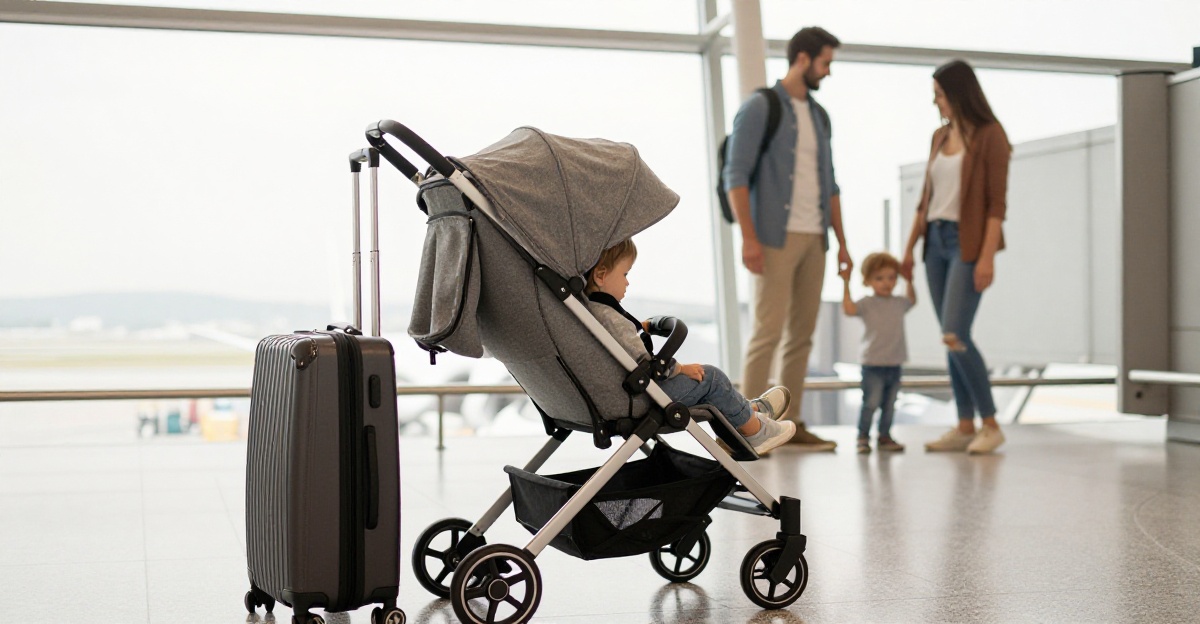
Maxi-Cosi has launched the Oxford Cabin Lightweight Travel Stroller, a model built specifically for air travel and compact storage. The announcement doesn’t reference a direct predecessor in the cabin stroller category, so there’s no prior model to compare it against. What we’re looking at is a dedicated overhead-bin-friendly pushchair meant to sit alongside a full-size stroller in your gear rotation, not replace it. It targets a specific pain point: the gate-check gamble. You know the routine. You hand over your stroller at the jet bridge, pray it doesn’t end up at your destination looking like it went through a cement mixer, and then wait for it while balancing a tired toddler on your hip. The Oxford Cabin skips that entire process by stowing overhead.
Specs
Let’s get to the numbers and construction details, because that’s what actually matters when you’re deciding if a travel stroller earns a spot in your luggage allowance.
Weight: 16 lbs. That’s light enough to hoist into an overhead bin one-handed, which is the whole point of a cabin stroller. If you’ve ever tried to lift a 25-pound travel system into a bin while holding a baby, you’ll appreciate the difference.
Fold: One-hand, self-standing fold. This is critical for airport transitions. You’re holding a baby, a boarding pass, and a diaper bag; you need a stroller that collapses without requiring three hands and a physics degree. It stands on its own when folded, so you aren’t leaning it against a terminal wall and watching it slide onto the floor.
IATA Compliance: The fold is IATA-compliant, designed to fit in most overhead bins. IATA sets the standard for airline luggage dimensions, but “most” isn’t “all.” You still need to check your specific airline’s overhead bin dimensions before you fly, because regional carriers and smaller aircraft have different capacity limits.
Car Seat Compatibility: The Oxford Cabin is compatible with Maxi-Cosi infant car seats to create a travel system. This is a significant feature if you’re flying with an infant who isn’t sitting independently yet. You can click the car seat onto the stroller frame, which means you aren’t carrying the seat through the airport by its handle. Maxi-Cosi hasn’t published which specific infant car seat models are compatible, so confirm that with the manufacturer before assuming your current seat will click in.
Comfort Features:
- Extendable canopy for shade and privacy
- Mesh seatback for airflow and ventilation
- EcoCare fabrics made from 100%-recycled materials
- Adjustable recline
- 3-position leg rest for growing kids
Included Accessories: Travel bag with backpack and carry straps, giving you two ways to carry it hands-free through the airport.
What’s Not Published: Maxi-Cosi hasn’t published the weight capacity, height range, or age recommendations for the Oxford Cabin yet. They also haven’t published specific folded dimensions beyond the IATA-compliance claim. For a travel stroller, the folded dimensions are the spec that determines whether this actually fits in the overhead bin of the aircraft you’re booking, so that’s a notable gap. I’ll update this coverage when those numbers are available.
How It Compares
The source makes a direct comparison between cabin strollers and full-size strollers, positioning them as complementary tools rather than competing categories. Here’s how the Oxford Cabin stacks up against a full-size stroller based on the manufacturer’s own breakdown:
Cabin Stroller (Oxford Cabin):
- Ultra-compact fold designed for travel
- Sized to fit in most overhead bins
- Lightweight and easy to carry one-handed
- Quick fold for boarding and security
- Designed for tight spaces, aisles, and jet bridges
Full-Size Stroller:
- Multiple modes of use, often reversible (forward- and rear-facing)
- Larger frame and heavier weight
- Larger wheels for different types of terrain
- Generous storage for shopping and long outings
- Designed for long walks and all-day comfort
- Ideal for life close to home
The trade-offs are straightforward. A full-size stroller gives you terrain capability, storage capacity, and seating configurations. A cabin stroller gives you portability, speed, and the ability to keep your stroller with you on a plane. Maxi-Cosi notes that many families find having one of each gives them the best of both worlds: a full-size stroller for daily adventures and a compact cabin stroller dedicated to travel and quick outings. That’s an honest assessment. A cabin stroller with small wheels and a compact frame isn’t going to handle a cobblestone street in Rome the way a full-size model with suspension and larger wheels will. But a full-size stroller isn’t going to fit in an overhead bin, either.
The comparison to other cabin strollers on the market isn’t addressed in the source material, so I can’t speak to how the Oxford Cabin’s 16-pound weight, feature set, or fold mechanism stacks up against competitors like the Babyzen YOYO2 or the GB Pockit. Those comparisons will have to wait for hands-on testing.
Who It’s For
The Oxford Cabin is built for families who fly, take trains, use public transit, or navigate any travel scenario where space is tight and speed matters. If you’re a parent who has ever stood at baggage claim waiting for a gate-checked stroller while your toddler melts down, this product is aimed directly at you.
It’s also for families who already own a full-size stroller and recognise that their daily neighbourhood pushchair isn’t the right tool for air travel. The two-stroller approach isn’t cheap, but neither is replacing a stroller that got damaged in transit, and neither is the stress of dragging an oversized frame through a crowded airport.
The car seat compatibility makes it particularly relevant for parents of infants. If your baby is still in an infant car seat, you can create a travel system that moves through the airport as a single unit. That’s faster than carrying the car seat separately and easier than trying to manage a baby, a seat, and a stroller as three distinct items through security.
The EcoCare recycled fabrics are a nod to sustainability that some parents will appreciate, though the real selling point is whether this stroller actually makes travel less of a headache. Recycled materials are a bonus, not a reason to buy.
Families who primarily drive and rarely fly probably don’t need a cabin stroller. If your stroller goes from your garage to the boot of your car to the park, a full-size model serves you better in every way that matters. The Oxford Cabin is a specialised tool for a specialised problem.
FAQ
Can a stroller really go in the overhead bin?
Many airlines allow compact cabin strollers in overhead bins if they meet size requirements. The Oxford Cabin’s IATA-compliant fold is designed for this purpose. Always check your airline’s specific policy before flying, because requirements vary between carriers and aircraft types.
Is a cabin stroller enough for everyday use?
Yes, according to Maxi-Cosi. Cabin strollers work for errands, travel, and outings thanks to their lightweight and compact design. But the manufacturer also acknowledges that full-size strollers are better suited for long walks, all-day comfort, and rough terrain. A cabin stroller can handle everyday use; it just won’t be as comfortable or capable as a full-size model over long distances.
Should I bring a stroller and a baby carrier?
Yes, if you’re travelling with an infant. They serve different purposes. A stroller handles long airport walks and gives your baby a place to rest. A carrier is helpful during security, boarding, and times when you need your hands free but can’t push a stroller, like when you’re seated on the plane with a baby on your lap.
What’s the biggest benefit of a cabin stroller?
Peace of mind. Keeping your stroller with you means no waiting at the jet bridge or baggage claim, no risk of damage from gate-checking, and no carrying a tired toddler through the airport without wheels. You land, you unfold, you go.
The Oxford Cabin fills a clear niche, but the missing specs are a problem. Weight capacity, folded dimensions, and age range are the numbers parents need before dropping money on a travel stroller, and without them, this launch feels rushed. Maxi-Cosi needs to publish those details before families can make an informed decision. The concept is sound; the execution of the launch itself is incomplete.
Continue Reading
Explore more safety news content or browse our other categories.
Frequently Asked Questions
- Can a stroller really go in the overhead bin?
- Many airlines allow compact cabin strollers in overhead bins if they meet size requirements. The Oxford Cabin's IATA-compliant fold is designed for this purpose. Always check your airline's specific policy before flying, because requirements vary between carriers and aircraft types.
- Is a cabin stroller enough for everyday use?
- Yes, according to Maxi-Cosi. Cabin strollers work for errands, travel, and outings thanks to their lightweight and compact design. But the manufacturer also acknowledges that full-size strollers are better suited for long walks, all-day comfort, and rough terrain. A cabin stroller can handle everyday use; it just won't be as comfortable or capable as a full-size model over long distances.
- Should I bring a stroller and a baby carrier?
- Yes, if you're travelling with an infant. They serve different purposes. A stroller handles long airport walks and gives your baby a place to rest. A carrier is helpful during security, boarding, and times when you need your hands free but can't push a stroller, like when you're seated on the plane with a baby on your lap.
- What's the biggest benefit of a cabin stroller?
- Peace of mind. Keeping your stroller with you means no waiting at the jet bridge or baggage claim, no risk of damage from gate-checking, and no carrying a tired toddler through the airport without wheels. You land, you unfold, you go.
Written By
Kid Sitting Safe
Our team researches car seat safety standards, crash test data, and real-world usability to help parents make the safest choice.
Related Articles

Peony Design Recalls Baby Bibs and Stroller Bags Over Choking Hazard
CPSC has recalled about 52 Peony Design handmade bibs and stroller bags because the snaps can detach. Which designs are affected, and how to get a refund.
Evenflo Recalls 59,661 Reo by Revolve360 Car Seats
Evenflo is recalling 59,661 Reo by Revolve360 car seats over a headrest that can shift in a crash. Which colourways are affected, and what owners should do.

UPPAbaby Kona: A Mid-Size Stroller Arriving Fall 2026
UPPAbaby's Kona opens a new mid-size class between full-size and compact strollers. What's known so far, ahead of the Fall 2026 launch.